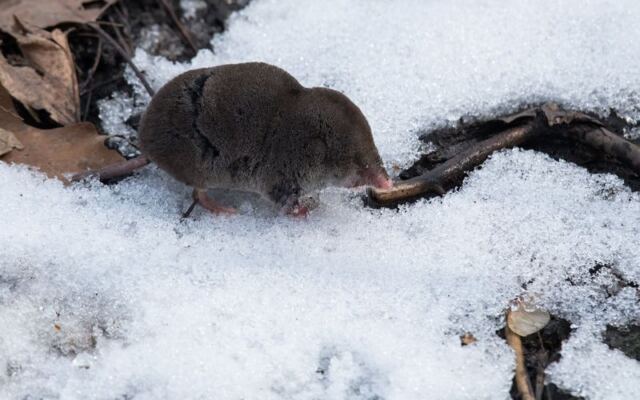
Alabama has a tiny mammal with a venomous bite, the southern short-tailed shrew, and it is built to get through winter by hunting and eating in the ground cover where it lives. Its saliva is mildly venomous, which helps it overpower prey much larger than a typical bug.
It digs tunnels, hunts in leaf litter and loose soil, and even stashes live snails for later. Here is what is known about this small predator, and what is still a mystery about your own backyard.
Meet Alabama’s southern short-tailed shrew
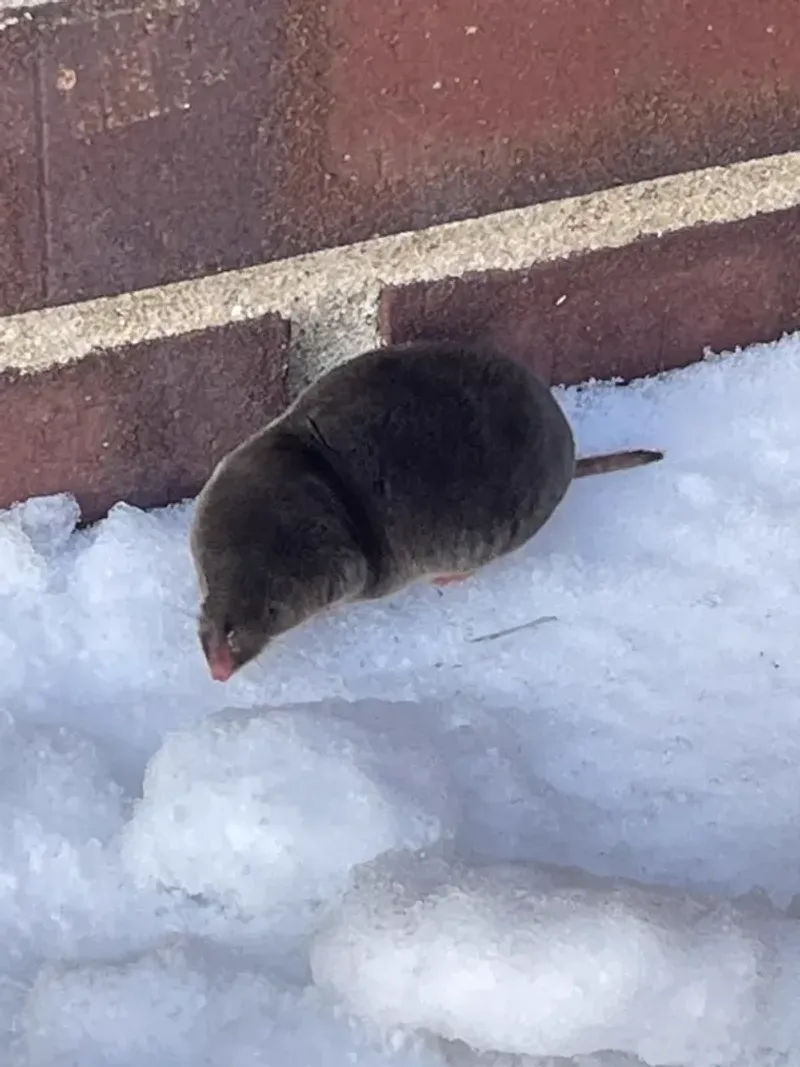
Few mammals in Alabama are as easy to miss as the southern short-tailed shrew (Blarina carolinensis). It is the species discussed in this article, and it is not the same as every shrew found in the state.
According to Alabama’s wildlife agency, an adult measures about 2.8 to 4.2 inches long and weighs roughly half an ounce to one ounce.
The same account says the species occurs across Alabama except the northeast. That is a broad range, yet the agency also indicates that little is known about the animal in the state.
A wide range on a map does not mean one is living in every neighborhood.
Alabama is home to several shrew species, and they differ in size and habits. The North American least shrew, for example, is a tinier relative that hunts at or just below the surface of loose soil and leaf litter.
Traits described for one species should not be handed to the others.
So what can you learn about the southern short-tailed shrew? Quite a lot about how it lives, including its bite, its burrows, and its winter habits.
What you cannot assume is that you will see one, or that one is living under your grass right now.
What the shrew’s venom does

Venom sounds dramatic, but the job it does here is practical. Alabama’s wildlife agency describes the southern short-tailed shrew’s saliva as mildly venomous, and says it can paralyze prey.
For a tiny animal with a very fast metabolism, subduing a meal quickly is a real advantage.
The same state species account states that the shrew is not a danger to humans. That is the agency’s statement, and it is worth taking at face value.
It is a different claim from saying that no bite could ever bother anyone.
Bodies react differently, and any wild animal bite can break skin and carry germs. A wild shrew that is picked up or cornered may well bite.
The venom is meant for small prey, not for people.
You may read stronger descriptions of shrew venom online. Those usually concern a different animal, the northern short-tailed shrew, so they do not tell us how the southern species affects people.
The southern shrew should be described by what Alabama’s agency says about it: mild venom, used on prey, and not considered a danger to humans.
How it finds food underground
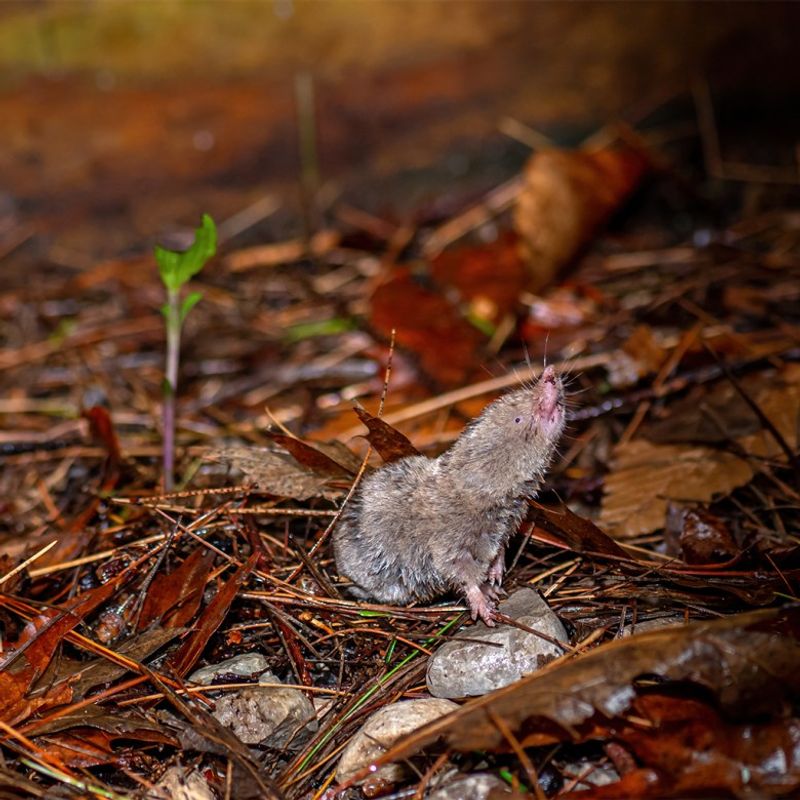
Picture a hunter that works mostly out of sight. Per Alabama’s species account, the southern short-tailed shrew eats invertebrates and small vertebrates, along with some other foods.
Think of earthworms, insects, snails, and the occasional small animal.
It finds that food by moving through soil, burrows, and the spaces beneath logs. These hidden routes give it cover and a steady chance to run into prey.
Being tiny with a quick appetite means it spends its time searching for the next meal.
As a predator, it fills a modest role. It eats small creatures that live in the soil and leaf layers of its habitat, and it is in turn small enough to be food for other animals.
There is nothing in the species account suggesting that it goes after people or pets.
It is also not accurate to call it a lawn pest controller. Its diet includes some invertebrates that gardeners dislike, but the agency account does not describe it as targeting any pest in particular.
It simply eats a mix of what it can find and catch.
Burrows and logs matter to this animal, so wild, undisturbed ground is a better fit for its way of life than a bare, tidy yard.
What winter food stores tell us
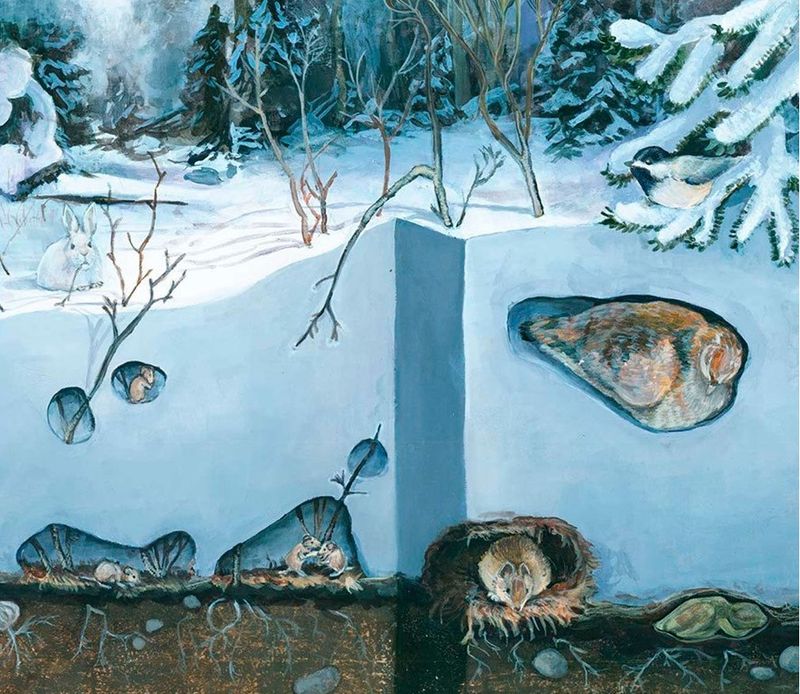
Winter is hard on small animals, and this shrew has a few documented tricks. Alabama’s species account reports that it stores living snails in its burrows for winter.
It also eats some vegetable matter in winter and makes tunnels under soil or snow.
Each of these details points to the same idea: the animal has ways to get through the cold months. A food pantry and sheltered tunnels give it options when fresh prey is harder to come by.
What the details do not show is nonstop hunting. Nothing in them tells us how active the shrew is on any particular cold day.
Weather-related activity of Alabama shrews is also described as poorly studied in an Auburn University thesis on shrews of the state.
There is one concrete winter record. A peer-reviewed species account notes a southern short-tailed shrew captured in southwestern Alabama on December 20.
That is one observation. It shows an animal was around in December, but it does not describe a whole winter’s worth of behavior.
Where this shrew is most at home
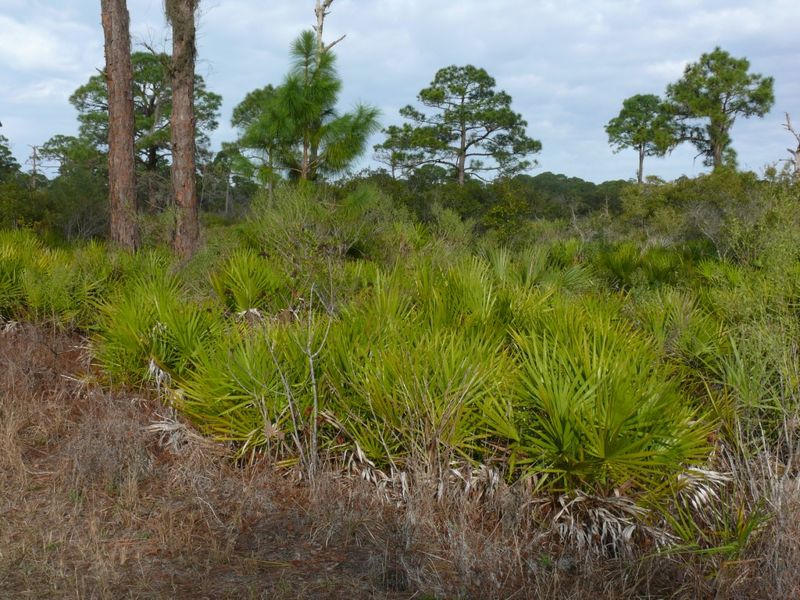
Ask where this shrew feels at home, and the answer sounds more like a forest than a front yard. Alabama’s agency links the species most often with moist, well-drained woodland or pine habitats and with deep organic matter.
Soft, crumbly ground is easy to tunnel through, and rotting leaves and wood hold the small creatures it eats.
Now compare that with a closely mown lawn. Short turf over compacted soil offers far less to burrow in and far less cover.
That does not rule out a shrew passing through a yard, especially one near woods, but it makes a lawn a poor example of the animal’s favorite setting.
Research on shrews in general adds some detail. The Auburn thesis on Alabama shrews supports the idea that shrews use leaf litter and other ground cover to forage or move.
That is a finding about shrews as a group, though.
It does not prove that southern short-tailed shrews are routinely active beneath residential lawns in winter. A leaf-covered yard might host one, but you cannot count on it.
How to handle leaves on a lawn
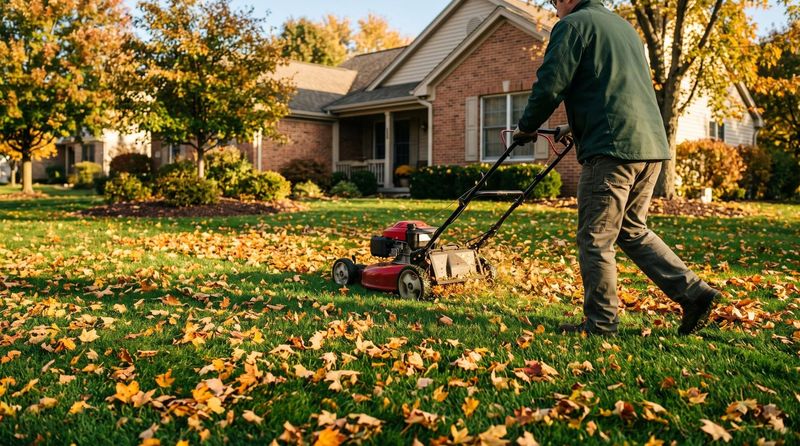
Raking decisions in fall come down to how many leaves you actually have. A light scattering over grass is a different situation from a thick, matted blanket.
The difference matters for your turf, and it has nothing to do with shrews.
University of Florida/IFAS Extension recommends finely mulching a light layer of leaves and leaving the pieces on the lawn. Leaves that completely cover the grass should be redistributed or removed.
A thick layer can smother turf by blocking light and air.
One practical way to handle a heavy layer is to move extra leaves to garden beds or under shrubs, where they act as mulch. Another is to run a mower over them in a couple of passes.
Either way, you are looking after your grass and soil.
Leaf litter is where researchers have found shrews in general moving and foraging, as the Auburn thesis shows. That is background, not a reason to rake or not rake.
Treat leaf care as lawn care, and leave shrews out of the decision.
If you encounter a shrew
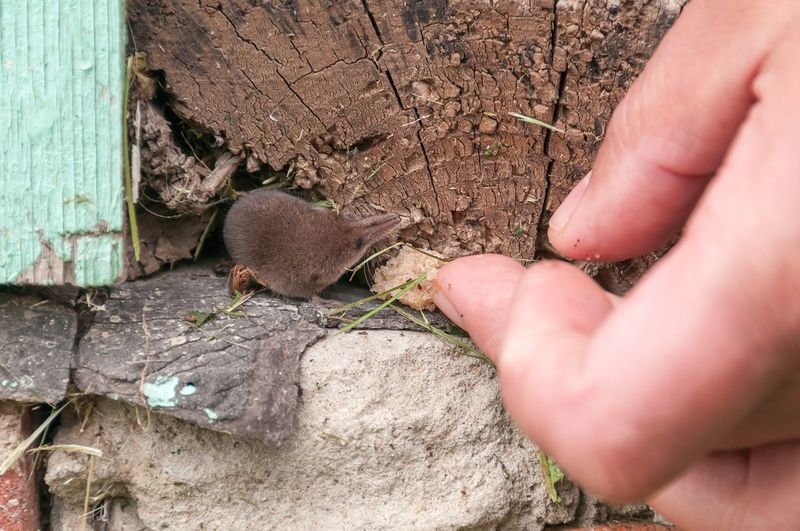
Seeing a shrew can be a surprise, so keep your distance. Do not pick it up, and do not casually trap or relocate it.
CDC wildlife guidance advises avoiding contact with wild animals and getting medical attention for serious bites.
If a bite or puncture does happen, wash the wound well with soap and water. Get medical guidance if the wound is significant or concerning.
Alabama’s wildlife agency says the southern short-tailed shrew is not a danger to humans, so this is no reason for panic, but any wild animal bite deserves sensible care.
For a genuine wildlife problem, such as animals repeatedly getting into your home, reach out to the appropriate local authority or a qualified operator. Alabama offers information on permitted nuisance animal control operators.
That is safer than trying to handle the animal yourself.
What we know is simple: the southern short-tailed shrew is a small predator that uses burrows and stores food for winter. Whether one lives under your lawn, or stays active there in winter, remains unknown.
Some of the most interesting neighbors are the ones we never see.
Share this story