Get the latest garden guides in your inbox →
Gardening Latest
  • General Gardening
  • Lawn Care
  • Plant Care
  • Composting
  • Soil Health
  • Backyard
  • Garden Muse Magazine
  • General Gardening
  • Lawn Care
  • Plant Care
  • Composting
  • Soil Health
  • Backyard
  • Garden Muse Magazine
  • News
  • Gardening Calendar
  • Garden Structures
  • Vegetable Garden
  • Vertical Garden
  • Raised Beds
  • Hydroponics
  • General Equipment
  • Community Gardens
Garden Themes
  • Spiritual Garden
  • Hydroseeding
  • Seeding and Laying Sod
  • Artificial Grass
  • Lawn Care Equipment
  • Plants
  • Trees
  • Planting Tools
  • Composting Basics
  • Fertilizer
  • Alternative Growing Mediums
  • Front Yard
  • Backyard Activities
  • Landscaping
Gardening Latest

Explore by state

Which state is your garden in?

Currently viewing Alabama

All states

Northeast

  • Connecticut —
  • Delaware 34
  • Maine —
  • Maryland 20
  • Massachusetts 37
  • New Hampshire —
  • New Jersey 20
  • New York 30
  • Pennsylvania 30
  • Rhode Island —
  • Vermont —

Southeast

  • Alabama 20
  • Arkansas —
  • Florida 20
  • Georgia 21
  • Kentucky 34
  • Louisiana 19
  • Mississippi —
  • North Carolina 18
  • South Carolina 33
  • Tennessee 17
  • Virginia 19
  • West Virginia —

Midwest

  • Illinois 19
  • Indiana 22
  • Iowa 33
  • Kansas —
  • Michigan 21
  • Minnesota 19
  • Missouri 19
  • Nebraska —
  • North Dakota —
  • Ohio 21
  • South Dakota —
  • Wisconsin 35

Southwest

  • Arizona 20
  • Colorado —
  • Nevada —
  • New Mexico —
  • Oklahoma —
  • Texas 19
  • Utah —

West

  • Alaska —
  • California 20
  • Hawaii —
  • Idaho —
  • Montana —
  • Oregon —
  • Washington —
  • Wyoming —

No state matches that search.

Site menu

Gardening Latest
  • General Gardening
    • News
    • Gardening Calendar
    • Garden Structures
    • Vegetable Garden
    • Vertical Garden
    • Raised Beds
    • Hydroponics
    • General Equipment
    • Community Gardens
    Garden Themes
    • Spiritual Garden
  • Lawn Care
    • Hydroseeding
    • Seeding and Laying Sod
    • Artificial Grass
    • Lawn Care Equipment
  • Plant Care
    • Plants
    • Trees
    • Planting Tools
  • Composting
    • Composting Basics
  • Soil Health
    • Fertilizer
    • Alternative Growing Mediums
  • Backyard
    • Front Yard
    • Backyard Activities
    • Landscaping
  • Garden Muse Magazine

Explore

  • About GardeningLatest.com
  • Contact Us

Get the latest from the garden

New guides on lawn care, plants and backyard projects, sent when they go up.

Subscribe →

Follow

  • Facebook
  • X
  • Pinterest
  • YouTube
Alabama Gardening

Should You Cut That Giant Flower Stalk Off Your Alabama Mustard Greens? Here’s What It Means

Yes, you can cut that tall stalk, but it will not turn your mustard back into a leafy plant.

LT

By Loretta Tate

November 26, 2026 · 6 min read

Should You Cut That Giant Flower Stalk Off Your Alabama Mustard Greens? Here’s What It Means
Should You Cut That Giant Flower Stalk Off Your Alabama Mustard Greens? Here's What It Means

Yes, you can cut that tall stalk, but it will not turn your mustard back into a leafy plant. The stalk means your mustard has started bolting, which is the normal switch from making leaves to making flowers and seeds.

You can still pick leaves you like, eat the flowers if you have the right kind of mustard, or save seed. Here is how to decide what to do with that plant.

At a glance

Where
Alabama Gardening
Hardiness zone
8 10 to 20°F
Read
6 minutes
Published
November 26, 2026

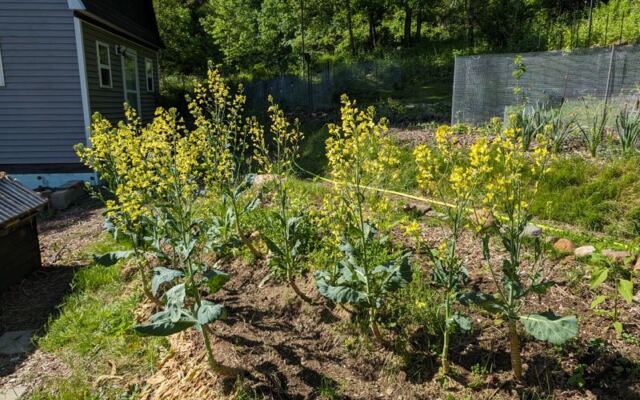
A giant central stalk usually means the mustard has bolted
A giant central stalk usually means the mustard has bolted
© Homestead and Chill

Bolting is when a plant shifts from growing leaves to making flowers and seed. That tall center stalk is the first big sign.

Mustard does this as part of its normal life cycle, much like a lettuce or spinach plant that sends up a tower late in its run.

A flower stalk is not a disease symptom on its own. Maryland Extension describes bolting in vegetables as a regular reproductive stage, and it does not treat it as a sign of illness.

Spots, mold, sticky residue, or chewed holes are separate problems, and you would see those on the leaves themselves.

Look at what the plant is doing before you decide anything. A stalk just beginning to rise usually sits above leaves that are still decent.

Utah State University Extension notes in its mustard growing guide that leaves are best picked before the seed stalk forms, which tells you timing matters for quality.

Quality is the real change here. Illinois Extension points to flavor and texture as the harvest concerns for mustard, not a sudden safety problem.

So a bolting plant is not automatically trash. Taste a leaf, and let your own palate guide you.

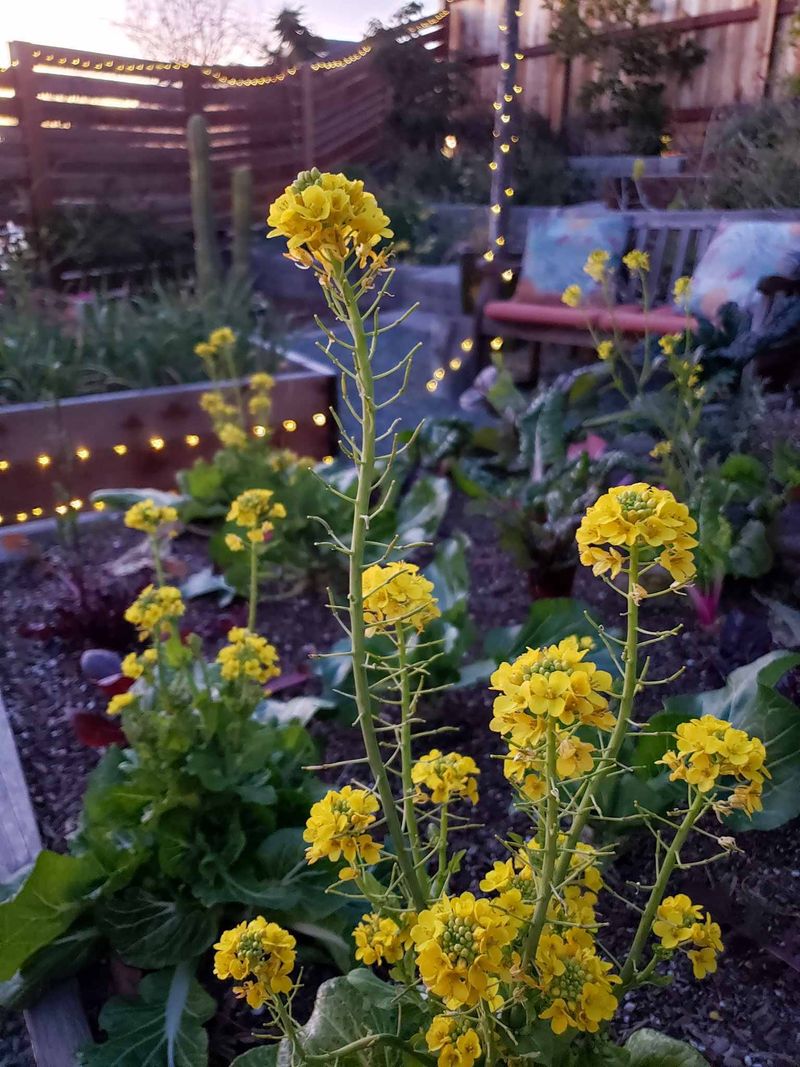
Mustard’s flowering response depends on conditions and variety
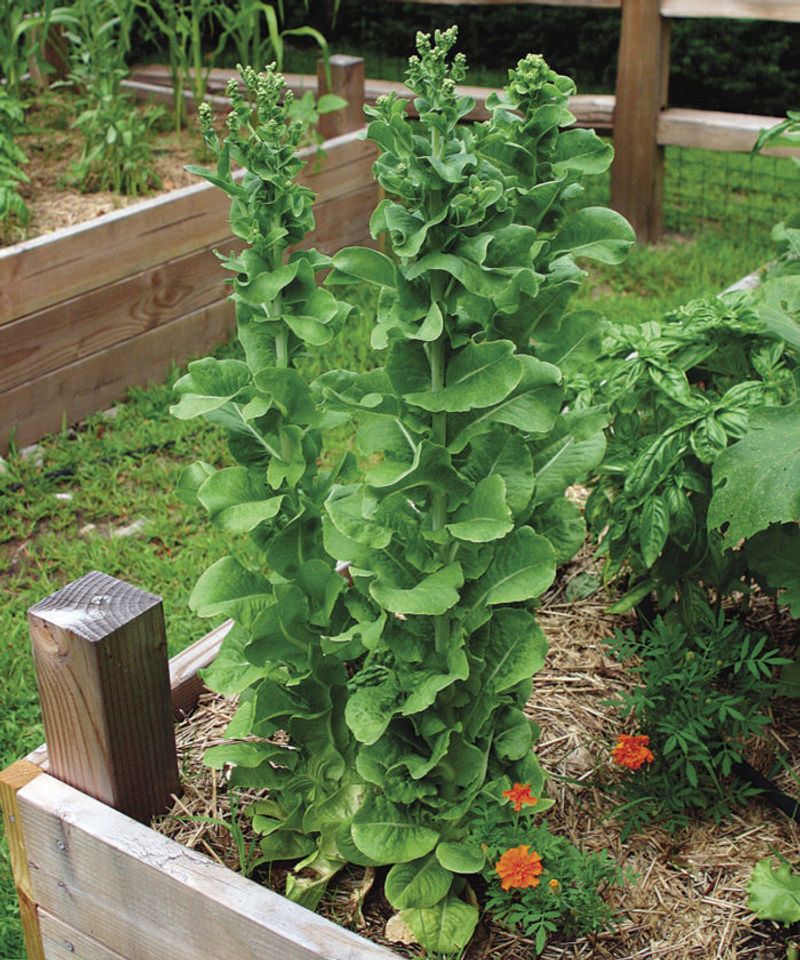
Mustard’s flowering response depends on conditions and variety
© Fine Gardening

Mustard is a cool-season crop, and it likes mild weather. When days turn warm and long, it tends to hurry toward flowers.

Utah State University Extension connects mustard flowering with warm, long days, which is why a spring planting in Alabama can start bolting as the season heats up.

If your plant is cultivated brown mustard, Brassica juncea, the stalk may be worth eating.

Do not expect one exact trigger, though. Plants respond differently, and there is no single temperature or calendar date that works for every garden.

Two rows planted a week apart can behave differently, and so can two varieties side by side.

Researchers have seen this variety directly. A study of 22 Myanmar mustard accessions found large differences in how long plants took to bolt and in how they reacted to temperature and day length.

The practical lesson is to watch your own plants instead of trusting a rule. Keep a quick note of when each variety sent up a stalk in your yard.

Over a couple of seasons, that record will tell you more than any general chart.

Cutting the stalk is not a proven reset button
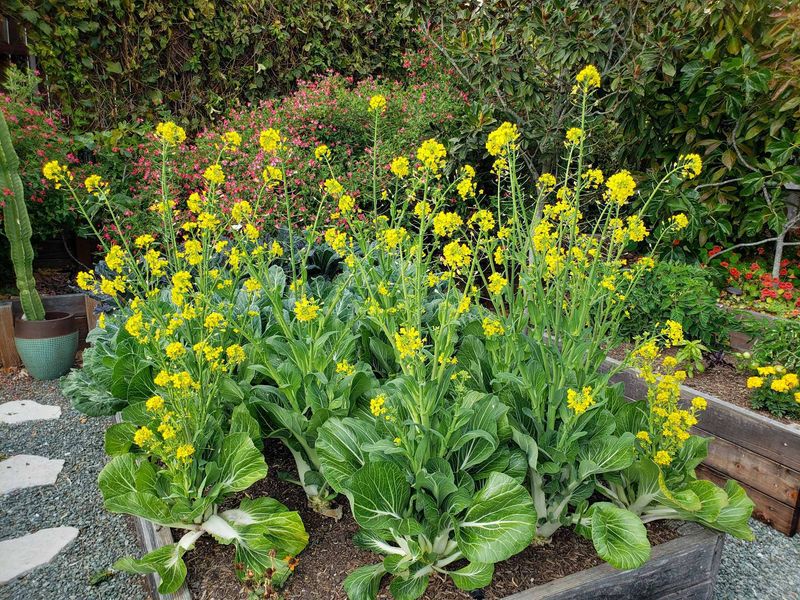
Cutting the stalk is not a proven reset button
© Homestead and Chill

Here is the direct answer to the question in the headline. Mustard-specific guidance backs harvesting before the seed stalk forms.

It does not show that cutting off a mature stalk sends the plant back to making tender leaves.

You may have heard that snipping a flower stalk redirects energy. Maryland Extension says that works for certain crops such as rhubarb, onions, and hard-neck garlic.

Its discussion of leafy crops that bolt does not promise the same result for mustard.

So treat stalk removal as a tidy-up, not a fix. If you cut it, do not count on better-tasting leaves or a big second harvest.

The plant is following its life plan, and it may simply try again with new flower shoots.

The better move is to act earlier next time. As Utah State University Extension suggests, pick leaves before the stalk shows up.

If a stalk is already tall, harvest what still looks good and decide what the plant is best used for from here.

Judge the leaves by their condition, not by the stalk alone
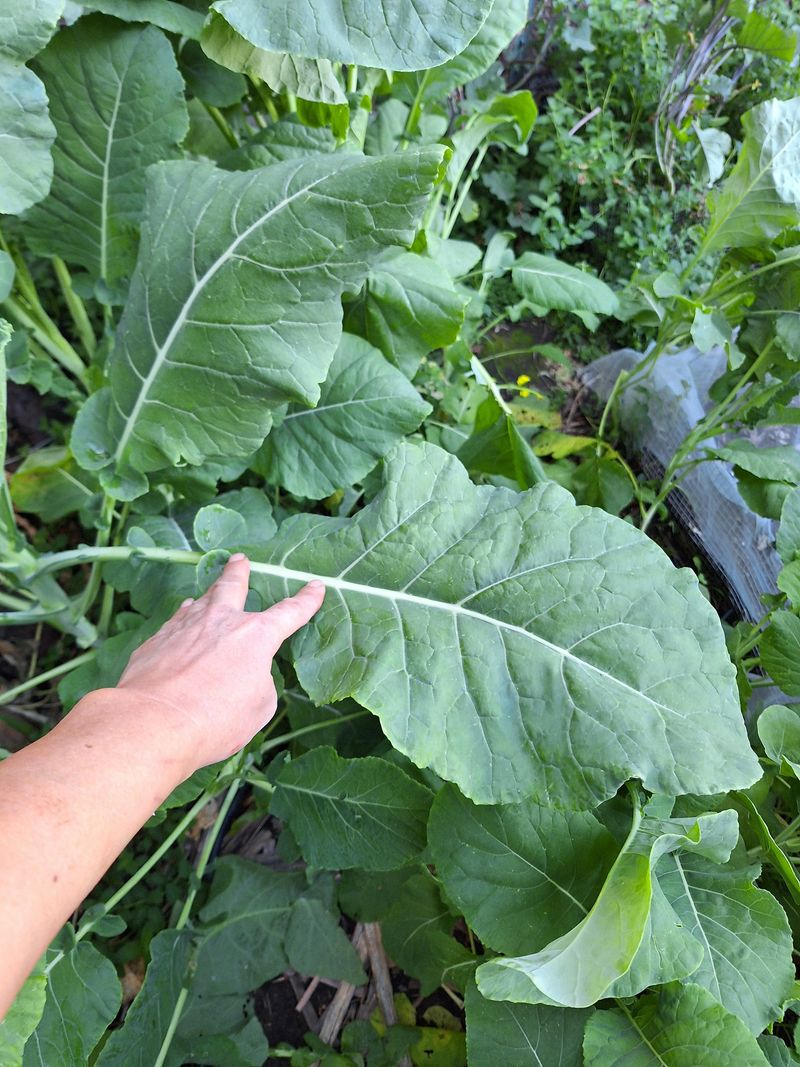
Judge the leaves by their condition, not by the stalk alone
© Etsy

Your eyes and taste buds are the best test. Pick a leaf and look at it, then nibble a piece.

If it is tender and the flavor suits you, it is fine for the kitchen.

Age and growing conditions both shape how a leaf turns out. Illinois Extension describes mustard as a crop where quality changes, and tougher texture and sharper flavor are common as plants mature.

Not every leaf on a bolting plant is inedible, but many will be stronger than you like.

For a steady supply, take young outer leaves and leave the center alone. Alabama Extension suggests harvesting outer leaves when they reach about 6 to 8 inches.

The inner growing point keeps producing new growth that way.

Once a plant is bolting, use what is still appealing, or pull the whole plant if the leaves have lost their charm. You can also cut all leaves close to the soil.

Utah State University Extension says regrowth is possible only if the growing point is not damaged, and that is not a way to undo bolting.

Identified brown mustard offers more than leaves
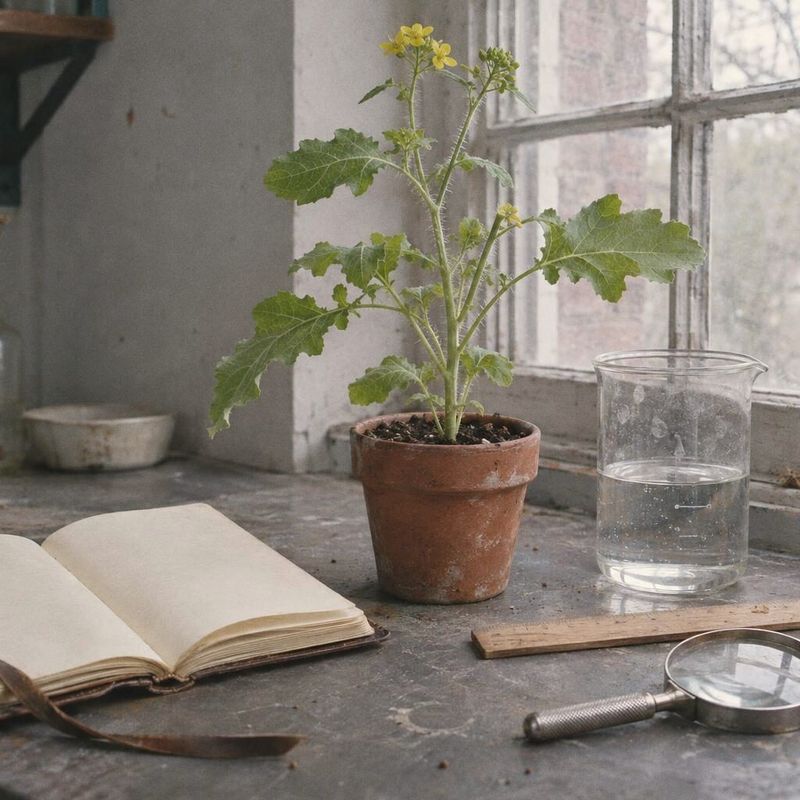
Identified brown mustard offers more than leaves
© Spliff CBD & THCX Shop

If your plant is cultivated brown mustard, Brassica juncea, the stalk may be worth eating. North Carolina State Extension lists the flowers and stems of this plant as edible, with a mustardy flavor.

That makes a clean, correctly identified plant more useful than a discard pile.

Try the tender flowering tops in a stir-fry or salad, where the sharp taste can be a feature. Start with a small amount to see how strong it is.

This advice has a firm limit. It applies to cultivated brown mustard, not to every plant with yellow flowers that looks like mustard.

Many wild or garden plants resemble it at a glance.

If you are not sure what you are growing, do not eat it. Check the seed packet, plant tag, or your records first.

When identity is unclear, the safest choice is to leave the flowers for the bees and enjoy them visually.

Leave some flowers if you want mustard seed
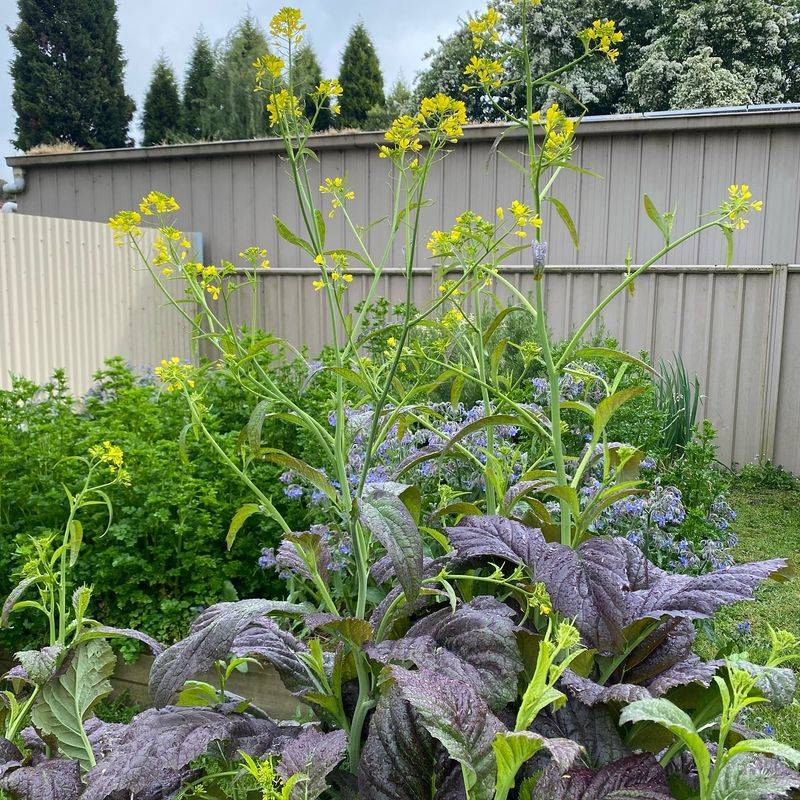
Leave some flowers if you want mustard seed
© cath_lily

Wanting seed changes the whole plan. Instead of cutting the stalk, let the flowers do their job.

They will mature into pods that hold the seed.

North Carolina State Extension describes brown mustard as producing pods and seeds, and it notes that bees are attracted to the plant. So a patch left to flower can also support pollinators in your yard.

Choose a plant or two to set aside for seed rather than your whole row. That way you can still harvest leaves from the rest while the seed plants finish their cycle.

No yield is promised, and results will depend on your plant and your season.

Seed saving takes patience. The plant will look a bit scruffy while pods fill out, but that untidy stage is what you are after.

A fresh sowing is the better reset for tender leaves
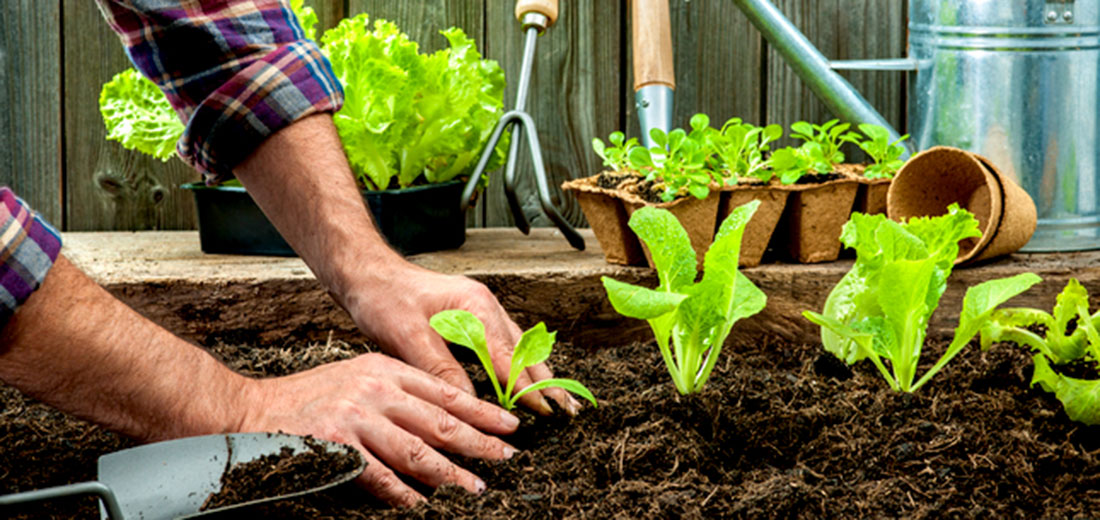
A fresh sowing is the better reset for tender leaves
© Homestead Gardens

When you want soft, mild leaves again, plant new seed. A young plant starts the cycle over, which cutting a stalk does not do.

Alabama Extension also recommends reseeding in late summer for milder, tender growth.

Alabama’s planting table gives broad windows. For spring, Alabama Extension lists January 1 to May 1 in North Alabama and January 1 to May 15 in South Alabama.

For fall, it lists August 1 to September 15 in North Alabama and August 1 to November 1 in South Alabama.

Treat those dates as regional guidance, not a promise. Your site, the weather that season, and your variety can all shift what works.

Sow a little at a time so you always have young plants coming along.

So your choices are simple: harvest the leaves that still appeal, leave flowers for seed, or plan another sowing. A mustard plant that has bolted has not failed you, it has just finished one chapter.

Share this story
LT

Written by

Loretta Tate

More from Loretta Tate →

About Gardening Latest

Gardening Latest provides in-depth guides to maintaining and enhancing your garden and backyard. Learn how to make the most of the space you have and create a beautiful garden.

More about us →

Latest stories

  • Michigan GardeningMichigan Gives You the Right to Prune a Neighbor’s Overhanging Branches, Just Not Past the Property Line

    Michigan Gives You the Right to Prune a Neighbor’s Overhanging Branches, Just Not Past the Property Line

    1 min ago
  • Massachusetts GardeningRaking Leaves In Late Fall Is How Massachusetts Homeowners Meet The Venomous Critters In Their Yards

    Raking Leaves In Late Fall Is How Massachusetts Homeowners Meet The Venomous Critters In Their Yards

    6 min ago
  • New York GardeningBobcats Keep Showing Up Near New York Houses, And Here’s What That Really Means

    Bobcats Keep Showing Up Near New York Houses, And Here’s What That Really Means

    16 min ago
  • Ohio GardeningWhen Your Neighbor’s Vines Climb Over The Fence, Ohio Law Says Exactly Where You Can Cut

    When Your Neighbor’s Vines Climb Over The Fence, Ohio Law Says Exactly Where You Can Cut

    22 min ago
  • Indiana GardeningCan You Trim a Neighbor’s Vine in Indiana? What the Law Does and Doesn’t Say

    Can You Trim a Neighbor’s Vine in Indiana? What the Law Does and Doesn’t Say

    28 min ago

Gardening by state

Stories for your state, and the hardiness zone most of it gardens in.

Keep exploring

Read next

All Alabama Gardening →
Alabama GardeningAlabama Gardeners Pull Its Seedlings by the Handful, but This Invasive Tree Keeps Spreading
Alabama Gardening

Alabama Gardeners Pull Its Seedlings by the Handful, but This Invasive Tree Keeps Spreading

16 hr ago
Alabama GardeningIn Alabama, the Property Line Marks Exactly How Far You Get to Trim a Neighbor’s Overhanging Branches
Alabama Gardening

In Alabama, the Property Line Marks Exactly How Far You Get to Trim a Neighbor’s Overhanging Branches

19 hr ago
Alabama GardeningThe Real Reason Alabama Yuccas Send Up Giant Flower Stalks, Plus Whether You Should Cut Them Off
Alabama Gardening

The Real Reason Alabama Yuccas Send Up Giant Flower Stalks, Plus Whether You Should Cut Them Off

22 hr ago

More from Alabama Gardening

  • Grabbed a Saddleback Caterpillar While Pulling Weeds in Alabama? Here’s How to Ease That Sting Fast

    Nov 24
  • Alabama’s Southern Short-Tailed Shrew: A Tiny, Seldom-Seen Mammal With Possibly Venomous Saliva

    Nov 24
Back to top

Leave a response Cancel

Your email address stays private. Required fields are marked with an asterisk.

Gardening Latest

In-depth guides to maintaining and enhancing your garden and backyard: how to make the most of the space you have, and how to make it beautiful.

  • Facebook
  • X
  • Pinterest
  • YouTube

We may earn a portion of sales from products or services that are purchased through our site as part of our affiliate partnerships with retailers.

Explore

  • About GardeningLatest.com
  • Contact Us
  • Terms and Conditions
  • Privacy
  • Editorial Note:
  • FTC Disclosure

Newsletter

New garden guides and seasonal tips, straight to your inbox.

We’ll email you a link to confirm. Unsubscribe any time.

Almost there! Check your inbox and tap the link to confirm.

© 2026 Gardening Latest. All rights reserved.

Back to top