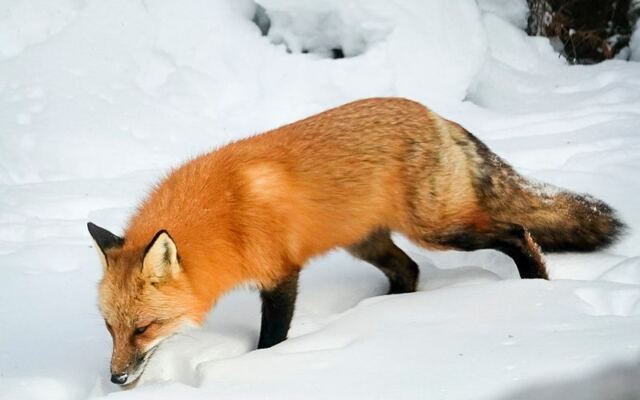
A red fox crossing your snowy yard is not lost or random, because winter is a normal working season for these animals. Foxes travel, hunt, and mark out their territory even when the ground is frozen.
Knowing what they are likely doing helps you enjoy the sight and respond wisely. A single sighting cannot tell you exactly why that fox chose your yard, but the possibilities are worth understanding.
Foxes stay active through Pennsylvania winters
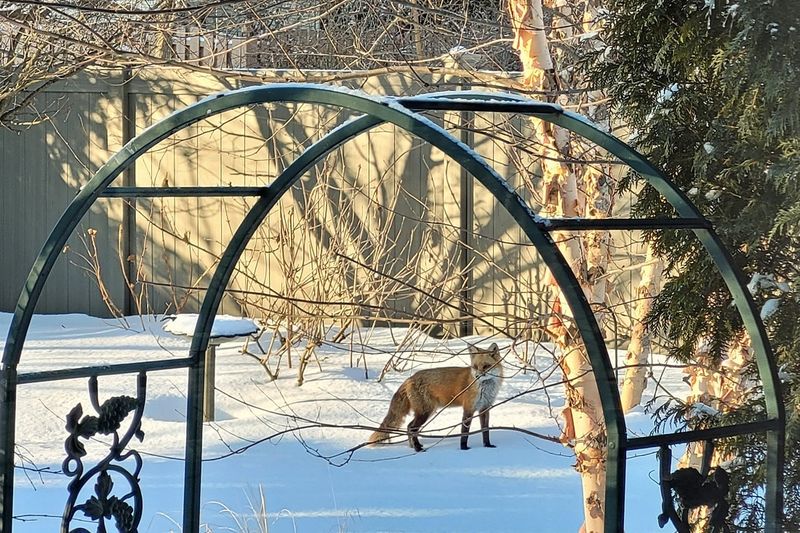
Winter does not send red foxes into a long sleep. They generally stay active through the cold months rather than denning up for shelter, though that does not mean they never use dens.
Moving across open ground in January is ordinary fox life, not a sign that something has gone wrong.
A yard can simply sit on a route. A fox may be travelling through its home range, checking familiar paths, or searching for something to eat.
Both are plausible and common explanations, but nobody can say which one applies to a single animal on a single evening.
Distance gives a sense of how far these animals roam. The Pennsylvania Game Commission says foxes travel an average of five miles on a winter night while searching for food.
That is an average, so it does not mean every fox covers that much ground. It also does not explain why a particular fox crossed your lawn.
Think of your yard as one stop on a much larger map. The fox has likely passed through many other yards, fields, and wood edges the same night.
Seeing it may feel personal, but from the fox’s side it is probably one small piece of a long loop.
Keeping that wide range in mind makes a sighting easier to take in stride. A fox that trots through and keeps going is doing what foxes do in winter.
Watching from a window, with pets indoors, is a sound way to enjoy it.
Food and shelter can make yards part of a fox’s range
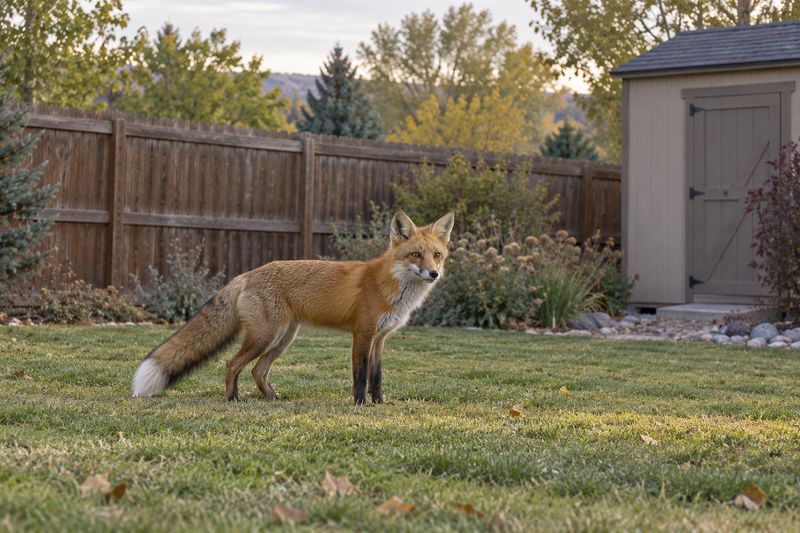
Foxes are adaptable, opportunistic eaters. Their menu, as listed by the Game Commission, includes rodents, rabbits, insects, fruit, and carrion, along with other foods that are easy to find.
A fox that eats whatever is available can make a living in many kinds of places.
That flexibility is why foxes can live in heavily populated areas. When food and shelter are available, neighborhoods can become usable parts of their range.
Brush piles, sheds, thick shrubs, and quiet corners can all offer cover, while small mammals and fallen fruit offer meals.
Here is the catch for curious homeowners. A yard has resources, but a sighting does not prove which one, if any, drew the animal in.
The fox may have been heading to the field beyond your fence, and your lawn may have been the shortest path.
It is also tempting to see a fox as a free pest controller. Foxes do eat rodents, but one passing through does not mean your mouse or vole problem will shrink.
Treat any pest benefit as a bonus that cannot be counted on, not a service you can expect.
A practical example: if a fox keeps showing up near the same spot, look at what is there. Open compost, spilled birdseed, or pet bowls left out overnight are things people control.
Removing them takes away reasons for a fox to linger without needing to confront the animal at all.
Snow can make a hunt easier to see
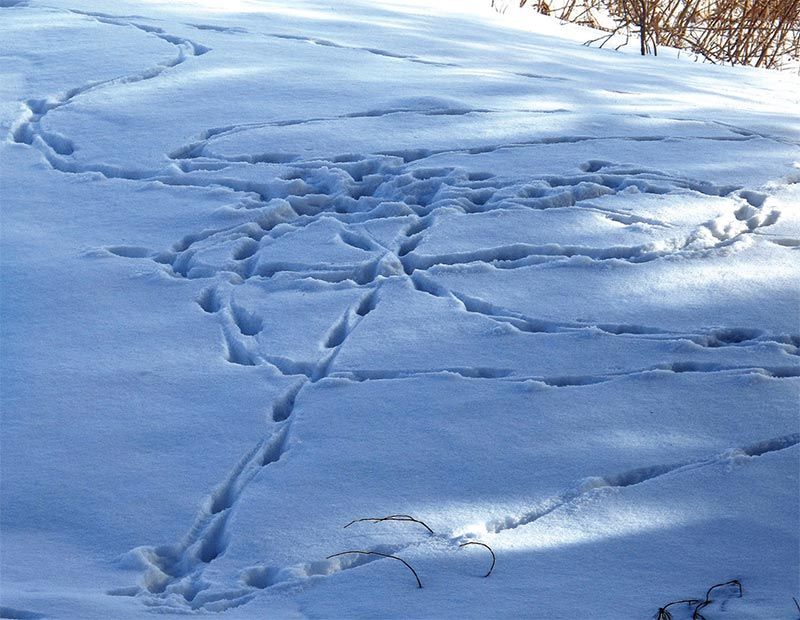
Fresh snow works like a notebook. Tracks, pounce marks, and small holes can show where an animal paused or dug.
Because the white background makes a rusty coat stand out, a fox is also simply easier to spot in winter.
Under that snow, life continues. According to the National Park Service, mice and voles stay active in tunnels beneath the snow in winter, and red foxes can locate rodents by sound.
A fox may stand very still, tilt its head, and then spring into the snow.
If you see that kind of pounce, hunting is a reasonable guess. It is still only a guess.
A fox that stops and listens in your yard may be hunting, but one sighting cannot prove it, and it says nothing certain about how hungry that animal is.
Likewise, the hunt tells you nothing about whether the fox is helping you. A fox might catch a vole in your lawn and leave, and that would not mean your yard now has fewer rodents.
Any benefit to a homeowner is unproven.
If you want to learn more, a good habit is to look at the snow the next morning from a distance. Trails that run in a fairly straight line often suggest travel, while scattered dig spots may hint at foraging.
Those are clues, not answers, and they are best enjoyed without following the animal.
Late-winter barking can be linked to breeding

Some winter nights in Pennsylvania come with an odd, sharp bark that carries across the neighborhood. In late winter, that sound has a seasonal explanation.
The Game Commission says foxes usually breed in February and may bark at night to signal to the opposite sex.
So if you hear barking after dark in February, breeding season is one reasonable explanation for the sound. Other causes are possible too, such as a fox reacting to a dog or another animal nearby.
Hearing it once does not tell you which.
Notice what this does and does not say. The link is between the season and the barking.
It does not mean a fox seen crossing your yard was doing so because of breeding, and without more evidence that connection should not be assumed.
The same caution applies to the animals themselves. A bark from the dark and a fox in the yard might be two separate events, and neither one alone reveals an individual animal’s motive.
For a practical response, treat the noise as part of the season’s soundtrack. Bring pets in at night, keep them on a leash during late-evening walks, and let the sound pass.
It is a normal sign of wildlife going about its business.
Daylight alone does not establish rabies
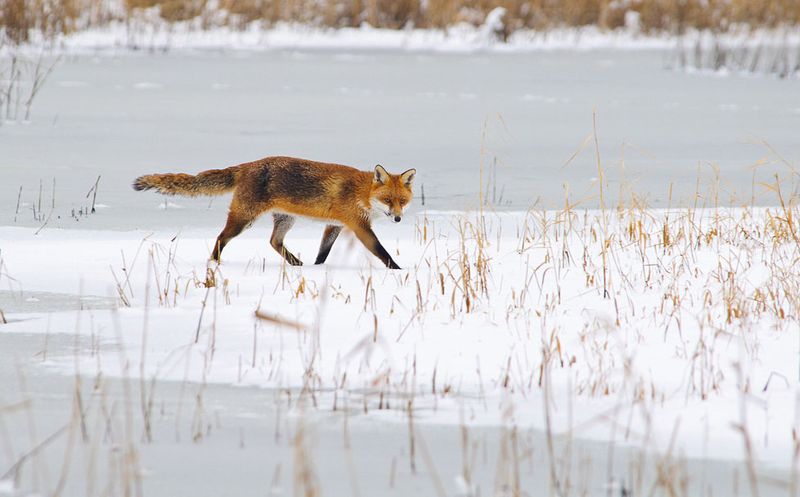
Many people see a fox in the afternoon and worry right away. Foxes are mainly nocturnal, according to the Pennsylvania Game Commission, but they can live in populated areas, and that means they are sometimes seen during the day.
Wildlife agencies in other states say the same thing. Michigan’s Department of Natural Resources explains that seeing a fox near homes, even in daylight, is normal.
A daytime sighting by itself does not establish rabies.
What matters more is how the animal acts. If a fox appears sick or behaves unusually, give it space, keep people and pets away, and seek professional guidance.
Do not try to judge the animal’s health from a distance by guessing at the cause.
Looks can mislead too. Red foxes can have different color phases, so a fox may not look bright red at all.
Fur color is not a reliable test of health, and neither is the hour of day.
A calm fox that trots along a fence line and moves off when it notices you is behaving in a routine way. Enjoy the view from indoors or a safe distance, and leave the animal to go on its way.
Keep the yard safer without approaching the fox
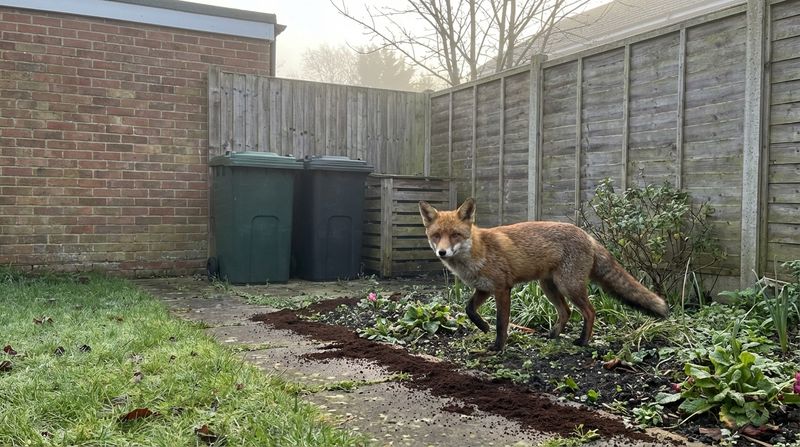
Most of the useful steps happen well before a fox shows up. Never feed foxes, and keep pet food, garbage, and compost where wildlife cannot reach them.
Bring bowls indoors at night, use lids that latch, and clean up fallen fruit or birdseed.
According to CDC guidance on wildlife, repeated feeding or close contact can reduce wildlife’s fear of people and raise risks for people, pets, and the animals themselves. A fox that learns to expect food may come closer to homes than is good for anyone.
Pets need some planning as well. Keep dogs on a leash or fenced in after dark, supervise cats and small animals, and keep pets away from wildlife in general.
Keeping rabies vaccinations current is one of the strongest protections, as described in CDC rabies prevention information.
When a fox does pass through, let it. Do not approach, touch, corner, capture, or try to medicate it, even if you think it looks thin or hurt.
Stepping back and giving it room is the safest move for both of you.
If you want the fox to move along, a little noise from a safe distance, such as a firm clap from the porch, is usually enough. Keep your pets close and go back inside.
A yard with nothing to eat and no easy hiding spots is simply less interesting to a passing fox.
Know when to contact professionals
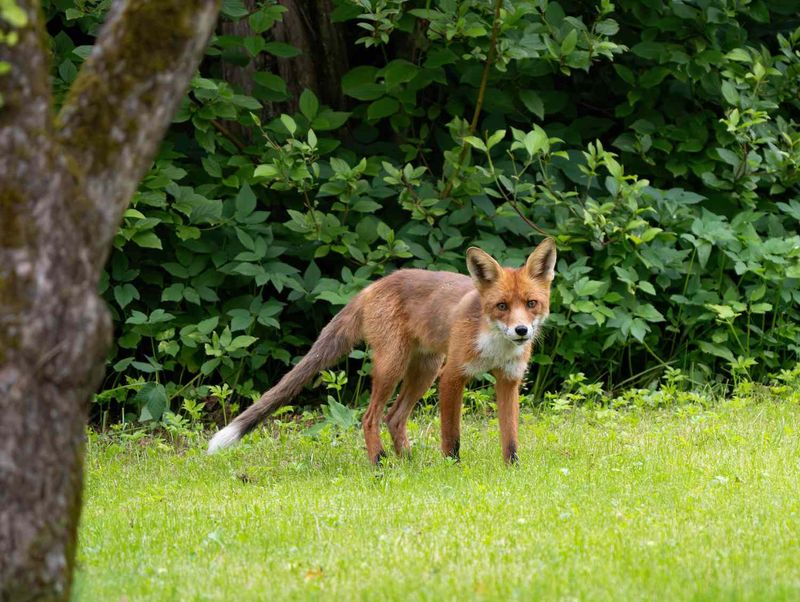
Most fox sightings need nothing more than a quiet look and a little space. A fox that crosses the yard, notices you, and keeps moving is a routine visit.
Action is worth taking when the animal’s behavior stands out, not simply because it showed up.
Signs that call for attention include a fox that appears sick, seems unusually unafraid, acts confused, or approaches people or pets in a way that feels wrong. In those cases, keep people and pets away and contact the Pennsylvania Game Commission or your local animal control.
If there is immediate danger, call the police.
Do not try to diagnose the animal yourself. Leave that to trained people, and avoid any attempt to handle it.
A bite or scratch is a different matter and needs fast attention. Wash the wound right away with soap and water, then seek prompt medical or public-health advice about possible rabies exposure.
The Pennsylvania Department of Agriculture says suspected wildlife exposures should be assessed by health professionals, and the state diagnostic laboratory system also provides rabies information.
If a pet has been in contact with a wild animal, call your veterinarian as well. A fox in winter is mostly just a neighbor on the move, and the best response is to stay watchful and let it pass.
Share this story