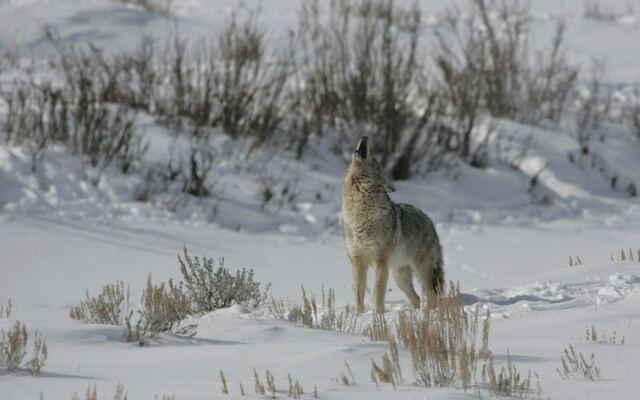
Few sounds make a quiet night feel stranger than a coyote howl drifting across a Pennsylvania neighborhood. It is natural to wonder what the animals are saying and whether they are close to your house.
The honest answer is more interesting than a simple yes or no. Here is what is known about coyote howls, what is not, and what is smart to do at home.
Why are coyotes most vocal after dark?
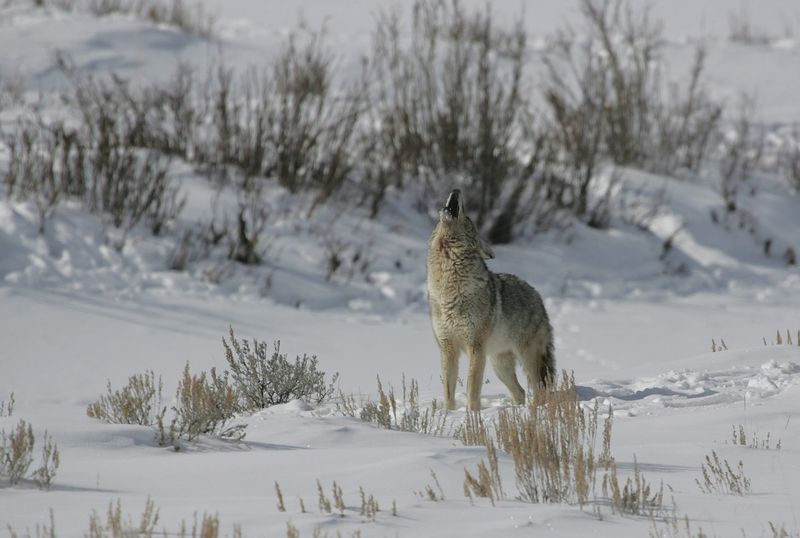
Coyotes in Pennsylvania can vocalize at any time of year, and they are not limited to one season. According to the Pennsylvania Game Commission, howls can be heard at any time of day, but vocal activity is usually highest at night.
That is a statement about how often coyotes call, not about how loud any single howl is after dark.
Part of the pattern may simply be what people notice. Evenings and nights tend to be quieter, with less traffic and fewer daytime sounds, so a howl stands out more.
Coyotes are also often more active after dark, which fits with the Game Commission’s description of nighttime as the busiest time for calling.
So when a howl reaches you late at night, it fits ordinary coyote behavior. That is the main takeaway, and it is a reassuring one.
A single howl does not tell you how close the animal is, because sound can carry a long way over open land, fields, and woods, and it can bounce or fade in ways that fool the ear.
It also does not mean anyone is in danger. Howling is a vocal behavior, not a warning aimed at residents.
Think of it a bit like hearing an owl or a distant train: a sign that wildlife shares the landscape with you, and nothing more by itself.
The later sections look at what howls might be for, how the seasons fit in, and which simple habits keep pets safe no matter what you hear.
One sound can serve several communication functions
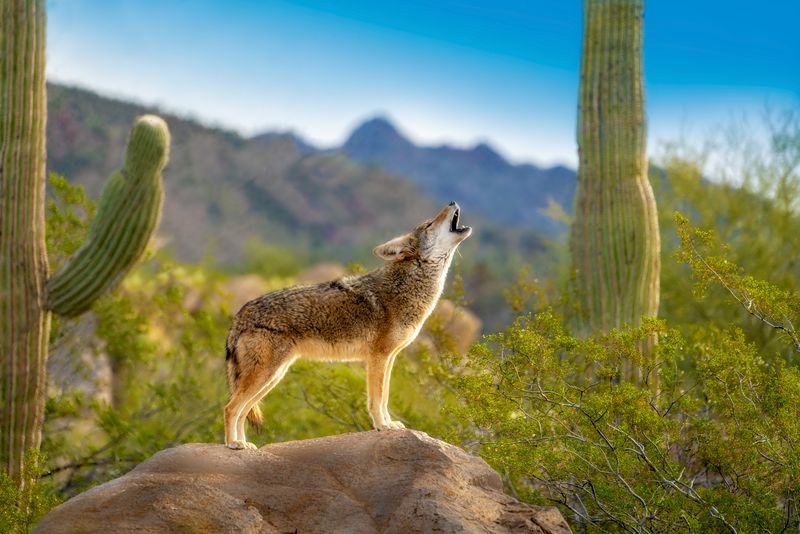
Coyotes talk with more than howls. The Game Commission notes that they also use yips and barks, and each sound can carry different information.
Howling is especially good for reaching other coyotes across long distances, where seeing each other is not possible.
Researchers who study canids describe howls as signals tied to both territorial defense and group cohesion. A peer-reviewed study of canid howls looked at these functions across several species and subspecies.
In plain terms, a howl might help coyotes stay in touch with family members, or it might tell neighbors that an area is already claimed.
Here is the catch. Knowing the general jobs a howl can do does not let a listener figure out which job applies on a given night.
A howl from the woods behind your yard could be a coyote reconnecting with a relative, answering a faraway call, or marking its area. From the sound alone, there is no reliable way to tell.
That is why it is better to avoid stories such as a nearby pair courting, a den being defended, or a warning aimed at your street. Those ideas make for a dramatic tale, but nothing about a howl confirms them.
A more useful way to think about it is that coyote society runs on conversation. Groups often center on a mated pair and their offspring, and calls help keep that network connected.
Hearing the conversation tells you coyotes live in the region, which is already something most Pennsylvanians can assume.
Fall dispersal is possible; mating is not the clear answer
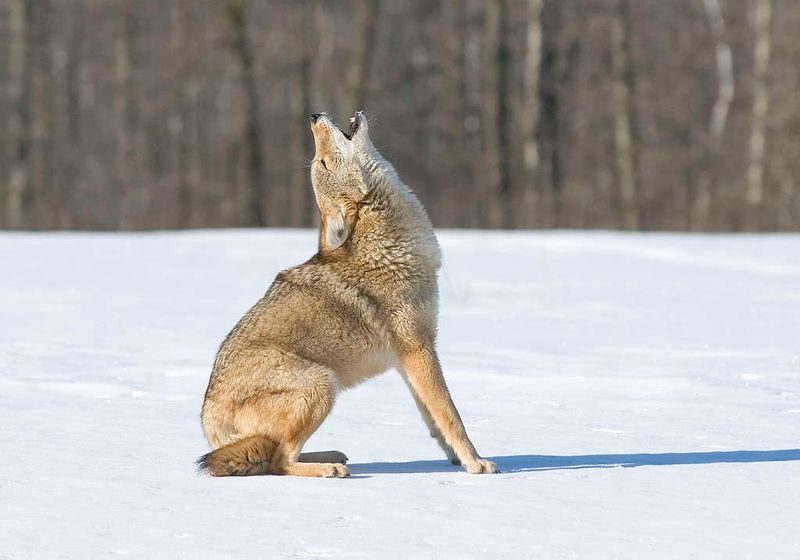
Seasons do shape coyote life, so it helps to know the general calendar. The Pennsylvania Game Commission says young coyotes may begin dispersing from their family groups around October.
Pups born in spring are growing up by then, and some head out to find their own space.
Dispersal is one possible piece of the fall picture. A young coyote on the move might call, or other coyotes might call back.
Still, no one can say that a particular late-November howl comes from a dispersing animal.
Mating is a different story. The Game Commission says females usually come into heat in February, and pups are born from mid-April to early May.
Late November sits well before that window, so calling a howl then a sign of courtship goes further than the facts allow.
Pair bonds are real, though. Pennsylvania coyotes can stay together for several years, and family groups often center on a mated pair.
That long-term partnership does not mean a howl in November is a romantic message, because bonded animals call to each other all year.
These dates are general timing, not exact predictions for every coyote or every county. Groups vary in makeup, and breeding can vary too.
Use the calendar as background, not as a decoder for the sounds outside your window.
A chorus does not reveal the head count
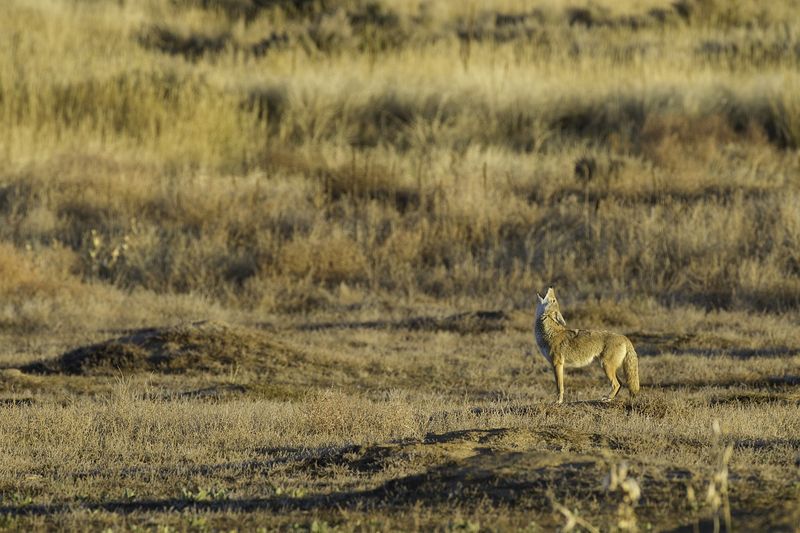
A burst of yips and howls can sound like a whole crowd. Your ears may tell you there are ten coyotes out there, but sound is a poor tool for counting.
Voices overlap, echo off hills and trees, and a few animals can sound like many.
A study called Do You Hear What I Hear? tested this directly. In an experiment with 427 listeners, participants overestimated the number of recorded coyotes by nearly twofold on average.
That result belongs to the experiment. It does not give you a formula, such as dividing by two, to apply to a real chorus outside your home.
Real nights have wind, terrain, distance, and different group sizes, all of which change what you hear.
The practical lesson is simple. If a chorus starts up, resist the urge to announce a number to the neighborhood group chat.
A family of a few animals and a larger group can sound surprisingly alike.
If you are curious, a better approach is patience. Notice when the calling happens and how long it lasts, but treat any head count as a guess.
Not knowing the number is perfectly fine, because it does not change the sensible steps for keeping pets safe.
Protect pets without treating a howl as an emergency
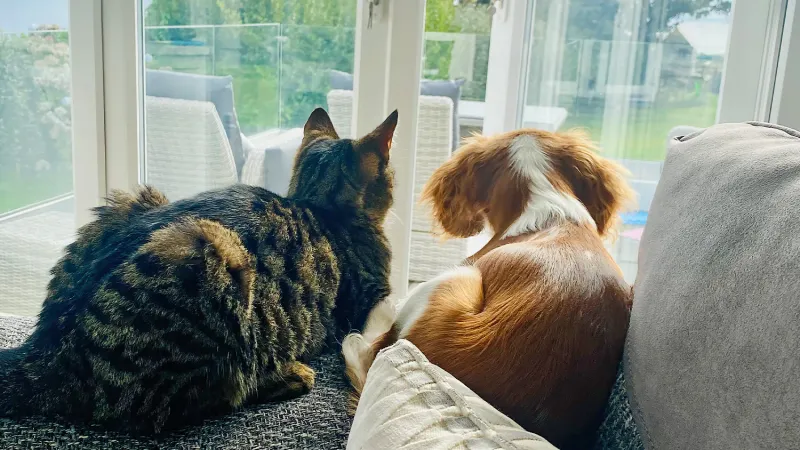
Hearing a howl is not a signal that a coyote is about to show up in your yard. Even so, coyotes live across Pennsylvania, including near homes, so a few habits are worth keeping all year.
Wildlife agencies in other states give the same basic advice, and it holds up well here.
Start with supervision. The Massachusetts Division of Fisheries and Wildlife recommends keeping an eye on pets outdoors, especially small ones, and leashing dogs.
Step outside with your dog at night rather than letting it roam alone, and use a flashlight so you can see the yard.
Cats are safest indoors. Connecticut’s Department of Energy and Environmental Protection also advises removing food sources that draw wildlife near homes.
That means bringing pet food inside after meals and keeping garbage in secure containers with tight lids.
Fencing and lighting can add a small layer of help, but they are not guarantees. Pets are never entirely free from risk around wildlife, so the routine matters more than any single gadget.
A good rule of thumb is to treat these steps as everyday housekeeping, like locking a door. You do not need to change your whole evening because you heard a distant chorus.
You just keep your pets close and your yard free of easy snacks.
Contact wildlife officials about a concerning animal
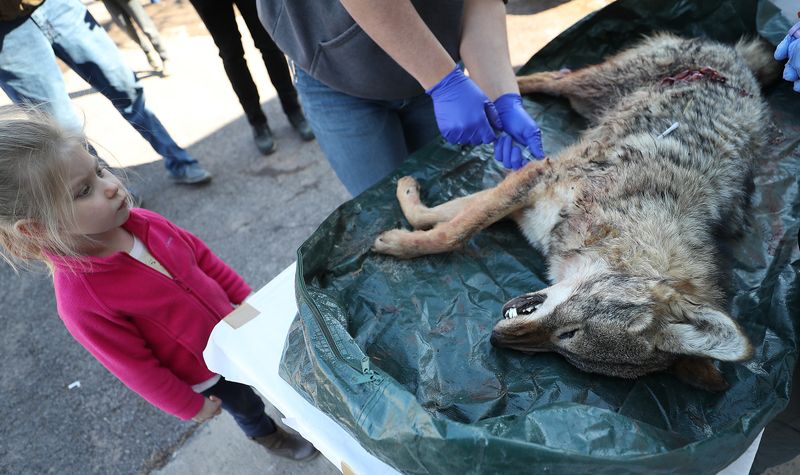
Hearing howling is one thing, and meeting a coyote that seems unwell is another. Signs of concern might include an animal that looks sick or injured, acts oddly, or keeps returning to a home despite being scared off.
In those cases, take it seriously without panicking.
Do not approach, feed, trap, or handle the animal. Keep people and pets well away, and head indoors if needed.
Pennsylvania-focused guidance on coyotes behaving strangely or aggressively backs up this cautious approach.
For a suspected sick, injured, or nuisance animal, call the Game Commission’s centralized dispatch at 1-833-PGC-HUNT or 1-833-PGC-WILD. Its frequently asked questions page notes that calling works better than email or social media when a report is time-sensitive.
A howl in the dark is simply a coyote being a coyote, and the night usually moves on without incident.
Share this story