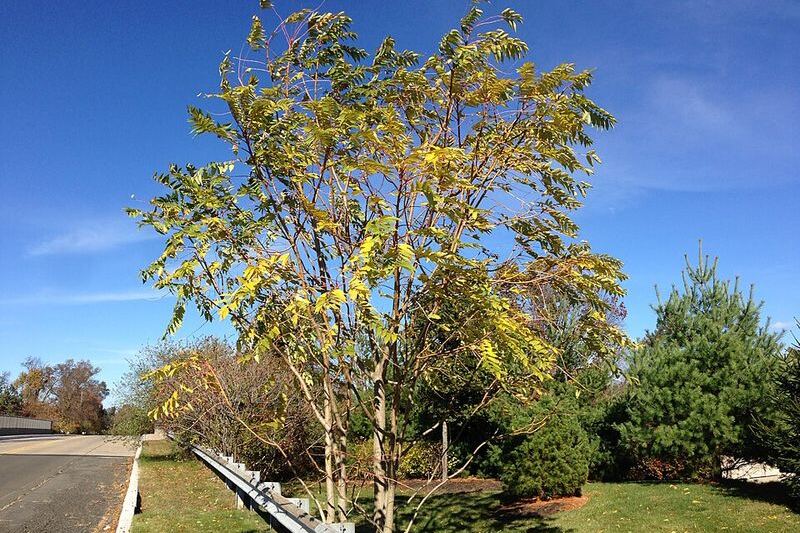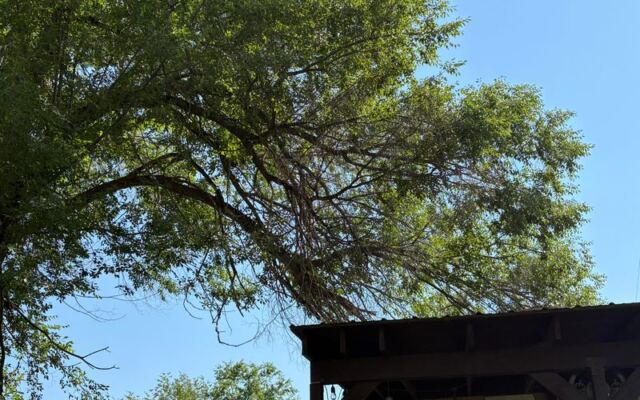
If a neighbor’s tree limbs stretch over your yard, New Jersey law gives you a limited right to trim them back to the property line. That line is the edge of what you can do on your own.
Knowing how far the right goes can save you from a ruined tree, an injury, or a fight over the fence. Here is how to use the rule the smart way.
New Jersey’s trimming right stops at the property line
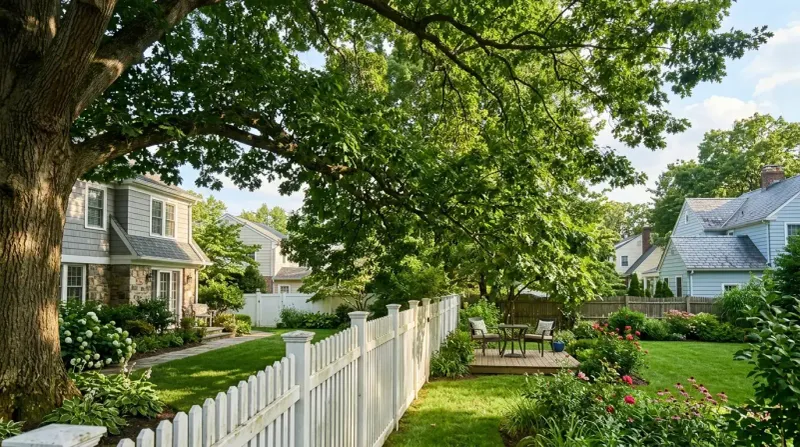
A New Jersey appeals court laid out the basic rule in D’Andrea v. Guglietta.
A neighbor may lop off overhanging branches to the property line, but no further. The property line is where your self-help stops.
This is a limited common-law right. It does not make the tree yours, even though the branches hang over your land.
It also does not let you step onto the neighbor’s side to make the cuts, climb into the tree from their yard, or take down the trunk.
Think of it as permission to deal with what crosses the boundary and nothing past it. If a limb reaches over your lawn, the part above your lawn is what the rule addresses.
Anything beyond the line belongs to your neighbor’s space and your neighbor’s tree.
The rule also comes with conditions. The New Jersey State Bar Foundation ties the right to branches that constitute a nuisance, and it says the person trimming must use due care.
So the law does not say every overhanging branch can automatically be cut.
The next sections explain those conditions and the steps to take before you pick up a saw. Each step helps you stay on the right side of the law and of your neighbor.
The right depends on nuisance and due care
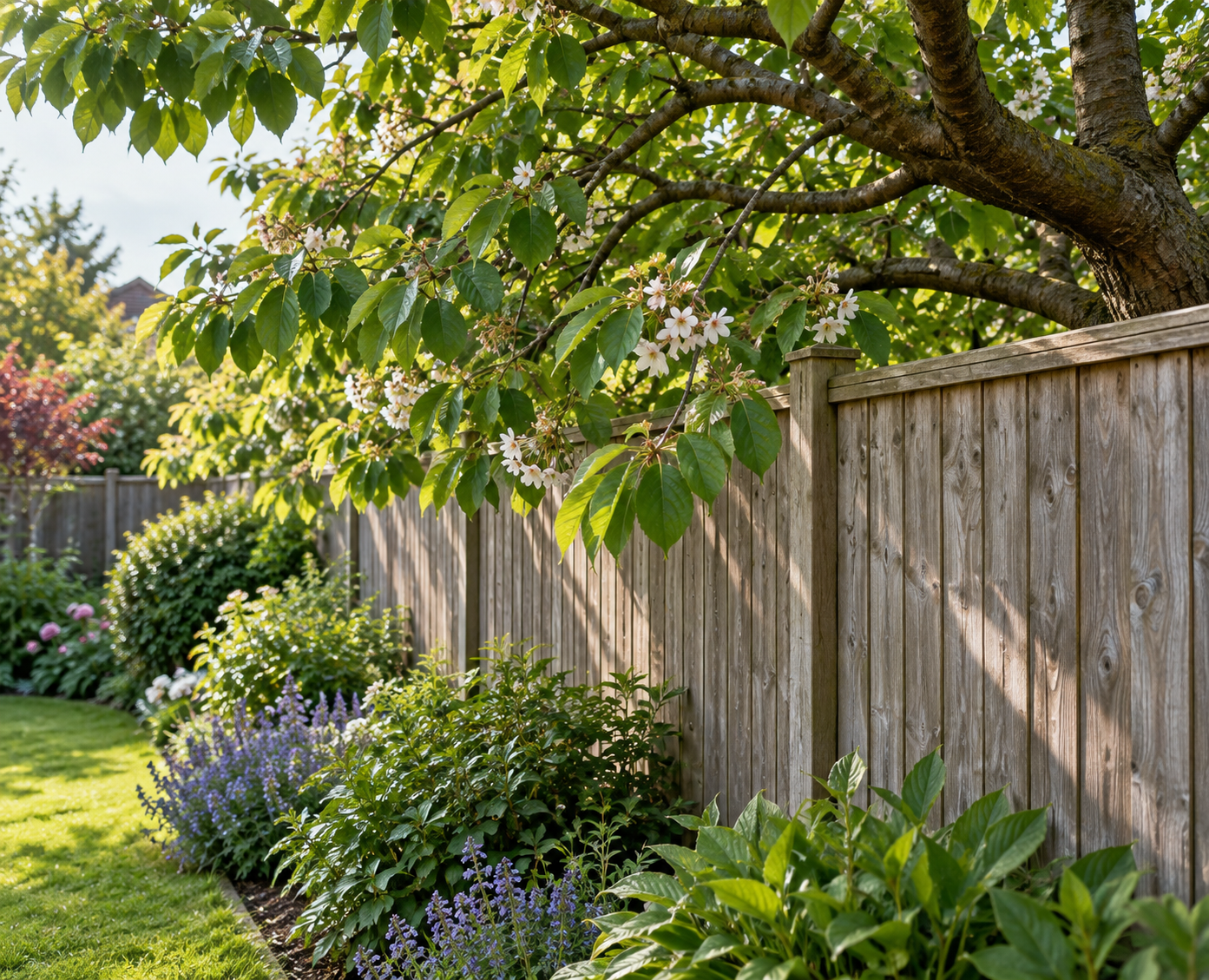
Having a branch overhead is not the same as having a legal right to cut it. The State Bar Foundation says trimming is allowed when the branches constitute a nuisance, and that the person doing the work must exercise due care.
Both parts matter.
A nuisance generally means something that unreasonably interferes with the use and enjoyment of your property. Whether a branch meets that standard depends on the facts.
A limb scraping your roof or dropping heavy debris onto your patio is a very different situation from a high twig that never touches anything.
This article cannot say whether your tree qualifies. There is no universal test that settles it from a photo or a description.
If you are unsure, that is a good reason to slow down and get advice.
Due care is the second condition. It means working in a way that a reasonable person would, without tearing bark, leaving ragged stubs, or cutting so much that the tree is hurt.
A tree that is damaged by sloppy work can turn your small problem into a bigger one.
So the right is best read as a limited way to address encroachment. It is not an unconditional license to remove any growth that you find inconvenient.
A neighbor’s tree that merely blocks a view or drops a few leaves does not automatically give you the right to cut.
Confirm the actual boundary before making a cut
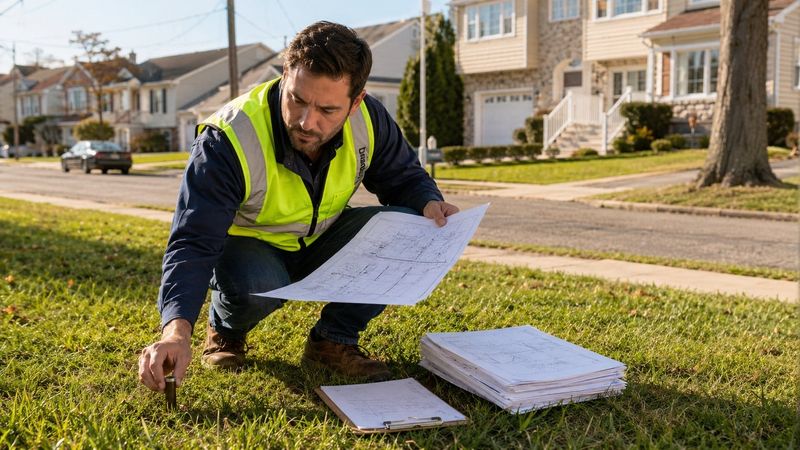
Fences wander, hedges grow where they please, and yards often look bigger or smaller than the deed says. None of those things is definitive proof of where your lot ends.
The visible edge of your yard may not be the legal line at all.
This matters because the recognized self-help limit is the property line. In D’Andrea, the right runs to the line and no further.
If you guess wrong and cut past it, you may be cutting a tree that is not yours to touch.
Start with your deed and any survey you received when you bought the home. Look for survey pins or markers at the corners of the lot.
If the records are unclear or the markers are missing, a licensed land surveyor can mark the line for you.
Once you know the line, picture it rising straight up from the ground. Only the part of the branch that crosses over into your airspace is on your side.
Any cut should be made at or inside that vertical line, and you should stay on your own land while doing it.
If you cannot tell where the line is, pause. A short delay costs far less than a dispute over a tree cut in the wrong place.
A conversation can prevent avoidable tree damage
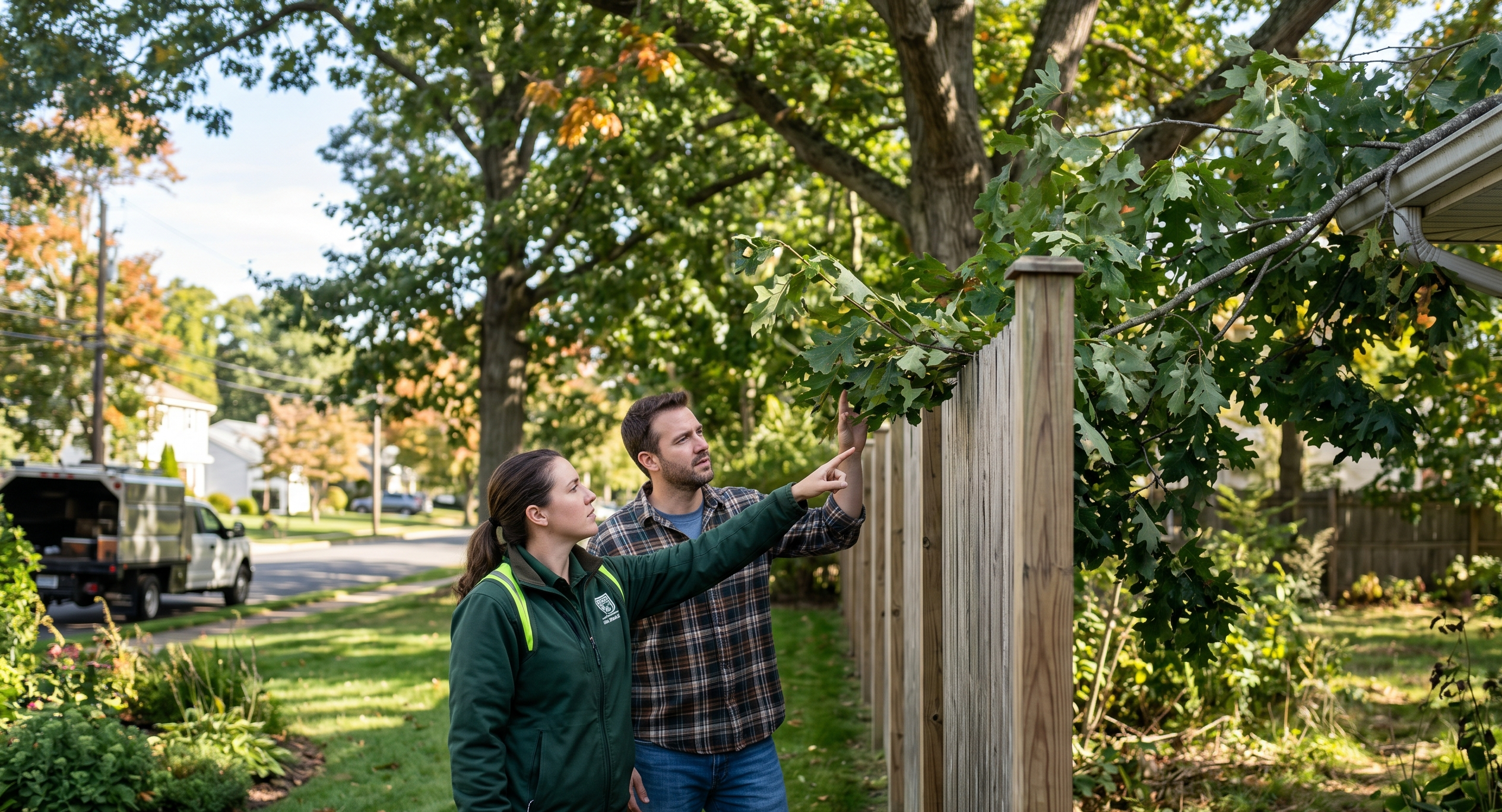
Before anything gets cut, talk to the person who owns the tree. The State Bar Foundation recommends trying to resolve the matter with the neighbor first.
Princeton’s municipal guidance gives similar advice, noting that improper trimming can harm a tree.
A friendly chat often solves more than a saw. Your neighbor may not even know the limb has grown over your yard.
They may be happy to have it handled, especially if it means the work is done properly.
Bring up specifics. You can discuss when the work should happen, how much will be taken off, and who will do it.
Some neighbors prefer to hire a tree company and split the cost, which can protect the tree and keep things friendly.
Jot down what you agreed on, even in a quick text message. A simple written record helps if memories differ later.
Keep in mind that a conversation does not widen your legal rights. Even with a neighbor’s blessing, you still need to confirm the boundary and check local rules.
And if the neighbor says no, the legal limit stays the same: the property line, with due care, for branches that qualify as a nuisance.
Local rules may change what work is allowed
New Jersey does not appear to have one statewide permit rule for pruning, so the answer can change from town to town. Check your municipality’s rules and the specifics of the tree itself before you cut.
A call or visit to the town clerk, construction office, or shade tree office is a good start.
Local examples show how much the rules can differ. Secaucus says a removal permit is not required for pruning that does not affect a tree’s viability.
Princeton, on the other hand, says its Shade Tree Commission does not handle disputes about private trees.
Those are only local examples. They are not statewide standards, and your town may say something different.
Do not assume that what one town allows applies to yours.
The tree’s status matters too. A tree on private land is treated differently from a street tree or a tree on public property.
Some trees may be protected by local ordinance or by conditions tied to a development approval, and pruning rules for those trees may differ.
Ask the town whether the tree is private, public, or protected, and whether any rules cover the kind of work you plan. Getting that answer first helps keep a simple trim from becoming a violation.
Power lines and substantial limbs call for professional help
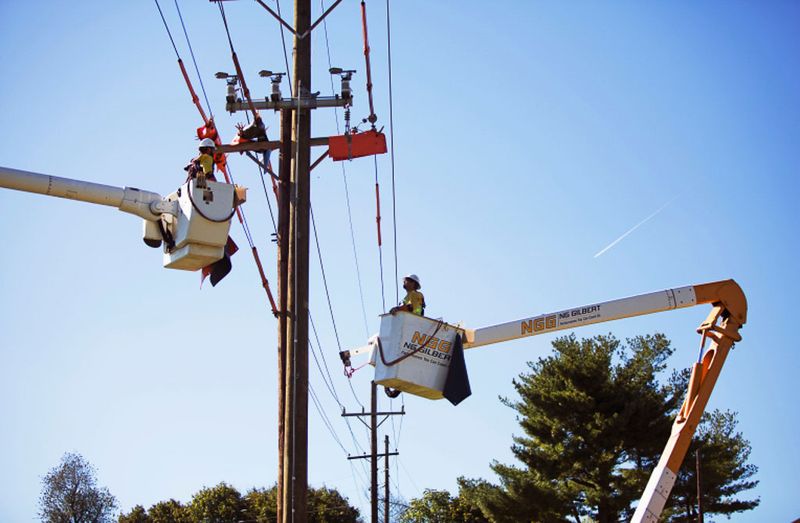
Safety comes before property rights. Never trim or climb a tree near power lines.
PSE&G warns against it and says to contact the utility if a tree needs trimming near a line.
Branches that look harmless can touch or lean on energized wires. Contact with a line can be deadly, and so can a limb that falls onto one.
Call the utility and let its crews decide how to handle it.
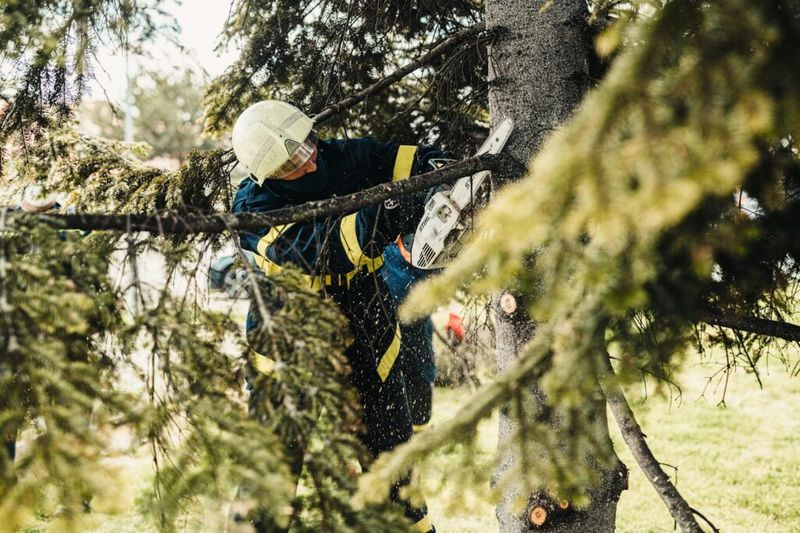
Tree work is dangerous in general. The New Jersey Department of Health warns about the hazards and recommends leaving storm-damaged tree work to licensed professionals.
Cracked, hanging, or tangled limbs can snap or spring without warning.
Substantial limbs and uncertain cuts also call for qualified help. If you are not sure where a cut should go, how heavy the limb is, or how it will fall, hire someone who does this for a living.
On the business side, the New Jersey Board of Tree Experts says businesses providing tree-care services for hire must register with the Board. They must also employ a licensed tree expert or tree-care operator, depending on the services offered.
Those requirements apply to businesses that offer tree care for hire. They do not mean every homeowner must hire a licensed professional for every small trim.
They do give you a way to check that the company you hire is properly set up.
Liability depends on what happened and how the tree was handled
Two different questions come up here. One is whether a tree owner can be responsible for harm caused by a tree.
The other is whether a neighbor who trims a tree can be responsible for damaging it.
On the first question, New Jersey cases show that the answer depends on the facts. Decisions such as Scannavino v.
Walsh and Ross v. Lowitz separate natural conditions from trees that an owner planted or affirmatively maintained.
Nuisance liability generally requires unreasonable conduct, negligence, recklessness, or another legally actionable basis. A tree owner is not automatically liable whenever a branch causes damage.
On the second question, the State Bar Foundation warns that careless trimming that damages the neighbor’s tree can lead to civil liability. That could mean paying for harm to the tree, such as the cost of repair or lost value.
The Foundation also says that knowingly or recklessly damaging the tree could have criminal consequences. The state’s criminal mischief statute has specific elements and grading rules.
That does not mean any damaging cut is a crime.
The practical lesson is that outcomes turn on details: what the tree is, who cared for it, how the cut was made, and what the person intended. If real damage or a real dispute is involved, a New Jersey attorney can look at your facts.
Keep the cut limited, careful, and on your side

Check the boundary first, then ask whether the branch is truly a nuisance. Use due care, check your town’s rules, and stop or call for help when the work looks unsafe or uncertain.
The rule from D’Andrea limits self-help. It is not blanket permission to hurt a neighbor’s tree.
A branch may cross the line, but your rights end where the line does.
Share this story