Get the latest garden guides in your inbox →
Gardening Latest
  • General Gardening
  • Lawn Care
  • Plant Care
  • Composting
  • Soil Health
  • Backyard
  • Garden Muse Magazine
  • General Gardening
  • Lawn Care
  • Plant Care
  • Composting
  • Soil Health
  • Backyard
  • Garden Muse Magazine
  • News
  • Gardening Calendar
  • Garden Structures
  • Vegetable Garden
  • Vertical Garden
  • Raised Beds
  • Hydroponics
  • General Equipment
  • Community Gardens
Garden Themes
  • Spiritual Garden
  • Hydroseeding
  • Seeding and Laying Sod
  • Artificial Grass
  • Lawn Care Equipment
  • Plants
  • Trees
  • Planting Tools
  • Composting Basics
  • Fertilizer
  • Alternative Growing Mediums
  • Front Yard
  • Backyard Activities
  • Landscaping
Gardening Latest

Explore by state

Which state is your garden in?

Currently viewing New Jersey

All states

Northeast

  • Connecticut —
  • Delaware 35
  • Maine —
  • Maryland 21
  • Massachusetts 37
  • New Hampshire —
  • New Jersey 21
  • New York 30
  • Pennsylvania 30
  • Rhode Island —
  • Vermont —

Southeast

  • Alabama 20
  • Arkansas —
  • Florida 21
  • Georgia 21
  • Kentucky 35
  • Louisiana 19
  • Mississippi —
  • North Carolina 19
  • South Carolina 34
  • Tennessee 17
  • Virginia 20
  • West Virginia —

Midwest

  • Illinois 19
  • Indiana 22
  • Iowa 34
  • Kansas —
  • Michigan 21
  • Minnesota 19
  • Missouri 19
  • Nebraska —
  • North Dakota —
  • Ohio 21
  • South Dakota —
  • Wisconsin 35

Southwest

  • Arizona 20
  • Colorado —
  • Nevada —
  • New Mexico —
  • Oklahoma —
  • Texas 19
  • Utah —

West

  • Alaska —
  • California 20
  • Hawaii —
  • Idaho —
  • Montana —
  • Oregon —
  • Washington —
  • Wyoming —

No state matches that search.

Site menu

Gardening Latest
  • General Gardening
    • News
    • Gardening Calendar
    • Garden Structures
    • Vegetable Garden
    • Vertical Garden
    • Raised Beds
    • Hydroponics
    • General Equipment
    • Community Gardens
    Garden Themes
    • Spiritual Garden
  • Lawn Care
    • Hydroseeding
    • Seeding and Laying Sod
    • Artificial Grass
    • Lawn Care Equipment
  • Plant Care
    • Plants
    • Trees
    • Planting Tools
  • Composting
    • Composting Basics
  • Soil Health
    • Fertilizer
    • Alternative Growing Mediums
  • Backyard
    • Front Yard
    • Backyard Activities
    • Landscaping
  • Garden Muse Magazine

Explore

  • About GardeningLatest.com
  • Contact Us

Get the latest from the garden

New guides on lawn care, plants and backyard projects, sent when they go up.

Subscribe →

Follow

  • Facebook
  • X
  • Pinterest
  • YouTube
New Jersey Gardening

Copperheads And Black Widows Hide In New Jersey Gardens, So Here’s How To Spot Them

Your tomato patch and woodpile might be hiding more than weeds. New Jersey is home to two critters that deserve real…

AR

By Angela Russo

November 26, 2026 · 5 min read

Copperheads And Black Widows Hide In New Jersey Gardens, So Here’s How To Spot Them
Copperheads And Black Widows Hide In New Jersey Gardens, So Here's How To Spot Them

Your tomato patch and woodpile might be hiding more than weeds. New Jersey is home to two critters that deserve real respect: the northern copperhead snake and the black widow spider.

Both like quiet, cluttered corners of yards and gardens, and both can deliver a painful bite. Learning what they look like and where they hide lets you keep gardening without fear.

At a glance

Where
New Jersey Gardening
Hardiness zone
7 0 to 10°F
Read
5 minutes
Published
November 26, 2026

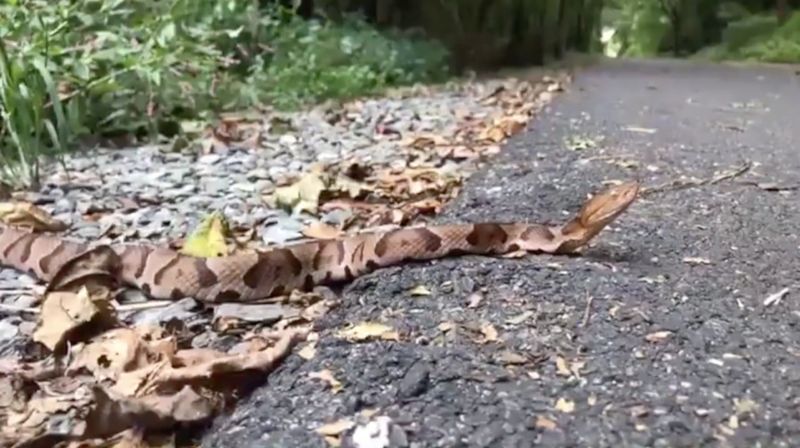
1. The Copperhead’s Hourglass Bands

The Copperhead's Hourglass Bands
© NJ.com

Picture a pile of fallen oak leaves, then picture a snake that looks exactly like it. That is the copperhead’s whole trick.

Its body is a pinkish tan to coppery brown, crossed by darker bands shaped like hourglasses or Hershey’s Kisses.

Look at the bands from the side. They are wide near the belly and narrow across the spine, which is the opposite of most harmless look-alikes.

Adults usually stretch 2 to 3 feet long, with a thick body for their size.

The head is another clue. It is coppery, smooth, and shaped like a wide triangle, sitting on a narrower neck.

Copperheads also have cat-like vertical pupils, though you should never get close enough to check.

2. Where Copperheads Hang Out in Jersey
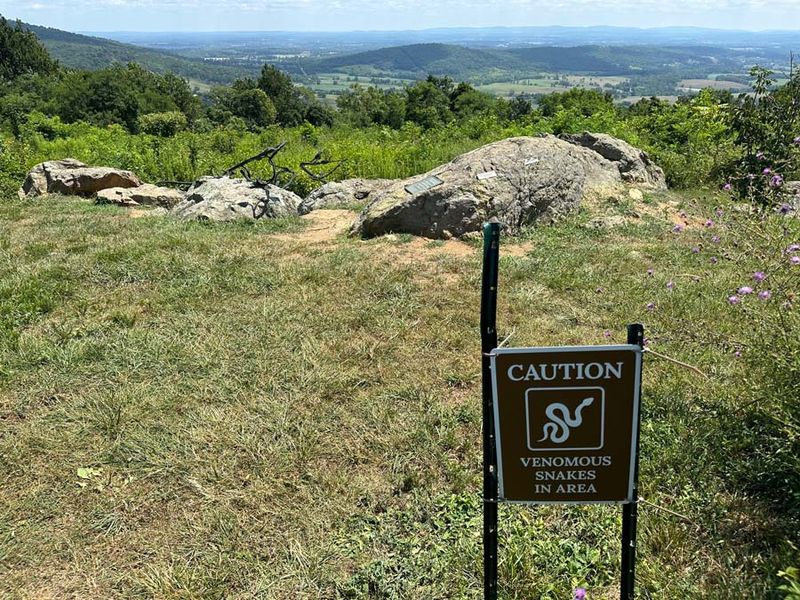
Where Copperheads Hang Out in Jersey
© The Piedmont Environmental Council

Copperheads are not found everywhere in the Garden State. They mostly live in the northern and central hills, such as the Highlands, the Watchung Mountains, and rocky ridges near the Palisades.

If you garden near wooded slopes or rock outcrops in those areas, stay alert.

In a yard, they love spots that are shady, rocky, and messy. Stone walls, firewood stacks, thick mulch, and piles of old boards make perfect hideouts.

They also follow mice, so a rodent problem can draw them in.

Summer evenings are their busiest time. On hot days, they rest in cool cover and hunt after dark.

3. Bright Yellow Tail Tips on Baby Copperheads
Bright Yellow Tail Tips on Baby Copperheads
© Reddit

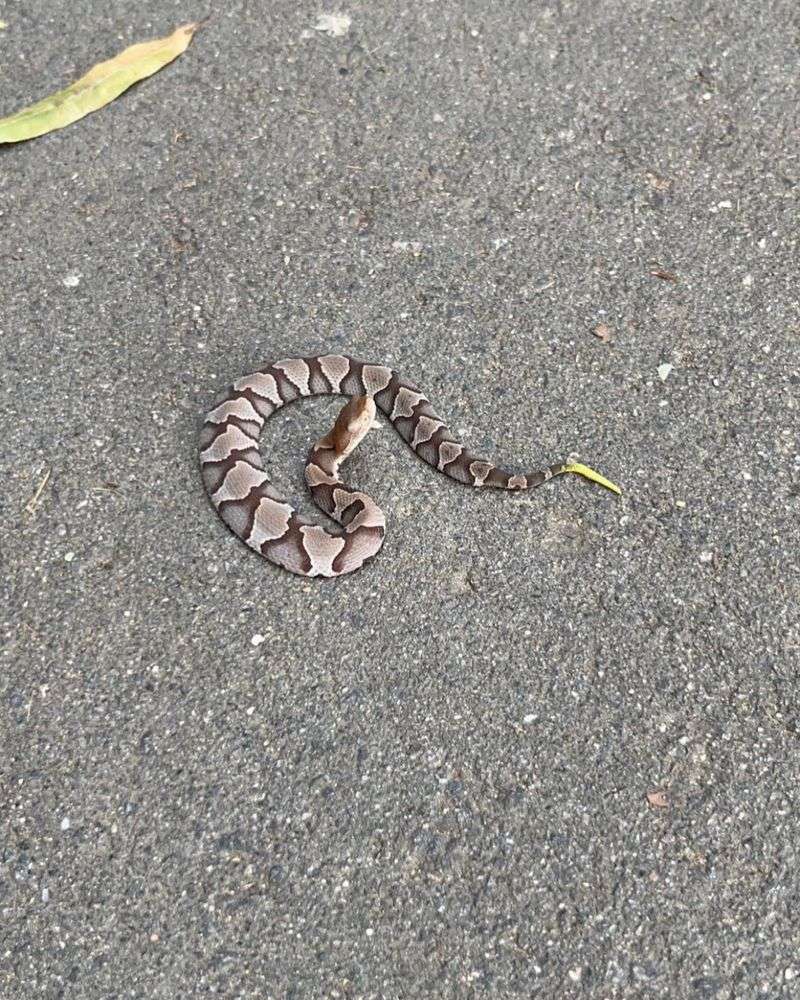
Here’s a weird one: baby copperheads come with a built-in fishing lure. Young snakes have a bright yellow or greenish tail tip.

They wiggle it to trick frogs and lizards into coming closer.

Glossy, round, and inky black, a female black widow looks almost like a polished bead.

Babies are born alive in late summer and early fall, usually August through September. They are about 8 inches long and already have venom from day one.

Kids poking through mulch or leaf litter at that time of year should wear gloves and use a rake.

The yellow tip fades as the snake grows. So if you spot a small, banded snake with a glowing tail, give it plenty of space.

4. Copperhead Look-Alikes to Know

Copperhead Look-Alikes to Know
© Florida Today

Plenty of harmless snakes get mistaken for copperheads every summer. The eastern milksnake and the northern water snake are the most common mix-ups in New Jersey.

Knowing the difference can save a helpful snake’s life.

Milksnakes have blotches, not hourglasses, and their blotches are wide across the back. Water snakes have bands that are wide on top and narrow on the sides, which is the reverse of a copperhead.

When in doubt, treat any snake as off-limits. Most bites happen when people try to kill or grab a snake, so simply walking away is your safest move.

5. The Black Widow’s Red Hourglass
The Black Widow's Red Hourglass
© Reddit

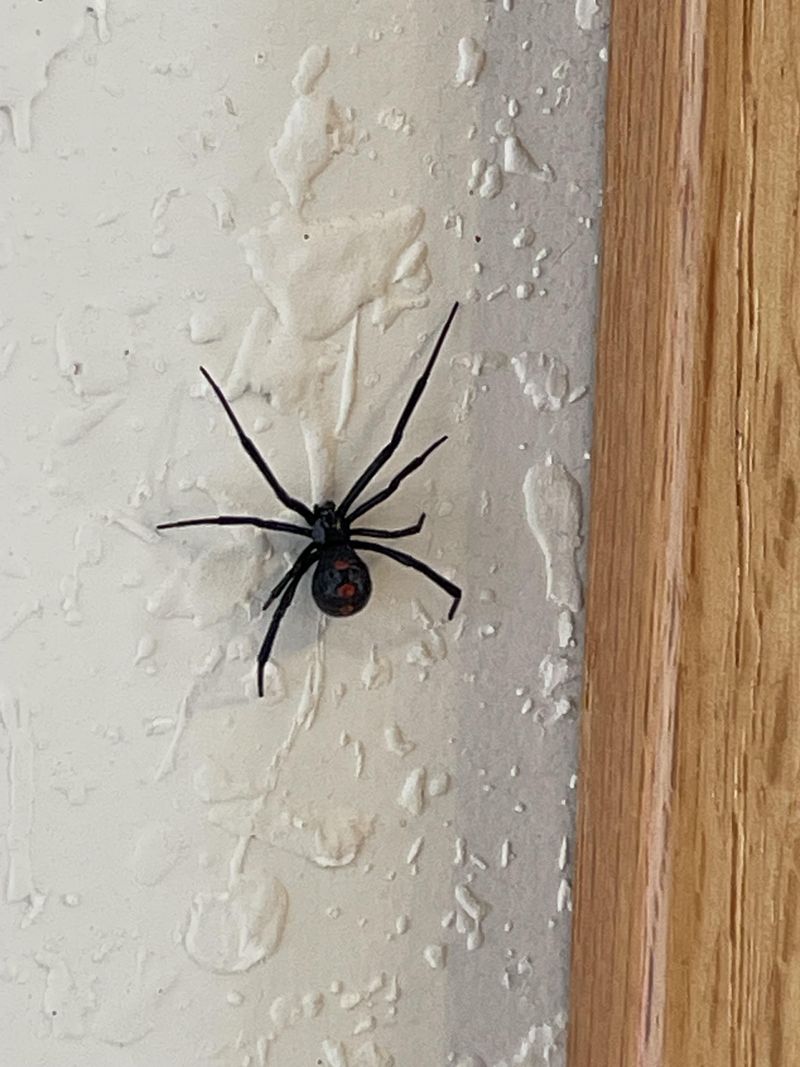
Glossy, round, and inky black, a female black widow looks almost like a polished bead. Flip her over and you’ll see her famous red hourglass on the belly.

In New Jersey, the northern black widow often has a split hourglass, looking like two separate red triangles.

Some also have a row of red spots along the top of the abdomen. The body is about half an inch long, with long shiny legs.

Males are much smaller and paler, with less color. They are rarely a danger to people.

6. Messy Webs in Dark Corners
Messy Webs in Dark Corners
© Pest Pros San Diego

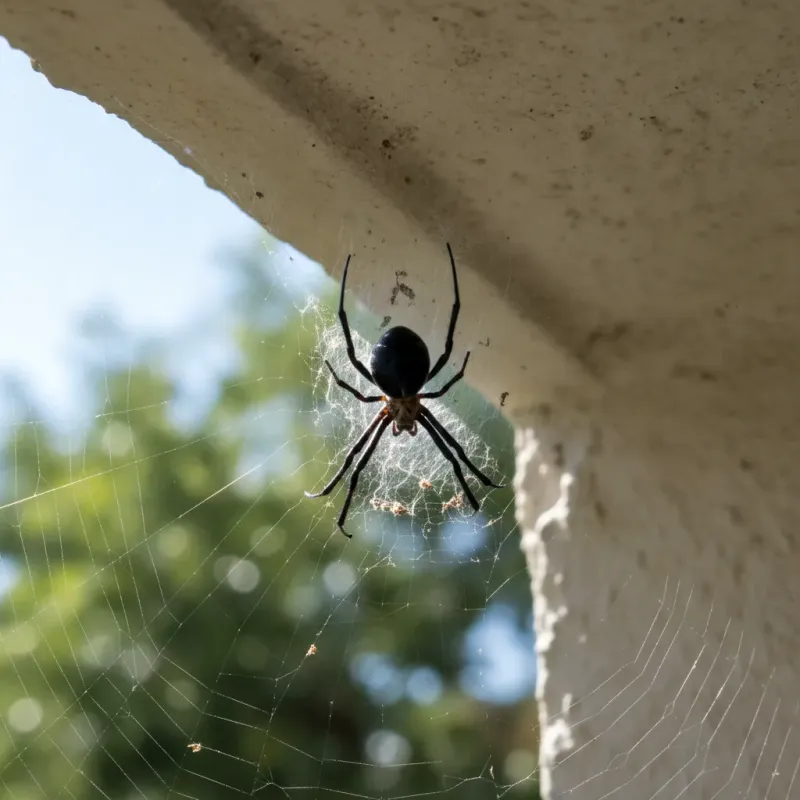
Forget the neat spiral webs from cartoons. Black widows build tangled, messy cobwebs that look like a jumble of strong silk threads.

The silk is tough enough that you can feel it snag on a stick.

They pick dark, quiet places low to the ground. Check under flower pots, inside garden gloves left outside, under deck boards, in meter boxes, and around woodpiles.

Fun fact: black widow silk is so strong that it was once used for crosshairs in gun sights. That toughness is a good hint you’ve found a widow web.

7. Egg Sacs and Spider Season
Egg Sacs and Spider Season
© blazepestcontrol

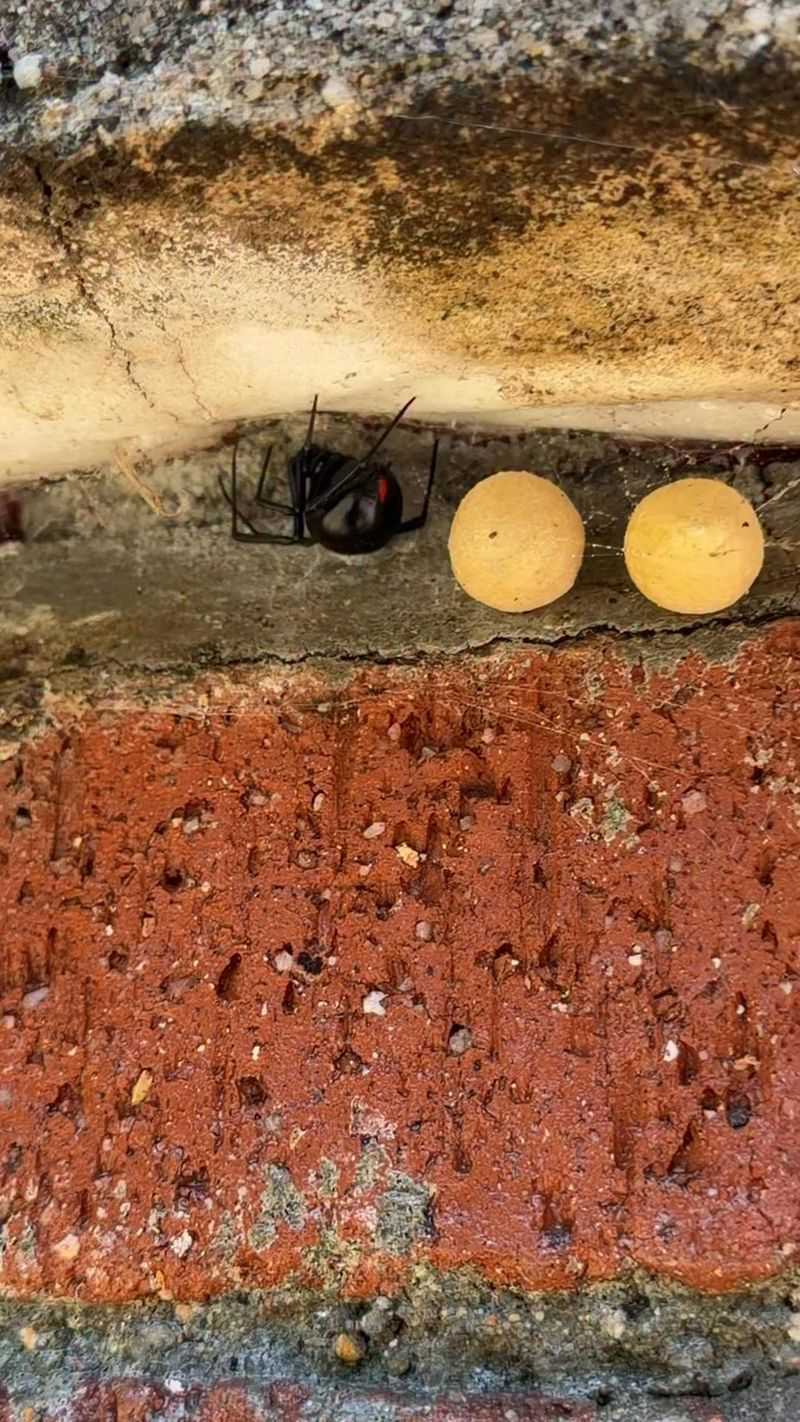
Ever spotted a little tan ball stuck in a cobweb? It might be a black widow egg sac.

These are papery, round or pear-shaped, and about the size of a pea.

One sac can hold hundreds of eggs. Females guard them closely, which is when they are most likely to bite.

Late spring through early fall is peak season.

If you find sacs, wear thick gloves and remove them with a stick into a sealed bag. Clearing clutter helps keep new spiders from moving in.

8. Smart Habits to Stay Safe
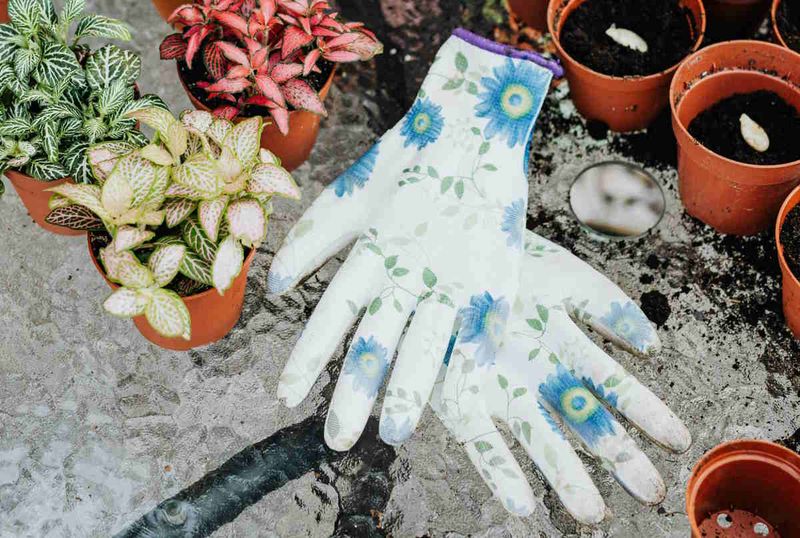
Smart Habits to Stay Safe
© Small Indoor Plants

A few simple habits make your garden far less inviting to both critters. Wear thick gloves and closed shoes when moving rocks, wood, or pots.

Shake out gloves and boots stored outdoors.

Keep grass short and stack firewood off the ground and away from the house. Seal gaps under sheds and decks, and control mice so snakes have less to hunt.

If you are bitten by either, stay calm and call 911 or Poison Control at 1-800-222-1222. Bites are rarely deadly, but quick medical care matters.

Share this story
AR

Written by

Angela Russo

More from Angela Russo →

About Gardening Latest

Gardening Latest provides in-depth guides to maintaining and enhancing your garden and backyard. Learn how to make the most of the space you have and create a beautiful garden.

More about us →

Latest stories

  • Delaware GardeningThat Green Caterpillar With a Brown Saddle Stings Hard in Delaware Gardens, and Here’s What to Do First

    That Green Caterpillar With a Brown Saddle Stings Hard in Delaware Gardens, and Here’s What to Do First

    3 min ago
  • South Carolina GardeningBlack Vultures Roosting on Your South Carolina Roof This Winter Are Tearing Up More Than Shingles

    Black Vultures Roosting on Your South Carolina Roof This Winter Are Tearing Up More Than Shingles

    11 min ago
  • Kentucky GardeningWhy Kentucky Deer Are Rubbing the Bark Off Your Young Trees, and How to Stop the Damage Before Spring

    Why Kentucky Deer Are Rubbing the Bark Off Your Young Trees, and How to Stop the Damage Before Spring

    17 min ago
  • Florida GardeningFlorida Is Full of Harmless Critters That Look Venomous, and These 7 Send People Running

    Florida Is Full of Harmless Critters That Look Venomous, and These 7 Send People Running

    23 min ago
  • Maryland GardeningThere’s an Invasive Tree Moving Through Maryland Neighborhoods, and Hand-Pulling Can’t Keep Pace

    There’s an Invasive Tree Moving Through Maryland Neighborhoods, and Hand-Pulling Can’t Keep Pace

    30 min ago

Gardening by state

Stories for your state, and the hardiness zone most of it gardens in.

Keep exploring

Read next

All New Jersey Gardening →
New Jersey GardeningBefore Winter Hits, New Jersey’s Venomous Yard Critters Make Themselves Known In Late Fall
New Jersey Gardening

Before Winter Hits, New Jersey’s Venomous Yard Critters Make Themselves Known In Late Fall

49 min ago
New Jersey GardeningA Giant Flower Stalk on Your New Jersey Yucca Isn’t a Problem, but Here’s Why It Happens and Whether to Cut It
New Jersey Gardening

A Giant Flower Stalk on Your New Jersey Yucca Isn’t a Problem, but Here’s Why It Happens and Whether to Cut It

18 hr ago
New Jersey GardeningYour Neighbor’s Tree Just Came Down on Your New Jersey Property, and This Is Who Actually Pays
New Jersey Gardening

Your Neighbor’s Tree Just Came Down on Your New Jersey Property, and This Is Who Actually Pays

21 hr ago

More from New Jersey Gardening

  • Hearing Coyotes Howl Near Your New Jersey Home at Night? Here’s What They’re Actually Saying

    Nov 24
  • New Jersey Folks Eating Celery Every Day Are Learning What It Really Does To Their Bodies

    Nov 24
Back to top

Leave a response Cancel

Your email address stays private. Required fields are marked with an asterisk.

Gardening Latest

In-depth guides to maintaining and enhancing your garden and backyard: how to make the most of the space you have, and how to make it beautiful.

  • Facebook
  • X
  • Pinterest
  • YouTube

We may earn a portion of sales from products or services that are purchased through our site as part of our affiliate partnerships with retailers.

Explore

  • About GardeningLatest.com
  • Contact Us
  • Terms and Conditions
  • Privacy
  • Editorial Note:
  • FTC Disclosure

Newsletter

New garden guides and seasonal tips, straight to your inbox.

We’ll email you a link to confirm. Unsubscribe any time.

Almost there! Check your inbox and tap the link to confirm.

© 2026 Gardening Latest. All rights reserved.

Back to top