Your backyard in Missouri might feel safe and ordinary, but a few venomous neighbors could be living under the woodpile or behind the shed. Most of them want nothing to do with you, yet knowing who they are can keep your family and pets out of trouble.
Some look a lot like harmless critters, which is exactly why learning the differences matters. Here are ten creatures worth recognizing, plus the clues that set each one apart.
1. Copperhead
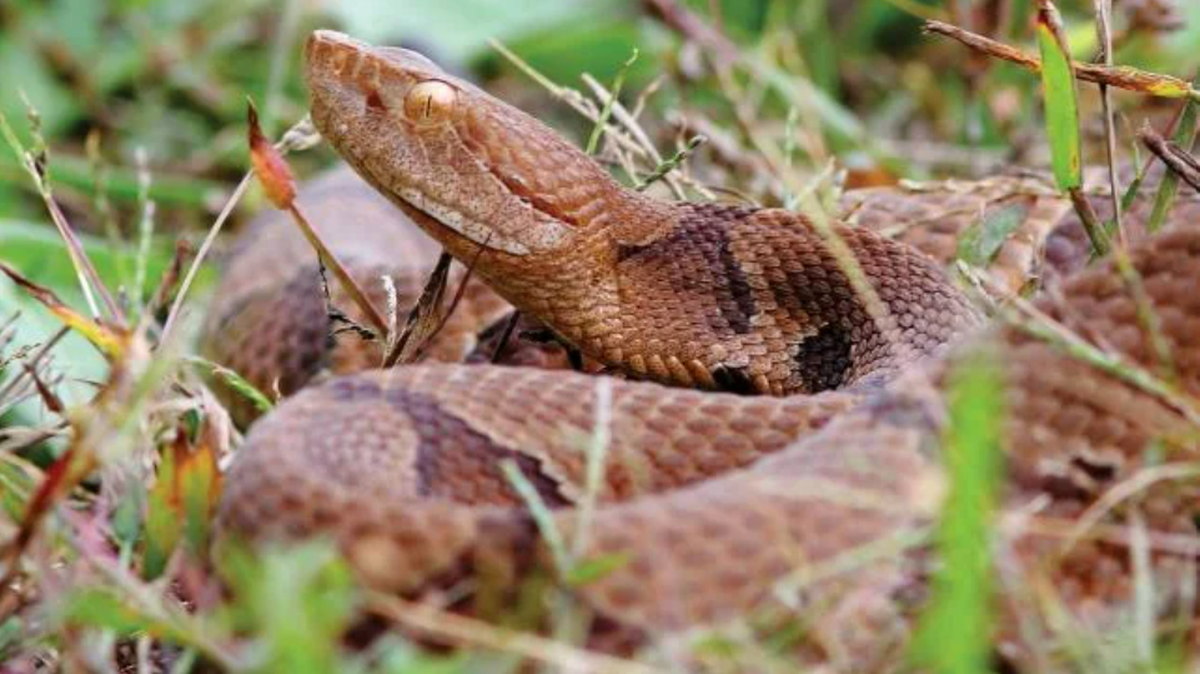
Ask any Missouri snake expert which venomous species people meet most, and the answer is almost always the copperhead. It blends into leaf litter so well that folks often step right next to one without noticing.
Luckily, its bite is rarely deadly, though it still hurts plenty and needs a doctor.
The best clue is the pattern. Look for dark, chocolate-colored bands shaped like an hourglass, wide on the sides and narrow across the back.
The head is a plain coppery color with no markings, and young ones have a bright yellow tail tip they wiggle to lure frogs.
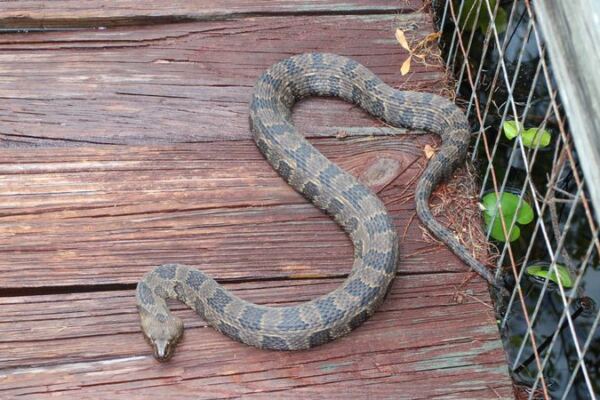
Harmless water snakes and young rat snakes get mistaken for copperheads all the time. Those snakes have blotches that are wider on the back, the opposite of the hourglass.
Keep piles of boards and brush away from the house, and copperheads will have fewer places to hide.
2. Timber Rattlesnake

Big, heavy, and calm, the timber rattlesnake is the largest venomous snake in Missouri, sometimes stretching past four feet. Homes near wooded hills in the Ozarks are most likely to see one.
Most of the time it simply sits still and hopes you walk on by.
Spotting it is fairly easy once you know the marks. Dark, zigzag bands called chevrons run across a yellowish, gray, or tan body.
The tail is solid black and ends in a rattle, which is the giveaway that sets it apart from every other snake on this list except the massasauga.
Here’s a fun bit of history: a timber rattlesnake appeared on early American flags with the words “Don’t Tread On Me.” That motto is good advice today. Back away slowly and give it room.
3. Western Cottonmouth
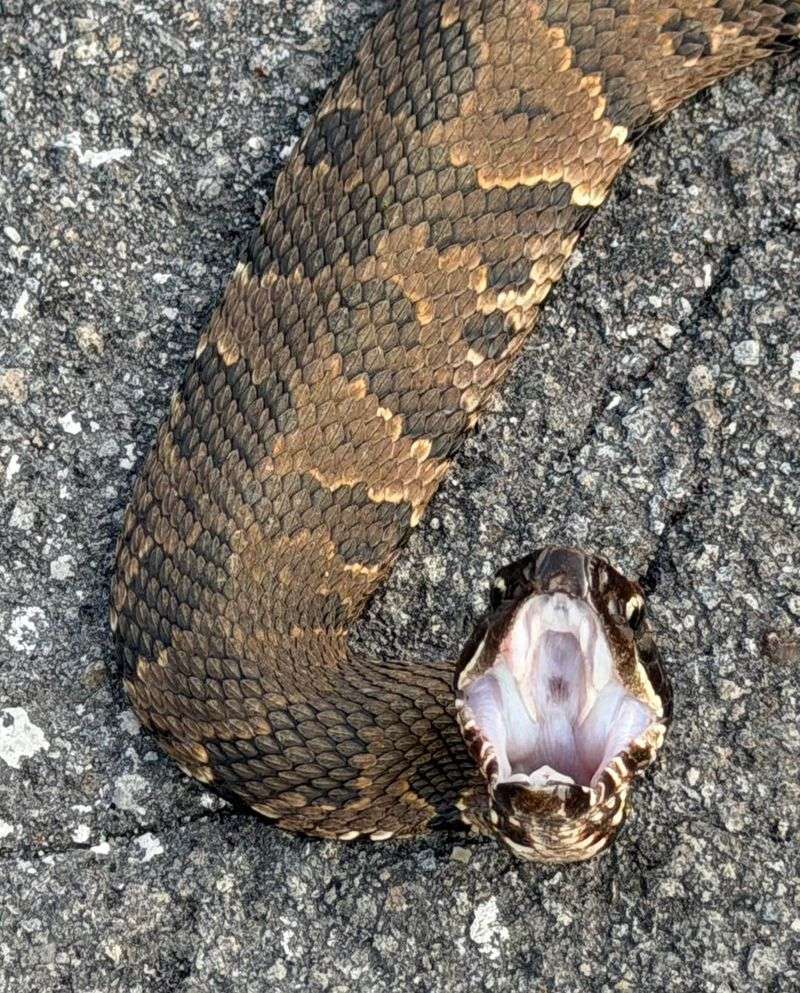
Picture a thick, dark snake floating high on a pond, its whole body riding on top of the water. That buoyant swim is a classic cottonmouth move.
In Missouri, they mostly live in the southern half of the state, near swamps, creeks, and farm ponds.
When threatened, a cottonmouth opens its mouth wide to flash a bright white lining, which is how it got its name. Adults are often dark olive or nearly black with faint bands.
Look for a dark stripe running through the eye and a chunky, heavy body.
Plenty of harmless northern water snakes get blamed for being cottonmouths. Water snakes usually dive and swim away, while cottonmouths hold their ground.
If your yard backs up to water, scan the bank before reaching down.
4. Eastern Massasauga
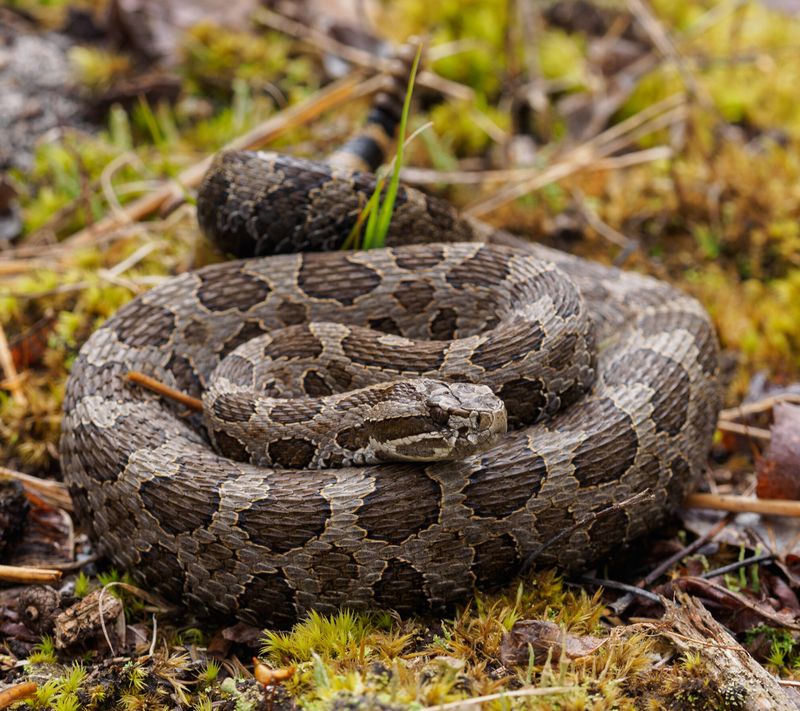
Few Missourians will ever see this one. The eastern massasauga is a small, rare rattlesnake found mainly in wet prairies and marshes in the northern part of the state.
It’s protected, so if you spot one, consider yourself lucky and leave it alone.
Unlike the timber rattler, it has round, dark blotches on a gray body instead of zigzag bands. Its rattle is tiny and sounds a bit like a buzzing insect.
On top of its head are nine large scales, a detail only experts usually check.
Its name comes from an Ojibwe word meaning “great river mouth,” a nod to the soggy places it loves.
5. Pygmy Rattlesnake
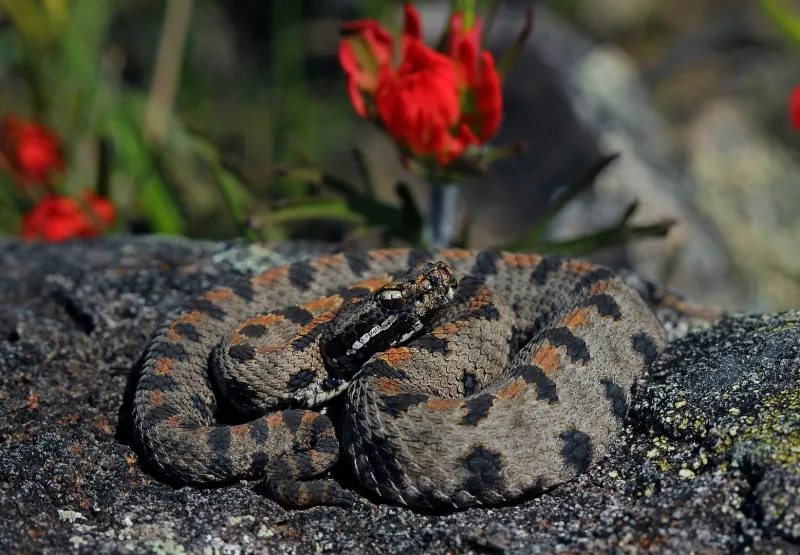
Small enough to curl up on your palm, the western pygmy rattlesnake surprises people every time. Adults rarely top 18 inches.
You’ll find them on rocky glades and dry hillsides in southern Missouri.
Its rattle is so small that it sounds like a soft hiss, so don’t count on hearing a warning. Look instead for a thin orange or reddish stripe down the middle of the back, with dark spots along a gray body.
Bites are painful but seldom serious for adults. Still, wear gloves when moving rocks in your garden, because these little guys love tucking themselves into tight spots.
6. Brown Recluse Spider
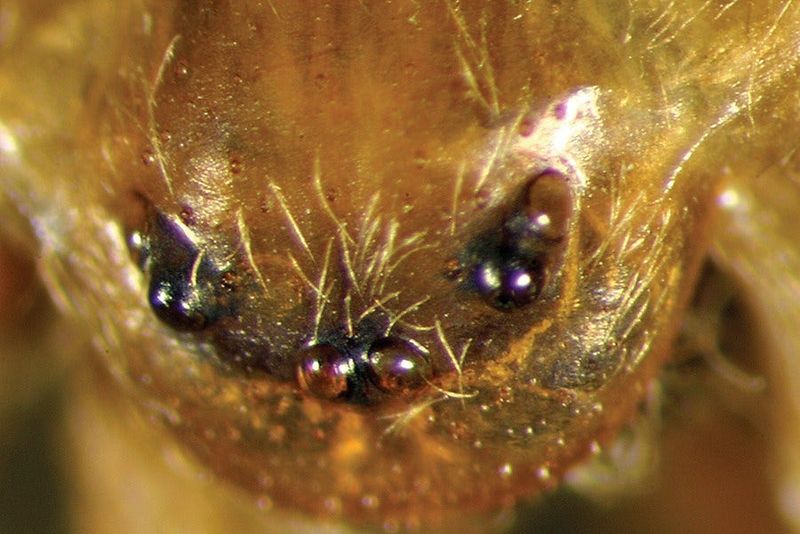
Missouri sits right in the heart of brown recluse country. These shy spiders hide in garages, closets, and stacks of cardboard more than in open yards.
One house can have dozens without anyone noticing.
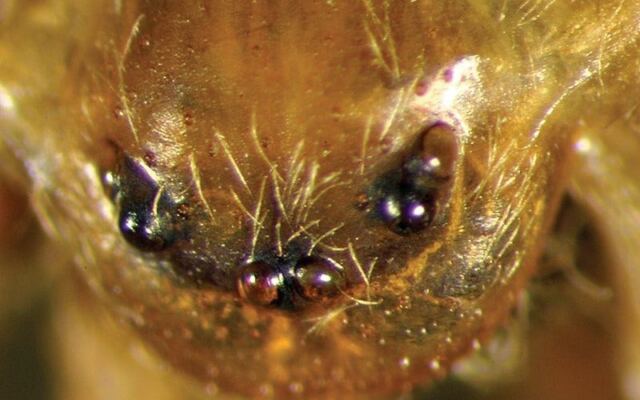
Check for a dark, violin-shaped mark on the front body, with the neck of the violin pointing toward the rear. The biggest clue is the eyes: recluses have six eyes in three pairs, while most spiders have eight.
Their legs are long, thin, and evenly tan, without stripes or bands.
Bites can cause a slow-healing wound in some people. Shake out shoes and gloves stored in the garage, and seal cracks around doors to keep them out.
7. Black Widow Spider
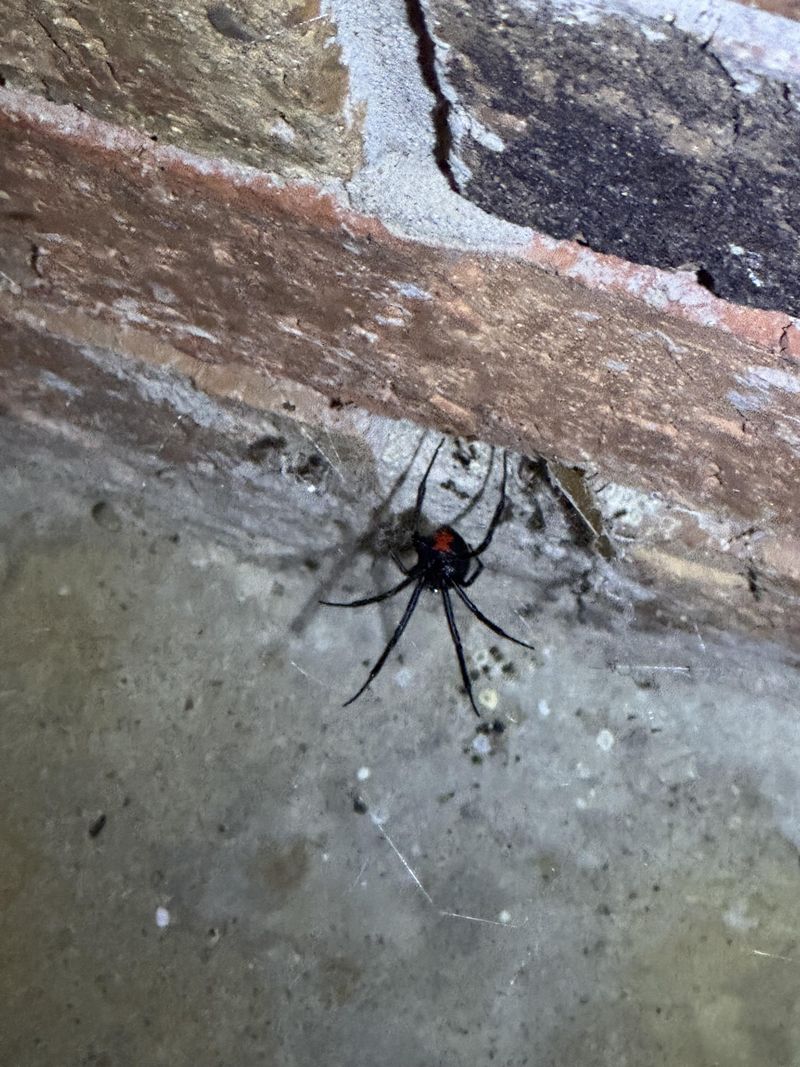
Shiny as patent leather, the female black widow is hard to forget. She builds messy, tangled webs in dark corners like under decks, in water meter boxes, and inside old flowerpots.
Flip-side identification is key. The famous red hourglass sits on her belly, so you often see it when she hangs upside down in her web.
Males and young spiders are smaller and brownish with stripes, and they rarely bite.
Her venom is strong but she is not aggressive. Most bites happen when someone pokes a hand into a hidden spot.
Gloves while gardening go a long way.
8. Striped Bark Scorpion
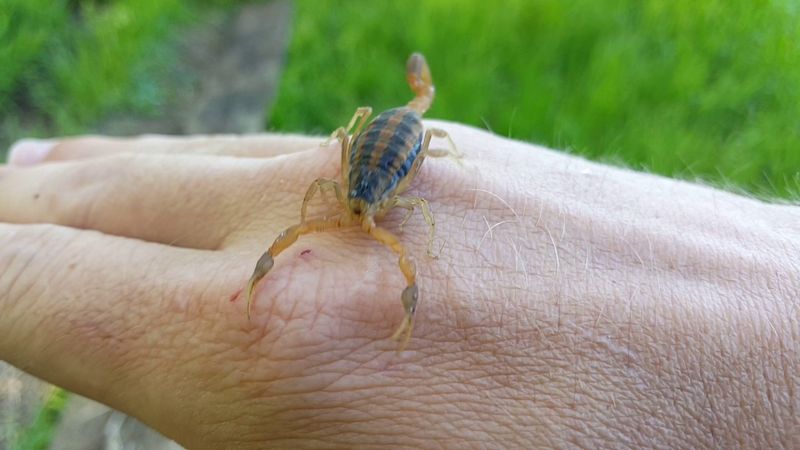
Yes, Missouri has scorpions! The striped bark scorpion lives on rocky glades in the southern part of the state, and it sometimes wanders into homes.
It’s only about two inches long and tan or yellowish.
Two dark stripes running down its back are the easy way to know it. Shine a blacklight outside at night and you’ll get a spooky surprise: scorpions glow blue-green under ultraviolet light.
A sting feels like a strong bee sting for most people. Keep firewood off the ground and away from the house to cut down on hiding places.
9. Southern Flannel Moth Caterpillar
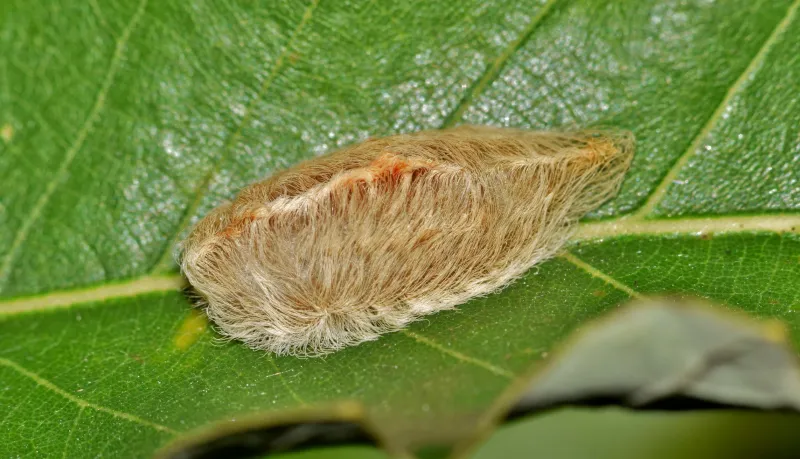
It looks like a tiny toupee crawling on a leaf, and kids naturally want to pet it. Don’t!
The southern flannel moth caterpillar, often called the puss caterpillar, hides venomous spines under that soft-looking fur.
You’ll spot it on oak, elm, and maple trees in late summer. It’s teardrop-shaped, about an inch long, and covered in tan, gray, or orange hair.
A sting can cause burning pain, swelling, and even nausea.
Teach children a simple rule: fuzzy caterpillars are for looking, not touching. If someone gets stung, pressing tape on the spot can pull out broken spines.
10. Saddleback Caterpillar
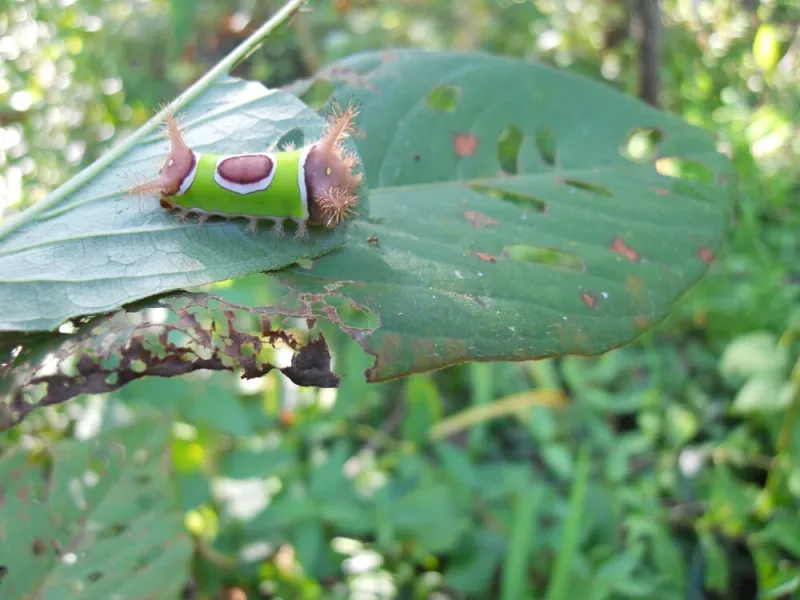
Bright green with a brown spot in the middle, the saddleback caterpillar looks like it’s wearing a tiny saddle blanket. That cute outfit is a warning sign.
Fleshy horns at each end are loaded with stinging spines.
Gardeners often brush against them while pulling weeds or picking vegetables, since they feed on many plants, including corn and roses. The sting feels sharp and can leave a red, itchy rash for days.
Unlike the fuzzy puss caterpillar, this one is easy to see once you know what you’re hunting for. Bold colors in nature usually mean “back off,” and the saddleback proves the rule.
Wear long sleeves in the garden and you’ll stay safe.
Share this story