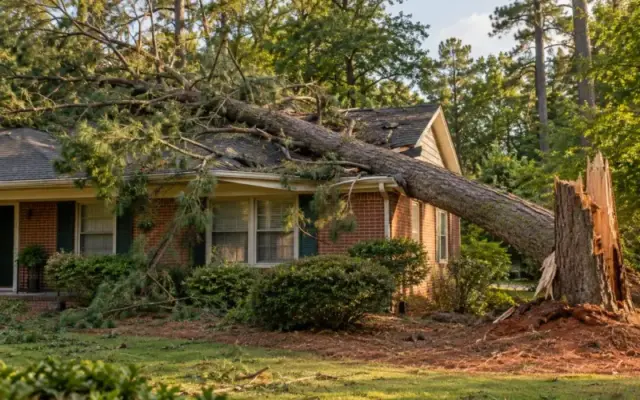
When a neighbor’s tree crashes into your Georgia yard, the person who pays is often not the person whose yard it came from. In many cases, the owner of the land where the tree lands handles the mess, and that surprises a lot of people.
Still, a neighbor can be on the hook if they knew, or should have known, the tree was dangerous. Here is how cleanup, blame, and insurance fit together so you know what to do next.
The property where the tree lands usually handles debris
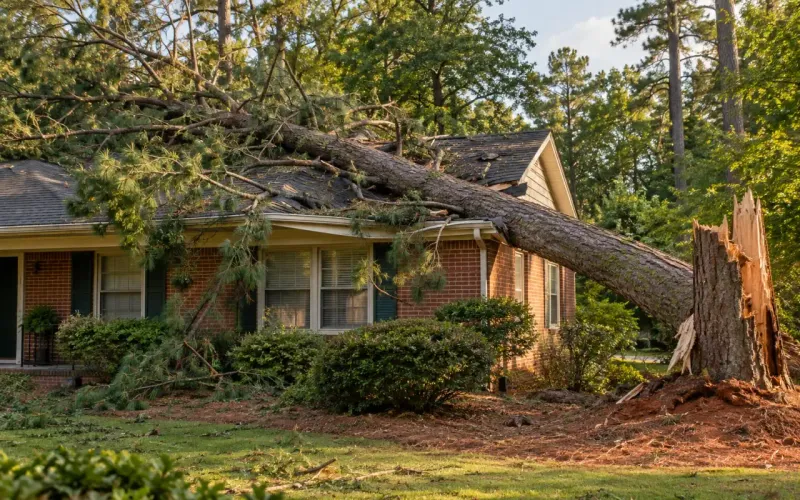
Georgia’s Attorney General says the owner of the property where a tree lands is generally responsible for hauling away the tree and handling damage on that property. You can read that baseline in the state’s consumer guidance on a neighbor’s fallen tree.
In plain terms, if the trunk and limbs are sitting in your yard, the practical job of dealing with them usually falls to you.
That is a starting point, not an absolute rule. The same guidance points to an exception when the neighbor should reasonably have known the tree was dead, diseased, or dangerous.
So where the tree came from does not automatically settle who ends up paying.
It helps to treat three questions as separate. First, who handles the debris on the land where it fell.
Second, who may be legally liable for any damage the tree caused. Third, whether an insurance policy covers the loss.
Answering one of these does not answer the others.
For example, you might end up arranging the cleanup of a neighbor’s tree and still have a possible claim against that neighbor if evidence shows a known hazard. On the other hand, a healthy tree knocked down by strong winds may leave no one legally at fault, even though the debris still needs to go somewhere.
University of Georgia Extension describes tree responsibility in similar fact-dependent terms.
Before you pick up a saw or hire a crew, take photos and think about safety. The next sections cover ownership, liability, insurance, and what not to touch.
Tree ownership generally follows the trunk
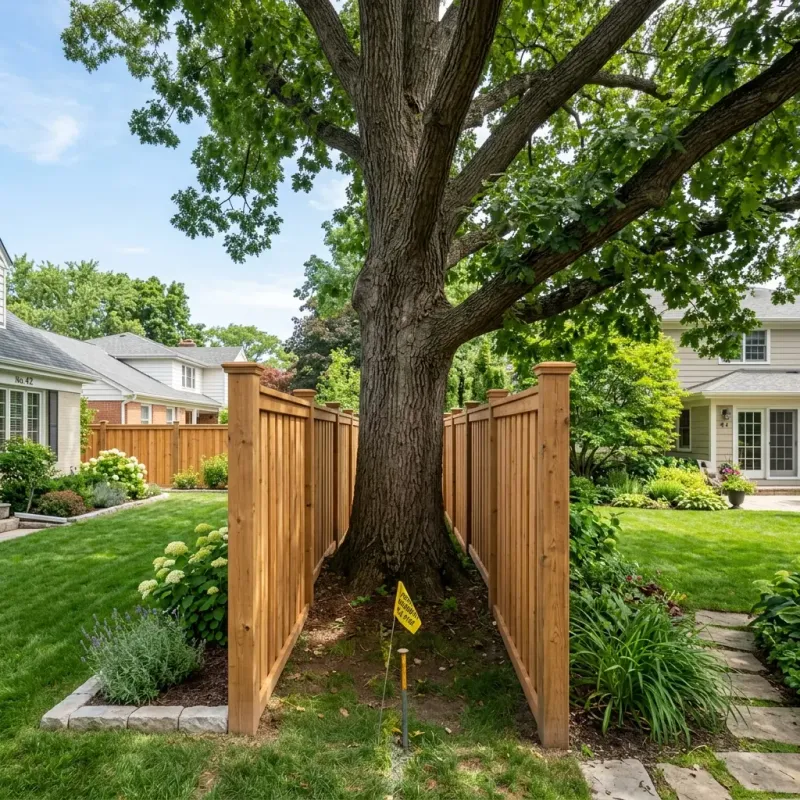
Figuring out who owns a tree is usually simpler than people expect. UGA Extension explains that ownership generally follows the location of the trunk.
If the trunk stands on your neighbor’s land, the tree is generally theirs, even when branches stretch over your roof.
A trunk sitting right on the property line may mean the tree is jointly owned. In that case, both neighbors may share certain responsibilities for it.
That can get complicated, so it is smart to understand where the line actually runs.
If you and your neighbor disagree about where the trunk sits, a survey may help establish the boundary. A licensed surveyor can mark the line so you are not guessing based on a fence, which may not follow the true property line.
Having that answer in hand makes later conversations with a neighbor or an insurer much easier.
Keep one point in mind. The canopy and the tree’s origin alone should not decide the question, and naming the owner does not by itself decide who pays for storm damage.
A tree owner is not automatically liable just because the tree was theirs. Liability turns on other facts, which the next section covers.
A known danger can change the liability question
A neighbor may be liable if they knew, or reasonably should have known, that a tree was dangerous before it fell. That is a negligence question, and it depends on evidence.
Georgia’s consumer guidance points to this exception when a tree was dead, diseased, or otherwise dangerous. There is no simple statute that makes one side pay in every case.
Two Georgia cases show how much the facts matter. In Cornett v.
Agee, the tree had visible rot, leaned toward the neighboring yard, and the owner had received prior notice. Those facts pointed toward knowledge of a danger.
In Wade v. Howard, the court found that a lean alone did not establish notice of danger in that case.
So a leaning tree does not automatically make its owner liable. Visible decay, dead limbs, earlier warnings, and similar signs carry more weight.
A storm also does not automatically settle the question. Saying a storm caused the fall does not erase the issue of whether the owner ignored an obvious hazard.
At the same time, strong winds can topple a healthy tree with no fault on anyone’s part.
Georgia does not have a general fixed schedule requiring owners to inspect trees, according to UGA Extension. That does not rule out liability for a hazard that was known or easy to see.
If you suspect this applies, keep old photos, letters, texts, or emails that show earlier warnings, and consider talking with an attorney.
Your insurer may handle a covered claim first
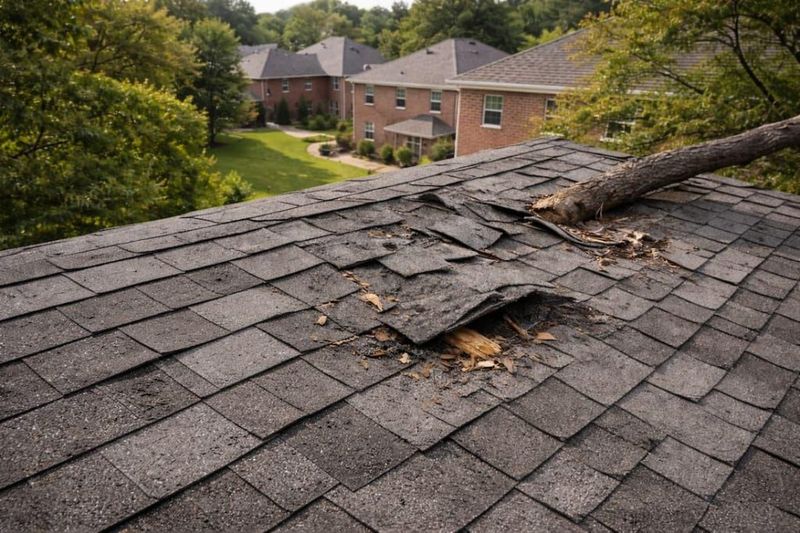
Who may be liable and how an insurance claim moves forward are two different matters. You can generally contact your own insurer about covered storm damage without first proving your neighbor did anything wrong.
If the evidence later supports the neighbor’s liability, your insurer may pursue the neighbor’s insurer to recover costs.
Coverage depends on your policy and the facts. The Insurance Information Institute explains in its guide to tree damage and homeowners coverage that typical policies respond to damage to a home or another insured structure.
Debris removal may not be covered when no insured structure was hit.
So the details matter. A tree that crushed part of your roof or garage is a different situation from one that simply landed on your lawn.
Blocked access, such as a trunk across your driveway, can also change how a claim is handled.
Do not assume that debris removal will be covered, and do not assume it will be denied. Read your policy, ask your insurer direct questions, and get answers in writing when you can.
Remember, an insurer paying a claim does not prove who was legally at fault, and a denied claim does not prove your neighbor is responsible. Each question follows its own rules.
Document the damage and contact your insurer promptly
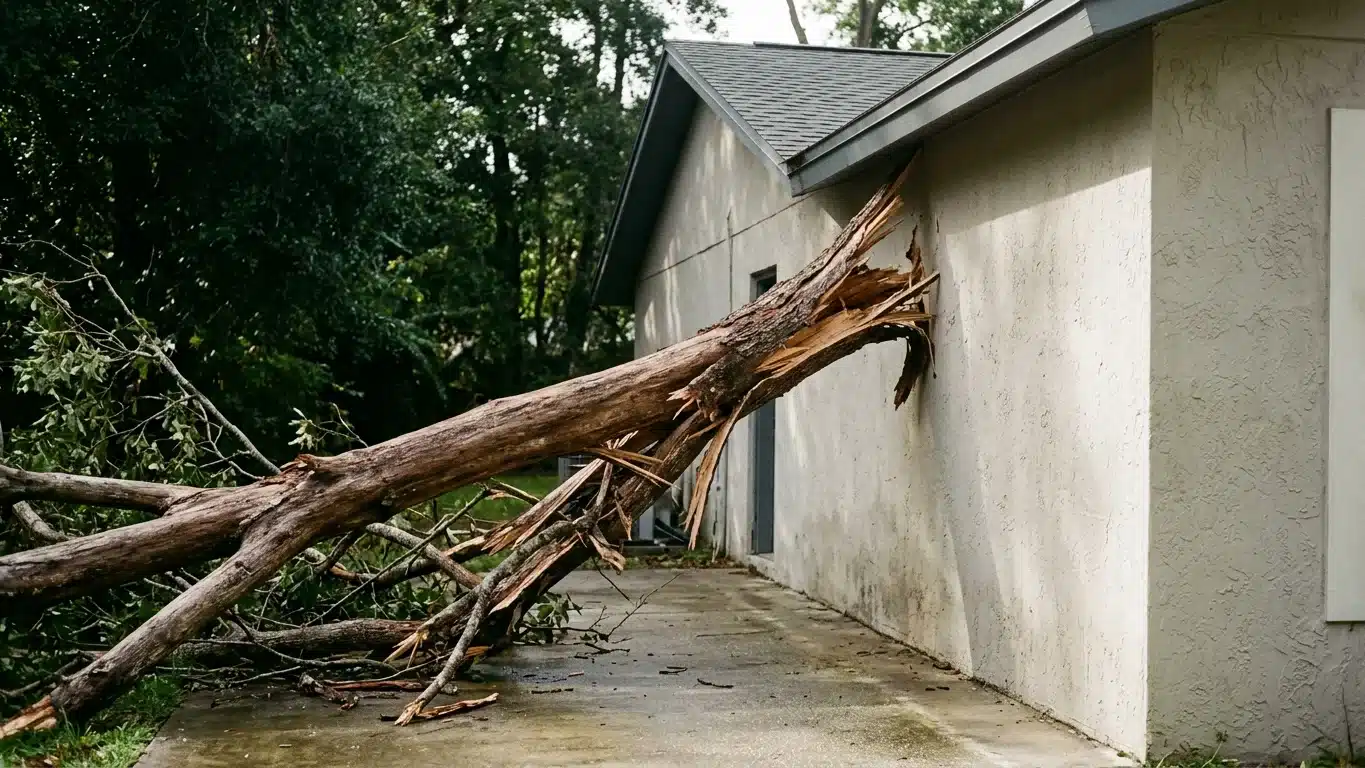
Good records make everything easier later. If it is safe, photograph the damage and the tree before any cleanup begins.
Capture wide shots of the whole yard and close-ups of the trunk, the break point, and any damage to fences, roofs, or vehicles.
Contact your insurer promptly. Georgia’s insurance commissioner recommends quick contact with your insurer and protecting property from further damage in its severe weather safety tips.
Ask what the claim process looks like and what proof the company wants.
Next, review your own policy. Look at covered causes of loss, your limits, and your deductible so you know what to expect.
The Insurance Information Institute notes that coverage varies, so do not rely on a number you heard from a friend or an old brochure.
Take reasonable steps to prevent more harm. That might mean covering a broken window or roof opening with a tarp, if you can do so safely.
Keep receipts for these temporary fixes.
Write down dates, names, and claim numbers as you go. Keep this stage focused on recording the event and starting a claim, and leave the question of your neighbor’s responsibility for later.
Some storm debris is too dangerous to handle
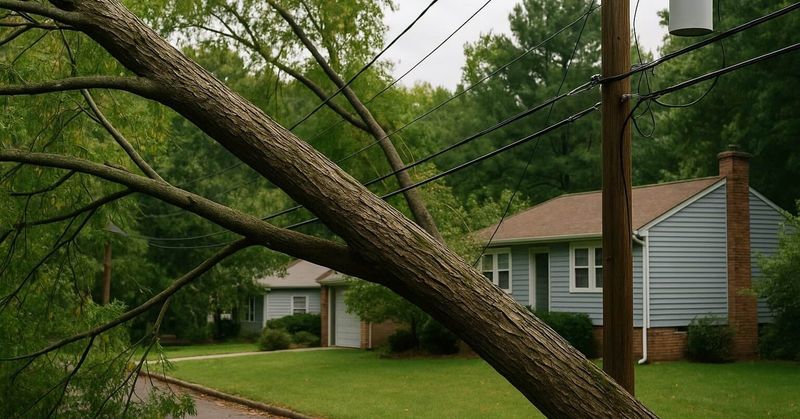
Safety comes before cleanup. If a tree is touching a power line, or if any line is down, stay away.
Georgia Power says on its tree and vegetation FAQ page to assume downed lines are energized, keep your distance, and contact the utility.
Do not try to move the tree or the wires yourself, even if the power looks like it is out. Lines can come back on without warning.
Keep children and pets away from the area as well.
Storm-damaged trees can be dangerous even without power lines. The Georgia Forestry Commission warns in its natural disaster recovery guidance that chainsaw work on storm-damaged trees is risky.
Wood can be bent, wedged, or hanging in ways that are hard to judge.
For large, suspended, or tense debris, hire a certified arborist rather than trying a do-it-yourself fix. A professional has the training and equipment to handle it more safely.
Hiring one can also protect you from injuries that no policy will make up for.
If you are unsure whether a situation is safe, treat it as unsafe. Wait for the utility or a qualified tree service.
Keep cleanup, liability, and coverage separate
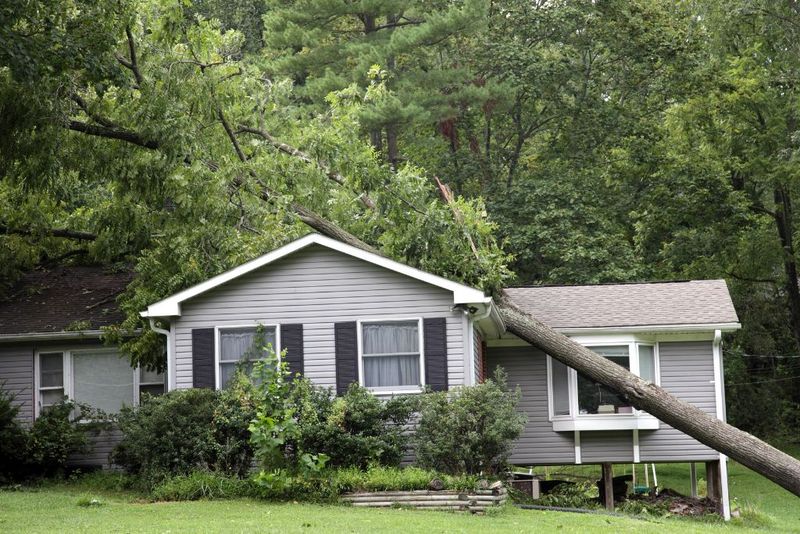
Three questions run side by side after a storm. The property where the tree lands generally handles debris there, as the Georgia Attorney General’s guidance explains.
Insurance depends on your policy and the circumstances, as the Insurance Information Institute describes. A neighbor’s liability depends on evidence of a known or reasonably apparent danger, as cases like Wade v.
Howard show.
Document everything, call your insurer, and keep away from anything unsafe. No outcome is guaranteed, but good records keep your options open.
A fallen tree is a messy problem, yet three clear questions make it manageable.
Share this story