Get the latest garden guides in your inbox →
Gardening Latest
  • General Gardening
  • Lawn Care
  • Plant Care
  • Composting
  • Soil Health
  • Backyard
  • Garden Muse Magazine
  • General Gardening
  • Lawn Care
  • Plant Care
  • Composting
  • Soil Health
  • Backyard
  • Garden Muse Magazine
  • News
  • Gardening Calendar
  • Garden Structures
  • Vegetable Garden
  • Vertical Garden
  • Raised Beds
  • Hydroponics
  • General Equipment
  • Community Gardens
Garden Themes
  • Spiritual Garden
  • Hydroseeding
  • Seeding and Laying Sod
  • Artificial Grass
  • Lawn Care Equipment
  • Plants
  • Trees
  • Planting Tools
  • Composting Basics
  • Fertilizer
  • Alternative Growing Mediums
  • Front Yard
  • Backyard Activities
  • Landscaping
Gardening Latest

Explore by state

Which state is your garden in?

Currently viewing Arizona

All states

Northeast

  • Connecticut —
  • Delaware 37
  • Maine —
  • Maryland 23
  • Massachusetts 39
  • New Hampshire —
  • New Jersey 23
  • New York 32
  • Pennsylvania 32
  • Rhode Island —
  • Vermont —

Southeast

  • Alabama 23
  • Arkansas —
  • Florida 23
  • Georgia 23
  • Kentucky 37
  • Louisiana 22
  • Mississippi —
  • North Carolina 21
  • South Carolina 36
  • Tennessee 20
  • Virginia 22
  • West Virginia —

Midwest

  • Illinois 22
  • Indiana 24
  • Iowa 36
  • Kansas —
  • Michigan 23
  • Minnesota 22
  • Missouri 22
  • Nebraska —
  • North Dakota —
  • Ohio 23
  • South Dakota —
  • Wisconsin 38

Southwest

  • Arizona 23
  • Colorado —
  • Nevada —
  • New Mexico —
  • Oklahoma —
  • Texas 22
  • Utah —

West

  • Alaska —
  • California 22
  • Hawaii —
  • Idaho —
  • Montana —
  • Oregon —
  • Washington —
  • Wyoming —

No state matches that search.

Site menu

Gardening Latest
  • General Gardening
    • News
    • Gardening Calendar
    • Garden Structures
    • Vegetable Garden
    • Vertical Garden
    • Raised Beds
    • Hydroponics
    • General Equipment
    • Community Gardens
    Garden Themes
    • Spiritual Garden
  • Lawn Care
    • Hydroseeding
    • Seeding and Laying Sod
    • Artificial Grass
    • Lawn Care Equipment
  • Plant Care
    • Plants
    • Trees
    • Planting Tools
  • Composting
    • Composting Basics
  • Soil Health
    • Fertilizer
    • Alternative Growing Mediums
  • Backyard
    • Front Yard
    • Backyard Activities
    • Landscaping
  • Garden Muse Magazine

Explore

  • About GardeningLatest.com
  • Contact Us

Get the latest from the garden

New guides on lawn care, plants and backyard projects, sent when they go up.

Subscribe →

Follow

  • Facebook
  • X
  • Pinterest
  • YouTube
Arizona Gardening

Why That Giant Flower Stalk Is Towering Over Your Arizona Agave, and Whether Cutting It Off Does Any Good

That tall stalk means your agave is flowering, and cutting it off is not a proven way to save the plant…

EM

By Elena Marquez

November 27, 2026 · 6 min read

Why That Giant Flower Stalk Is Towering Over Your Arizona Agave, and Whether Cutting It Off Does Any Good

That tall stalk means your agave is flowering, and cutting it off is not a proven way to save the plant. The main rosette usually fades after it blooms, but the story does not always end there.

Pups at the base or tiny plantlets on the stalk can carry the plant forward. Here is what the stalk means and what you can sensibly do about it.

At a glance

Where
Arizona Gardening
Hardiness zone
9 20 to 30°F
Read
6 minutes
Published
November 27, 2026

A tall stalk marks the flowering phase
A tall stalk marks the flowering phase
© Reddit

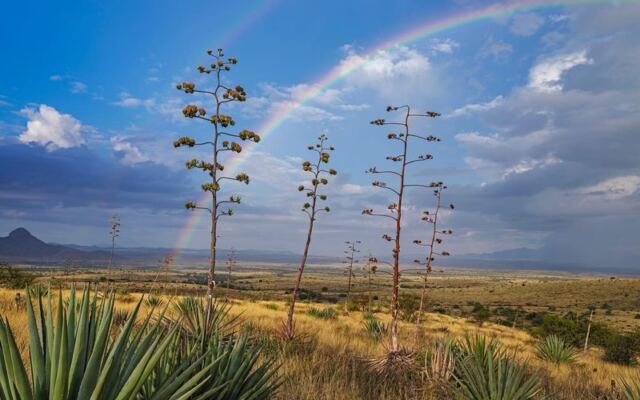
Sooner or later, a mature agave pushes up a stalk that can look like a giant asparagus spear. That stalk usually means the rosette has entered its flowering phase.

University of Arizona Cooperative Extension reports that stalks can climb up to 20 feet. That is a reported height, not a limit for every agave species, since some stay much shorter.

The stalk can rise fast, sometimes making the plant look entirely different within weeks. It is a stage in the plant’s life cycle, not an emergency.

Nothing here calls for a rushed decision.

The nickname “century plant” causes a lot of confusion. It does not mean a 100-year wait.

The same Extension publication says the cycle usually runs closer to 10 to 20 years, while the National Park Service gives a broader 15 to 30 years for most agaves. Timing varies by species, climate, and growing conditions, so no single age applies to every plant.

Also check that you really have an agave. Yuccas look similar, with sword-shaped leaves and tall bloom spikes.

Arizona Extension notes that yuccas can bloom repeatedly without the plant dying, while agaves often decline after flowering. Knowing which one you have changes what to expect.

What may die—and what may keep growing
What may die—and what may keep growing

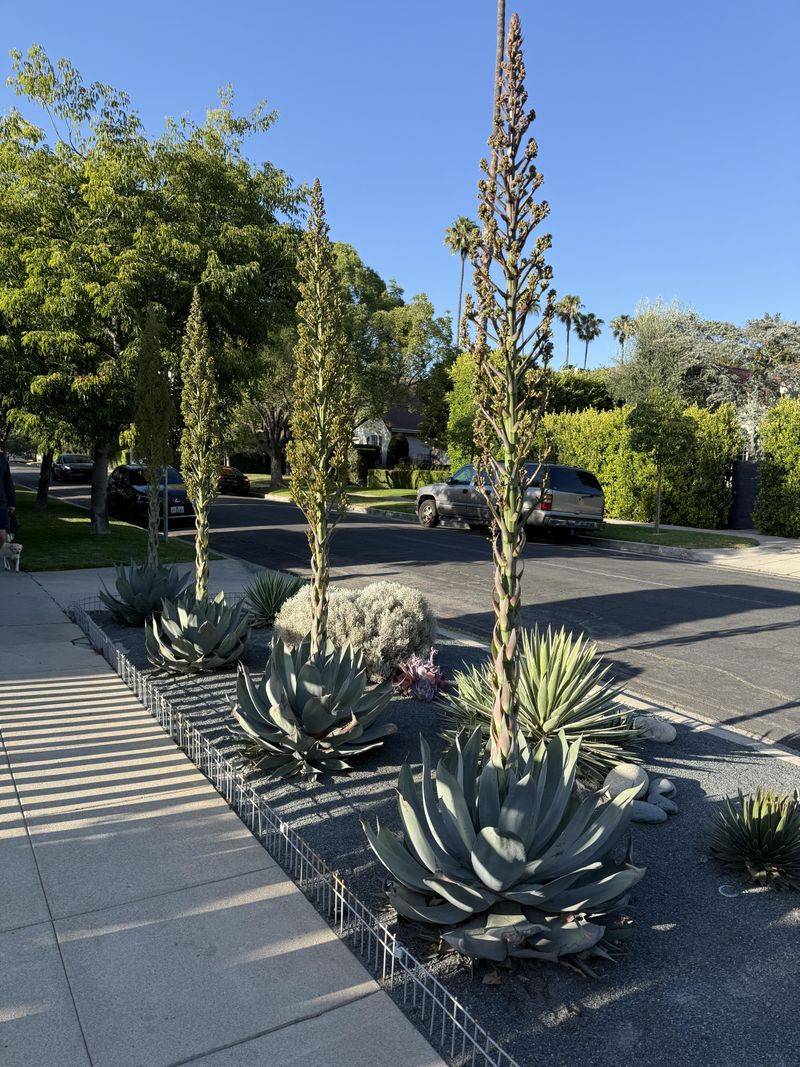
A single rosette is one plant body, but many agaves grow as a larger patch. The flowering rosette commonly senesces, meaning it slowly fades, after it blooms.

That does not mean the whole patch vanishes.

Arizona Extension describes two ways agaves carry on. Basal offsets, called pups, sprout around the base.

The City of Chandler generally advises against pruning agaves but says dried flower stalks can be removed.

Bulbils are tiny plantlets that can form on the flower stalk, and some pups and bulbils can be propagated. A plant may or may not produce either, so do not count on them.

Gardening guidance from University of Florida IFAS describes most agave rosettes as flowering once before declining. That matches what many Arizona gardeners see.

One tired rosette often sits beside a ring of younger growth.

Species also differ. A 2017 research review argues that many agaves are clonal plants.

In those, an individual rosette flowers once and dies, while younger branches can flower later.

So the phrase “the agave dies” is too broad. A better description is that one rosette is finishing its run while newer growth may continue.

Cutting the stalk is not an established way to save the rosette
Cutting the stalk is not an established way to save the rosette
© Desert Dabbler

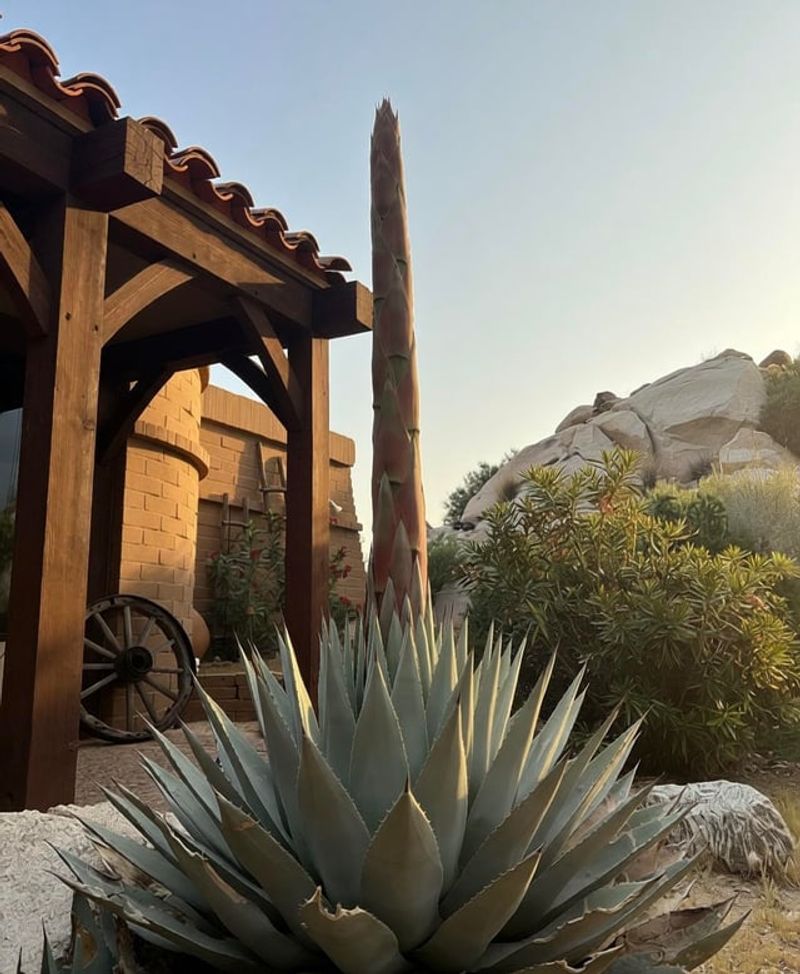
Many gardeners hope that snipping the stalk will keep the plant going. The reviewed sources do not back that up.

University of Arizona Extension says the flowers open, seeds form, and individual plants then fade and die.

The University of Florida IFAS publication likewise describes most rosettes as flowering once before senescing. Neither source reports controlled tests of removing the stalk.

That means they do not tell us whether cutting saves the rosette or changes how quickly it declines.

In plain terms, nobody has shown that cutting works, and nobody has shown it makes no difference at all. The honest answer is that it is unproven.

Cutting should not be your plan for keeping that particular rosette alive.

If your agave is already sending up a stalk, the rosette is following a normal life stage. Look at the base for pups instead, since those are the more dependable sign the plant may continue.

The next section covers what leaving the stalk can gain you.

Leave the stalk for flowers or possible propagation
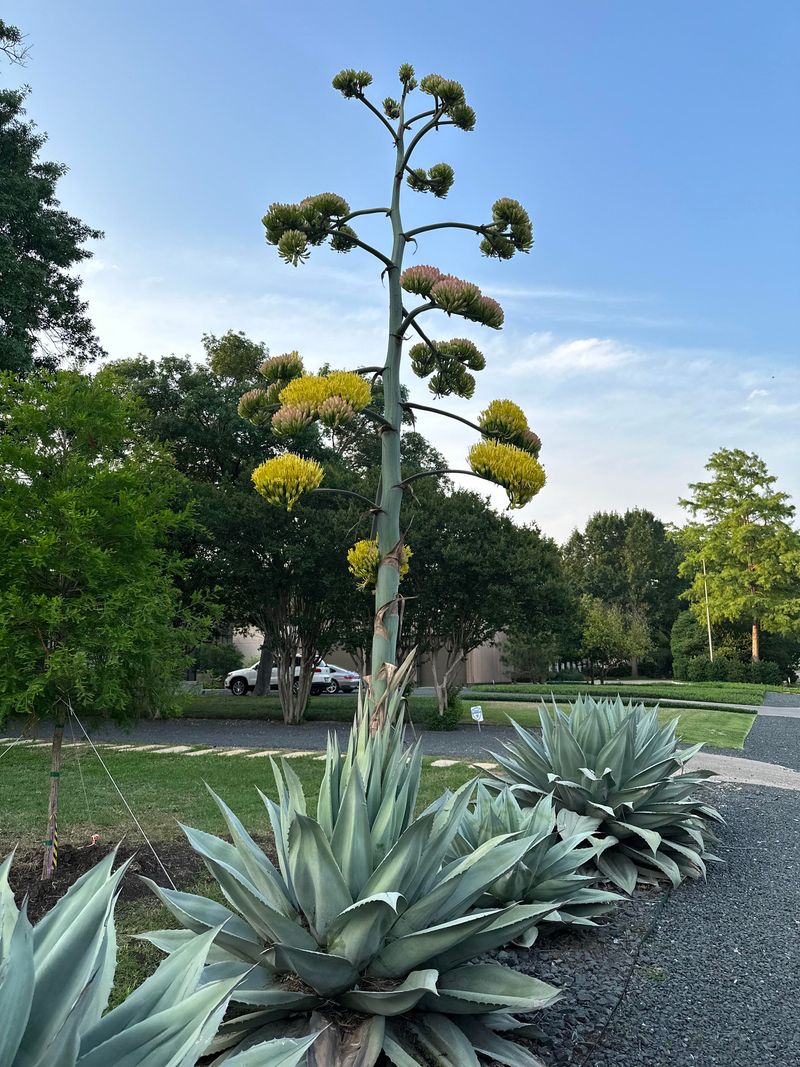
Leave the stalk for flowers or possible propagation
© Reddit

Leaving the stalk keeps the show going. Arizona sources note that agave flowers attract pollinators, including bats, birds, and insects.

A standing stalk can turn a quiet corner of the yard into a busy spot.

Leaving it also keeps the chance of seed or bulbils. Cutting early gives up the remaining flowers and may forgo both.

No particular plant is guaranteed to produce seed or usable bulbils, so treat them as a possible bonus.

If propagation is your goal, let the flowers, seedpods, or bulbils develop before you remove anything. University of Arizona guidance says to let cut wounds on pups or bulbils dry and scab over for several days.

Then plant them in a well-drained medium.

These are reasons to keep the stalk, not proof that doing so saves the flowering rosette. The main plant will likely keep fading either way.

What you gain is pollinator activity and a shot at new plants.

A dry stalk is different from the living rosette
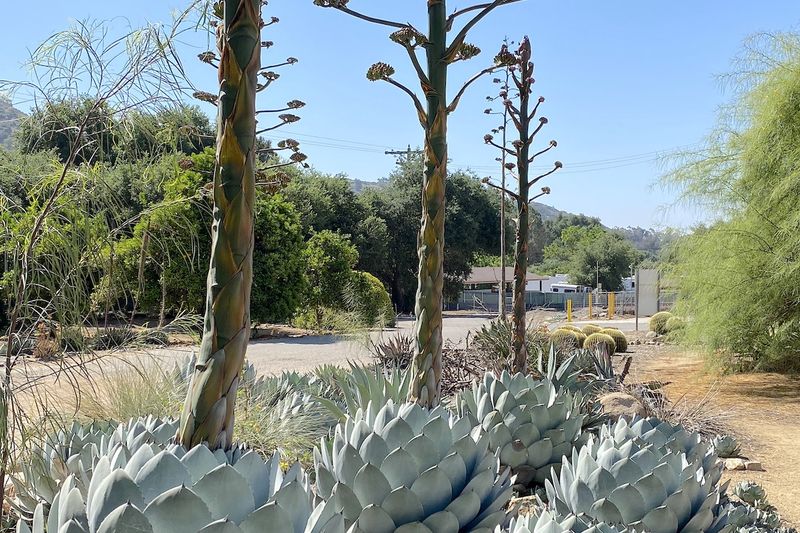
A dry stalk is different from the living rosette
© Debra Lee Baldwin

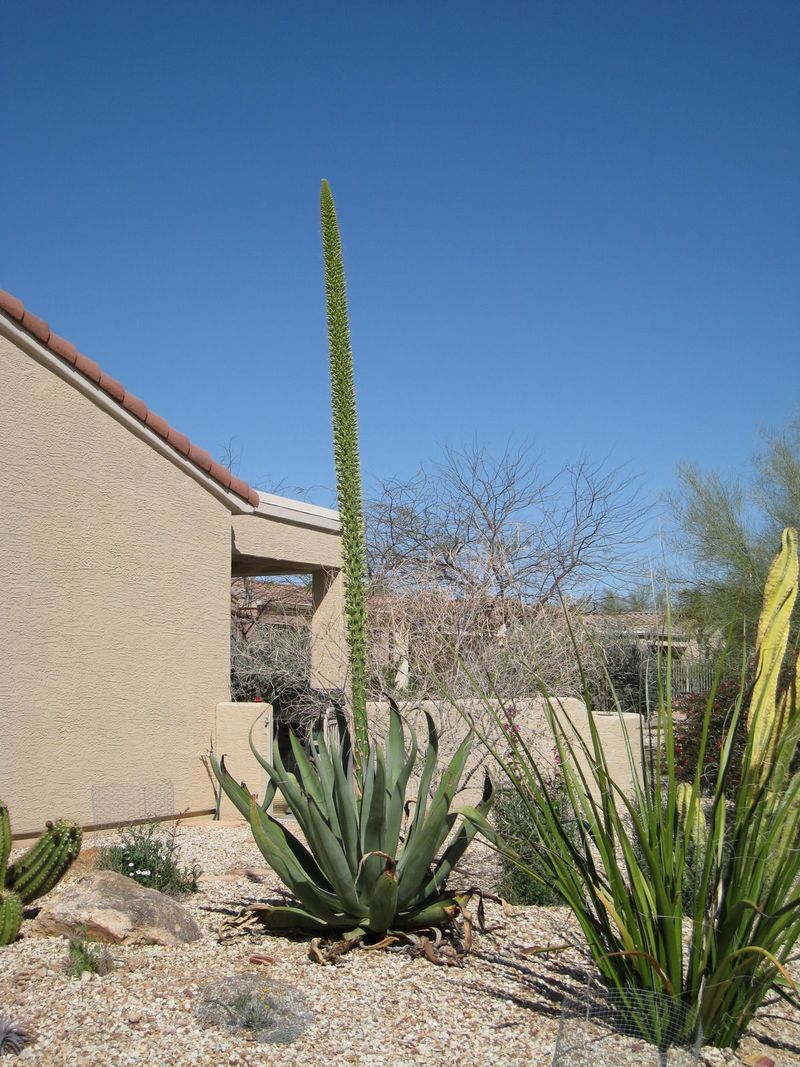
Once the flowers are done, the stalk turns brown and brittle. Some people want it gone for looks, or because it leans over a path or patio.

That is a practical choice, and it is not the same as cutting into the plant itself.

Local advice differs in emphasis. Nevada Extension discusses removing the agave stalk and the mother plant after blooming.

The City of Chandler generally advises against pruning agaves but says dried flower stalks can be removed.

The shared thread is caution about the living plant. Taking down a dry stalk is one job.

Trimming healthy leaves or cutting into the rosette just for appearance is another, and nothing in these sources recommends it.

Treat removal as housekeeping, not a way to change the plant’s life cycle. If the stalk is still green and flowering, waiting costs you little and keeps your options open.

Protect yourself and keep clear of utility lines
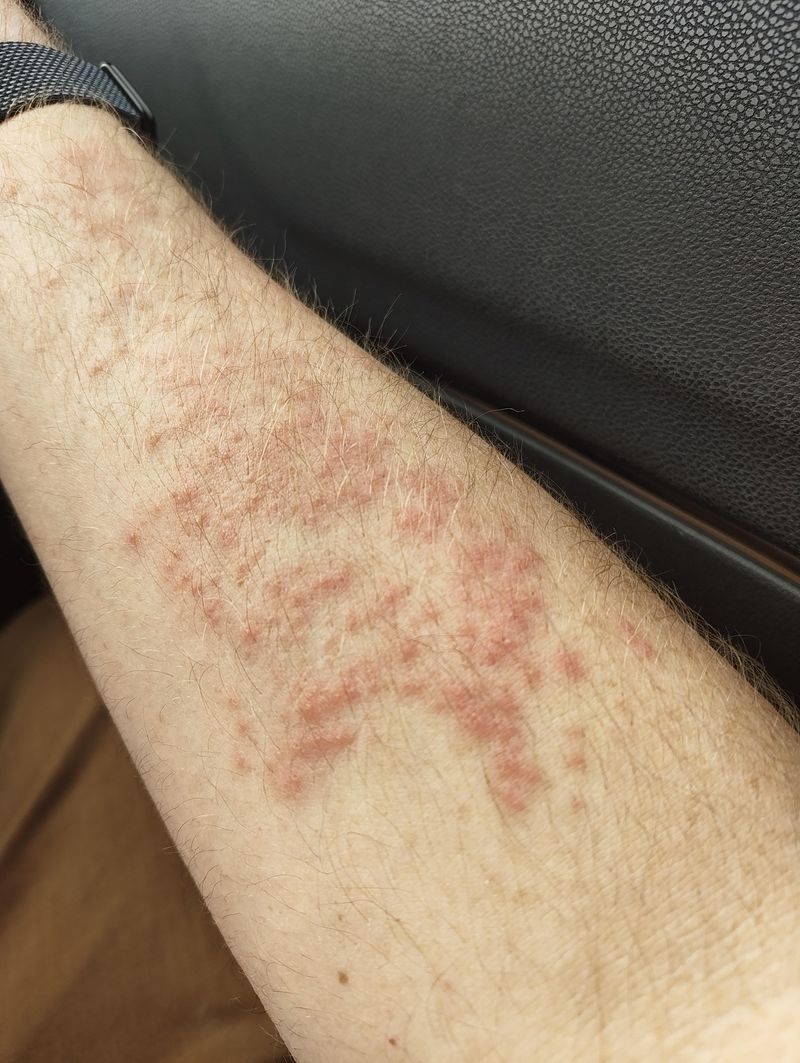
Protect yourself and keep clear of utility lines
© Reddit

Agave is not a friendly plant to handle. Its sap can irritate skin.

The FDA’s review describes irritants in agave leaf sap, including calcium oxalate crystals, and reports of contact dermatitis.

Wear long sleeves, sturdy gloves, and eye protection, and avoid skin and eye contact. The spines add a second hazard, so keep your face and legs clear of the leaf tips.

A tall, thick stalk may tempt people to reach for a chainsaw. That work calls for training and protective gear, and OSHA’s chainsaw guidance covers the equipment involved.

If you lack either, hire a qualified professional.

Look up before you cut. The Bonneville Power Administration says people should not trim or remove vegetation near its transmission lines themselves.

That rule applies to transmission lines. For any other overhead lines, contact the serving utility before attempting removal.

Decide what you want to preserve
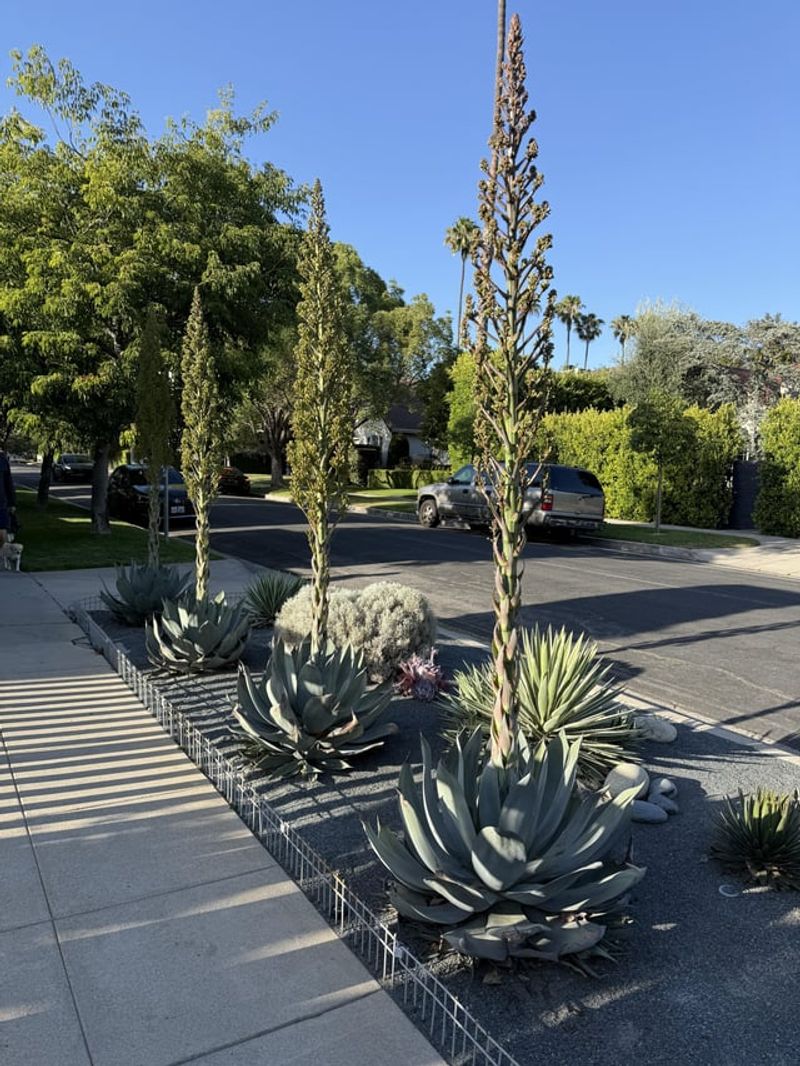
Decide what you want to preserve

Cutting the stalk will not reliably rescue the flowering rosette, so choose based on what you value. Leave it for flowers, pollinators, and possible seed or bulbils.

Or remove it for practical reasons, ideally once it is dry, without cutting into the living plant, and follow the safety limits above.

Meanwhile, pups or bulbils may let the wider plant carry on as one rosette declines.

An agave spends years building up to one grand finale, and the pups are its way of taking a bow.

Share this story
EM

Written by

Elena Marquez

More from Elena Marquez →

About Gardening Latest

Gardening Latest provides in-depth guides to maintaining and enhancing your garden and backyard. Learn how to make the most of the space you have and create a beautiful garden.

More about us →

Latest stories

  • Texas GardeningSpotted A Yellow Jacket Nest Near Your Texas Home? Here’s What To Do Next

    Spotted A Yellow Jacket Nest Near Your Texas Home? Here’s What To Do Next

    10 min ago
  • Wisconsin GardeningWisconsin Porcupines Chew the Bark Off Backyard Trees All Winter, and Here’s How to Stop the Damage

    Wisconsin Porcupines Chew the Bark Off Backyard Trees All Winter, and Here’s How to Stop the Damage

    21 min ago
  • Missouri GardeningThese Venomous Creatures Are Hiding In Missouri Yards, And Here’s How You Tell Them Apart

    These Venomous Creatures Are Hiding In Missouri Yards, And Here’s How You Tell Them Apart

    27 min ago
  • Tennessee GardeningTennessee Yards Hide More Venomous Critters Than You Think, And Fall Brings Them Out

    Tennessee Yards Hide More Venomous Critters Than You Think, And Fall Brings Them Out

    33 min ago
  • Alabama GardeningDon’t Run From These 7 Alabama Critters Because They Only Look Venomous

    Don’t Run From These 7 Alabama Critters Because They Only Look Venomous

    39 min ago

Gardening by state

Stories for your state, and the hardiness zone most of it gardens in.

Keep exploring

Read next

All Arizona Gardening →
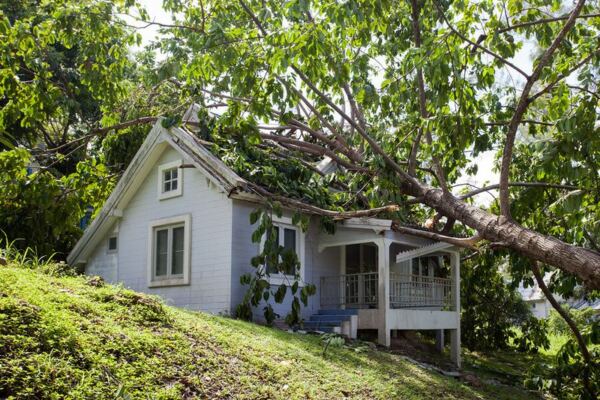
Arizona GardeningMonsoon Winds Toppled Your Neighbor’s Tree Into Your Arizona Yard, So Here’s Who Pays for the Damage
Arizona Gardening

Monsoon Winds Toppled Your Neighbor’s Tree Into Your Arizona Yard, So Here’s Who Pays for the Damage

2 hr ago
Arizona GardeningHere’s What Arizona Law Lets You Trim When Your Neighbor’s Bougainvillea Spills Over The Wall
Arizona Gardening

Here’s What Arizona Law Lets You Trim When Your Neighbor’s Bougainvillea Spills Over The Wall

6 hr ago
Arizona GardeningThose Coyotes Yipping in the Arizona Desert Near Your Home at Night Are Sending a Seasonal Message
Arizona Gardening

Those Coyotes Yipping in the Arizona Desert Near Your Home at Night Are Sending a Seasonal Message

9 hr ago

More from Arizona Gardening

  • 7 Native Arizona Plants You Legally Need a Permit to Dig Up or Move

    Nov 25
  • Roof Rats Leave These Clues Around Arizona Citrus Trees Long Before They Get Inside

    Nov 25
Back to top

Leave a response Cancel

Your email address stays private. Required fields are marked with an asterisk.

Gardening Latest

In-depth guides to maintaining and enhancing your garden and backyard: how to make the most of the space you have, and how to make it beautiful.

  • Facebook
  • X
  • Pinterest
  • YouTube

We may earn a portion of sales from products or services that are purchased through our site as part of our affiliate partnerships with retailers.

Explore

  • About GardeningLatest.com
  • Contact Us
  • Terms and Conditions
  • Privacy
  • Editorial Note:
  • FTC Disclosure

Newsletter

New garden guides and seasonal tips, straight to your inbox.

We’ll email you a link to confirm. Unsubscribe any time.

Almost there! Check your inbox and tap the link to confirm.

© 2026 Gardening Latest. All rights reserved.

Back to top