When coyotes howl near your Massachusetts home at night, they are almost always just talking to each other. That eerie chorus is communication, not a signal that something bad is about to happen.
The sound can feel alarming in the dark, but it tells you much less than most people assume. Knowing what howling can and cannot tell you helps you focus on what really matters.
Coyotes howl to communicate
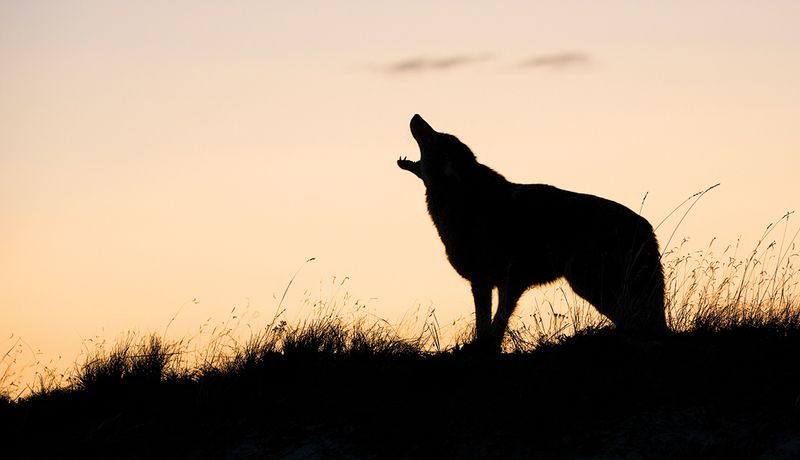
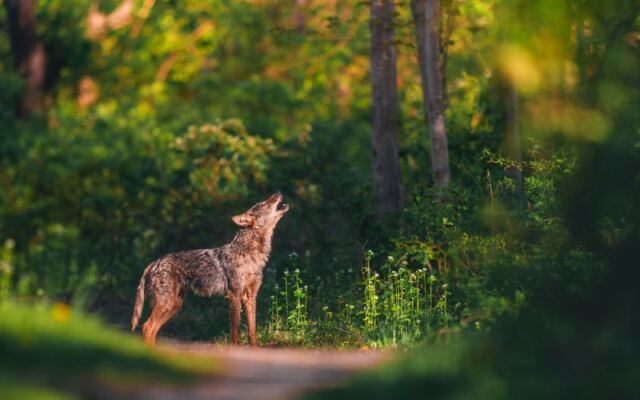
Coyotes commonly howl and yip at night, and the reason is simple: they are communicating. MassWildlife explains that these calls can help coyotes maintain territory and locate family members.
Think of it as a way of saying “this area is taken” or “where is everybody?” across a distance.
Here is the catch. Howling has more than one possible job, and the sound alone cannot tell you which one is happening on a given night.
A chorus outside your window might be a family member checking in, a territorial message, or something else entirely. Nobody listening from a bedroom can sort that out.
Night is the most common time to hear them, but it is not the only one. Coyotes may also vocalize during the day, including in response to sirens and other loud sounds.
If you hear a burst of yips when an ambulance passes, that is a good example of a call set off by noise rather than by anything near your house.
A few popular ideas deserve a firm correction. Coyotes do not howl to announce a kill, so a chorus is not evidence that something has just been caught nearby.
Howling is also not a sign that an attack is coming, that the animals are sick, or that they have picked out your home as a target.
What a howl can do is let you know coyotes live in your area, which is true of much of Massachusetts. That awareness is useful, and it does not need to come with dread.
The rest of this article covers what actually deserves your attention.
A chorus cannot tell you how many coyotes are there
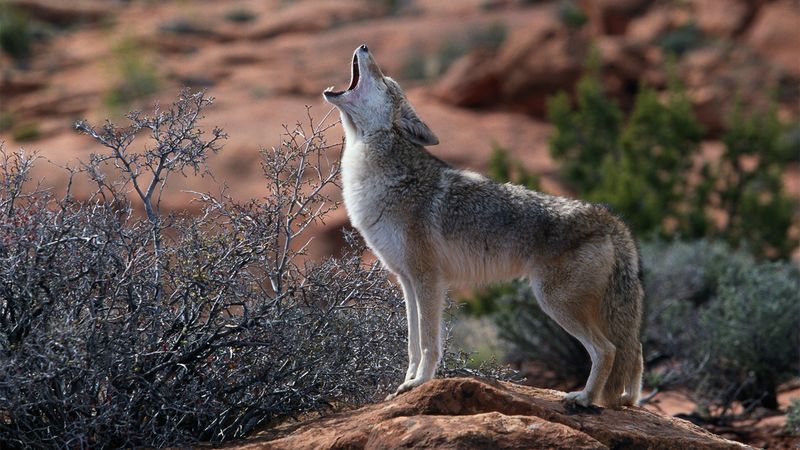
Ears are poor counters. A few coyotes yipping and howling together can sound like a much bigger group, because their voices overlap and bounce around the landscape.
So the number you think you hear is not a reliable number.
A 2017 experiment shows how big the gap can be. In a study on human perception of coyote group size, 427 participants listened to recordings of one to four coyotes howling and yipping.
On average, they estimated nearly twice as many coyotes as were actually recorded.
It helps to be clear about what that study was. People heard recordings and made guesses.
It was not a field test of residents identifying coyotes outdoors in Massachusetts, so it cannot tell us exactly how any one person would do on any one night.
The result is still a handy warning. If a chorus makes you feel surrounded, remember that your impression may be inflated.
That feeling is not proof that a large pack is nearby.
The reverse mistake is just as easy to make. Some people hear a chorus and decide it must be a pair with pups, and that is a guess too.
A chorus might come from a small group or a few more animals, and the sound alone will not settle it.
The practical move is to let go of the headcount. Whether it was two coyotes or five, your next steps are the same, and they depend on what you can see, not what you think you heard.
Pups may practice howling later in summer
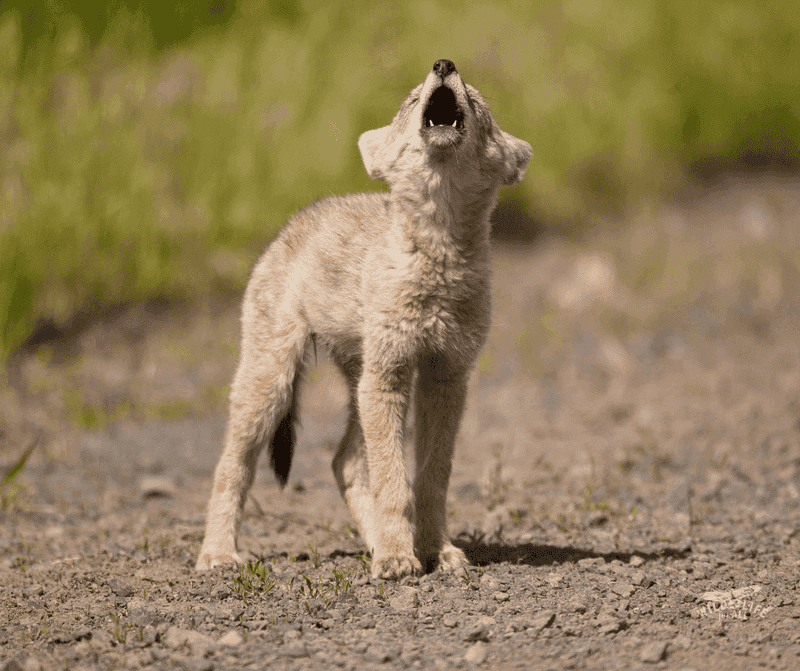
Late summer can bring noisier nights. Coyote pups are born in spring, and by the end of summer they may be especially vocal as they practice howling, according to MassWildlife’s coyote overview.
Town guidance from the state, such as its information sheet for town officials, makes the same seasonal point.
That gives you one reasonable explanation for an August or September chorus. Young voices cracking and squeaking through their first howls can add to the racket.
It is a nice picture, but keep it in its place.
Pup practice is a possibility, not a diagnosis. You cannot confirm from the sound or the calendar that pups are present, any more than you can confirm how many adults are with them.
Plenty of other reasons for howling exist at any time of year.
So if the neighborhood gets loud in late summer, treat the pup idea as a gentle guess. It can make the noise feel less sinister, but it should not change how you behave.
Keep an eye on what you can actually observe, such as how coyotes act around people and pets, and let the soundtrack stay background.
Watch what a coyote does around people

Behavior is where the real information lives. MassWildlife considers frequent use of residential areas and frequent daytime activity to be normal for coyotes, as outlined in its guide to preventing conflicts.
A coyote crossing a yard, trotting down a street, or showing up in the morning is not, by itself, cause for concern.
That does not mean the risk is zero. It means presence alone is not the signal to worry about.
What counts is how the animal acts toward people.
The state draws a clear line. Bold behavior includes approaching or following people and not fleeing when hazed.
Aggressive behavior includes an attack on a person.
Picture two evenings. On the first, you spot a coyote at the edge of your yard, and it looks at you and moves off when you step outside.
On the second, a coyote walks toward you on a trail, follows you, and ignores shouting and arm waving. The first is ordinary residential presence, and the second is bold behavior that deserves a report.
If you see anything concerning, contact the authorities. MassWildlife’s frequently asked questions point residents to wildlife officials for those situations.
Include where and when it happened and exactly what the animal did.
Notice that none of this depends on whether you heard a howl. A silent coyote that follows people matters far more than a noisy chorus from the woods.
Haze a comfortable coyote without cornering it
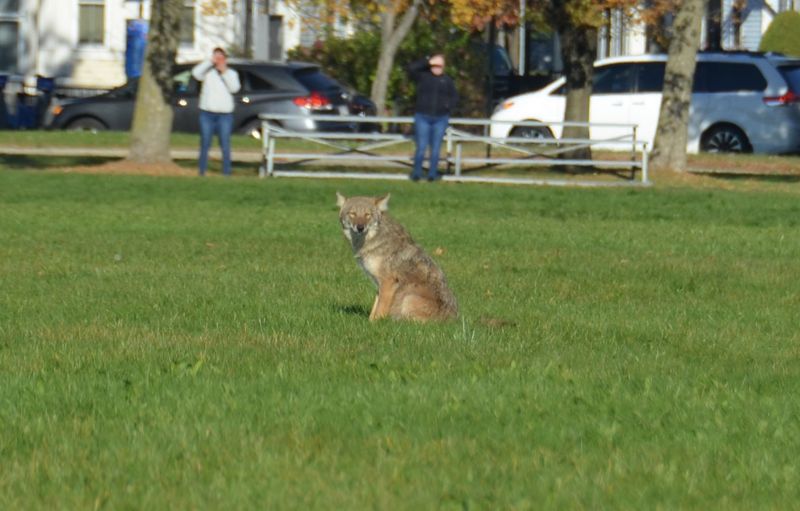
If a coyote seems relaxed in your yard or neighborhood, MassWildlife recommends hazing it. The goal is to remind the animal that people are not something to be comfortable around.
The steps come from the state’s conflict prevention guide.
Make yourself look larger by standing tall and raising your arms. Make loud noises by shouting, clapping, or banging pots.
Then move confidently toward the coyote, always intending to frighten it, not injure it.
Hazing has limits, and they matter. Do not haze an animal that appears ill or injured.
Do not corner it, because an animal with no way out may react defensively. Do not drive it toward a road, where it or drivers could be hurt.
In practice, that means leaving the coyote a clear path away from you, ideally toward open space or woods. Watch the layout of your yard before you start.
A fenced corner is a bad place to push an animal into.
One more situation calls for a different move. If you suspect a den is nearby, perhaps because a coyote keeps acting protective around one spot, keep your dogs leashed and leave the area calmly.
Do not try to haze your way through it.
If a coyote does not flee when hazed, that is the bold behavior described earlier. Step back to safety and report it to the authorities.
Protect pets and remove easy attractants
Most of the useful work happens at home, and it has nothing to do with decoding howls. These steps reduce the chances of a conflict.
They are not an explanation for why coyotes call.
For pets, MassWildlife advises keeping cats indoors. Dogs should be leashed and directly supervised when outside, even in a fenced yard at night, as laid out in the state’s conflict prevention guide.
A quick backyard trip with a flashlight beats letting a small dog wander in the dark.
Next, take away the free meals. MassWildlife’s prevention page recommends removing or securing garbage, open compost, bird feeders, fallen fruit, and outdoor pet food.
Use bins with tight lids, bring pet bowls in after meals, and pick up windfall apples. Bird feeders can draw rodents, which in turn can draw coyotes.
Put together, these habits make your yard less interesting and your pets safer. They also fit with hazing, since a coyote that finds nothing to eat has less reason to linger.
If an animal still acts bold, MassWildlife’s frequently asked questions explain how to get help.
So the next time a chorus floats through your window, you can let it go. Judge the night by what a coyote does, not by what its voice seems to say.
Share this story