If a neighbor’s branches hang over your yard, Massachusetts lets you cut back the part that crosses onto your land. That right is old, it was confirmed by the state’s highest court in 2018, and it comes with firm limits.
You stay on your side of the line, you avoid harming the tree, and you know when to call a pro. Here is how to use the rule without creating a bigger problem.
Massachusetts courts recognize a longstanding right
Here is the rule in plain words: a Massachusetts property owner may remove the part of a neighbor’s tree that hangs over their land. Courts in the state have recognized this self-help right for a long time.
It is not a new pruning law passed by the legislature.
The Supreme Judicial Court restated the rule on July 16, 2018, in Shiel v. Rowell.
The court called it the Massachusetts rule and reaffirmed it rather than creating something new. So when you hear that the law “hands you the pruners,” what that really means is that old court precedent still stands.
The same decision also dealt with a second question. It held that when a healthy tree on a neighbor’s land causes damage, the affected owner generally has no legal claim against the tree’s owner.
That holding has its own limits, and the next section looks at them.
For now, the takeaway is simple. Your right is to deal with growth that invades your property, using your own effort and at your own cost.
Everything else in this article is about doing that well: knowing whose tree it is, making a cut that does not harm it, checking local rules, and recognizing jobs that need a professional.
Think of the rule as a practical tool and not as a license. It tells you what the law allows you to do on your side of the line.
It does not say that every cut you can make is a good one.
The right covers only the encroaching growth
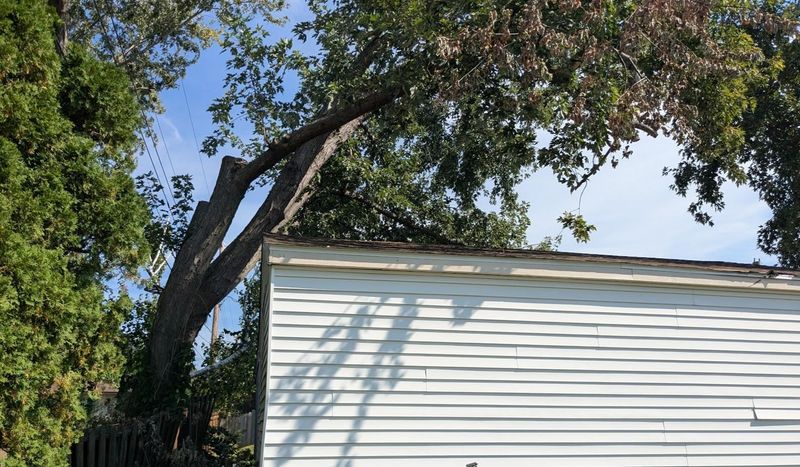
Self-help has a defined scope. You may deal with the part of the tree that invades your property.
You may not cross the boundary to reach more of it, and you should not willfully damage the tree or harm its health, as UMass Extension cautions.
That means a branch hanging over your lawn is fair game, but the rest of the limb on the other side of the fence is not. Pruning that kills the tree or leaves it badly hurt can invite a dispute, even if the first cut was over your land.
The rule also runs in one direction. Under Shiel, a neighbor’s refusal to trim a healthy tree does not, by itself, let you force that neighbor to do the work.
Your recognized remedy is trimming on your own property.
Notice the words healthy tree. The ruling addresses that situation, and the court separated it from the law about unhealthy trees.
A dead or diseased tree raises different questions, which get their own section later.
In practice, a friendly conversation often works better than a legal argument. A neighbor may agree to share the cost of a professional or at least know the pruning is coming.
Even so, the choice to trim stays with you, and so does the duty to do it carefully.
Check the tree’s ownership and the property line
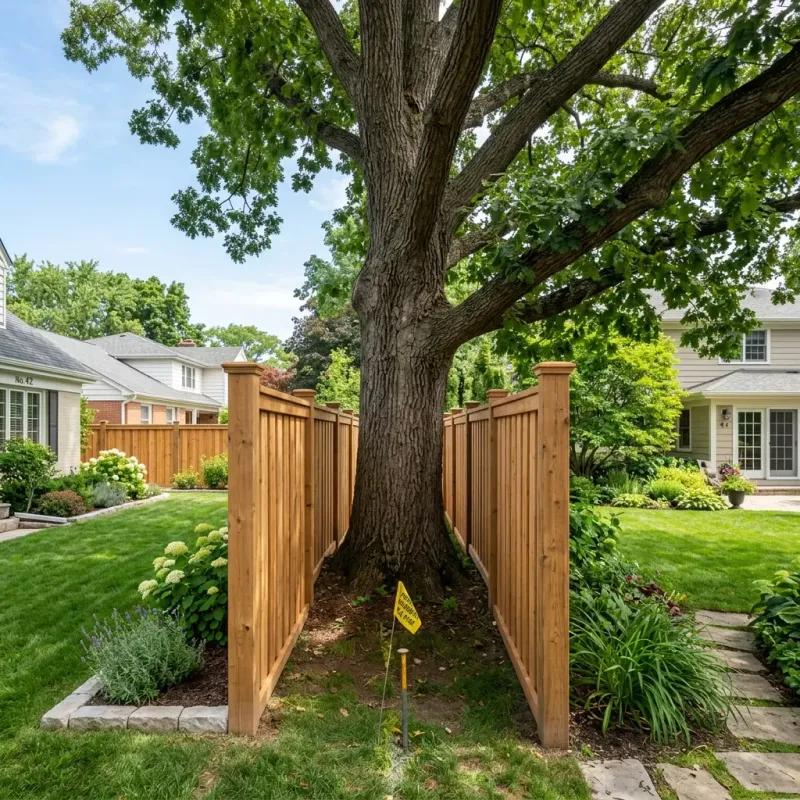
Before any cutting, answer two questions: whose tree is it, and where is the line? Tree ownership generally follows the spot where the trunk rises from the ground, not where the branches reach.
A big limb over your driveway does not make the tree yours.
If the base of the trunk sits on the boundary, you may have a shared tree. UMass Extension notes that such a tree belongs to both owners, so the ordinary single-owner rule may not settle things.
Talk with the neighbor before cutting anything.
Next, establish the boundary. Fences and hedges are not always on the true line, so check your deed, your plot plan, or hire a licensed surveyor if the stakes are high.
Then keep every step of the work on your own land, and ask for permission before you set foot next door, since entering without it is not allowed.
Location can matter in a real dispute. In Smith v.
Silva, the Appeals Court dealt with cutting and its position relative to the property line. That case shows the issue can arise, but it should not be stretched into a broader rule.
A few photos before you start, showing the trunk, the fence, and the branches, can help later if anyone questions what you did.
Choose a cut that protects the tree
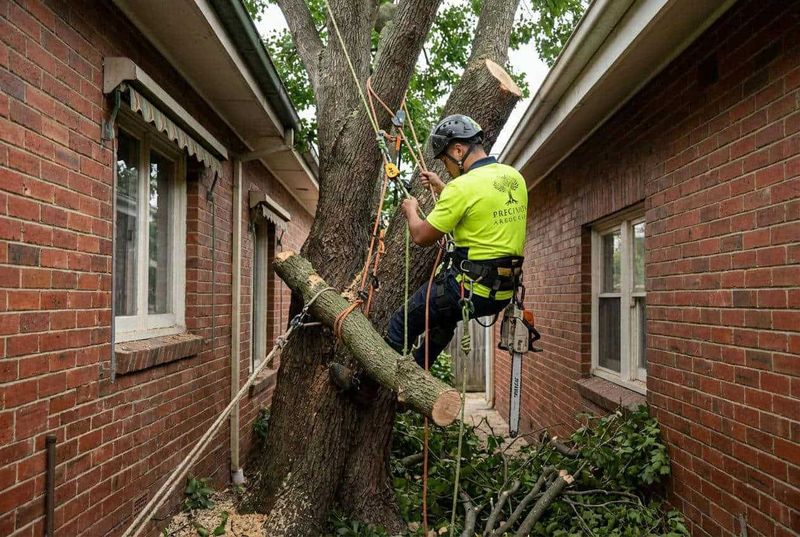
A legal cut and a good cut are not always the same. The boundary may fall in the middle of a branch, and cutting exactly there can leave a stub or a wound that heals poorly.
The legal limit is the invading portion, and UMass Extension warns against damaging the tree or hurting its health.
Sound pruning follows a few habits. Boston Tree Alliance guidance says to preserve the branch collar, the slightly swollen ring where a branch meets its parent limb.
It also says to avoid flush cuts, which slice into that collar.
For larger branches, the guidance describes a three-cut method. The first cut goes partway up from underneath, a second cut farther out removes the weight, and the final cut is made just outside the collar.
This stops bark from tearing down the trunk as the limb falls.
Sometimes the best cut falls beyond your boundary. If so, do not reach across.
Talk to the neighbor, or have an arborist advise on a plan that limits harm, such as a smaller cut that stays on your side.
For anything substantial, hire a certified arborist. Legal permission does not make a cut safe, and one bad cut can leave a lasting wound on a neighbor’s tree.
Check public-tree protections and local rules
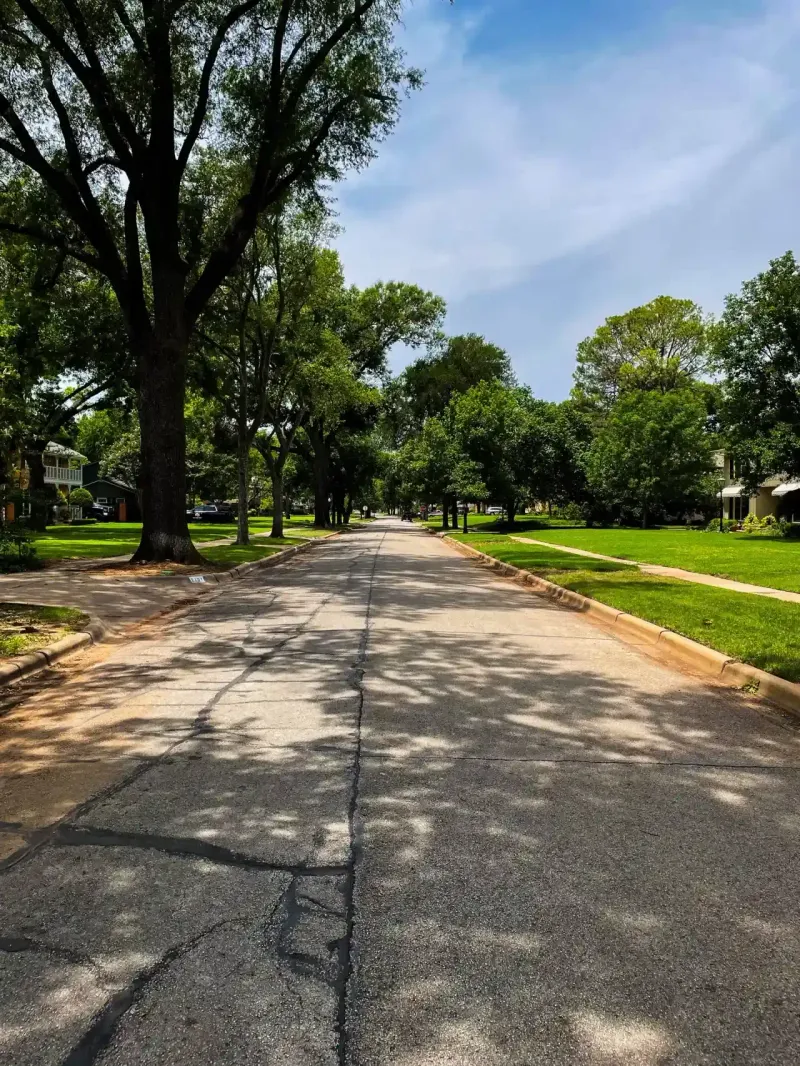
The neighbor-branch rule does not tell you whether a tree is protected. Some trees are public shade trees, and others are covered by local bylaws.
Check both before you cut.
Under Chapter 87, Section 1, trees in or on the boundary of a public way are defined as public shade trees. A tree that looks like it sits in a yard may still qualify.
Generally, Section 3 limits cutting or trimming such trees to the tree warden or a deputy, unless a written permit applies.
Towns can also adopt their own rules for private trees. The state’s Tree Bylaw and Ordinance Guide explains that communities may pass tree-protection bylaws or ordinances and that they differ from place to place.
One town’s requirements do not apply statewide.
Brookline is one example. Its tree protection page describes a bylaw covering protected private trees and requiring permits for covered removals, while stating that pruning private trees does not need a permit.
Your town may be stricter, looser, or silent.
The simplest step is a call to your town hall, tree warden, or planning office. Ask whether the tree is public, whether any local bylaw applies, and whether pruning or removal needs approval.
A hazardous tree needs a different assessment
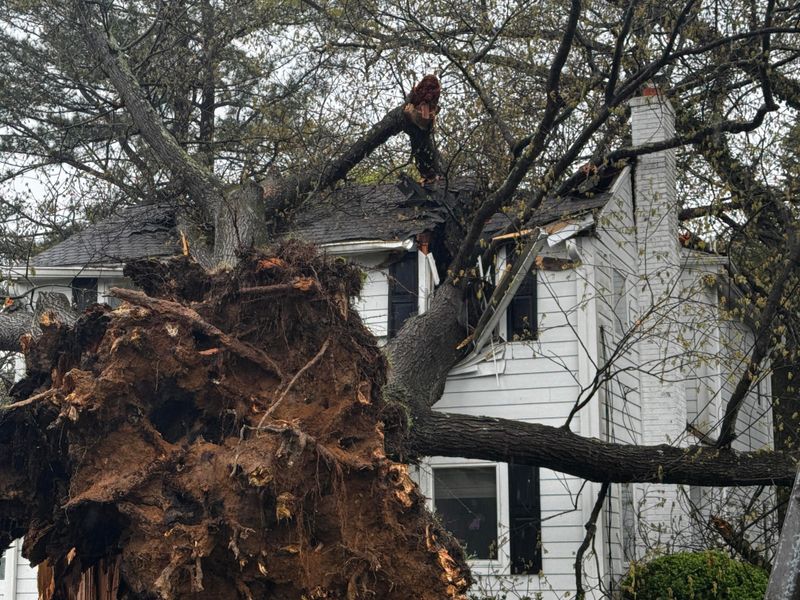
The healthy-tree rule from Shiel does not cover every situation. The court said its holding concerned healthy trees and noted that the law on unhealthy trees is separate.
So it would be wrong to read the case as saying a tree owner is never responsible.
That does not mean every complaint about a bad tree leads to liability either. The tree’s condition and the specific facts matter, and no particular legal result is guaranteed.
If a dispute is serious, a lawyer can explain how the law applies to your situation.
The practical question is about risk. Warning signs include dead limbs, large cracks, fungus at the base, leaning that is new, or storm damage.
Pruning off a few branches over your yard will not fix a tree that is failing.
For these cases, get a professional look. UMass Extension’s storm damage fact sheet recommends a professional for substantial or storm-damaged limbs, because hidden defects are hard to judge from the ground.
Keep notes and photos, tell your neighbor in writing what you found, and keep people and cars away from the danger zone until an assessment is done.
Leave power-line and high-risk work to professionals
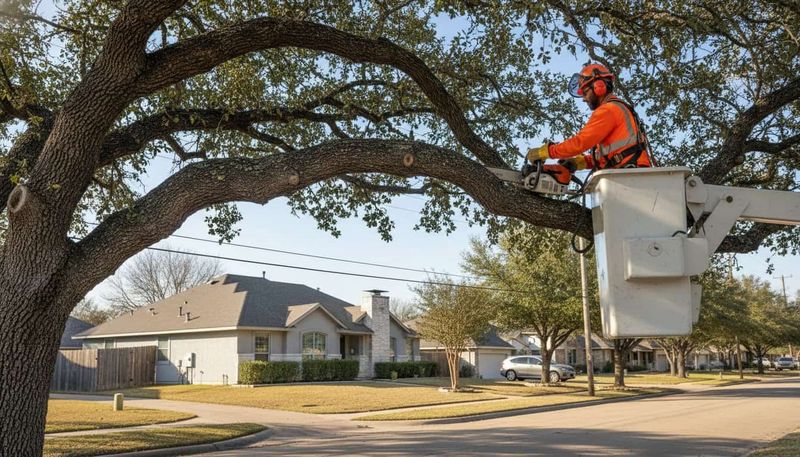
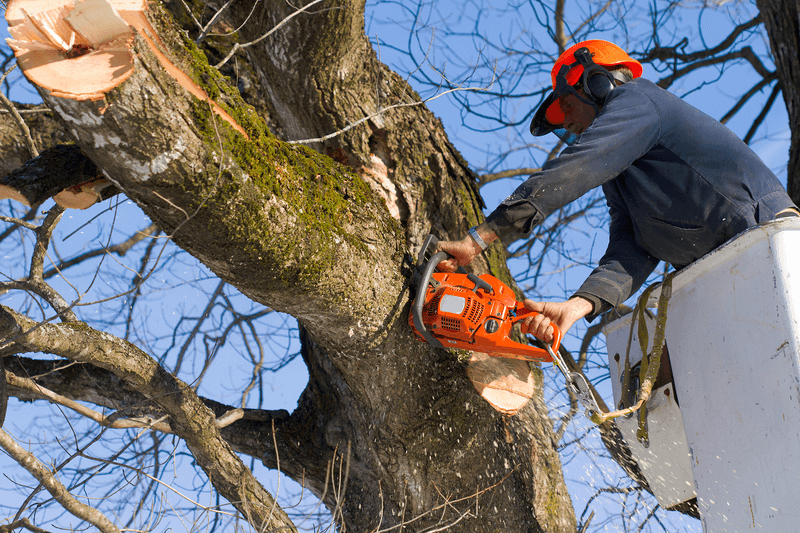
A legal right to prune is not a reason to take on dangerous work. Ladders, climbing, and chainsaws on big limbs send many people to the hospital.
A branch you are allowed to cut may still be a branch you should not cut yourself.
Power lines raise the stakes. OSHA guidance says tree trimming within 10 feet of a power line must be done by trained, experienced line-clearance tree trimmers.
Branches, ladders, and pole saws can all carry current, so stay well back.
If limbs touch or crowd the lines, call your utility company or a qualified line-clearance contractor instead of reaching for the pruners. Do not assume a line is safe because it looks insulated.
Other jobs also belong with professionals. These include heavy limbs, work high off the ground, and damaged limbs, which UMass Extension says warrant a professional because broken wood can shift without warning.
When hiring, ask for proof of insurance, check credentials, and tell the crew where your boundary is so they stay on your side. Your rights end at the property line, and so should the risks you take.
Share this story