You flip over a garden stone, and something with stripes, spots, or way too many legs scrambles out. Your first thought might be to grab a shovel, but plenty of Massachusetts critters only look dangerous.
Most of them are harmless to people and actually help your yard by eating pests and keeping nature in balance. Here are seven creepy-looking neighbors you can safely let be.
1. Eastern Milksnake
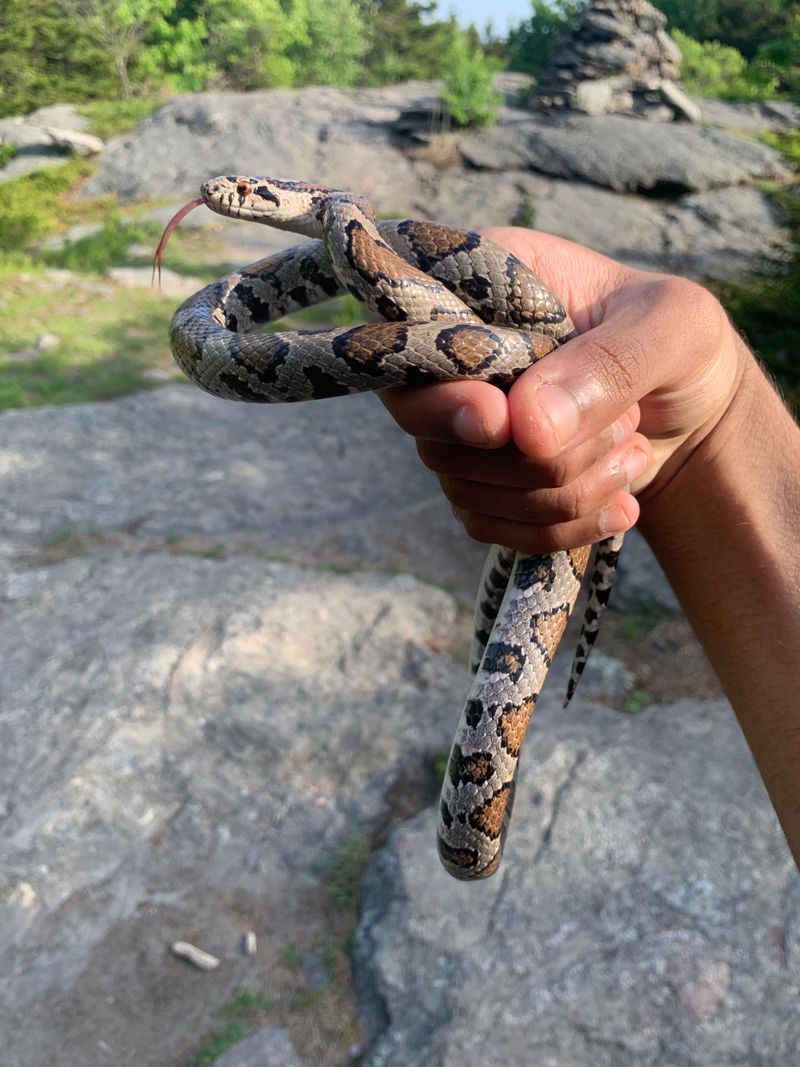
Plenty of Bay State homeowners have called in a panic about a copperhead in the woodpile, only to learn they found a milksnake. The reddish-brown saddles on a gray body do look a lot like a copperhead at first glance.
Up close, though, the pattern is blotchy rather than hourglass-shaped.
Milksnakes are not venomous at all. They hunt mice, voles, and other small rodents that chew on garden hoses and sneak into sheds.
When cornered, one may rattle its tail in dry leaves, which is pure bluff.
Fun fact: the name comes from an old myth that these snakes drank milk from cows in barns. In truth, they were just in the barn chasing mice.
2. Northern Water Snake

Thick body, dark bands, hanging out by the water. If you grew up hearing about cottonmouths, the northern water snake checks every scary box.
The good news is that cottonmouths do not live anywhere near Massachusetts.
Water snakes have no venom. They can be cranky if grabbed and may bite or release a smelly musk, so hands off is the best rule.
Left alone, they will slide into the pond and vanish.
If you have a backyard pond or live near a stream, these snakes eat fish and frogs and keep the shoreline wild in a healthy way. Watching one bask on a warm rock is a quiet little nature show.
3. Eastern Hognose Snake

Picture a snake that spreads its neck like a cobra, hisses loudly, and then, if that fails, flips over and plays dead with its tongue hanging out. That drama queen is the eastern hognose, found in sandy spots like Cape Cod and the Connecticut River Valley.
All that acting hides a mild personality. Hognose snakes almost never bite people, and their special saliva is meant for toads, not humans.
Flip one right side up and it will often roll back over, as if insisting it is truly dead.
Hognose snakes are a species of concern in Massachusetts, so spotting one is a treat. Snap a photo from a distance and let the performer exit the stage.
4. House Centipede
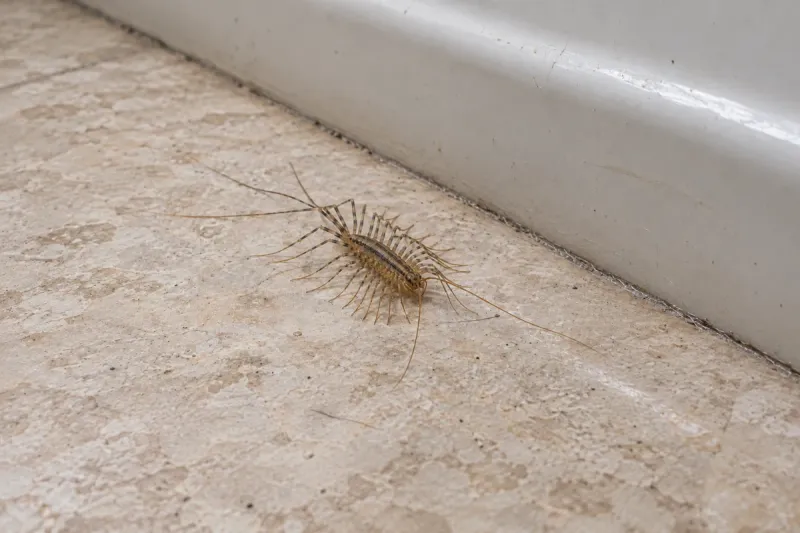
Fifteen pairs of long, wiggly legs zooming across the bathroom wall at midnight. Few things make people shriek faster.
Yet the house centipede is one of the best free pest controllers you could ask for.
These speedy hunters eat silverfish, cockroaches, spiders, and bed bugs. Technically they have a tiny amount of venom for prey, but they rarely bite humans, and a bite feels like a mild bee sting at worst.
Outdoors, under mulch or near your foundation, they simply do their job. If one keeps showing up inside, a drier basement will send it elsewhere.
5. Eastern Cicada Killer Wasp
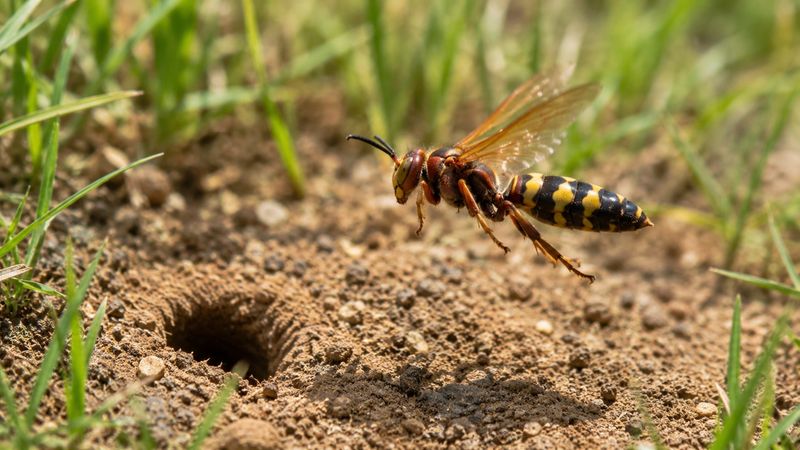
Size alone makes this one scary. At nearly two inches long, the cicada killer looks like a hornet that hit the gym.
Many folks spot them buzzing over bare patches of lawn in July and assume the worst.
Relax. The males that zip around and seem aggressive cannot sting at all.
Females can, but they save their sting for cicadas, which they drag into underground burrows to feed their young.
They do not form big colonies or defend a nest like yellowjackets. Mow around them, keep kids from stomping on burrows, and they will be gone by late summer.
6. Fishing Spider
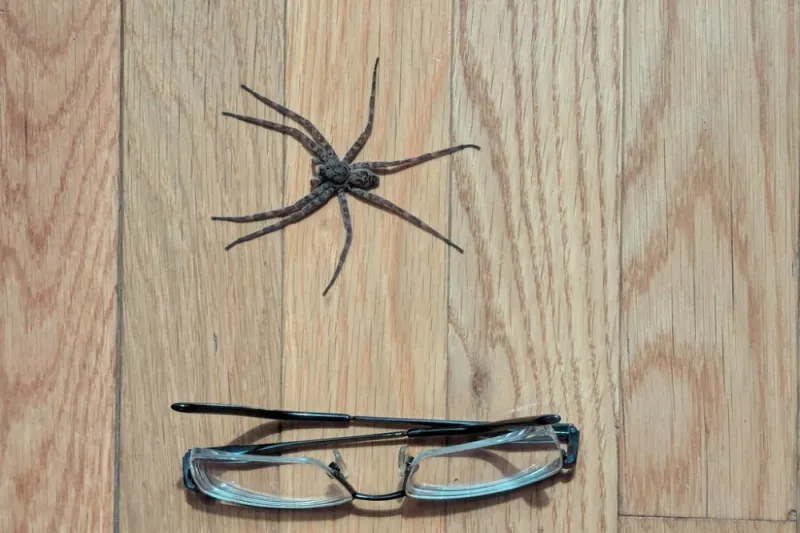
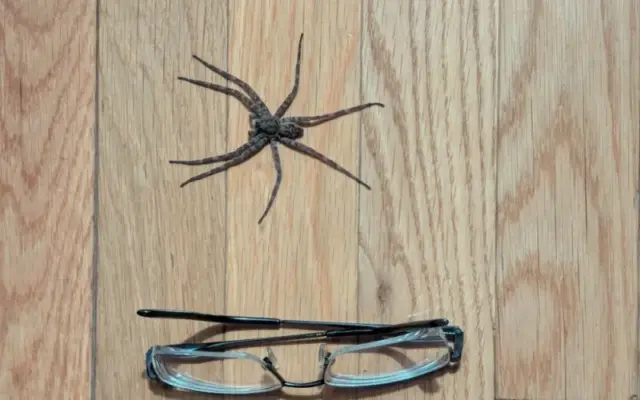
Did you know some spiders can walk on water and even dive under it? Fishing spiders do both, and they are big enough, with a leg span near the size of your palm, to make a dock visitor jump.
Despite their giant look, they are shy. A bite is rare and usually no worse than a bee sting.
Most of the time they skitter away or slip below the surface to hide.
You might find them on docks, boathouses, or damp wood piles. They snack on insects and sometimes tiny fish, which makes them an impressive part of lakeside life rather than a threat.
7. Red Eft (Eastern Newt)
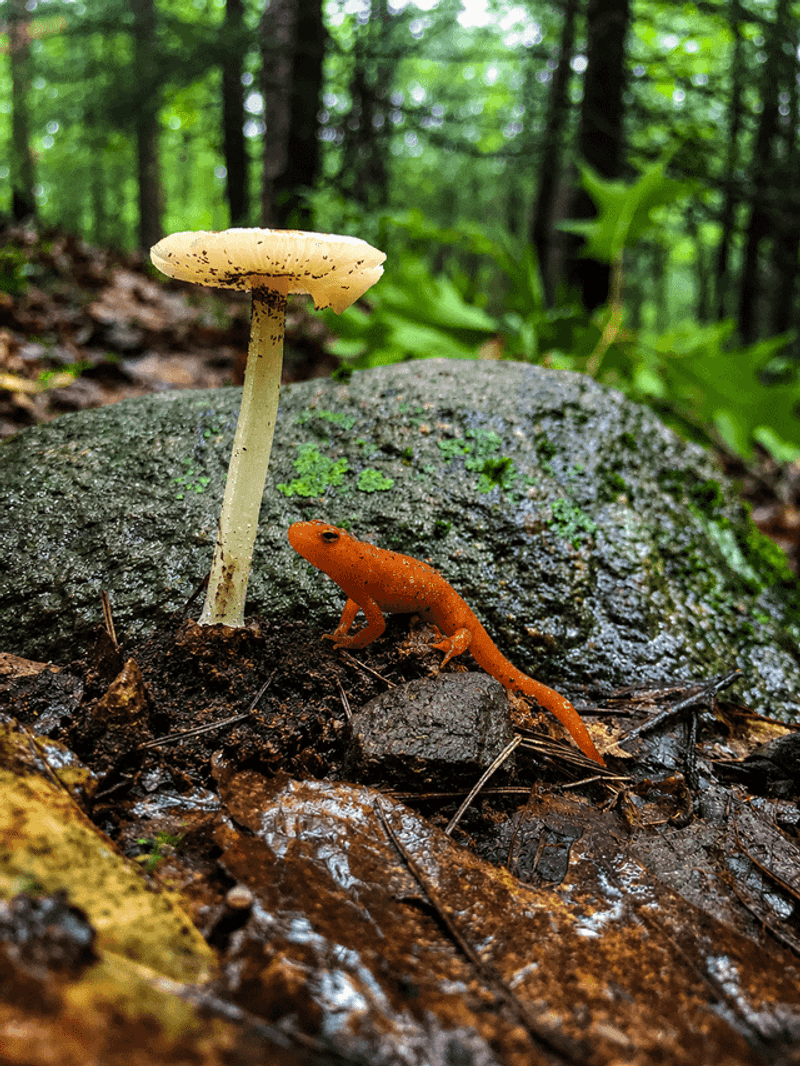
After a summer rain, bright orange lizard-like creatures sometimes appear on wet trails and garden paths. Their color screams danger, and that is partly true, since red efts carry mild skin toxins to warn off predators.
For people, the rule is simple. Do not eat one, and wash your hands if you touch it.
They do not bite, sting, or chase anyone.
A red eft is the teenage stage of the eastern newt. It wanders on land for a few years before returning to a pond as a green adult, which is a pretty amazing life story for a creature smaller than your finger.
Share this story