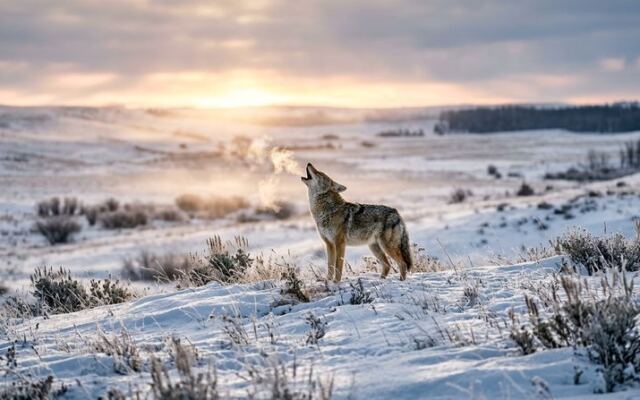
Those yips, barks, and howls floating over your yard at night are coyotes talking to each other. They use these sounds to keep in touch and to let other coyotes know who is around.
Scientists have sorted the calls into types, but no one can read one howl like a text message. Here is what the sounds can tell you, what they cannot, and how to stay sensible when you hear them.
Coyote calls do not have fixed translations
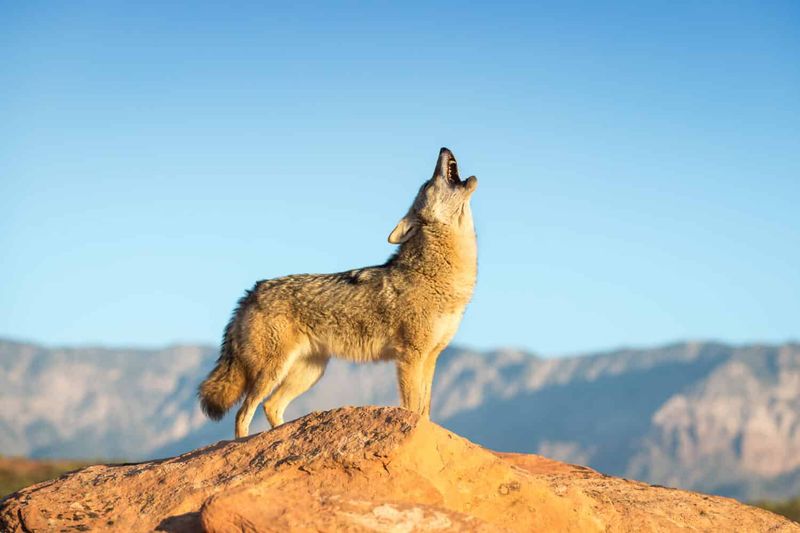
Here is the honest answer to what each call means: nobody can give you a dependable dictionary. Researchers have spent years recording coyotes and sorting their sounds into groups.
In a 1978 study of coyote vocalizations, Philip Lehner described a lexicon of calls and compared it with the sounds of other wild canids.
That kind of work is useful. It shows that coyotes make several kinds of sounds, including howls, barks, and short, high yips, and that the sounds seem to fit certain situations.
Earlier work, such as Lehner’s 1974 analysis of long-distance calls, looked closely at the howls that travel far across open ground.
But describing a type of call is not the same as decoding it. The available research does not back up a simple rule like a yip always means one thing and a howl always means another.
The same sound can show up in different situations, and context matters a great deal.
So you can absolutely notice differences. A long, smooth howl does sound different from a burst of excited yips.
You just cannot assign a certain meaning to each one from your back porch.
The rest of this article works the same way. It looks at the roles coyote calls can play, and it stays clear about the limits of what a sound alone can tell you.
Calls can help coyotes locate one another and signal territory
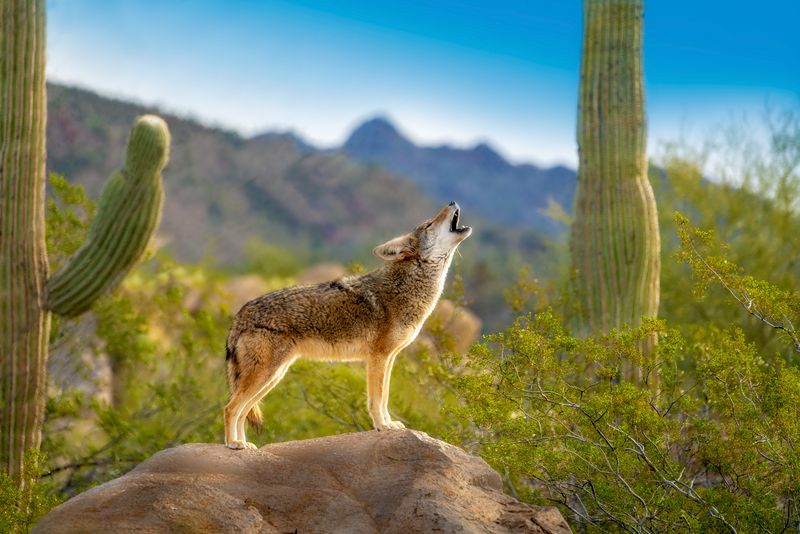
Coyotes live in a world where a lot of communication happens out of sight. Trees, hills, and darkness make it hard to see each other, so sound does the work.
TWRA notes that coyotes communicate through howls, yips, and barks.
Two broad jobs show up again and again in the research. One is helping coyotes locate each other.
A howl carries far, and an answering howl tells the caller where a companion is. The other is signaling that a territory is occupied, which lets neighbors know the area already has residents.
Lehner’s work on coyote vocalizations and on long-distance calls describes these functions.
Keeping track of family members is one possible role too. Maybe a coyote is checking in with relatives, but that is only one explanation, not the answer for every call you hear.
Here is the catch. Knowing why coyotes vocalize in general does not let you decode a single howl, yip, or bark.
A call you hear at 11 p.m. could fit any of these roles, or something else. Think of it like hearing someone shout across a field: you know they are communicating, but you may not know the message.
What Tennessee’s seasonal dates do—and don’t—tell us
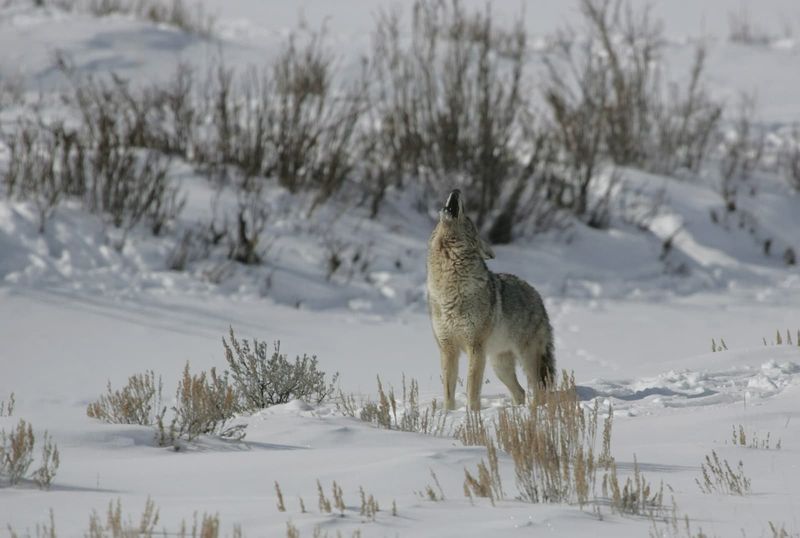
Seasons do matter for coyotes, so it helps to know the dates. TWRA reports that young coyotes begin dispersing in October and places breeding in January to March.
Dispersing means young animals leave the area where they were born to find places of their own.
Those dates are useful, but they have limits. They do not say how long dispersal continues, so you cannot treat late November as a set part of that period.
They also do not identify the cause of any particular call you hear on a late-November night. A howl on one of those evenings should not be labeled as breeding chatter or pup-rearing chatter.
Coyotes can also call year-round, and season and context can affect how vocal they are. The evidence at hand does not show a statewide late-November peak in calling.
If your neighborhood seems louder some nights, many things could be behind it, and a single date will not explain it.
A practical approach is to note when you hear calls and how often. A pattern in your own area is more useful than a guess about season.
If the sounds ever change in a way that worries you, that is a good moment to ask TWRA or local animal control about what is going on nearby.
A chorus can sound like more coyotes than it is
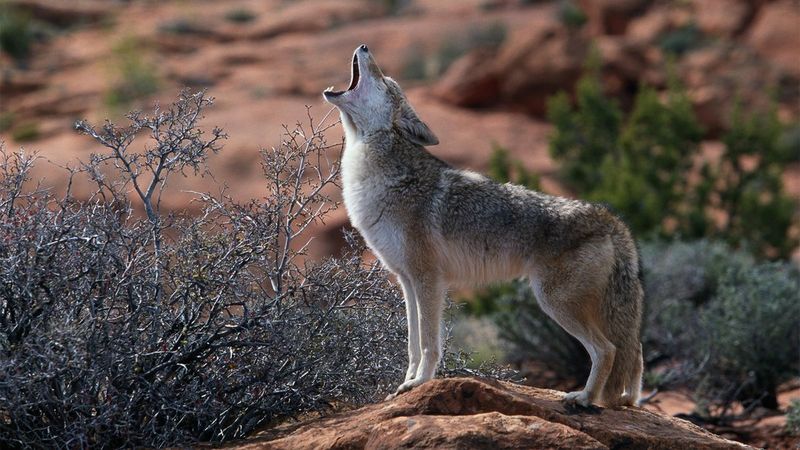
Picture a burst of overlapping yips and howls from beyond your fence. It is easy to imagine a whole pack out there.
Research suggests our ears can fool us.
In a Human-Wildlife Interactions study, 427 participants listened to recordings of one to four coyotes. They generally overestimated how many coyotes they heard.
Overlapping voices, echoes, and quick changes in pitch can make a couple of animals sound like many.
That result is worth taking seriously, but it also has a limit. The study was about recordings, so it cannot tell you how many coyotes are outside your home.
It cannot tell you how far away they are either.
So a loud chorus does not prove a large group is nearby. It does not prove the animals are close to your house.
Sound can carry a long way on a still night, and a few distant voices can seem right on top of you.
If you want to know more, you may be better off looking for other clues, such as tracks or trail camera photos. Even then, be careful about big conclusions.
A good rule is to treat the sound as a hint that coyotes live somewhere in the area, nothing more.
Coyotes can live in Tennessee neighborhoods
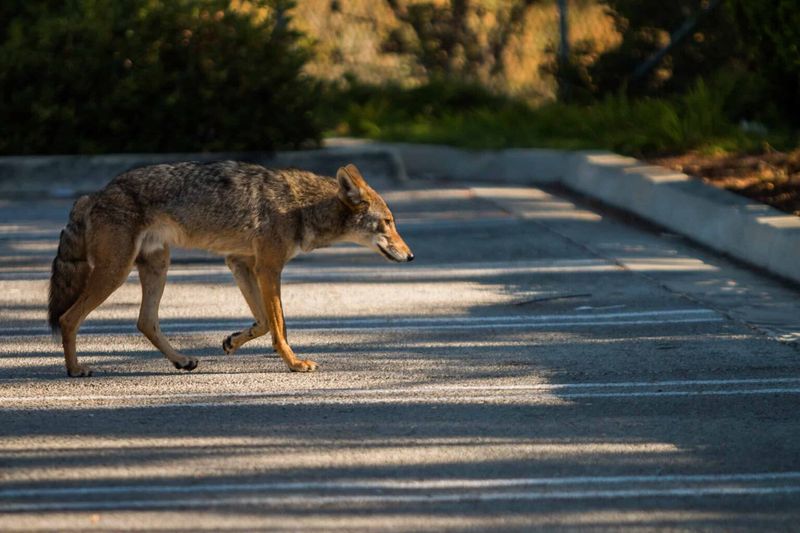
If you live in Tennessee, coyotes are probably closer to your daily life than you think. TWRA describes coyotes as locally common in the state.
They can live in many habitats, including urban areas, so a howl is as likely to drift across a Nashville subdivision as a hollow in the Cumberland Plateau.
Greenways, creek corridors, golf courses, and patches of woods give them places to travel and rest. Because they are so adaptable, hearing coyotes does not mean something unusual is happening in your area.
TWRA also describes a typical family group as a mating pair and their offspring. That is a family, not a giant pack.
So a chorus should not be taken as a sign of a large crowd.
It also helps to remember that a coyote calling in a neighborhood is not necessarily close to a home. Open ground, quiet nights, and hard surfaces can carry sound far.
The animal could be a long way off.
For most people, the takeaway is simple. Coyotes are part of the local wildlife, and hearing them is a normal part of living in the state.
What matters more is what you do around your home, which is where the next section comes in.
Keep food inaccessible and pets close
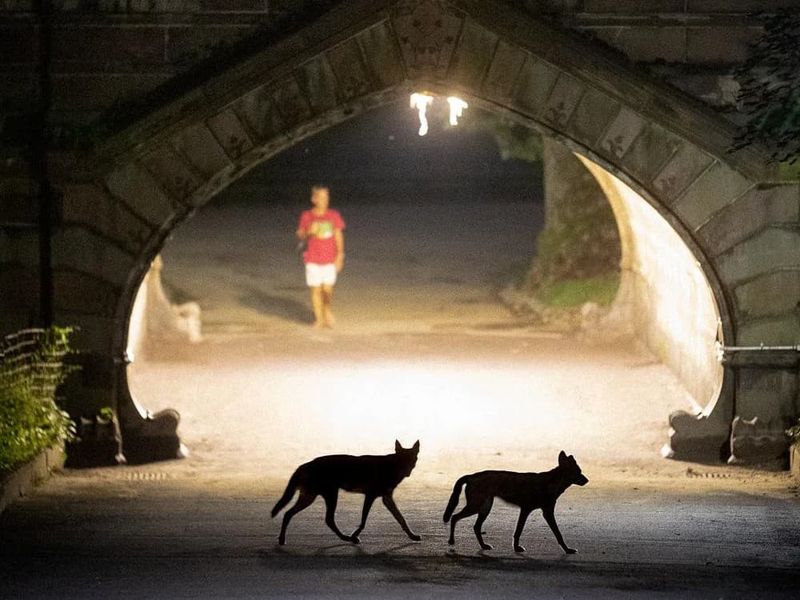
Most of the useful steps have nothing to do with the howling itself. They are about not giving coyotes a reason to hang around.
TWRA advises people not to feed coyotes, to secure trash and other food sources, and to keep pets from roaming.
Think about everything that could smell like a meal: garbage cans, pet food left on the porch, fallen fruit, and bird feeders that spill seed. Bring pet bowls inside and use cans with tight lids.
Small pets should be supervised, especially at night, and TWRA also advises supervising small children outdoors where coyotes have been frequenting.
If you see a coyote, do not approach it or feed it. TWRA recommends making noise as a way to discourage coyotes from frequenting an area.
Clapping, shouting, or banging pots can help send the message that your yard is not a comfortable place.
Behavior is the thing to watch. The CDC advises calling animal control if an animal is acting strangely or out of character.
That could mean an animal that seems unusually bold, confused, or unafraid of people.
If a wild animal ever bites someone, the Tennessee Department of Health advises reporting the bite to the local health department and animal control office. A howl on its own does not show that coyotes are hunting nearby, have killed a pet, or are about to attack.
Treat a howl as a clue, not a verdict
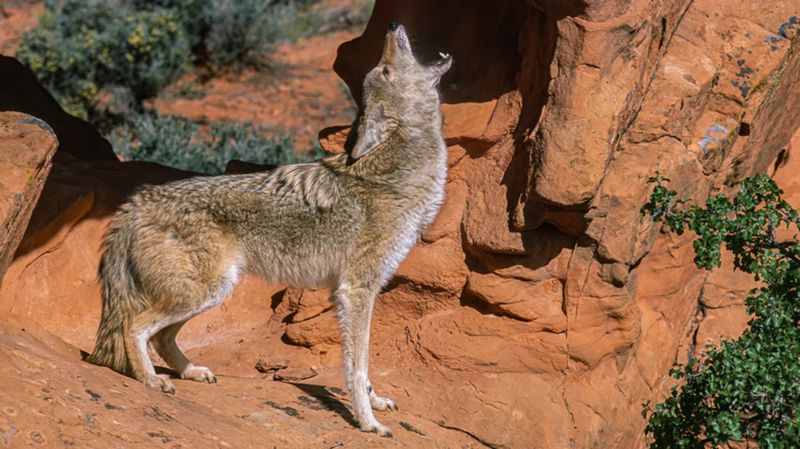
A coyote call is communication, and that is about as far as one sound can take you. It cannot show the exact purpose of the call, how many animals are out there, how far away they are, or what they intend.
Listeners in the study often guessed too high on numbers, which is a good reminder to stay humble about what we hear.
Put your effort into habits that work, like the food storage and pet supervision TWRA recommends. Then the next howl can just be a good story about the wild neighbors sharing your night.
Share this story