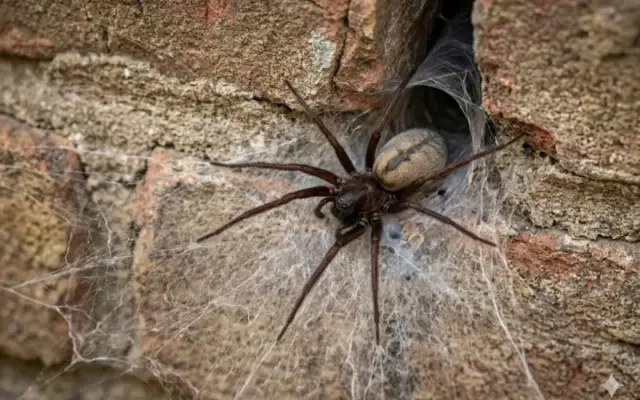
A big, dark spider near your porch light is most likely one of the common, harmless kinds, such as a fishing spider or a wolf spider, though size and color alone cannot tell you for sure. The light itself may matter less than you think, since it mostly draws insects that some spiders like to eat.
Tennessee does have a couple of spiders worth treating with care, so knowing the difference helps you stay calm and safe. Here is how to think about what you saw and what to do next.
The light can bring prey within reach
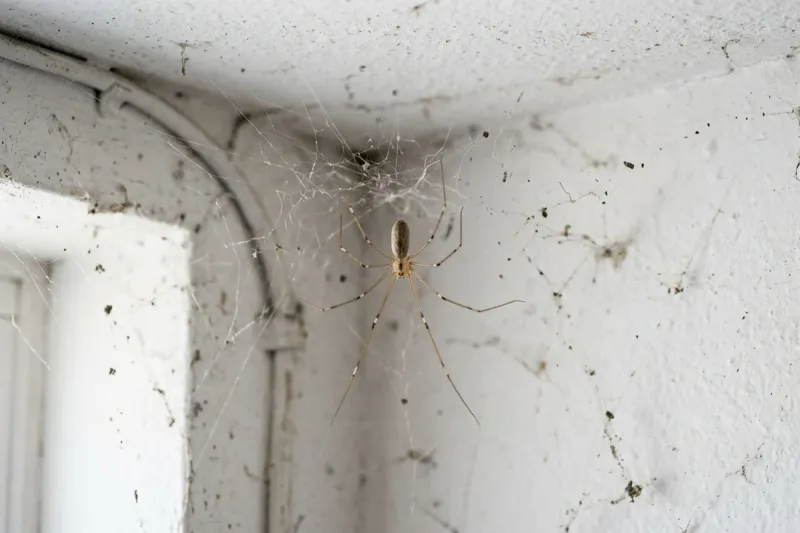
Porch lights pull in moths, gnats, and other flying insects after dark. According to Cornell’s pest management guidance, some web-building spiders place their webs near lights because that is where the insects gather.
For those spiders, a bright bulb is basically a free buffet.
That link is indirect, and it does not mean every spider is drawn to light. Wolf spiders and fishing spiders hunt actively instead of waiting in a web, as the Illinois Department of Public Health describes.
A hunter seen near a lamp may simply be wandering past on its way somewhere else.
Winter adds another wrinkle. A sighting in cold weather does not prove that spiders gather at porch lights in that season, and it does not show the spider came looking for warmth.
A natural-history account from the Burke Museum explains that outdoor spiders generally slow down or go dormant in the cold instead of seeking indoor heat.
Keep in mind that this account covers spiders broadly. It is not a survey of porch sightings in Tennessee, so it explains the general pattern but cannot say exactly why your particular spider was there on that particular night.
Fishing and wolf spiders are possibilities
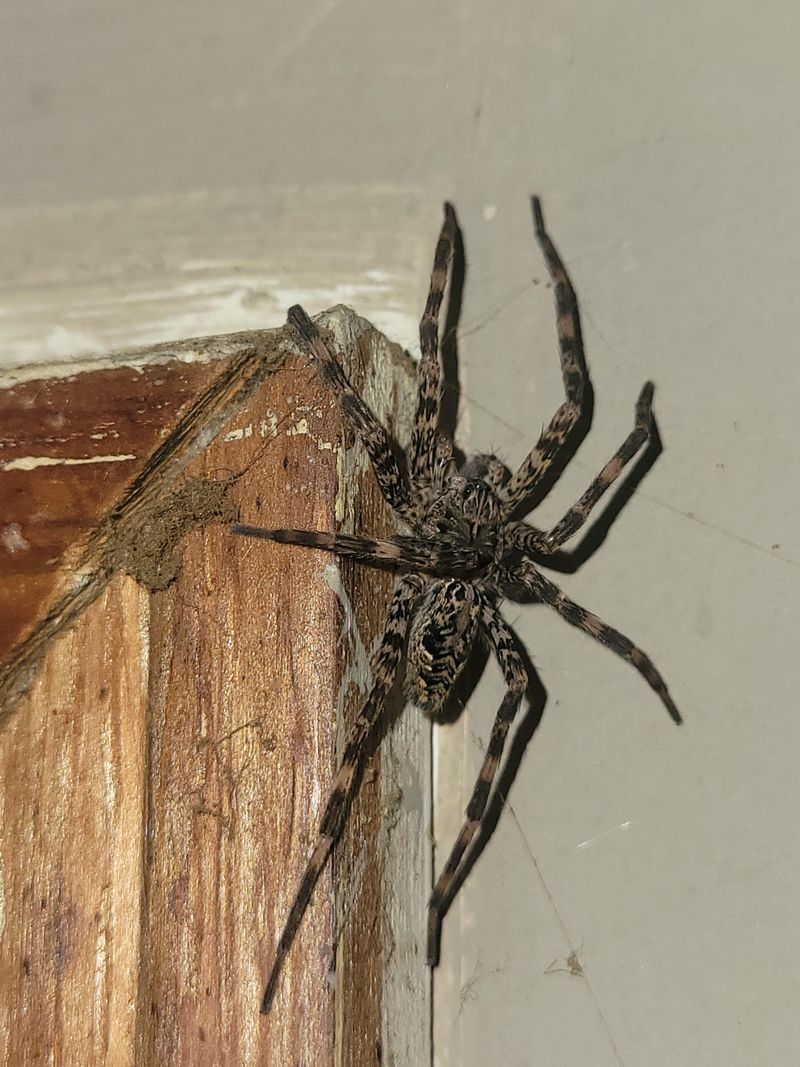
Fishing spiders and wolf spiders are two reasonable guesses for a large, dark spider, but they are guesses. Size and color are not enough to settle the question, and many spiders look similar in dim porch light.
Dark fishing spiders can resemble big wolf spiders. Penn State Extension describes fishing spiders as harmless and says they rarely bite, even when grabbed.
The dark fishing spider is also linked to wooded areas and homes, so the idea that fishing spiders live only near water is not accurate.
Wolf spiders are active hunters that chase prey instead of spinning a trap. University of Minnesota Extension notes that females carry egg sacs attached to their spinnerets, which is a helpful clue if you ever see one up close.
Their eye arrangement can also help with identification. Reading eyes safely takes a sharp image or an expert, not a quick look at a moving spider.
A clear photo reviewed by someone qualified will serve you far better than a guess based on how big or dark the spider seemed.
The spiders Tennessee flags as medically significant
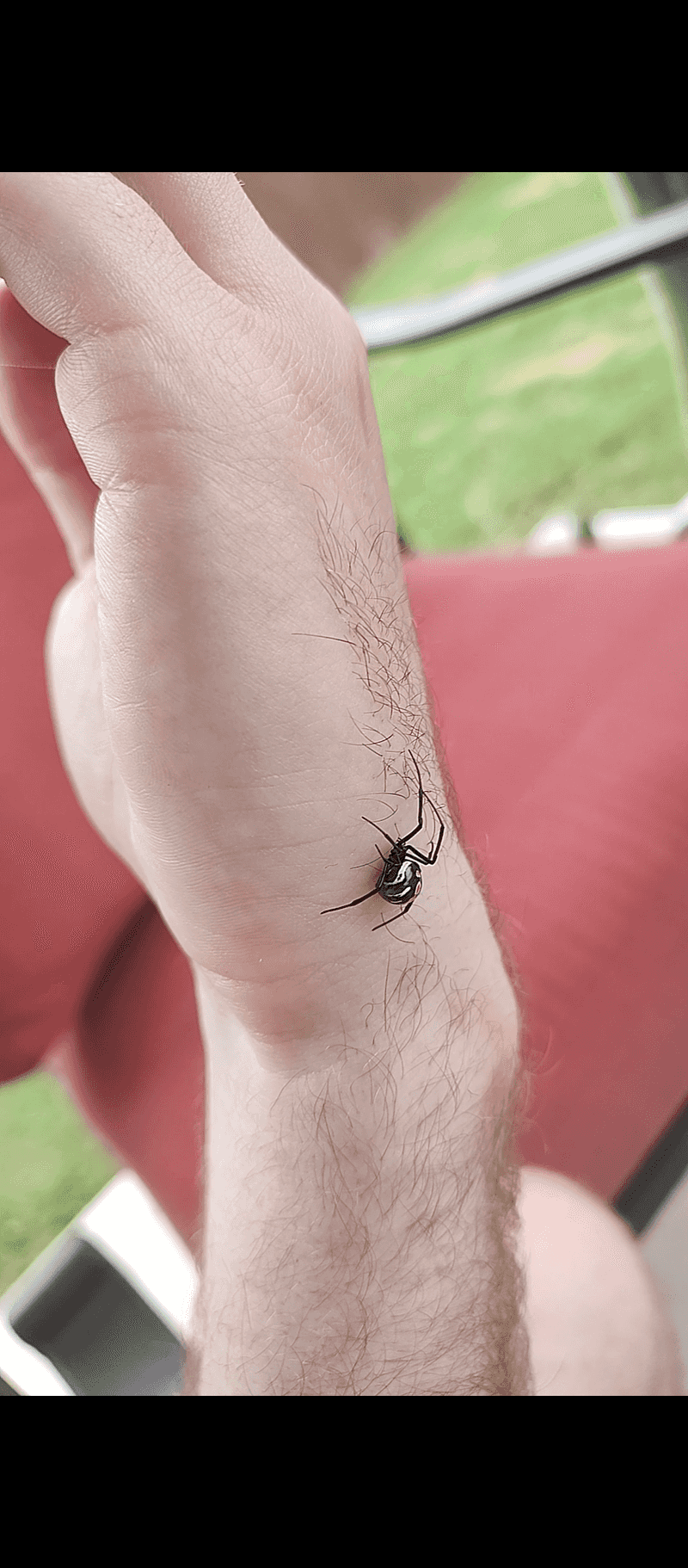
Most spiders are not medically harmful to people, though all of them carry venom. The National Pesticide Information Center makes that point clearly.
So the idea of only two venomous spiders is not technically right.
What Tennessee does highlight is a short list of medically significant ones. The Tennessee Poison Center names black widows and brown recluses as its principal concerns and says both are found in every county.
Habitat matters here. Brown recluses typically use sheltered, low-moisture places.
Black widows favor dark, protected spaces such as crawl spaces, sheds, firewood piles, and debris, not simply open areas beside a porch light.
You may also hear about brown widows. A June 2024 report from UT Extension described receiving Tennessee specimens.
At that time, though, it did not confirm that the species had survived winter or become established in the state, so it is best not to call them settled residents.
Get a closer look without getting too close
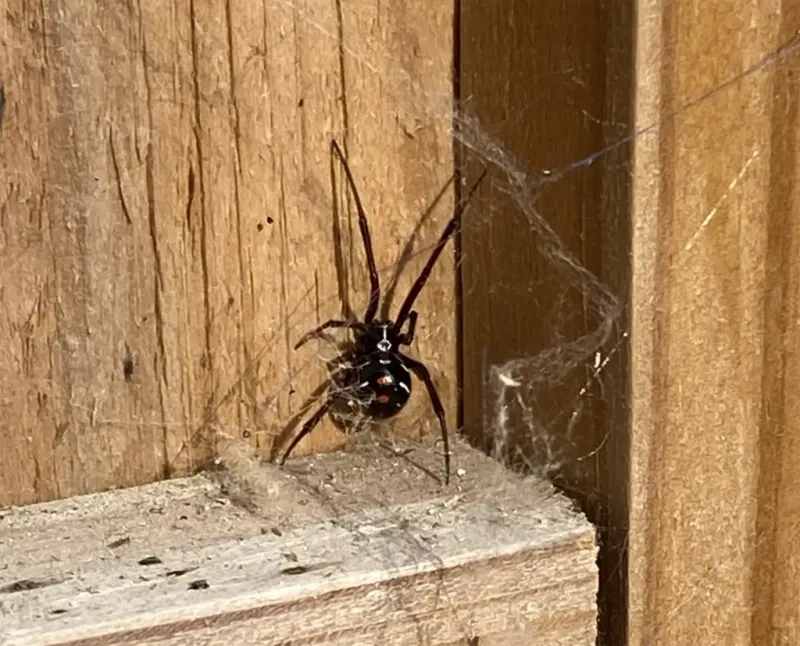
Curiosity is fine, but keep your hands out of it. Do not grab, crush, or poke an unknown spider, and do not reach into its web or hiding place.
The Tennessee Poison Center advises against handling suspected widows or other unidentified spiders for identification.
A smartphone is a better tool. Take a clear photo from a safe distance, ideally with the spider and some of its surroundings in view.
Then send it to your county Extension office or another qualified expert.
Try not to lean on a single marking. The same Poison Center cautions that other spiders can show violin-like patterns, so that shape alone does not make a brown recluse.
Eye arrangement is more telling, since recluses have six eyes in three pairs, but that is hard to judge without a sharp image.
The same caution applies to skin problems. As the UC Statewide IPM Program explains, a skin lesion alone does not establish that a spider caused it.
Without seeing or reliably documenting the spider, nobody can name one as the culprit. If you want more guidance on keeping spiders away from direct contact, NPIC’s spider page offers a good overview.
Reduce insects and webs near the entrance
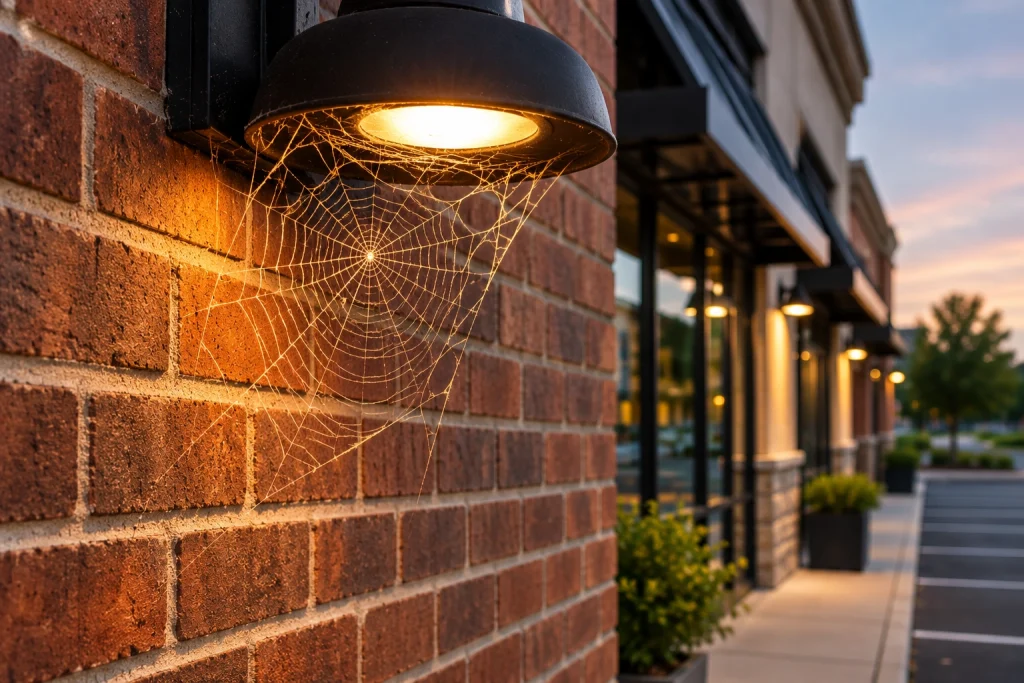
A few small changes can make a doorway less inviting to some spiders. Start with the light.
Cutting back on unnecessary outdoor lighting, or aiming it away from the entrance, gives flying insects less reason to gather there, which is the point Cornell’s pest management guidance makes about web-building spiders.
Fewer insects usually means less to eat. Sealing gaps around doors and windows, and clearing out clutter near the entrance, can trim the bug supply further.
The National Pesticide Information Center lists insect reduction and web removal among sensible steps.
Webs you can reach safely can be knocked down with a broom or vacuum hose. Do it in good light and from arm’s length.
Never reach into woodpiles, crevices, or other protected retreats to clear them out.
Treat all of this as habitat management, not a guarantee. These steps target conditions that may favor web-builders.
They will not remove every spider, and they will not discourage every hunting spider that happens to wander across your porch.
After a suspected bite, follow the symptoms
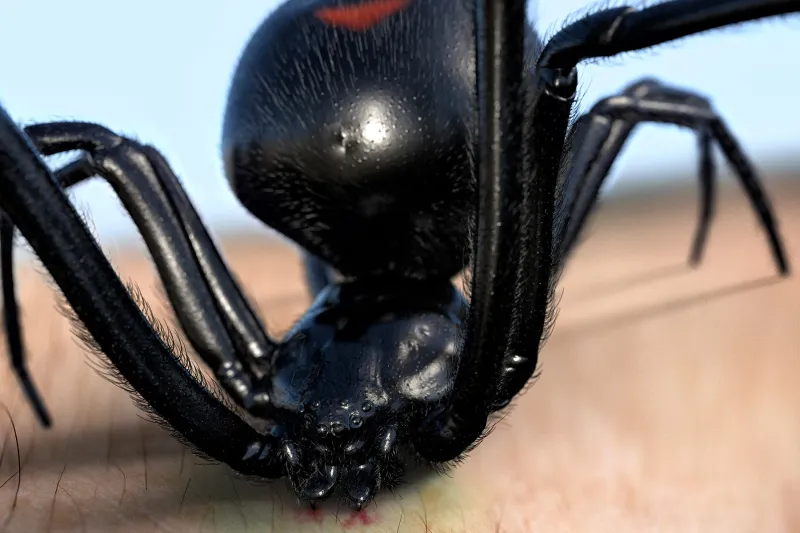
If something bites or stings you and you suspect a spider, begin with the basics. Clean the area with soap and water, then contact a medical professional or Poison Control for advice.
You do not need to know the species first.
Some symptoms call for emergency services right away. These include difficulty breathing, muscle rigidity, dizziness, or confusion, all of which point to whole-body effects.
The 2024 first aid guidelines from the American Heart Association and American Red Cross cover spider and scorpion envenomation.
Seek medical care as well if pain is severe or spreading, if there is an open wound, or if you feel unwell beyond the bite area. Let those symptoms steer your decisions, not a guess about which spider was involved.
That caution matters because wounds are easy to misread. The UC Statewide IPM Program notes that a lesion alone does not prove a spider caused it.
Calling the problem a spider bite too quickly can delay finding the real cause.
For general background on how rarely spiders cause serious harm, NPIC’s overview is a calm place to read more. A spider on the porch is usually just a neighbor with eight legs and a very different schedule than yours.
Share this story