Get the latest garden guides in your inbox →
Gardening Latest
  • General Gardening
  • Lawn Care
  • Plant Care
  • Composting
  • Soil Health
  • Backyard
  • Garden Muse Magazine
  • General Gardening
  • Lawn Care
  • Plant Care
  • Composting
  • Soil Health
  • Backyard
  • Garden Muse Magazine
  • News
  • Gardening Calendar
  • Garden Structures
  • Vegetable Garden
  • Vertical Garden
  • Raised Beds
  • Hydroponics
  • General Equipment
  • Community Gardens
Garden Themes
  • Spiritual Garden
  • Hydroseeding
  • Seeding and Laying Sod
  • Artificial Grass
  • Lawn Care Equipment
  • Plants
  • Trees
  • Planting Tools
  • Composting Basics
  • Fertilizer
  • Alternative Growing Mediums
  • Front Yard
  • Backyard Activities
  • Landscaping
Gardening Latest

Explore by state

Which state is your garden in?

Currently viewing Georgia

All states

Northeast

  • Connecticut —
  • Delaware 40
  • Maine —
  • Maryland 26
  • Massachusetts 42
  • New Hampshire —
  • New Jersey 26
  • New York 35
  • Pennsylvania 36
  • Rhode Island —
  • Vermont —

Southeast

  • Alabama 26
  • Arkansas —
  • Florida 26
  • Georgia 27
  • Kentucky 40
  • Louisiana 25
  • Mississippi —
  • North Carolina 24
  • South Carolina 39
  • Tennessee 23
  • Virginia 25
  • West Virginia —

Midwest

  • Illinois 25
  • Indiana 28
  • Iowa 39
  • Kansas —
  • Michigan 26
  • Minnesota 25
  • Missouri 25
  • Nebraska —
  • North Dakota —
  • Ohio 26
  • South Dakota —
  • Wisconsin 41

Southwest

  • Arizona 26
  • Colorado —
  • Nevada —
  • New Mexico —
  • Oklahoma —
  • Texas 25
  • Utah —

West

  • Alaska —
  • California 25
  • Hawaii —
  • Idaho —
  • Montana —
  • Oregon —
  • Washington —
  • Wyoming —

No state matches that search.

Site menu

Gardening Latest
  • General Gardening
    • News
    • Gardening Calendar
    • Garden Structures
    • Vegetable Garden
    • Vertical Garden
    • Raised Beds
    • Hydroponics
    • General Equipment
    • Community Gardens
    Garden Themes
    • Spiritual Garden
  • Lawn Care
    • Hydroseeding
    • Seeding and Laying Sod
    • Artificial Grass
    • Lawn Care Equipment
  • Plant Care
    • Plants
    • Trees
    • Planting Tools
  • Composting
    • Composting Basics
  • Soil Health
    • Fertilizer
    • Alternative Growing Mediums
  • Backyard
    • Front Yard
    • Backyard Activities
    • Landscaping
  • Garden Muse Magazine

Explore

  • About GardeningLatest.com
  • Contact Us

Get the latest from the garden

New guides on lawn care, plants and backyard projects, sent when they go up.

Subscribe →

Follow

  • Facebook
  • X
  • Pinterest
  • YouTube
Georgia Gardening

What That Giant Flower Stalk Means for Your Georgia Yucca, and What Cutting It Off Actually Does

That tall stalk shooting up from your Georgia yucca is a flower stalk, and it usually means the plant is doing just…

SB

By Savannah Brooks

November 27, 2026 · 6 min read

What That Giant Flower Stalk Means for Your Georgia Yucca, and What Cutting It Off Actually Does

That tall stalk shooting up from your Georgia yucca is a flower stalk, and it usually means the plant is doing just what it should. Cutting it off is optional cleanup, not a rescue or a bloom booster.

Knowing what each choice does helps you decide whether to keep it, cut it, or wait. Here is how to sort it out calmly.

At a glance

Where
Georgia Gardening
Hardiness zone
8 10 to 20°F
Read
6 minutes
Published
November 27, 2026

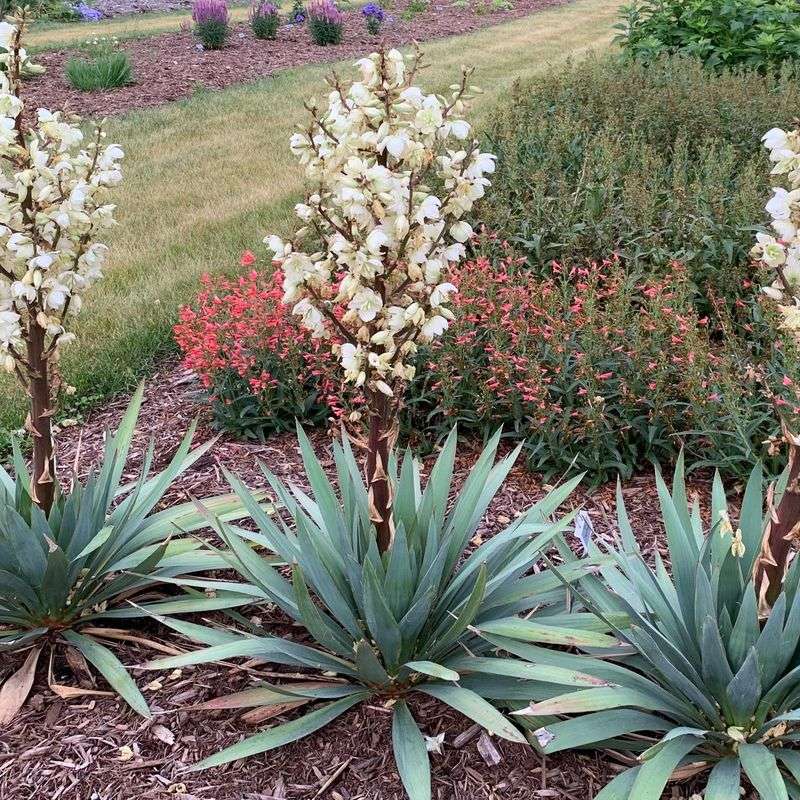
Adam’s needle sends up a flower stalk

Adam’s needle sends up a flower stalk
© Garden Crossings

Picture a clump of stiff, sword-shaped leaves that stays green all year. That is Adam’s needle (Yucca filamentosa), a common Georgia landscape plant.

UGA Extension describes it as an evergreen ornamental that sends up a flower stalk in midsummer.

That stalk is the tall spike that appears out of the middle of the leafy rosette. It can rise well above the foliage and carry showy white flowers.

Another UGA guide to Georgia landscape plants lists white summer flower spikes for the species and marks it as native to the state.

So if a thick stalk suddenly appears in June or July, you are most likely looking at a normal bloom, not a plant in trouble. The leaves at the base keep their green color, and the stalk simply adds height and a lot of flowers on top.

These details apply to Adam’s needle. Other plants sold as yucca can differ in size, bloom time, and habits, so it helps to check the tag or ask a local nursery if you are unsure what you have.

Once you know it is Adam’s needle, you can enjoy the show and take your time deciding what to do with the stalk later.

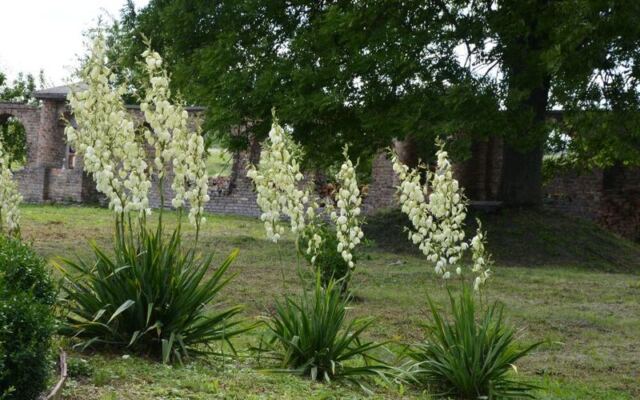
Flowering alone does not mean it is dying
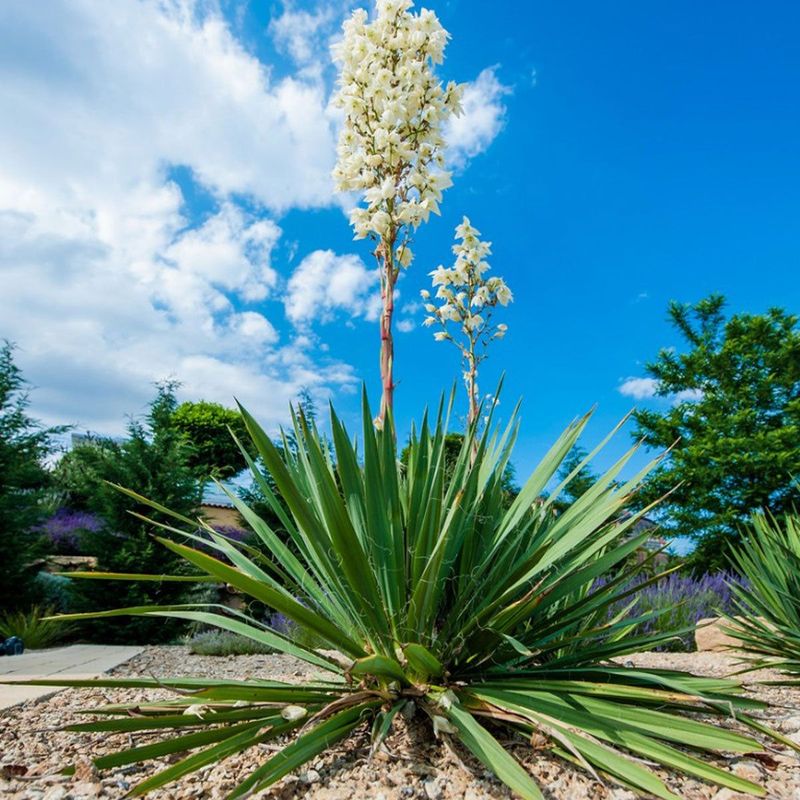
Flowering alone does not mean it is dying
© Gardening Know How

Many gardeners worry when a plant puts up a big stalk, and that worry is understandable. For a typical Adam’s needle, though, flowering by itself does not mean the plant is dying.

It is a normal event for a healthy plant.

The worry often comes from agaves, which have a famous death-bloom pattern. Many agaves flower once and then the main plant dies.

Pulling can mean a lot of effort and an awkward tug-of-war with the whole plant.

The Arizona-Sonora Desert Museum notes that most yuccas bloom more than once, which sets them apart from that pattern. Yuccas and agaves can look alike as rosette plants, but they do not behave alike.

University of Arizona Extension also helps tell these plants apart, which is useful if you are not sure what you planted. Adam’s needle is described by UGA as evergreen, which fits a plant that keeps living after it flowers.

One caution: “most” does not mean “all.” Yucca is a big group, and no one can promise that every species or every individual plant will bloom again. Flowering is also a poor way to judge health.

If you are concerned, look at the leaves and the base of the plant for real trouble signs such as widespread browning or softness, rather than blaming the stalk.

Choose what you want to keep before cutting
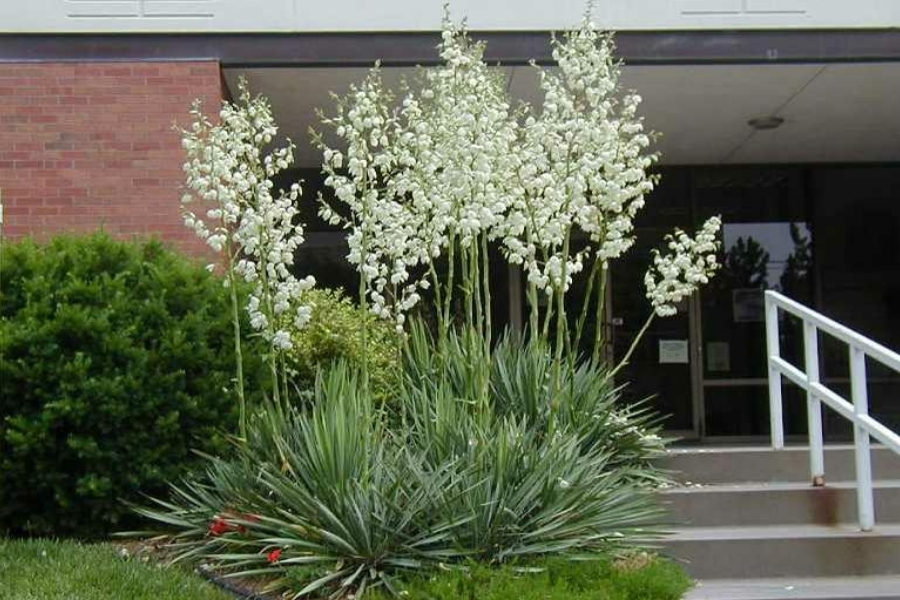
Choose what you want to keep before cutting
© Johnson’s Nursery

Timing matters more than technique here, because each choice gives up something else. If you cut during flowering, you remove the current display and may prevent seed production.

The Lady Bird Johnson Wildflower Center says the stalk can come off at any stage, but suggests waiting until the flowers are spent if you want to enjoy them.

Seeds are a separate matter. Yucca pods hold seeds, so anyone hoping to collect some should leave the stalk and pods alone until they mature.

Ask Extension addresses yucca seed pods, and an Illinois Extension reply says to leave the stalk and pods until you are ready.

Pods are not needed for next year’s bloom, so skipping them is fine. Letting them stay is simply a choice for seed lovers or for anyone who likes the look of the dried stalk.

There is one more option if you like wildlife. Yuccas have a close relationship with certain moths, and the Wildflower Center suggests leaving one or two stalks.

A study of Yucca filamentosa documents how these moths pollinate it and move pollen. That is a nice habitat consideration, not a rule, and you do not need to keep every stalk.

Cut the stalk instead of pulling it
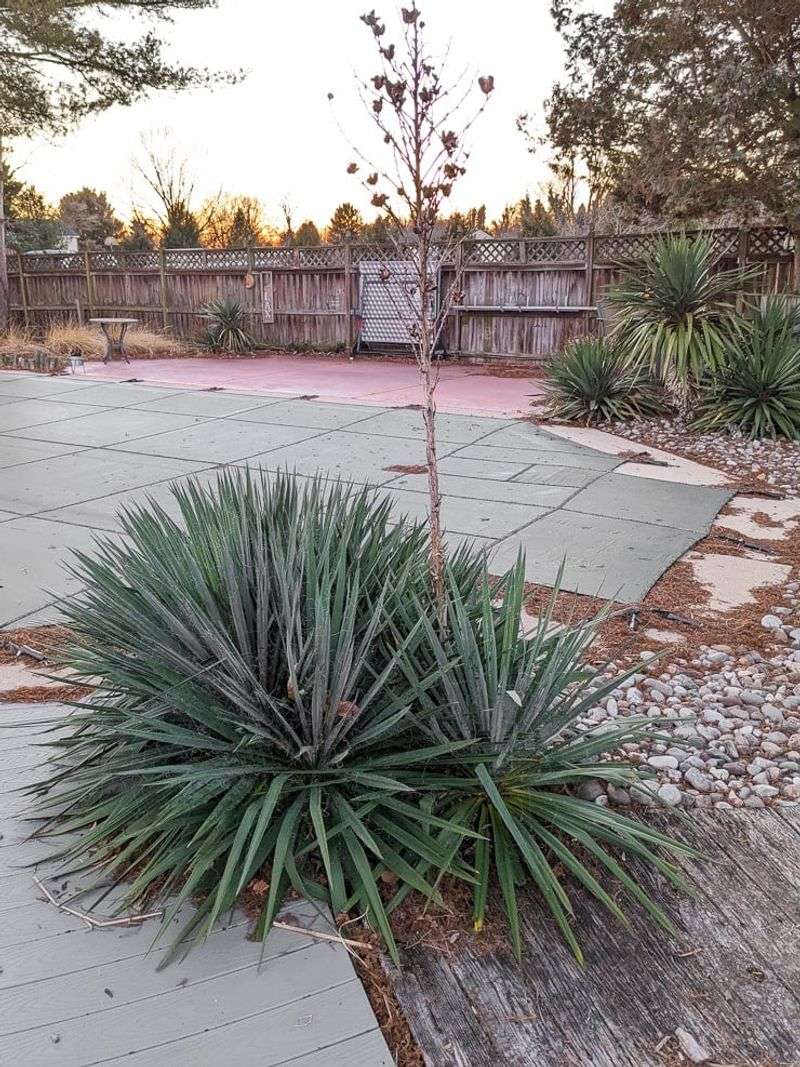
Cut the stalk instead of pulling it
© by Brittany Goldwyn

If you decide to tidy up, the stalk should be cut, not yanked. Illinois Extension cautions that the stalk is woody and unlikely to pull free.

Pulling can mean a lot of effort and an awkward tug-of-war with the whole plant.

Cut the stalk near the point where it comes out of the foliage. The Wildflower Center gives this guidance for gardeners who do not want seed pods.

If you want to enjoy the blooms, wait until the flowers have faded before you start.

Mind the leaves while you work. UGA describes the spiny foliage, and Nevada Extension notes that yucca points can be a hazard to people and pets.

Keep your hands and face clear of the pointed tips.

Sturdy gloves and eye protection are sensible precautions. Take a moment to look at where the stalk meets the plant before you reach in, so you never push blindly through the leaves.

Slow and careful beats fast and scratched.

Cutting is cleanup, not a bloom treatment
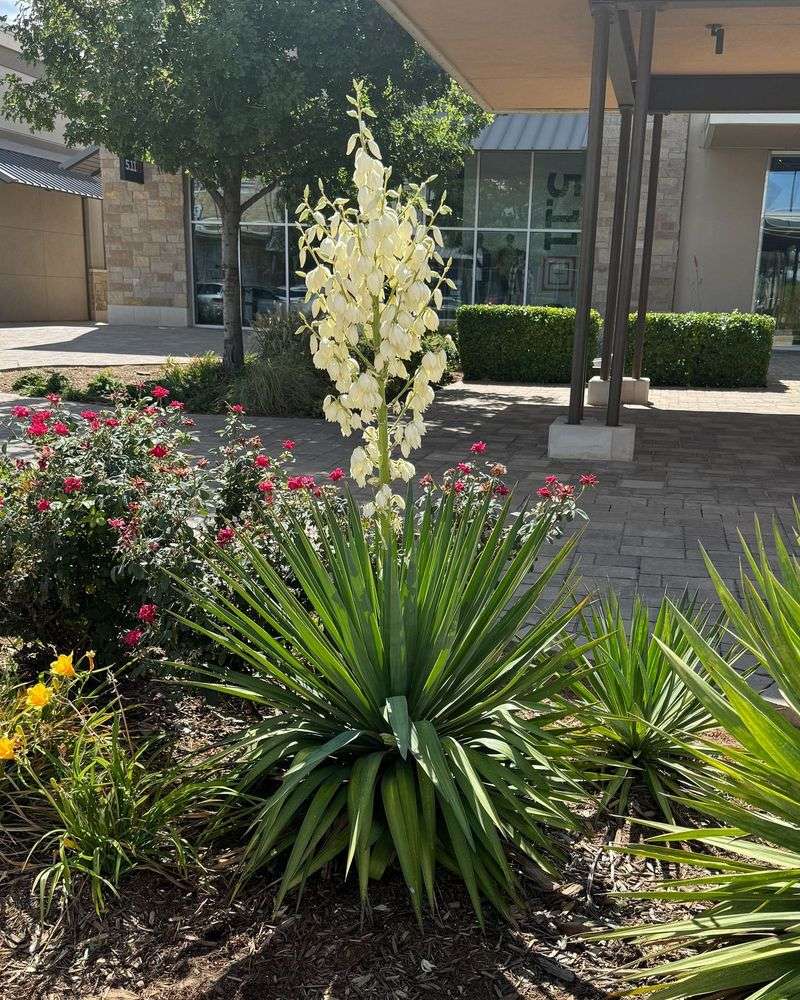
Cutting is cleanup, not a bloom treatment
© Treeland Nursery

Removing a spent stalk makes the bed look neater, and that is a fine reason to do it. It also keeps seed pods from forming if you do not want them.

Illinois Extension says the pods are not needed for next year’s bloom, and that the stalk may be cut down.

Virginia Cooperative Extension recommends removing yucca flower stalks at the end of flowering. That advice reads as routine tidying, and nothing more dramatic than that.

You may hear that cutting saves the plant, makes it bloom more, or sends stored energy back into the leaves. The guidance reviewed does not back up any of those claims.

No one has shown that removal gives a meaningful boost, so it is not a good reason to cut.

That means you can relax. A yucca that keeps its stalk through fall is not being harmed, and a yucca whose stalk you remove is not being rescued.

Think of it as a matter of looks and seeds, and let your own taste in the garden make the call.

Let your goal decide what happens next
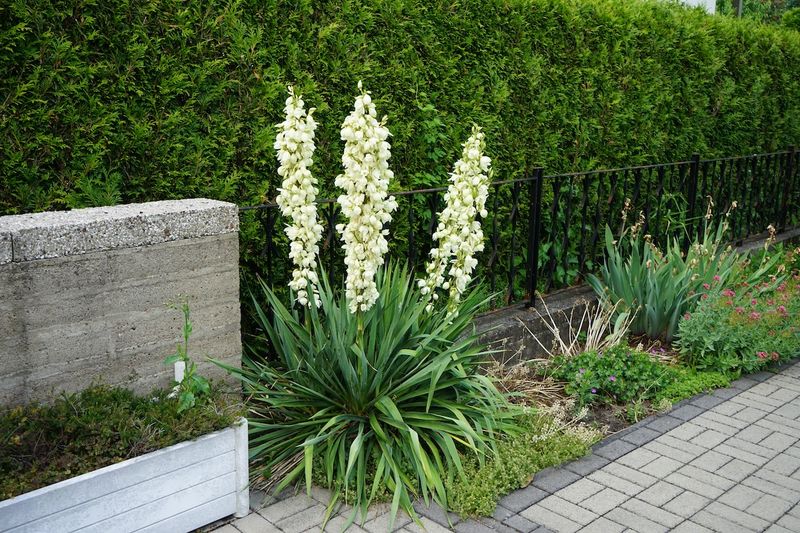
Let your goal decide what happens next
© The Old Farmer’s Almanac

Start by enjoying the blooms while they last, since UGA notes they arrive in midsummer. If you want seeds, leave the pods until they mature.

If you just want a tidy look, cut the spent stalk, as the Wildflower Center explains, and remember pods are not needed for next year’s flowers.

A tall stalk is a sign of a plant doing its job, so there is no hurry. The yucca will be fine either way.

Share this story
SB

Written by

Savannah Brooks

More from Savannah Brooks →

About Gardening Latest

Gardening Latest provides in-depth guides to maintaining and enhancing your garden and backyard. Learn how to make the most of the space you have and create a beautiful garden.

More about us →

Latest stories

  • Indiana GardeningIndiana Gardeners Keep Jumping Back From These 7 Critters, but They’re Completely Harmless

    Indiana Gardeners Keep Jumping Back From These 7 Critters, but They’re Completely Harmless

    1 min ago
  • Pennsylvania GardeningThe Fresh Ant Hills You Find After a Pennsylvania Rain Reveal More About Your Lawn Than You’d Think

    The Fresh Ant Hills You Find After a Pennsylvania Rain Reveal More About Your Lawn Than You’d Think

    6 min ago
  • Arizona GardeningThis Invasive Tree Keeps Outrunning the Arizona Homeowners Trying to Pull It

    This Invasive Tree Keeps Outrunning the Arizona Homeowners Trying to Pull It

    11 min ago
  • Texas GardeningA Texas Storm Just Put Your Neighbor’s Tree in Your Yard, and Here’s Who Really Pays

    A Texas Storm Just Put Your Neighbor’s Tree in Your Yard, and Here’s Who Really Pays

    16 min ago
  • Georgia GardeningDon’t Panic Over That Giant Flower Stalk on Your Georgia Sweet Onions. Here’s What It Means and Whether to Cut It

    Don’t Panic Over That Giant Flower Stalk on Your Georgia Sweet Onions. Here’s What It Means and Whether to Cut It

    21 min ago

Gardening by state

Stories for your state, and the hardiness zone most of it gardens in.

Keep exploring

Read next

All Georgia Gardening →
Georgia GardeningDon’t Panic Over That Giant Flower Stalk on Your Georgia Sweet Onions. Here’s What It Means and Whether to Cut It
Georgia Gardening

Don’t Panic Over That Giant Flower Stalk on Your Georgia Sweet Onions. Here’s What It Means and Whether to Cut It

21 min ago
Georgia GardeningGeorgia Homeowners Have The Right To Cut A Neighbor’s Vines Over The Fence, With One Big Catch
Georgia Gardening

Georgia Homeowners Have The Right To Cut A Neighbor’s Vines Over The Fence, With One Big Catch

2 hr ago
Georgia GardeningYour Neighbor’s Tree Landed in Your Georgia Yard After the Storm, and the One Who Pays Might Surprise You
Georgia Gardening

Your Neighbor’s Tree Landed in Your Georgia Yard After the Storm, and the One Who Pays Might Surprise You

9 hr ago

More from Georgia Gardening

  • These Venomous Creatures Share Your Georgia Yard, And Here’s How To Recognize Each One

    Nov 26
  • If You Keep Hearing Coyotes Howl Near Your Georgia Home at Night, Here’s Why It’s Happening Now

    Nov 25
Back to top

Leave a response Cancel

Your email address stays private. Required fields are marked with an asterisk.

Gardening Latest

In-depth guides to maintaining and enhancing your garden and backyard: how to make the most of the space you have, and how to make it beautiful.

  • Facebook
  • X
  • Pinterest
  • YouTube

We may earn a portion of sales from products or services that are purchased through our site as part of our affiliate partnerships with retailers.

Explore

  • About GardeningLatest.com
  • Contact Us
  • Terms and Conditions
  • Privacy
  • Editorial Note:
  • FTC Disclosure

Newsletter

New garden guides and seasonal tips, straight to your inbox.

We’ll email you a link to confirm. Unsubscribe any time.

Almost there! Check your inbox and tap the link to confirm.

© 2026 Gardening Latest. All rights reserved.

Back to top