You reach for a weed, something wiggles, and suddenly you are three feet back with your heart pounding. Indiana gardens are full of creatures that look scary but mean you no harm at all.
Many of them actually help your plants by eating pests or keeping the soil healthy. Once you know who they are, your next surprise in the flower bed might turn into a smile instead of a scream.
1. Eastern Garter Snake
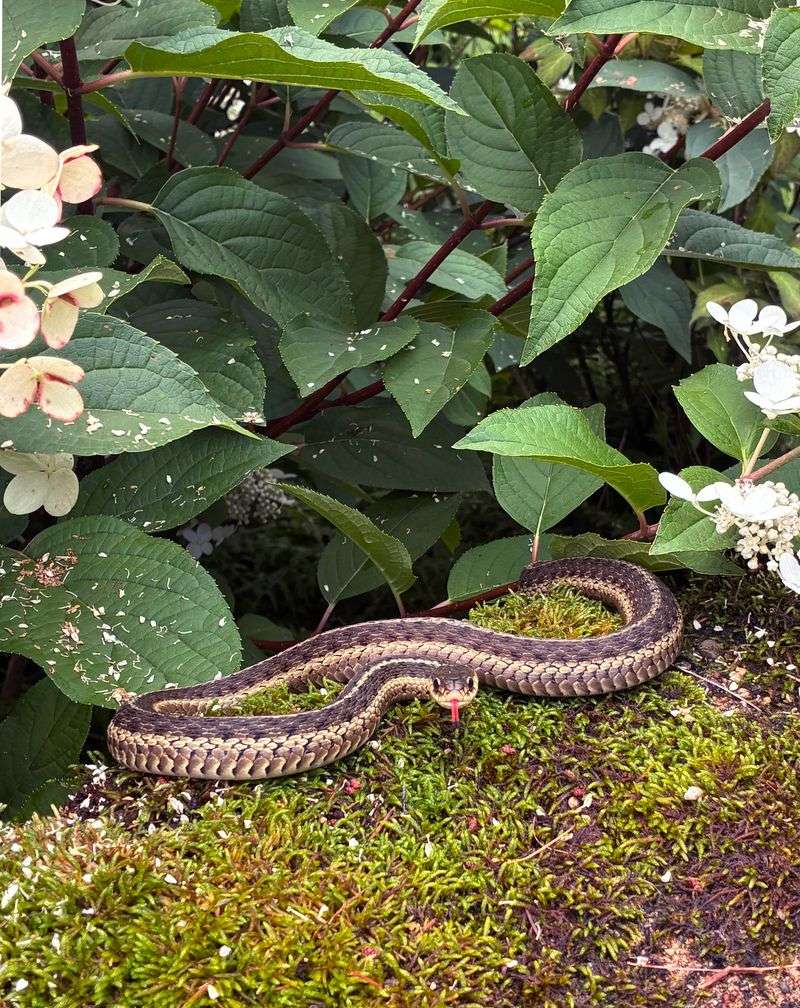
Picture pulling back a hosta leaf and seeing a striped snake staring back at you. That moment has sent plenty of Hoosiers sprinting for the porch.
Yet the eastern garter snake is one of the best neighbors your garden could ask for.
These slim snakes have three yellowish stripes running down a dark body. They are not venomous, and they would much rather slip away than face a giant human.
If you pick one up, the worst you will likely get is a smelly musk on your hands.
Garter snakes munch on slugs, earthworms, and small frogs, and they love a garden with rock piles or thick mulch. Fun fact: they are often among the first snakes to wake up in spring, sometimes basking on warm March days while snow still lingers in shady spots.
2. Wolf Spider
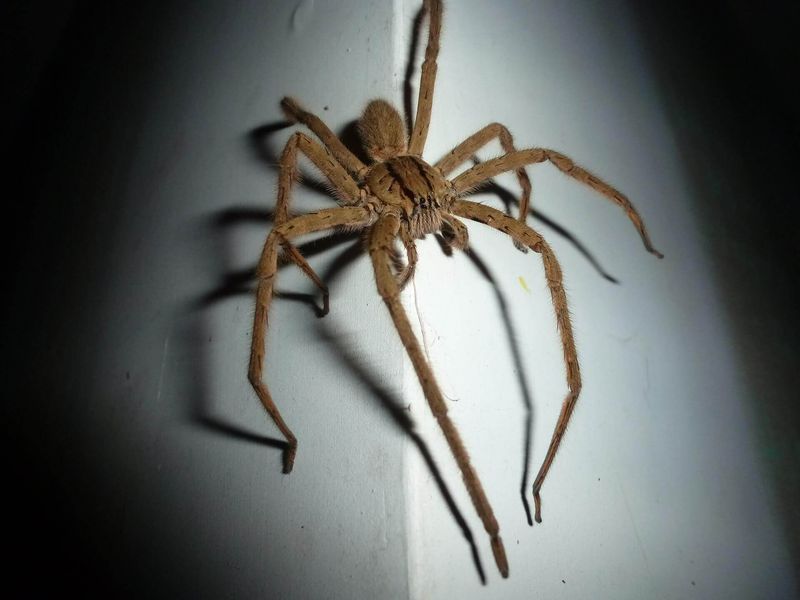
Big, hairy, and fast. Those three words explain why a wolf spider can make a grown adult drop a trowel.
Wolf spiders don’t spin webs to catch dinner. Instead, they chase prey across the ground like tiny hunters, which is why they seem to dart at you out of nowhere.
They are really just running from your shadow.
Here is the sweet part: mother wolf spiders carry their babies on their backs. If you see a spider that looks fuzzy and lumpy, you might be looking at dozens of spiderlings hitching a ride.
A bite is rare and usually feels like a bee sting at most, and in return they gobble up crickets, beetles, and other bugs that nibble your crops.
3. American Toad
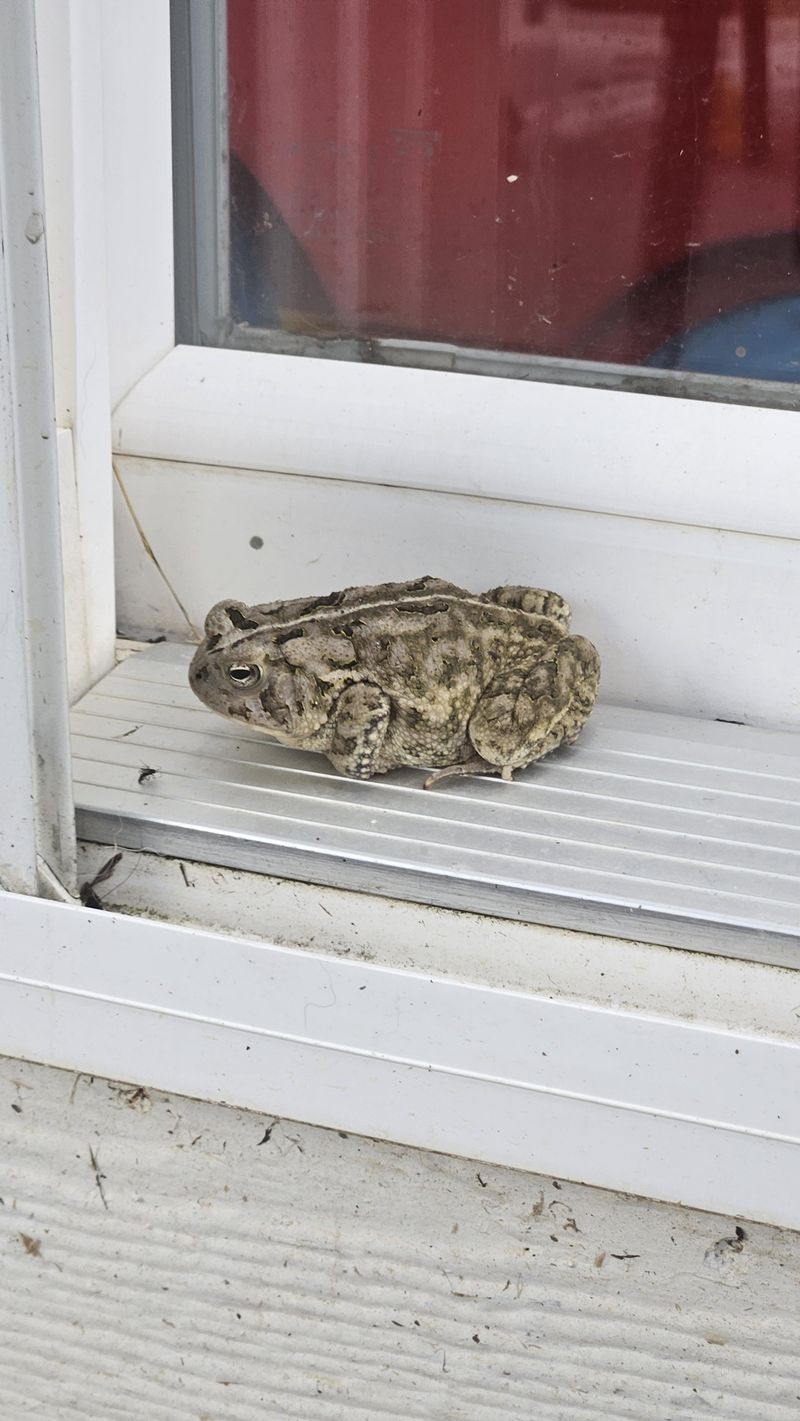
Grandma probably warned you that touching a toad gives you warts. Good news: that old tale is completely false.
The American toad is a lumpy, brown, slow-moving buddy that often hides under pots, boards, or leaf piles. When you lift a planter and it blinks up at you, it can be startling.
But this little guy is just napping until evening.
At night, a single toad can eat hundreds of insects, including cutworms and slugs. Toads do release a mild bitter substance from bumps behind their eyes to keep predators away, so just wash your hands after holding one.
Want more of them? Flip a cracked clay pot on its side in a shady corner, and you have built a toad house.
4. Cicada Killer Wasp
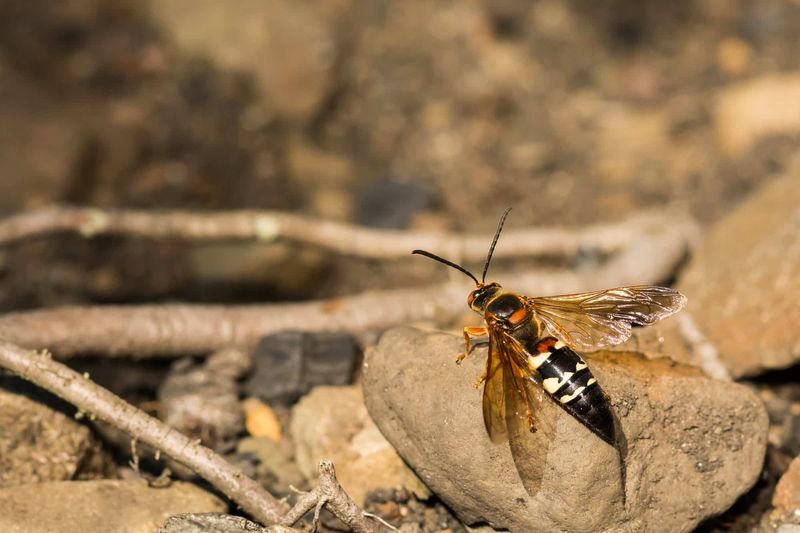
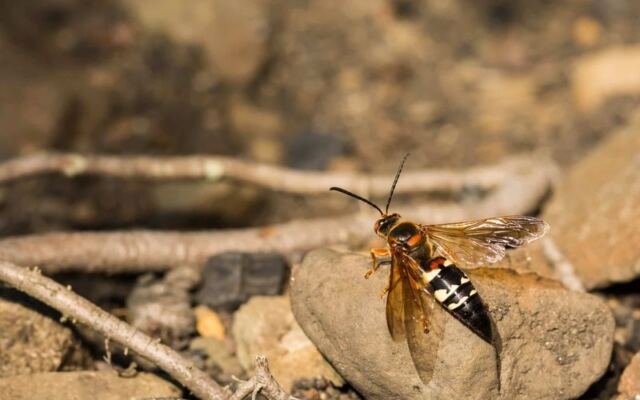
Nearly two inches long, with yellow markings and a loud buzz, the cicada killer looks like something out of a monster movie. When it zooms toward your face in July, running seems like the only option.
Relax. Males, the ones that zip around and seem aggressive, don’t even have stingers.
They are just guarding their territory and checking you out.
Females can sting, but they almost never bother people. They save their energy for hunting cicadas, which they drag into burrows to feed their young.
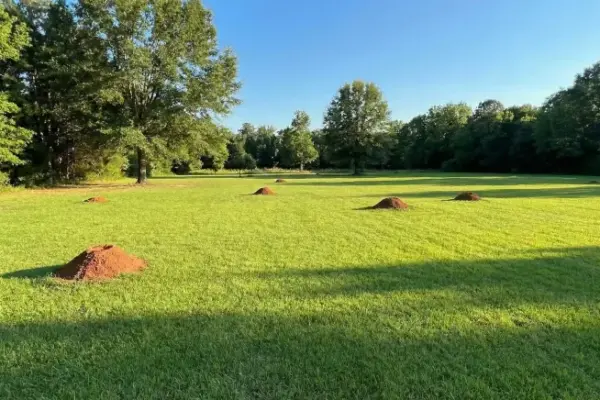
You might notice small dirt mounds in sandy spots or along sidewalks. Those are their nests, and the wasps will be gone by late summer.
5. Tomato Hornworm Look-Alike: Hummingbird Clearwing Moth
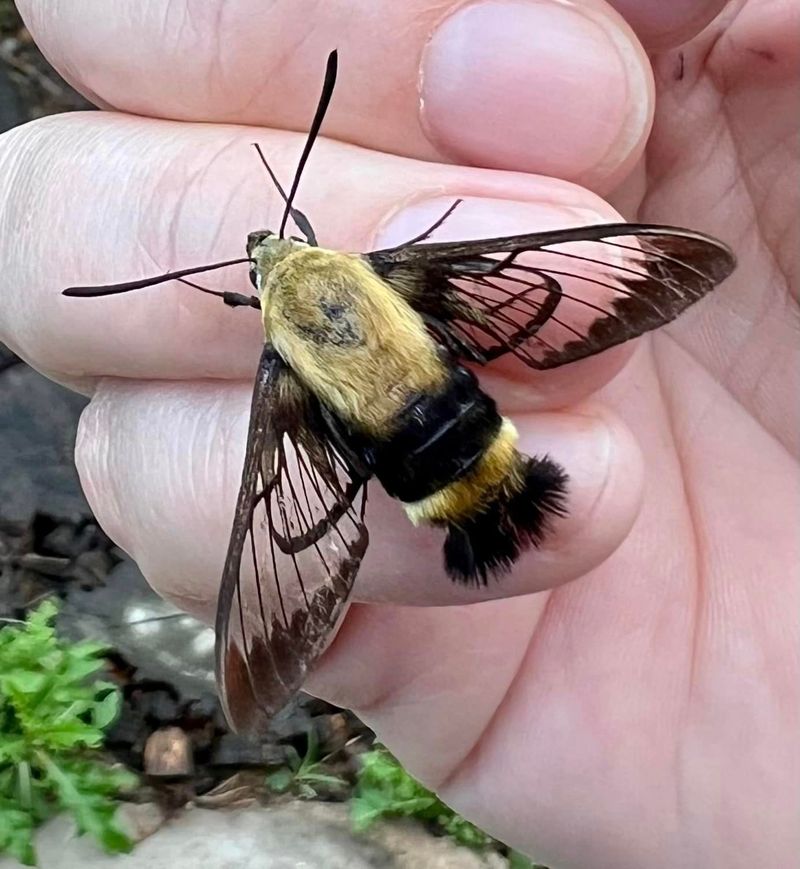
Is it a bird? Is it a bee?
Many gardeners swear they saw a tiny hummingbird with antennae, and honestly, they are not far off.
The hummingbird clearwing moth hovers in front of flowers and sips nectar with a long tongue, just like a real hummingbird. Its fuzzy body and buzzing flight make people think it might sting.
It can’t, and it won’t.
Its caterpillar does have a horn on its tail like the tomato hornworm, but it feeds on honeysuckle and viburnum instead of your tomatoes. Plant bee balm, phlox, or butterfly bush, and you may get a front-row seat to one of summer’s most charming shows.
6. Five-Lined Skink
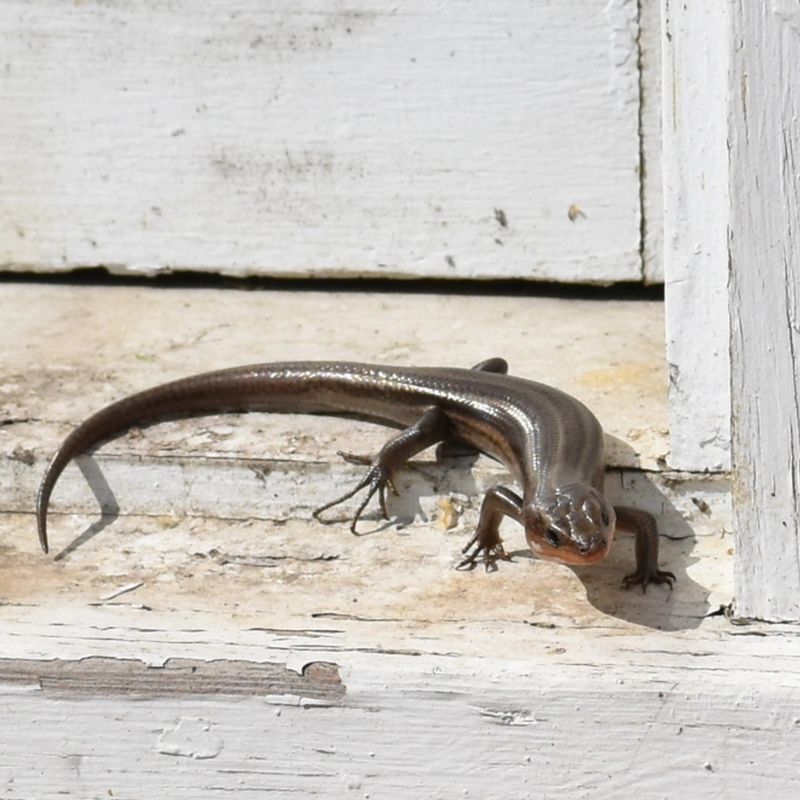
A flash of electric blue disappears under a stepping stone. If you garden in southern Indiana, there is a good chance you just met a five-lined skink.
Young skinks have shiny black bodies with cream stripes and a tail so blue it almost glows. Adults fade to brown as they age, and males can develop orange-red heads in spring.
That bright color makes some folks think they are dangerous, but the skink is totally harmless to people.
If a predator grabs its tail, the skink can drop it and grow a new one later. Pretty clever trick!
These quick lizards eat spiders, crickets, and beetles, so a stone wall or woodpile that shelters them is a gift to your garden.
7. Daddy Longlegs
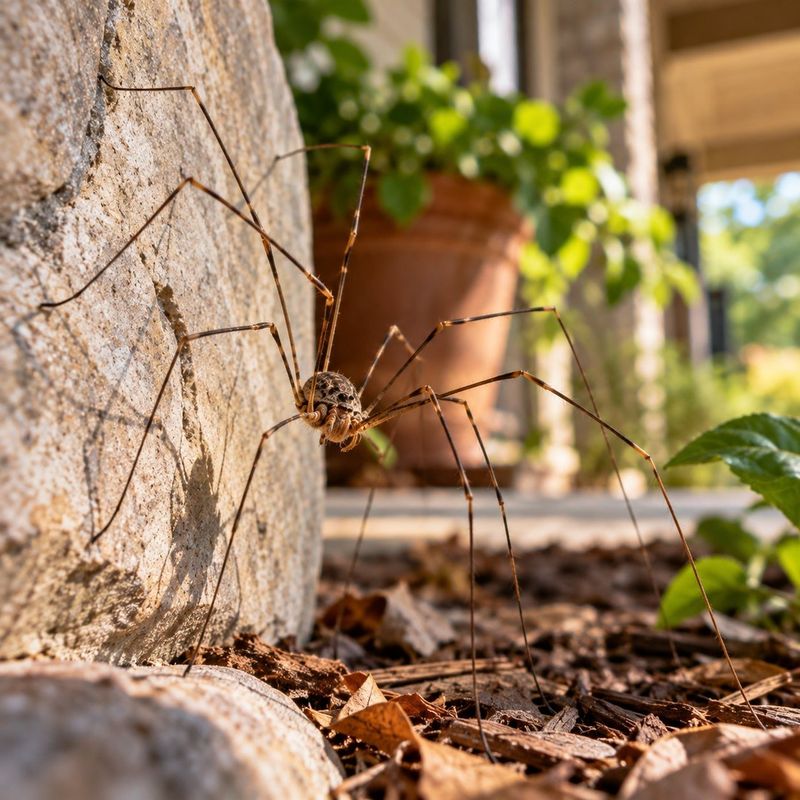
Somewhere along the way, a rumor spread that daddy longlegs are the most venomous creature alive but their fangs are too short to bite you. It is a fun story, and it is completely made up.
Most of the daddy longlegs you see in Indiana gardens are harvestmen, which aren’t true spiders at all. They have no venom glands, no silk, and one round body instead of two parts.
Their spindly legs just make them look creepier than they are.
Harvestmen are the cleanup crew of the garden, eating aphids, decaying plants, and tiny bugs. Next time one tiptoes across your arm, let it stroll.
It is simply on its way to tidy up.
Learning about these seven critters can turn a jumpy afternoon into a curious one. Give them space, and they will keep working hard for your Indiana garden.
Share this story