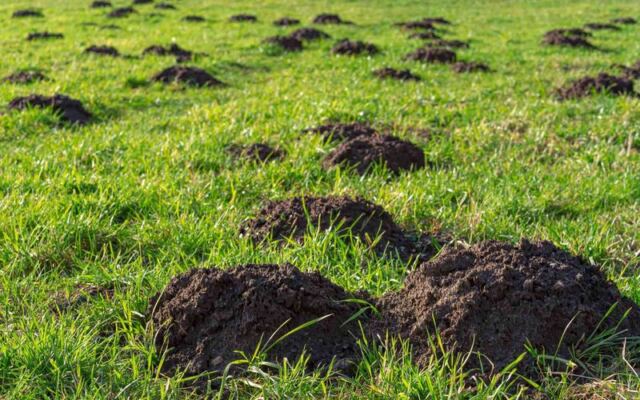
A fresh ant mound after rain tells you one clear thing: ants have been moving soil up to the surface. That small pile can point to a little local disturbance in your grass, but it cannot grade your soil or your lawn.
Knowing what a mound can and cannot say helps you decide whether to do anything at all. Most of the time, the answer is simpler than you might expect.
What a fresh mound tells you
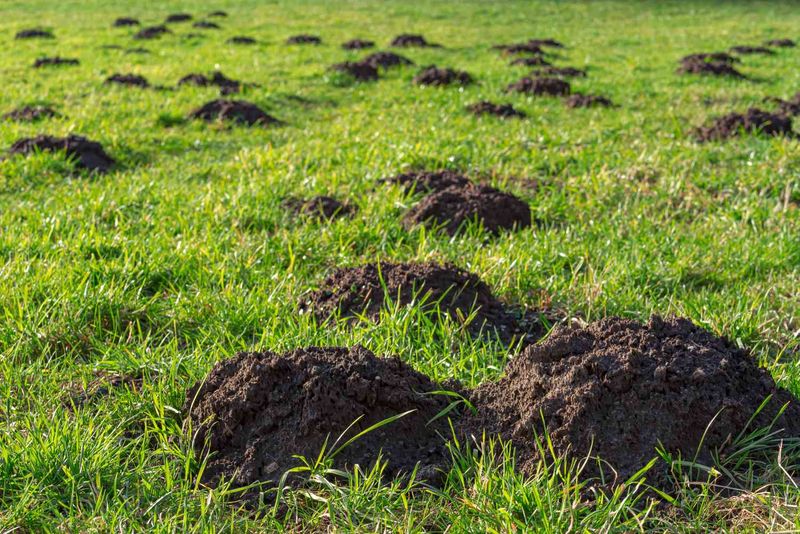
A fresh mound is a pile of soil that ants have carried up from below. It means they have dug out or tidied a nest and pushed the dirt to the surface.
That is the whole message, and it is a useful one: ants are active in that spot, and some soil is on the move.
The mound looks new, but that does not mean a new colony just moved in. Iowa State Extension explains that soil-nesting ants build mounds as their underground colonies expand.
A colony that has lived beneath your lawn for years can still produce a bright, fluffy pile overnight.
Think of the mound as a small clue about one patch of ground. Ants moving soil can cause a little local disturbance, such as loosened dirt or a few thin spots in the turf.
Penn State Extension notes that ants in home lawns seldom cause serious damage, so a mound is more of a curiosity than an emergency.
What a mound cannot do is diagnose your lawn. It will not tell you how healthy the soil is, whether water drains well, or why a patch of grass looks tired.
For those questions, you need to look at the grass and soil directly, which later sections cover.
So when you spot a new pile after a storm, you can read it simply. Ants have been digging, and the soil came up with them.
Why mounds may stand out after rain

Wet spring weather can make mounds easy to notice. Iowa State Extension reports that mound maintenance is especially noticeable during wet spring weather.
Damp soil also shows up darker and clumpier against green grass, so fresh piles catch your eye.
That is an observation about timing, not a rule about what rain does to every ant. Some of the best direct evidence comes from far away.
In a field study of imported fire ants in South China, the ants repaired their nest entrances after rain, and their mounds grew taller.
This shows that rain-related repair is possible in that species and that place. It does not show that the ants in Pennsylvania lawns react the same way.
Pennsylvania has several kinds of lawn and garden ants, and nobody can promise that a storm triggers the same repair work in all of them.
Rain also does not prove a colony has just arrived. A nest that was already there may simply be getting cleared out after water seeped in, or the ants may have been digging all along and the wet soil made it obvious.
A practical tip: if you see mounds right after a storm, check again in a few days. If the piles stay small and the grass around them looks fine, you are probably just watching ordinary ant housekeeping.
A mound cannot diagnose your soil
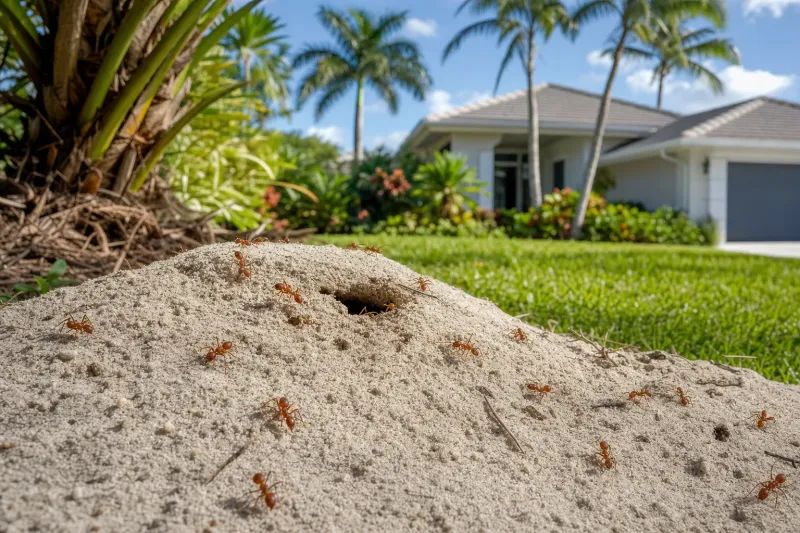
Plenty of people wonder whether a mound means the soil is great or terrible. Neither guess holds up.
A mound cannot tell you if your soil is healthy, compacted, or draining poorly, because ants dig in many kinds of ground.
Ants do change soil where they live. Penn State Extension describes how ant tunneling loosens soil and builds small mounds.
That is a local effect near the nest, and it varies by species, setting, and scale. It is not proof that tunnels improve aeration or drainage across your lawn.
Research shows how much results depend on place. In a study of citrus orchards in eastern Spain, researchers used simulated heavy rain and measured changes in water infiltration along with more erosion in ant-affected plots.
That was an orchard in a different climate, so it says nothing about whether ordinary Pennsylvania anthills help or hurt lawn drainage.
The lesson is humility. A pile of dirt is one data point, and it is a poor stand-in for a soil test or a look at how water behaves in your yard.
If you worry about puddling, hard ground, or weak grass, watch those problems directly. Notice where water sits after a rain, and how easily a screwdriver pushes into the turf.
Those clues say far more than an anthill ever could.
Most lawn mounds cause minor trouble
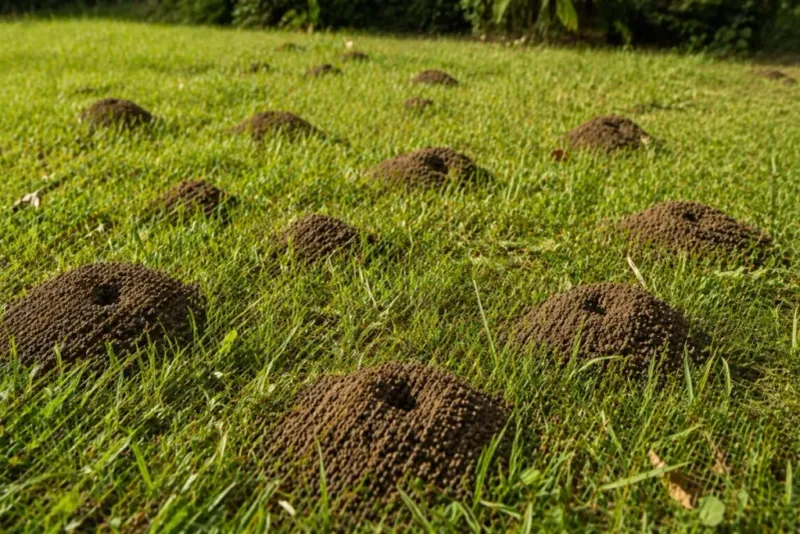
Here is the reassuring part. Penn State Extension says ants seldom cause serious damage to home lawns.
Their soil loosening and small mounds can cause minor turf damage, such as a bare spot or a bumpy patch, but that is usually the extent of it.
Some ants even help out. Certain kinds scavenge dead material and prey on harmful insects, so a few ants in the yard are not automatically a problem.
Roots are a common worry, and ants are not the culprit. Iowa State Extension says ants do not feed on plant roots.
The exception is a garden bed, where digging beside vegetable transplants can expose their roots and dry them out. That is a vegetable-patch situation, not what usually happens in turf.
Safety matters more than the grass here. Some ants may bite or sting, and a mound alone will not tell you which kind lives there.
Do not poke, dig into, or handle an unidentified colony, and keep children and pets from playing on it.
If you want to know what you are dealing with, look from a distance or take a clear photo. Then you can decide whether the mound is a harmless oddity or something worth managing.
Check the grass and soil directly

If your grass looks thin, yellow, or patchy, go to the source. Test the soil and inspect the turf instead of reading meaning into ant mounds.
A mound beside a weak patch is a coincidence until something else shows otherwise.
Penn State Extension offers a clear process in its soil testing guidance. For a lawn, it calls for taking samples about 4 inches deep from 8 to 10 random locations around the yard.
Mixing those samples gives you a fair picture of the whole lawn rather than a single spot.
Walk the lawn in a loose zigzag so the spots are truly random. Pull each sample with a probe or trowel, drop it into a clean bucket, and blend them together before filling the lab’s sample container.
Then follow the lab’s instructions for sending it in.
While you are out there, do some simple checks of your own. Look at how the grass is growing in sun versus shade, and notice where water collects after a storm.
Tug at a patch of weak turf to see if it lifts easily.
A mound by itself does not mean you need a soil test. Save that step for real lawn performance concerns, such as grass that keeps struggling despite good care.
Flatten a nuisance mound before considering treatment
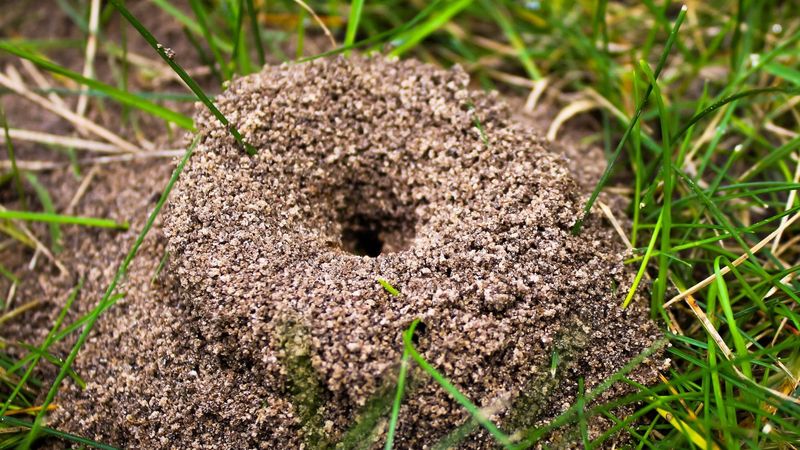
When a mound gets in the way of the mower or just looks messy, the easy fix is to flatten it. Iowa State Extension recommends raking or washing loose mound soil flat as needed.
Stay a little back from the opening, and wear gloves and closed shoes in case you meet ants that bite or sting.
If the ants are not causing a problem, leave them alone. Control is usually unnecessary in that case, and the mound will often fade or shift on its own.
Some situations may call for more. If you decide treatment is warranted, start by identifying the pest, since mounds look alike across species.
Penn State Extension and Purdue Extension both point toward careful, targeted treatment instead of treating the whole lawn automatically, and Purdue’s ant publication takes the same approach.
Choose a product labeled for that pest and for lawn use, and read the directions before you open it. Follow the label’s precautions for children, pets, and re-entry, so that nobody walks on treated grass too soon.
The EPA explains in its pesticide labeling guidance that using a registered pesticide in a way its label does not allow violates federal law, so do not improvise.
Mounds alone are no reason to spray the whole yard. Often the best tool is a rake, and the most useful skill is patience.
Share this story