Get the latest garden guides in your inbox →
Gardening Latest
  • General Gardening
  • Lawn Care
  • Plant Care
  • Composting
  • Soil Health
  • Backyard
  • Garden Muse Magazine
  • General Gardening
  • Lawn Care
  • Plant Care
  • Composting
  • Soil Health
  • Backyard
  • Garden Muse Magazine
  • News
  • Gardening Calendar
  • Garden Structures
  • Vegetable Garden
  • Vertical Garden
  • Raised Beds
  • Hydroponics
  • General Equipment
  • Community Gardens
Garden Themes
  • Spiritual Garden
  • Hydroseeding
  • Seeding and Laying Sod
  • Artificial Grass
  • Lawn Care Equipment
  • Plants
  • Trees
  • Planting Tools
  • Composting Basics
  • Fertilizer
  • Alternative Growing Mediums
  • Front Yard
  • Backyard Activities
  • Landscaping
Gardening Latest

Explore by state

Which state is your garden in?

Currently viewing Minnesota

All states

Northeast

  • Connecticut —
  • Delaware 40
  • Maine —
  • Maryland 26
  • Massachusetts 42
  • New Hampshire —
  • New Jersey 26
  • New York 35
  • Pennsylvania 35
  • Rhode Island —
  • Vermont —

Southeast

  • Alabama 26
  • Arkansas —
  • Florida 26
  • Georgia 26
  • Kentucky 40
  • Louisiana 25
  • Mississippi —
  • North Carolina 24
  • South Carolina 39
  • Tennessee 23
  • Virginia 25
  • West Virginia —

Midwest

  • Illinois 25
  • Indiana 27
  • Iowa 39
  • Kansas —
  • Michigan 26
  • Minnesota 25
  • Missouri 25
  • Nebraska —
  • North Dakota —
  • Ohio 26
  • South Dakota —
  • Wisconsin 41

Southwest

  • Arizona 25
  • Colorado —
  • Nevada —
  • New Mexico —
  • Oklahoma —
  • Texas 24
  • Utah —

West

  • Alaska —
  • California 25
  • Hawaii —
  • Idaho —
  • Montana —
  • Oregon —
  • Washington —
  • Wyoming —

No state matches that search.

Site menu

Gardening Latest
  • General Gardening
    • News
    • Gardening Calendar
    • Garden Structures
    • Vegetable Garden
    • Vertical Garden
    • Raised Beds
    • Hydroponics
    • General Equipment
    • Community Gardens
    Garden Themes
    • Spiritual Garden
  • Lawn Care
    • Hydroseeding
    • Seeding and Laying Sod
    • Artificial Grass
    • Lawn Care Equipment
  • Plant Care
    • Plants
    • Trees
    • Planting Tools
  • Composting
    • Composting Basics
  • Soil Health
    • Fertilizer
    • Alternative Growing Mediums
  • Backyard
    • Front Yard
    • Backyard Activities
    • Landscaping
  • Garden Muse Magazine

Explore

  • About GardeningLatest.com
  • Contact Us

Get the latest from the garden

New guides on lawn care, plants and backyard projects, sent when they go up.

Subscribe →

Follow

  • Facebook
  • X
  • Pinterest
  • YouTube
Minnesota Gardening

Your Minnesota Rhubarb Is Sending Up That Giant Flower Stalk for a Reason, and Here’s Whether to Cut It Off

That tall, knobby stalk pushing up from your rhubarb is the plant's flowering shoot, and if you grow rhubarb for its edible…

IO

By Ingrid Olson

November 27, 2026 · 6 min read

Your Minnesota Rhubarb Is Sending Up That Giant Flower Stalk for a Reason, and Here’s Whether to Cut It Off
Your Minnesota Rhubarb Is Sending Up That Giant Flower Stalk for a Reason, and Here's Whether to Cut It Off

That tall, knobby stalk pushing up from your rhubarb is the plant’s flowering shoot, and if you grow rhubarb for its edible stalks, the usual advice is to cut it off. Flowering is a normal part of rhubarb’s life, so there is no need to panic.

It also does not make your pie stalks unsafe to eat. Here is how to handle it, what to check for afterward, and how it fits with Minnesota harvest timing.

At a glance

Where
Minnesota Gardening
Hardiness zone
5 −20 to −10°F
Read
6 minutes
Published
November 27, 2026

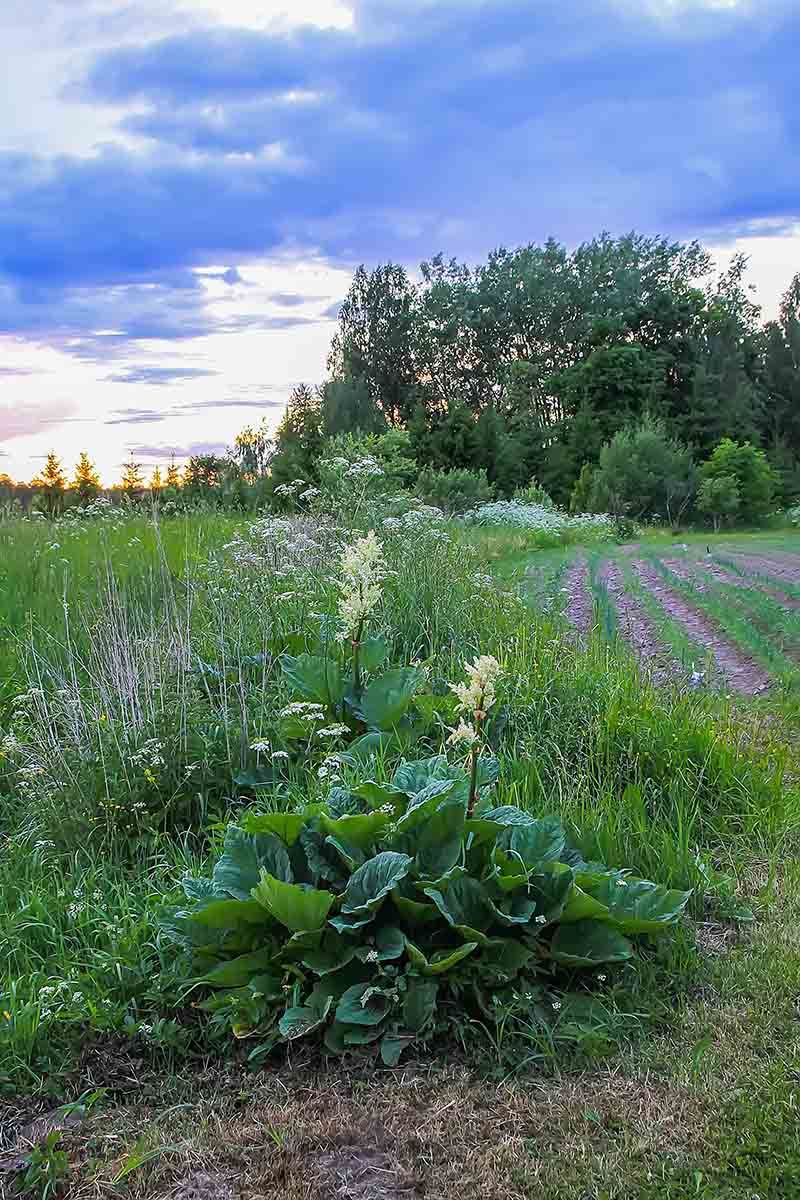
A flower stalk is part of rhubarb’s life cycle
A flower stalk is part of rhubarb’s life cycle
© Gardener’s Path

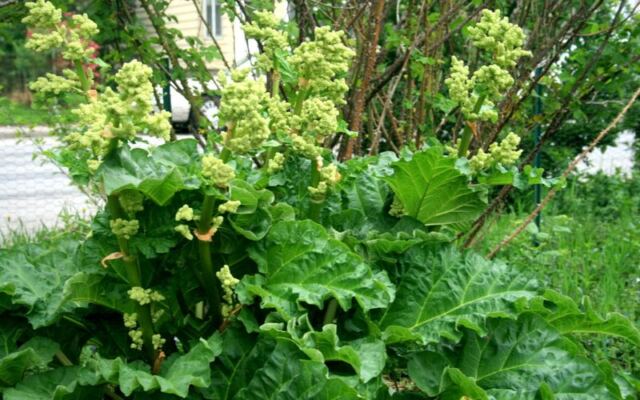
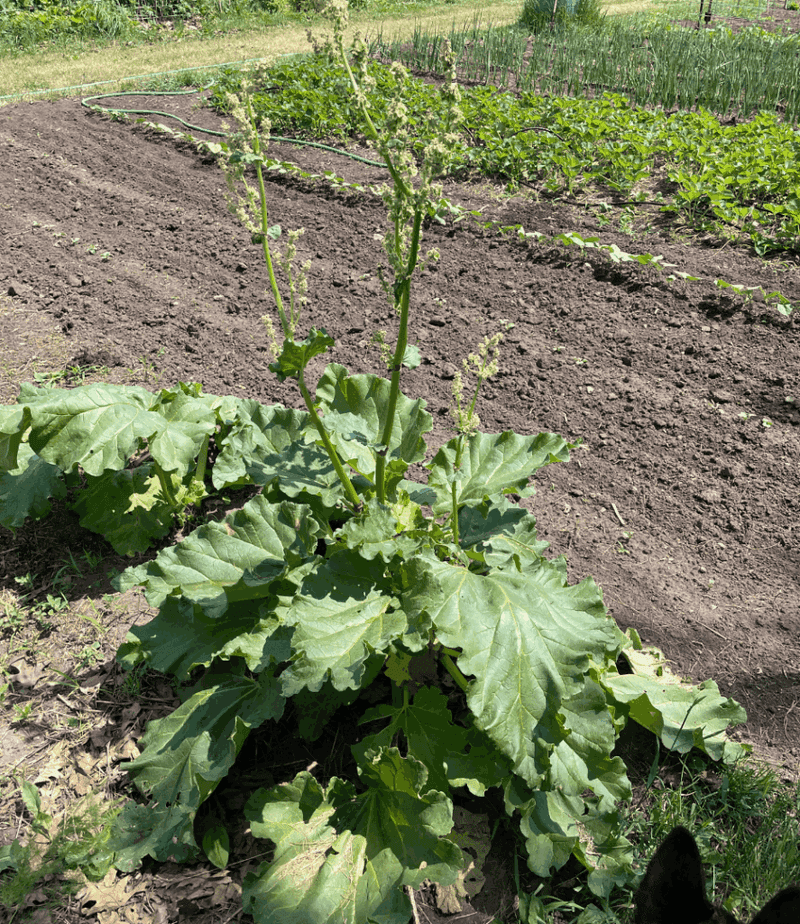
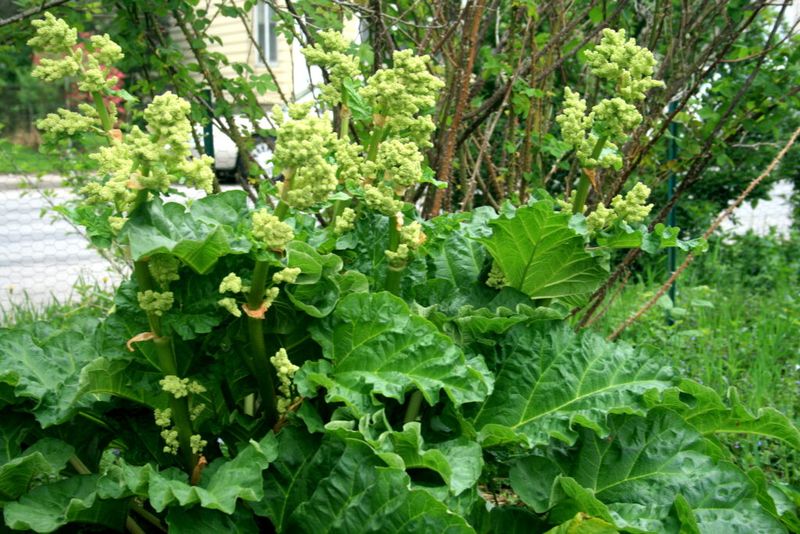
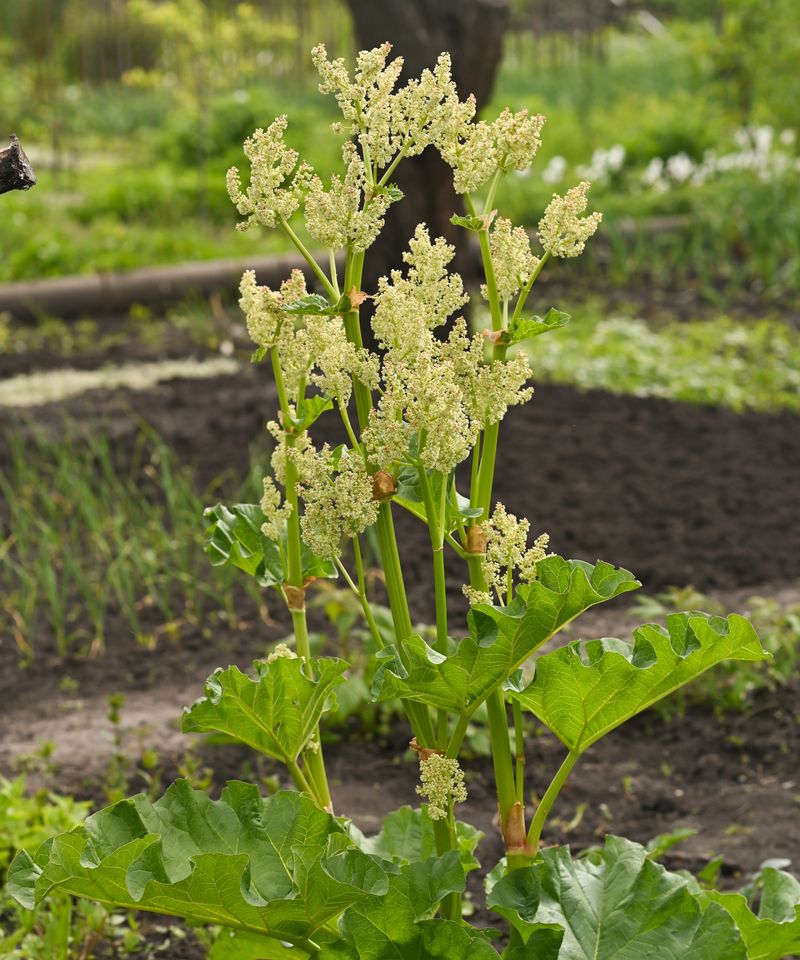
Sometime in late spring or early summer, one stalk on your rhubarb may look very different from the rest. It rises taller, looks thicker and rounder, and ends in a knobby cluster that opens into creamy flowers.

That is the plant’s reproductive shoot, the part built to make flowers and seed.

Rhubarb is a perennial, and flowering is simply one thing it does as part of its life cycle. A flower stalk showing up does not mean your plant is sick, failing, or in danger.

Gardeners across the Upper Midwest see it in healthy patches all the time.

What it does give you is a choice. If you grow rhubarb for its edible leaf stalks, University of Minnesota Extension advises cutting the flower stalk off when it appears.

Purdue University describes it the same way, as a normal flowering event that gardeners can manage.

The next sections walk through why flowering happens, why removal makes sense for a food crop, and how to do it well. Think of it as a routine garden chore, not an emergency.

Several factors can lead to flowering
Several factors can lead to flowering
© Homely Hens –

Gardeners often want to know why their rhubarb flowered, and the honest answer is that several things can play a part. The stalk itself will not tell you which one applies to your plant.

Iowa State Extension points to stress such as drought, extreme heat, or infertile soil, along with the age of the plant. Purdue also lists age and cultivar, plus drought, temperatures above 90 degrees Fahrenheit, and poor nutrition.

Purdue says the leaf stalks remain edible whether or not flower stalks are present.

The Royal Horticultural Society adds wet summers and heavy use of high-nitrogen feed to the list. Notice that these sources do not all agree on one weather story.

That is a clue that flowering has more than one route.

So a flower stalk is not proof of drought, heat, or poor care. An older clump may flower because of its age.

A particular variety may simply be prone to it. A hot, dry stretch may add to the effect, or it may have nothing to do with it.

For a Minnesota gardener, the practical takeaway is to look at your own conditions. Is the plant getting water in dry spells?

Is the soil reasonably fertile? Those are fair things to review, but treat them as general good care rather than a diagnosis.

Remove the stalk to manage the crop
Remove the stalk to manage the crop
© Budding Homestead –

If you are growing rhubarb for pies, sauces, and jam, take the flower stalk off. That is the clear recommendation from both University of Minnesota Extension and Purdue University for gardeners whose goal is edible stalks.

The reasoning is about where the plant puts its energy. Making flowers and seed takes resources, and a plant that is not busy doing that can keep its effort on leaves and stalks.

Removing the shoot limits that drain.

It helps to keep expectations realistic. The sources support removal as sensible plant management, but they do not promise bigger stalks, a larger harvest, or a quick change.

You are simply steering the plant toward the job you want it to do.

This is a crop-management choice, and it is separate from food safety. You are not removing the stalk because it makes the rest of the plant dangerous.

Your regular leaf stalks stay fine to eat whether or not a flower shoot appeared.

If you ever wanted to let one bloom for looks or curiosity, nothing dramatic happens. Just know that the edible harvest is what the standard advice is designed to protect.

Remove the whole stalk and check for more
Remove the whole stalk and check for more
© The Daring Gourmet

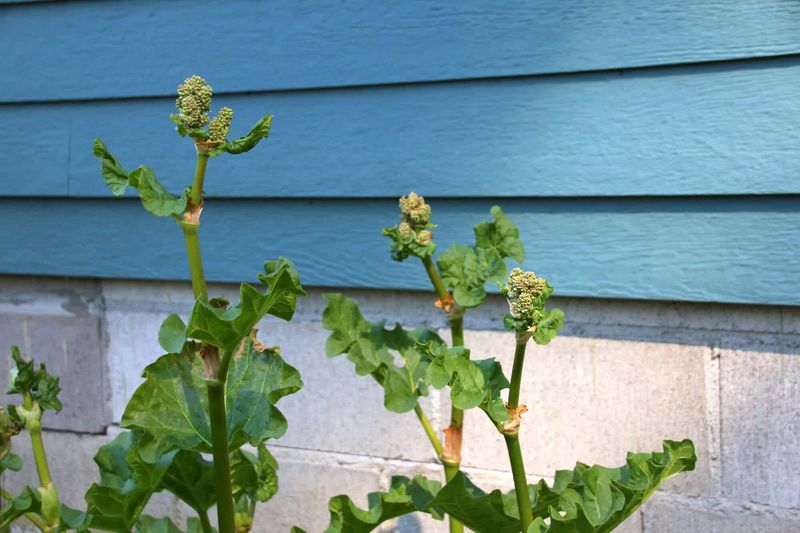
Go after the entire shoot, not just the flower head. Follow the stalk down and cut it off near its base, or pull it out and throw it away.

University of Minnesota Extension says to cut it off, while Iowa State Extension recommends pulling and discarding it.

Snipping only the blossoms is not the recommended method, since the rest of the shoot is still there. Taking it from the base deals with the whole structure at once.

Then keep an eye out. Purdue notes that flowering stalks can reappear, so gardeners who want to discourage flowering should look the plant over and remove new ones.

A quick walk past the rhubarb patch every week or so while you are already out in the garden is a reasonable habit. Part the leaves and look for any thick, rounded shoot that stands out from the usual stalks.

Toss what you remove rather than leaving it in the bed.

Eat the stalks, not the leaves or flowers
Eat the stalks, not the leaves or flowers
© Gardening Know How

Here is a myth worth setting aside: a flowering plant does not have poisonous stalks. Purdue says the leaf stalks remain edible whether or not flower stalks are present.

Removing the flower shoot is about plant care, not about making the stalks safe.

That reassurance covers the leaf stalks only. The leaf blades are poisonous, and the flowers should not be eaten either.

The University of Minnesota Extension edible flowers guide lists rhubarb flowers, leaves, and roots as containing toxic compounds. So rhubarb does not belong in a salad garnish or a flower-petal recipe.

In the kitchen, a simple routine works. Trim off and discard the leaf blades as you harvest, and use only the stalks.

If you have small children or curious pets, keep the trimmings out of reach.

Keep the two ideas apart in your head. Stalks are fine to eat, flowering or not.

Everything else on the plant stays out of the pot.

Follow Minnesota harvest guidance to protect next year’s plant
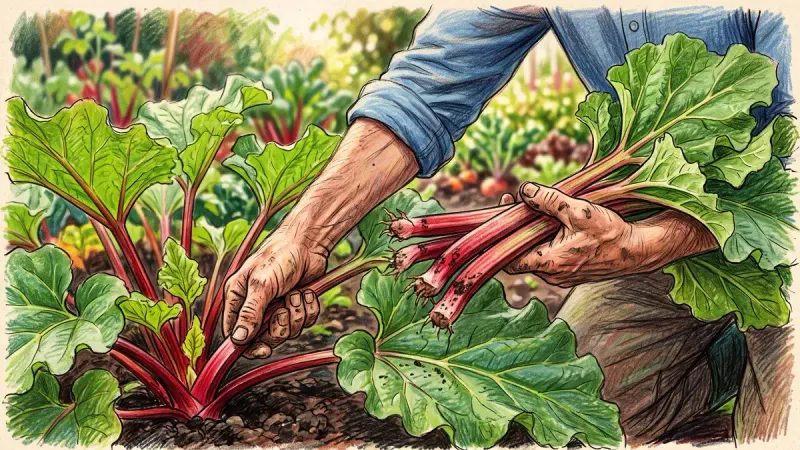
Follow Minnesota harvest guidance to protect next year’s plant
© GrowPerma

Cutting flower stalks is one piece of caring for the plant. How and when you harvest is another.

For Minnesota, University of Minnesota Extension says to harvest established plants through the end of June, then leave the leaves in place so the plant can build reserves for next year.

Young plants need patience. UMN advises waiting until the second season to harvest a plant started from crowns, or the third season if it was grown from seed.

Early picking from a new plant can set it back.

Moderation matters, too. South Dakota State University Extension advises avoiding heavy harvests and taking no more than one-third of a mature plant’s stalks at a time.

It also generally suggests wrapping up harvest around July 1.

Those two dates are close but not identical, and neither is a universal rule. UMN’s end-of-June guidance is written for Minnesota, while the SDSU date is a general guideline from a neighboring state.

Use them as a window, and adjust for your plant’s age and vigor.

The reason for stopping is about energy, not safety. Leaves left standing through summer feed the crown for next spring.

It is not true that the whole plant turns toxic later in the season; the stop date simply protects next year’s crop.

Keep the decision simple
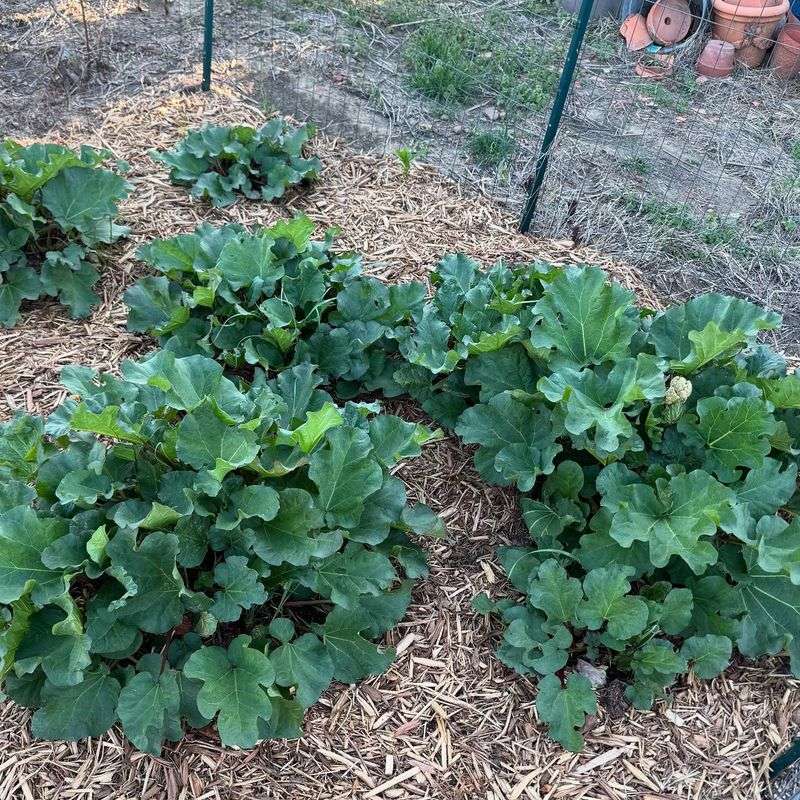
Keep the decision simple
© mountainlilyfarm

If you grow rhubarb for eating, cut the flowering shoot off at its base and glance back for new ones. Flowering is not a disease or a food-safety scare, and the stalks stay fine to eat.

Minnesota harvest guidance then keeps the plant strong for years.

A rhubarb patch that shows its flowers is just a plant doing what plants do. Your part is a quick cut and a little patience.

Share this story
IO

Written by

Ingrid Olson

More from Ingrid Olson →

About Gardening Latest

Gardening Latest provides in-depth guides to maintaining and enhancing your garden and backyard. Learn how to make the most of the space you have and create a beautiful garden.

More about us →

Latest stories

  • Wisconsin GardeningWisconsin Winters Don’t Kill Your Brown Recluse Worries, Because Hobo and Yellow Sac Spiders Move Indoors Now

    Wisconsin Winters Don’t Kill Your Brown Recluse Worries, Because Hobo and Yellow Sac Spiders Move Indoors Now

    3 min ago
  • Missouri GardeningYour Frozen Missouri Lawn Isn’t Empty: A Tiny Mammal With a Venomous Bite Hunts Below All Winter

    Your Frozen Missouri Lawn Isn’t Empty: A Tiny Mammal With a Venomous Bite Hunts Below All Winter

    9 min ago
  • Tennessee GardeningThose Big Brown Spiders Showing Up Inside Tennessee Homes After the First Cold Snap Are Wolf Spiders, and Here’s Why They Came In

    Those Big Brown Spiders Showing Up Inside Tennessee Homes After the First Cold Snap Are Wolf Spiders, and Here’s Why They Came In

    15 min ago
  • Alabama GardeningHearing Great Horned Owls Hoot Outside Your Alabama Home at Night? Here’s What It Means

    Hearing Great Horned Owls Hoot Outside Your Alabama Home at Night? Here’s What It Means

    21 min ago
  • Minnesota GardeningMinnesota Homeowners Keep Yanking This Invasive Tree, and It Keeps Taking Over Their Yards

    Minnesota Homeowners Keep Yanking This Invasive Tree, and It Keeps Taking Over Their Yards

    27 min ago

Gardening by state

Stories for your state, and the hardiness zone most of it gardens in.

Keep exploring

Read next

All Minnesota Gardening →
Minnesota GardeningMinnesota Homeowners Keep Yanking This Invasive Tree, and It Keeps Taking Over Their Yards
Minnesota Gardening

Minnesota Homeowners Keep Yanking This Invasive Tree, and It Keeps Taking Over Their Yards

27 min ago
Minnesota GardeningWhen Straight-Line Winds Drop Your Neighbor’s Tree in Your Minnesota Yard, Here’s Who Actually Pays
Minnesota Gardening

When Straight-Line Winds Drop Your Neighbor’s Tree in Your Minnesota Yard, Here’s Who Actually Pays

6 hr ago
Minnesota GardeningCoyote Howls Outside Your Minnesota Home at Night Reveal More, and Less, Than You’d Think
Minnesota Gardening

Coyote Howls Outside Your Minnesota Home at Night Reveal More, and Less, Than You’d Think

21 hr ago

More from Minnesota Gardening

  • Before You Dig Into Your Minnesota Garden, Learn To Recognize The Venomous Creatures Living There

    Nov 25
  • Coyotes Are Howling Near Your Minnesota Home This Time of Year for a Surprising Reason

    Nov 25
Back to top

Leave a response Cancel

Your email address stays private. Required fields are marked with an asterisk.

Gardening Latest

In-depth guides to maintaining and enhancing your garden and backyard: how to make the most of the space you have, and how to make it beautiful.

  • Facebook
  • X
  • Pinterest
  • YouTube

We may earn a portion of sales from products or services that are purchased through our site as part of our affiliate partnerships with retailers.

Explore

  • About GardeningLatest.com
  • Contact Us
  • Terms and Conditions
  • Privacy
  • Editorial Note:
  • FTC Disclosure

Newsletter

New garden guides and seasonal tips, straight to your inbox.

We’ll email you a link to confirm. Unsubscribe any time.

Almost there! Check your inbox and tap the link to confirm.

© 2026 Gardening Latest. All rights reserved.

Back to top