That tall, knobby stalk pushing up from your rhubarb is the plant’s flowering shoot, and if you grow rhubarb for its edible stalks, the usual advice is to cut it off. Flowering is a normal part of rhubarb’s life, so there is no need to panic.
It also does not make your pie stalks unsafe to eat. Here is how to handle it, what to check for afterward, and how it fits with Minnesota harvest timing.
A flower stalk is part of rhubarb’s life cycle
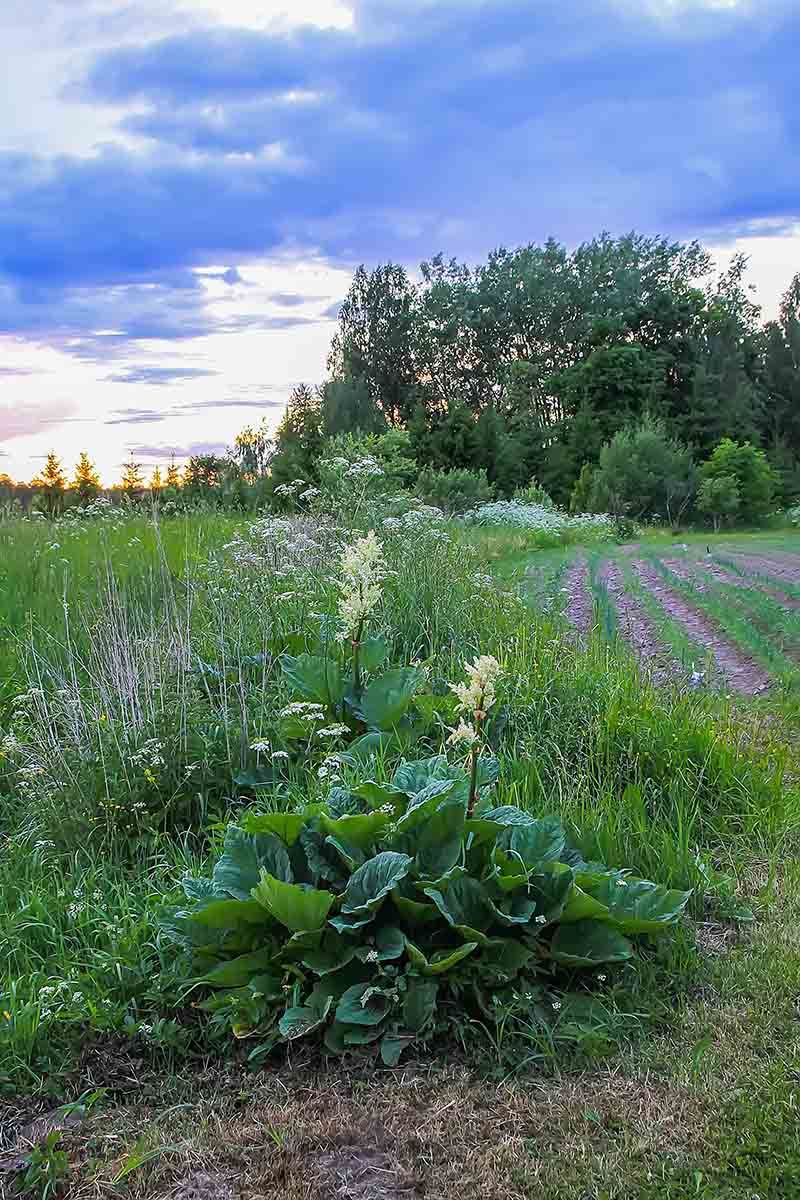
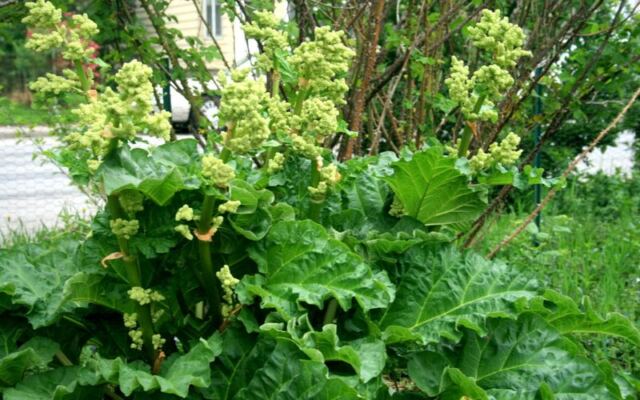
Sometime in late spring or early summer, one stalk on your rhubarb may look very different from the rest. It rises taller, looks thicker and rounder, and ends in a knobby cluster that opens into creamy flowers.
That is the plant’s reproductive shoot, the part built to make flowers and seed.
Rhubarb is a perennial, and flowering is simply one thing it does as part of its life cycle. A flower stalk showing up does not mean your plant is sick, failing, or in danger.
Gardeners across the Upper Midwest see it in healthy patches all the time.
What it does give you is a choice. If you grow rhubarb for its edible leaf stalks, University of Minnesota Extension advises cutting the flower stalk off when it appears.
Purdue University describes it the same way, as a normal flowering event that gardeners can manage.
The next sections walk through why flowering happens, why removal makes sense for a food crop, and how to do it well. Think of it as a routine garden chore, not an emergency.
Several factors can lead to flowering
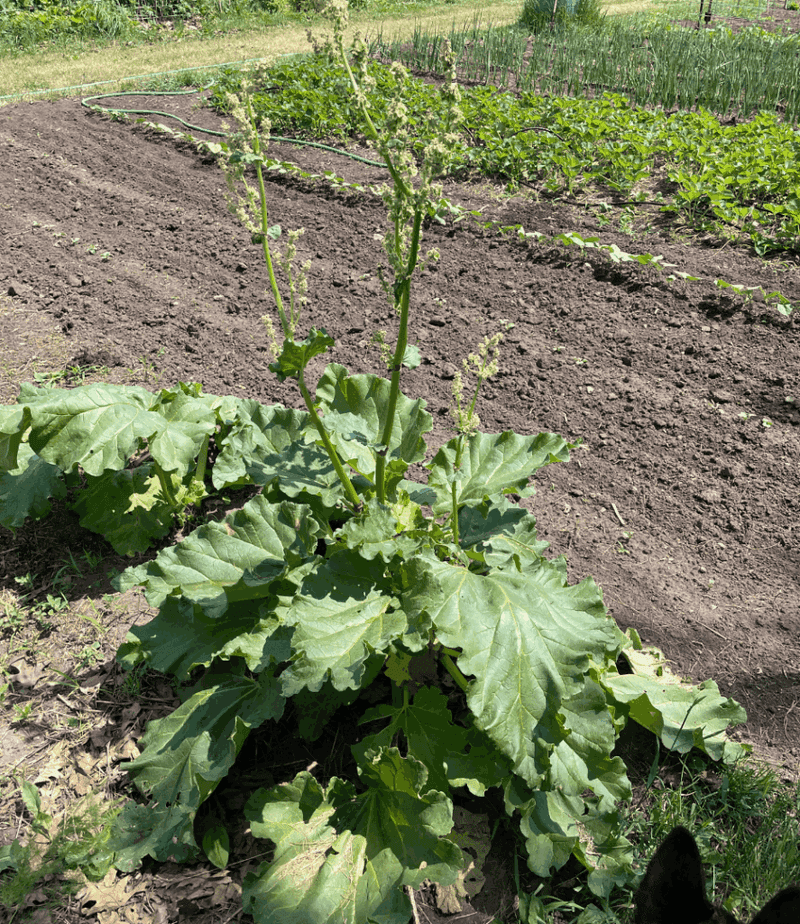
Gardeners often want to know why their rhubarb flowered, and the honest answer is that several things can play a part. The stalk itself will not tell you which one applies to your plant.
Iowa State Extension points to stress such as drought, extreme heat, or infertile soil, along with the age of the plant. Purdue also lists age and cultivar, plus drought, temperatures above 90 degrees Fahrenheit, and poor nutrition.
The Royal Horticultural Society adds wet summers and heavy use of high-nitrogen feed to the list. Notice that these sources do not all agree on one weather story.
That is a clue that flowering has more than one route.
So a flower stalk is not proof of drought, heat, or poor care. An older clump may flower because of its age.
A particular variety may simply be prone to it. A hot, dry stretch may add to the effect, or it may have nothing to do with it.
For a Minnesota gardener, the practical takeaway is to look at your own conditions. Is the plant getting water in dry spells?
Is the soil reasonably fertile? Those are fair things to review, but treat them as general good care rather than a diagnosis.
Remove the stalk to manage the crop
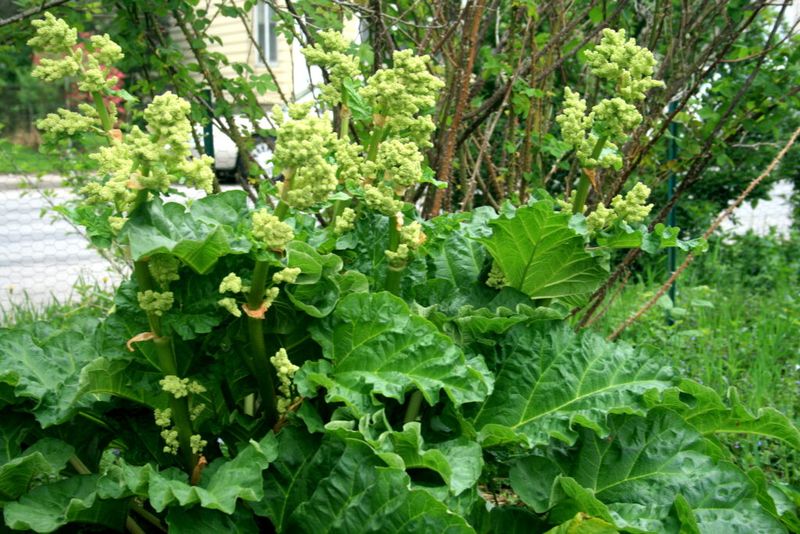
If you are growing rhubarb for pies, sauces, and jam, take the flower stalk off. That is the clear recommendation from both University of Minnesota Extension and Purdue University for gardeners whose goal is edible stalks.
The reasoning is about where the plant puts its energy. Making flowers and seed takes resources, and a plant that is not busy doing that can keep its effort on leaves and stalks.
Removing the shoot limits that drain.
It helps to keep expectations realistic. The sources support removal as sensible plant management, but they do not promise bigger stalks, a larger harvest, or a quick change.
You are simply steering the plant toward the job you want it to do.
This is a crop-management choice, and it is separate from food safety. You are not removing the stalk because it makes the rest of the plant dangerous.
Your regular leaf stalks stay fine to eat whether or not a flower shoot appeared.
If you ever wanted to let one bloom for looks or curiosity, nothing dramatic happens. Just know that the edible harvest is what the standard advice is designed to protect.
Remove the whole stalk and check for more
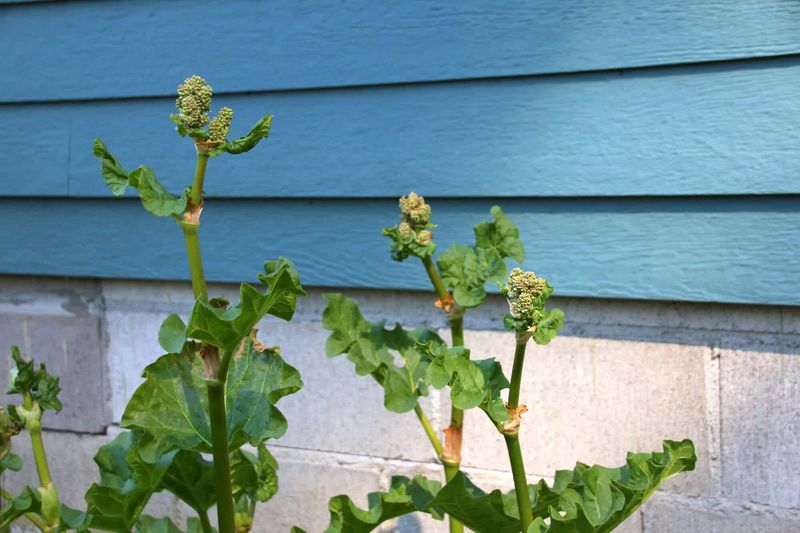
Go after the entire shoot, not just the flower head. Follow the stalk down and cut it off near its base, or pull it out and throw it away.
University of Minnesota Extension says to cut it off, while Iowa State Extension recommends pulling and discarding it.
Snipping only the blossoms is not the recommended method, since the rest of the shoot is still there. Taking it from the base deals with the whole structure at once.
Then keep an eye out. Purdue notes that flowering stalks can reappear, so gardeners who want to discourage flowering should look the plant over and remove new ones.
A quick walk past the rhubarb patch every week or so while you are already out in the garden is a reasonable habit. Part the leaves and look for any thick, rounded shoot that stands out from the usual stalks.
Toss what you remove rather than leaving it in the bed.
Eat the stalks, not the leaves or flowers
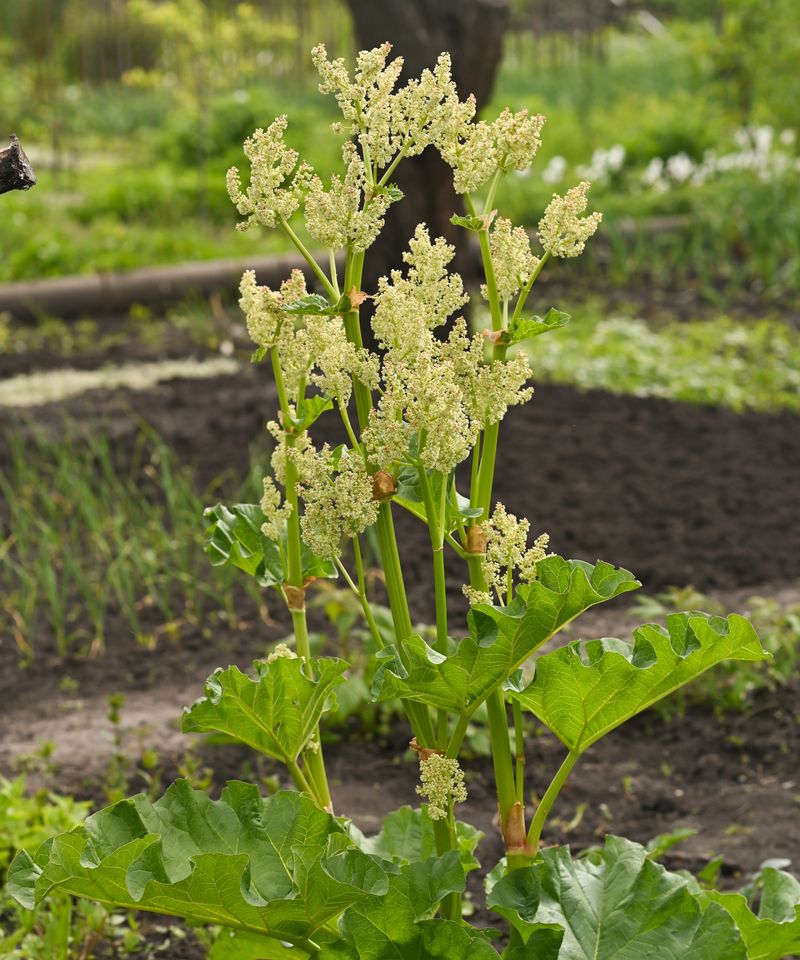
Here is a myth worth setting aside: a flowering plant does not have poisonous stalks. Purdue says the leaf stalks remain edible whether or not flower stalks are present.
Removing the flower shoot is about plant care, not about making the stalks safe.
That reassurance covers the leaf stalks only. The leaf blades are poisonous, and the flowers should not be eaten either.
The University of Minnesota Extension edible flowers guide lists rhubarb flowers, leaves, and roots as containing toxic compounds. So rhubarb does not belong in a salad garnish or a flower-petal recipe.
In the kitchen, a simple routine works. Trim off and discard the leaf blades as you harvest, and use only the stalks.
If you have small children or curious pets, keep the trimmings out of reach.
Keep the two ideas apart in your head. Stalks are fine to eat, flowering or not.
Everything else on the plant stays out of the pot.
Follow Minnesota harvest guidance to protect next year’s plant
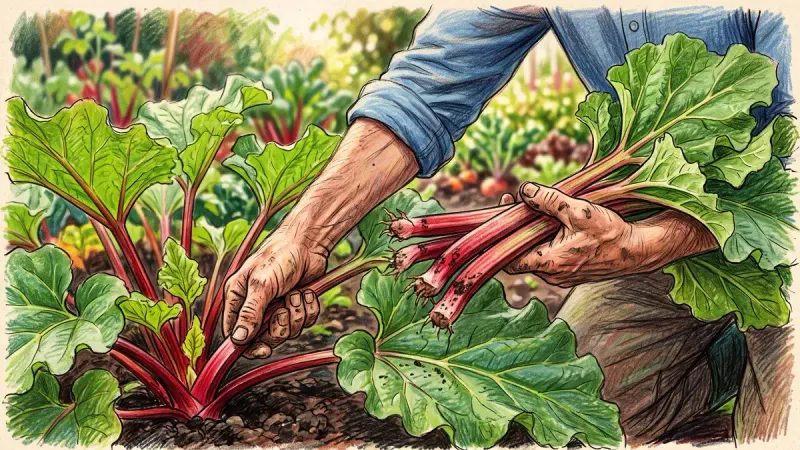
Cutting flower stalks is one piece of caring for the plant. How and when you harvest is another.
For Minnesota, University of Minnesota Extension says to harvest established plants through the end of June, then leave the leaves in place so the plant can build reserves for next year.
Young plants need patience. UMN advises waiting until the second season to harvest a plant started from crowns, or the third season if it was grown from seed.
Early picking from a new plant can set it back.
Moderation matters, too. South Dakota State University Extension advises avoiding heavy harvests and taking no more than one-third of a mature plant’s stalks at a time.
It also generally suggests wrapping up harvest around July 1.
Those two dates are close but not identical, and neither is a universal rule. UMN’s end-of-June guidance is written for Minnesota, while the SDSU date is a general guideline from a neighboring state.
Use them as a window, and adjust for your plant’s age and vigor.
The reason for stopping is about energy, not safety. Leaves left standing through summer feed the crown for next spring.
It is not true that the whole plant turns toxic later in the season; the stop date simply protects next year’s crop.
Keep the decision simple
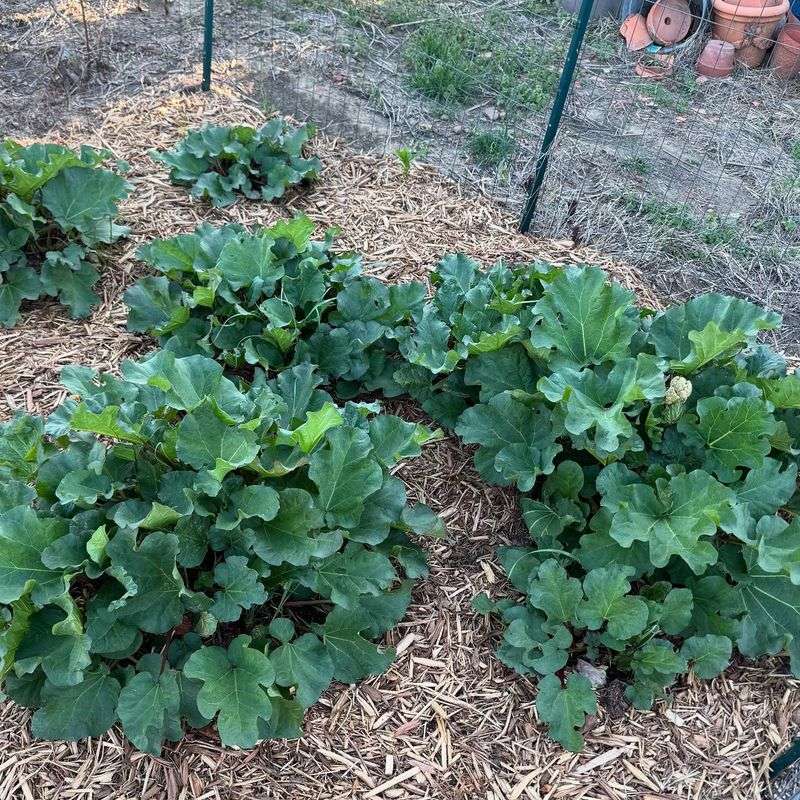
If you grow rhubarb for eating, cut the flowering shoot off at its base and glance back for new ones. Flowering is not a disease or a food-safety scare, and the stalks stay fine to eat.
Minnesota harvest guidance then keeps the plant strong for years.
A rhubarb patch that shows its flowers is just a plant doing what plants do. Your part is a quick cut and a little patience.
Share this story