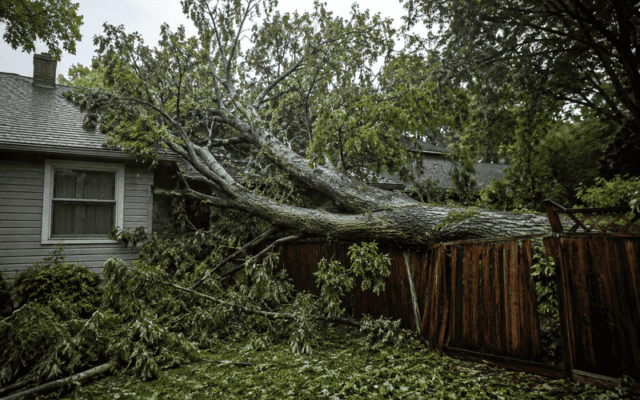
When a storm drops your neighbor’s tree in your yard, the tree’s origin alone does not decide who pays. In most cases, you would start with your own insurer, and the neighbor becomes responsible only if their negligence played a part.
Whether anyone covers the cleanup depends on what the tree hit and what your policy says. Knowing the difference before you pick up a chainsaw or a phone can save you money and trouble.
Where the tree lands changes the coverage question
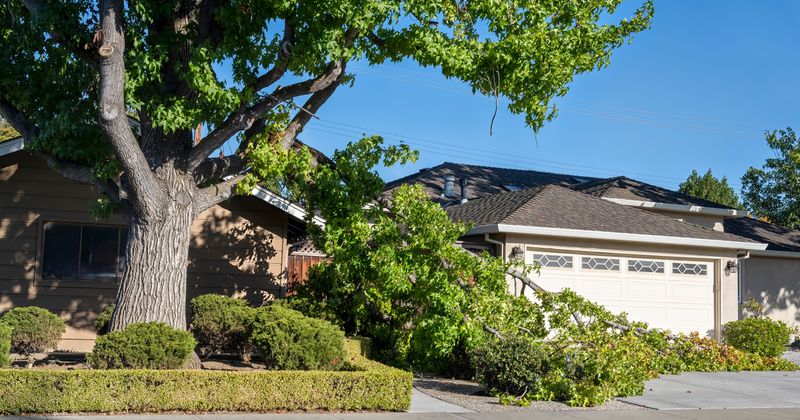
A tree’s origin alone does not decide who pays. When a storm brings down an apparently healthy tree and damages your property, you would generally start with your own insurer rather than send a bill next door.
The neighbor is not automatically responsible just because the trunk grew on their side of the line.
Where the tree lands matters a great deal. A tree that crushes part of your house or lands on a garage is a different situation from one lying quietly in the grass.
Minnesota Commerce’s disaster guide says tree-removal coverage depends in part on where the tree falls, and that policies vary, so checking yours is wise.
Think of it as four separate questions. Damage to a covered structure such as your home is one.
A damaged fence or garage is another. Blocked access, such as a tree across your driveway, is a third, and yard-only cleanup is the fourth.
Each can be handled differently under the same policy.
A tree lying only in open lawn may not qualify for removal coverage at all. In a 2025 MPR News report, a Minnesota Commerce enforcement director said a tree on a home, fence, garage, or other structure is more likely to qualify than one that is not lying on a structure.
The exact wording of your policy controls the answer.
The neighbor’s tree does not automatically make the neighbor pay

Owning a tree is not the same as being at fault when it falls. Tree ownership alone does not establish negligence or make the owner responsible for a loss.
Insurance regulator FAQs reflect this approach by pointing storm victims to their own coverage first.
Responsibility can shift when the owner’s own carelessness played a role. Minnesota Farm Bureau Insurance explains that a neighbor may be responsible if they ignored an obvious hazard they knew about or should have known about.
A dead, leaning, or visibly rotting tree is the kind of problem that raises questions.
Evidence about the tree’s condition can matter, but it does not settle things on its own. Earlier complaints to the neighbor, dated photographs, or an arborist’s assessment may help show the owner was on notice.
They are relevant pieces of the picture, not automatic proof of liability.
One Minnesota case shows how fact-specific these disputes are. In an unpublished 2008 Court of Appeals opinion, the tree appeared healthy and the owners lacked notice of danger, and the judgment for the owners was affirmed.
That outcome belongs to its own facts and is not a rule for every tree-fall dispute.
Liability coverage is a related point. Minnesota Commerce describes personal liability coverage as applying to damages for which the insured is legally liable, so it does not kick in simply because a tree came from that person’s property.
Straight-line winds explain the fall, not the verdict
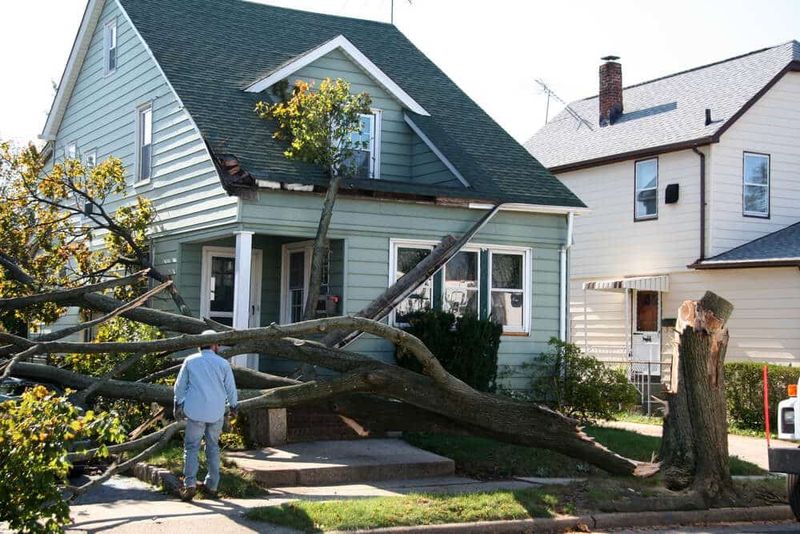
Straight-line winds are thunderstorm winds that blow without rotation, which sets them apart from tornadoes. The National Weather Service notes that these winds can still be damaging across a wide area.
Knowing the label tells you what pushed the tree over, but not who is responsible.
Liability questions turn on other facts. How healthy was the tree?
What did the owner know, or reasonably should have known, about its condition? Did a hazard such as decay or a split trunk contribute to the failure?
A fierce storm can topple a sound tree, and in that case a neighbor may owe nothing.
That does not make “act of God” a magic phrase. Minnesota Farm Bureau Insurance and a Minnesota legal analysis both point out that a natural force may not excuse liability if earlier negligence also contributed.
That analysis is dated, so treat it as background rather than a final word.
The same caution applies in reverse. Not every storm-felled tree creates liability, and the unpublished Minnesota appellate decision, Moua v.
Hastings, turned on the tree’s healthy appearance and the owners’ lack of notice. Facts in your own situation may point somewhere different.
Your own insurer is often the first call, but coverage varies
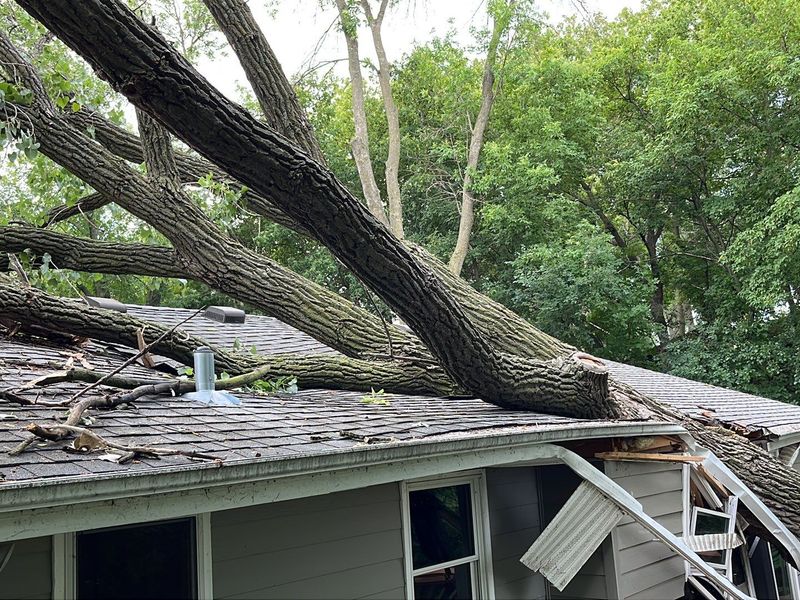
Calling your own insurer is usually the sensible first step. Waiting for a neighbor or a neighbor’s insurance company to step in can delay repairs, and there is no guarantee they will owe anything.
Your insurer can tell you what your policy does and does not cover for the damage you have.
Two different questions often get mixed up here. Personal-liability coverage applies when the insured person is legally liable for damage to someone else, according to Minnesota Commerce.
It is not triggered just because a tree from that person’s yard caused the harm.
The second question is about your own coverage. Does your policy pay for damage to your house, fence, or garage?
Does it pay anything to remove the tree, and under what conditions? Those answers live in your policy, and they can differ from one company and one policy form to the next.
Regulators encourage this approach. The insurance FAQs in this regulatory material treat the policyholder’s own insurer as the starting point for storm damage.
Sample policy forms show how much wording can vary. The Minnesota FAIR Plan’s sample HO-8 form, for example, caps certain fallen-tree removal at $500 and ties it to damage to a covered structure.
That is one example policy, not a statewide standard, so do not assume your coverage matches it.
When you call, ask the representative to point to the exact policy language on tree removal and debris cleanup. Write down who you spoke to and when.
Document the loss before cleanup
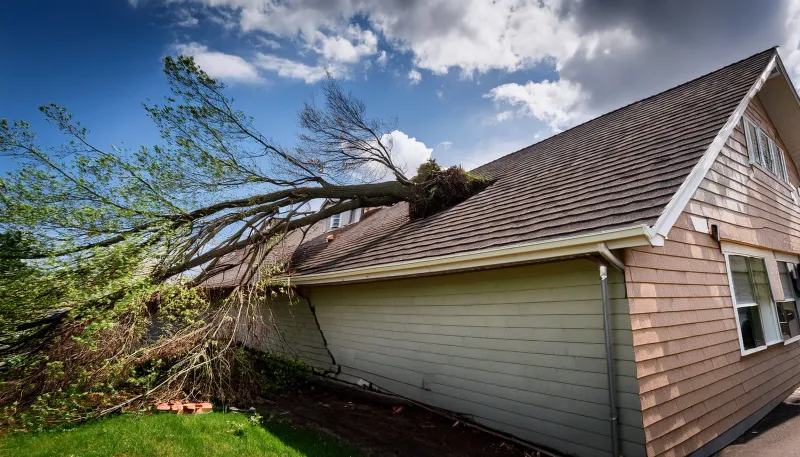
Before anyone moves a branch, make sure the area is safe. Stay clear of anything leaning, cracked, or hanging, and keep kids and pets away.
Once it is safe to do so, take photos or video of the tree, the damage, and the surrounding yard.
Wide shots show where the tree landed, and close-ups show what it hit. Capture the stump or broken base if you can see it, since the condition of the wood may matter later.
Date-stamped images are easier to rely on if questions come up.
Report the loss promptly. Minnesota Commerce’s claim-filing tips advise contacting the insurer, documenting damage before cleanup, and keeping receipts for temporary repairs such as a tarp over a damaged roof.
Those receipts may be part of what you submit.
Read your policy as well. If the insurer denies part of a claim or you disagree about coverage, ask for the specific policy language the decision relies on.
Having the wording in front of you makes any follow-up conversation clearer.
Keep everything in one folder, paper or digital. That includes photos, claim numbers, adjuster names, estimates, and notes from phone calls.
This section is about records, and a tidy file does most of the work.
Keep cleanup safe, authorized, and in writing
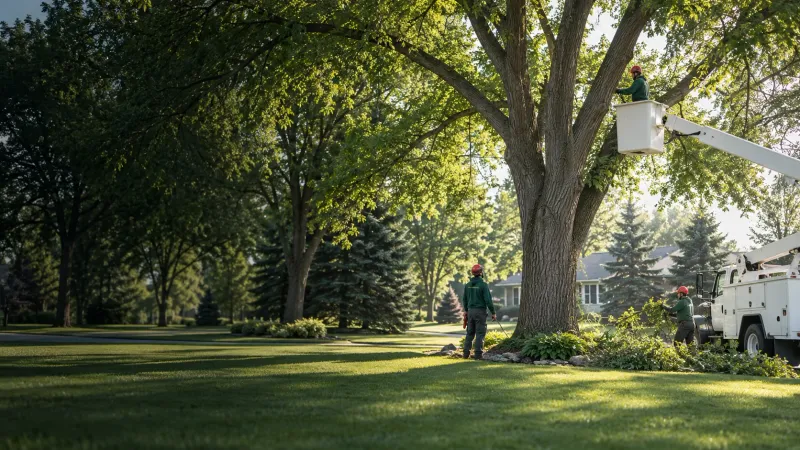
Tree work is dangerous, and hiring a professional is often the safest route. University of Minnesota Extension recommends checking a company’s qualifications and current liability and workers’ compensation insurance.
It also suggests getting the work and cleanup terms in writing and collecting multiple estimates when possible.
Power lines change everything. OSHA guidance says to assume downed lines are energized and stay at least 10 feet away.
Trimming or removal within 10 feet of a power line belongs to trained tree trimmers. If a tree touches wires, call the utility.
Do not cut a suspended tree or try to move one yourself.
Permission matters too. A tree owner does not automatically have to remove every part of a fallen tree from another person’s land, and the answer depends on the facts.
Minnesota Farm Bureau Insurance advises checking municipal rules in neighbor-tree disputes, so call your city to ask about local requirements instead of assuming one statewide rule applies.
Do not cut up or haul off a neighbor’s tree without clear permission. Minnesota Statutes section 561.04 deals with certain unauthorized cutting or carrying away of trees, with exceptions, and can involve treble damages.
It does not create a general duty to remove a fallen tree. A short, friendly written agreement with your neighbor about who handles what can prevent a second dispute.
Let the damage and evidence guide your next steps
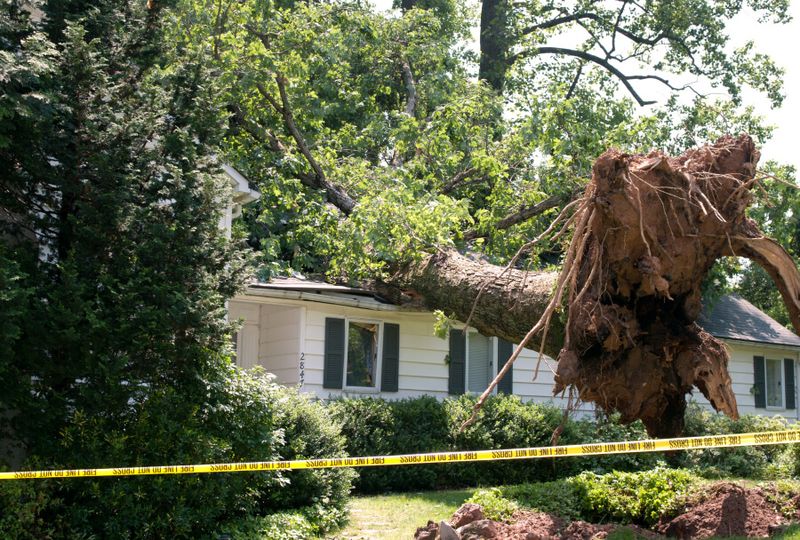
Start with what the tree actually damaged: a structure, a fence, your driveway access, or only the lawn. Notify the relevant insurer and keep your claim records together, as Minnesota Commerce’s claim tips suggest.
Preserve anything showing the tree’s condition, including photos and any earlier warnings you gave your neighbor. Then get policy-specific answers on removal before assuming anyone pays, since coverage varies by policy.
As Minnesota Farm Bureau Insurance explains, responsibility depends on the circumstances.
A storm decides where the tree falls, but your records help decide what happens next.
Share this story