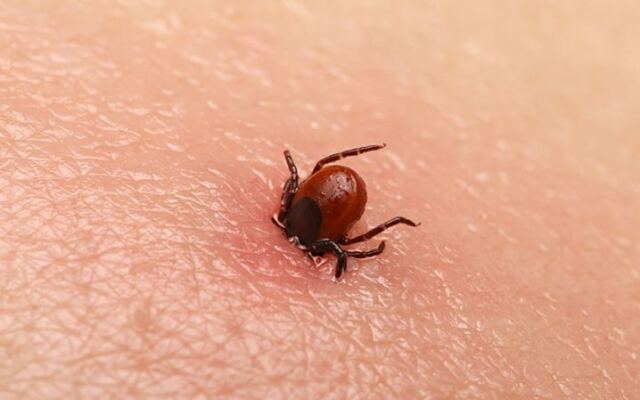
A warm afternoon in January can feel like a gift, especially when your dog is begging for a longer walk. But some ticks can make it through the cold months, and a few may come out when the weather turns mild.
Knowing what is true and what is exaggerated helps you keep your pets and family safe without giving up your winter walks.
Winter survival is not the same as winter activity
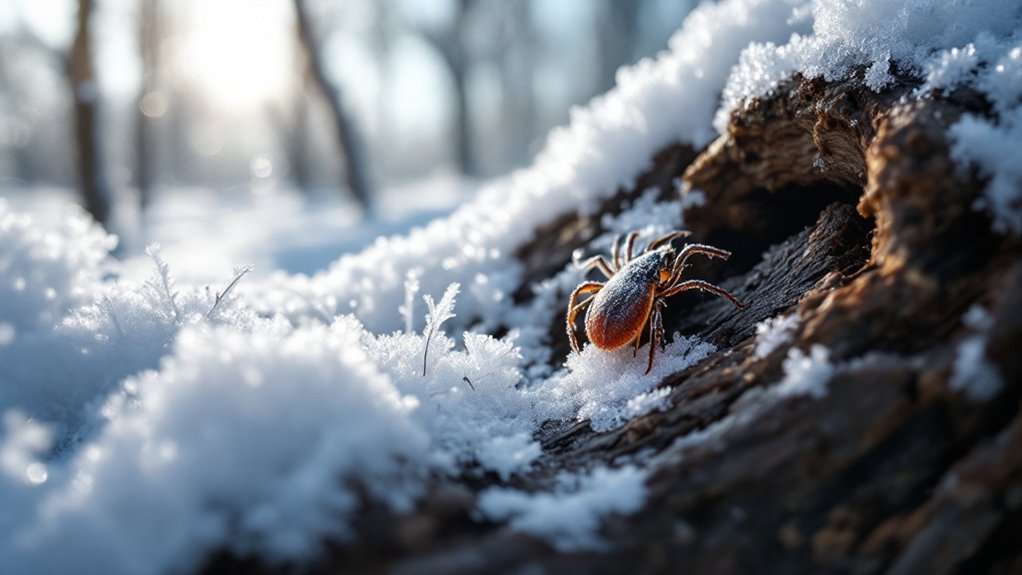
Surviving the winter and being out and hunting for a meal are two different things. The species we are talking about is the blacklegged tick, also called the deer tick.
Do not confuse it with the “winter tick,” which is the common name for a different species that mostly feeds on animals like moose and deer.
Research done outside Iowa shows that cold does not reliably wipe out blacklegged ticks. In a multiyear field study in eastern North America, overwintering nymphs often survived well.
That study does not tell us exact survival rates for Iowa, and it does not mean every tick makes it through every cold spell.
The reason some ticks make it is shelter. New England research on leaf litter and snow found that this ground-level cover can protect ticks from the coldest air temperatures.
Think of it like a blanket over the forest floor.
Hiding under that blanket is not the same as hunting for a host. Ticks that are sheltering are mostly waiting out the cold.
Under favorable conditions some may become active, but that is not continuous movement or feeding all winter long.
Iowa records show a possibility, not a statewide pattern
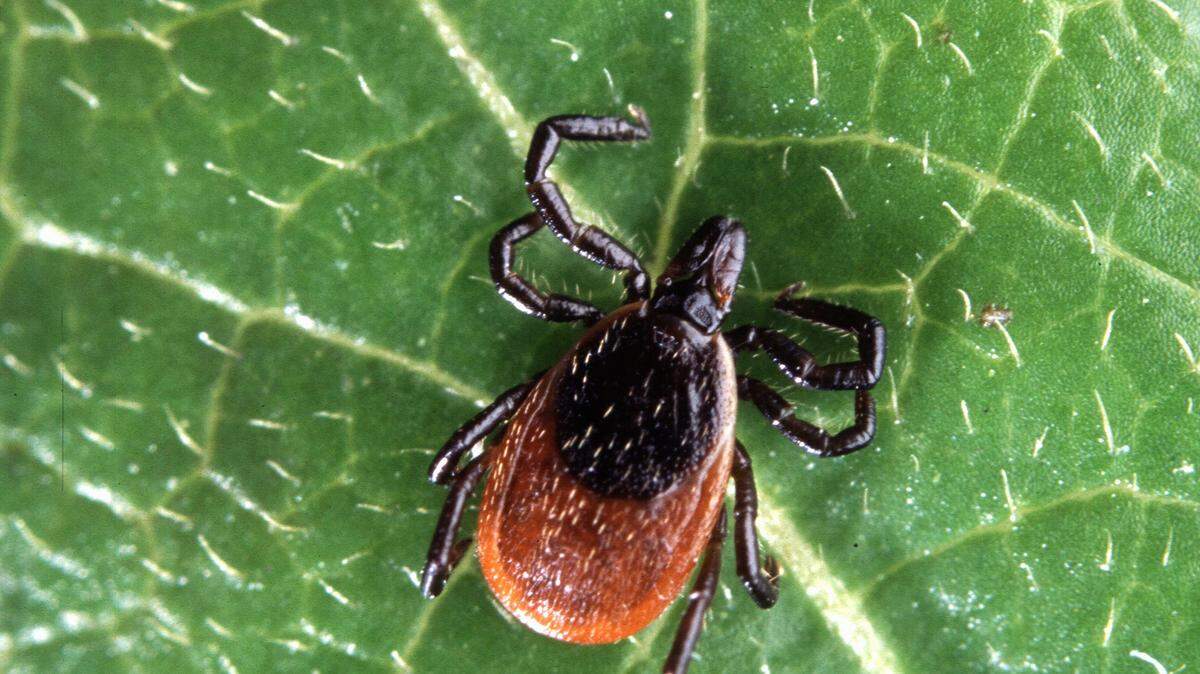
Iowa’s own records lean toward the warmer months. Iowa State University Extension describes typical tick activity as March through November.
Blacklegged tick submissions peaked in spring and fall.
Winter shows up only as a small footnote. In the submission data, which run through 2015, a small number of blacklegged ticks were turned in during February and December.
That tells us winter finds are possible, but they were rare.
Location matters too. Blacklegged ticks have been reported in the majority of Iowa counties, yet more submissions came from northeastern and eastern Iowa.
Being present in a county does not mean the same number of ticks or the same disease risk everywhere.
Nearby Wisconsin offers a hint of what can happen. A Wisconsin surveillance summary documented adult blacklegged ticks in Iowa County, Wisconsin, in February 2024, linked to temperatures above 40 degrees Fahrenheit.
That is useful regional backup, but it is not proof of winter activity across Iowa.
Above-freezing days can bring adult ticks out
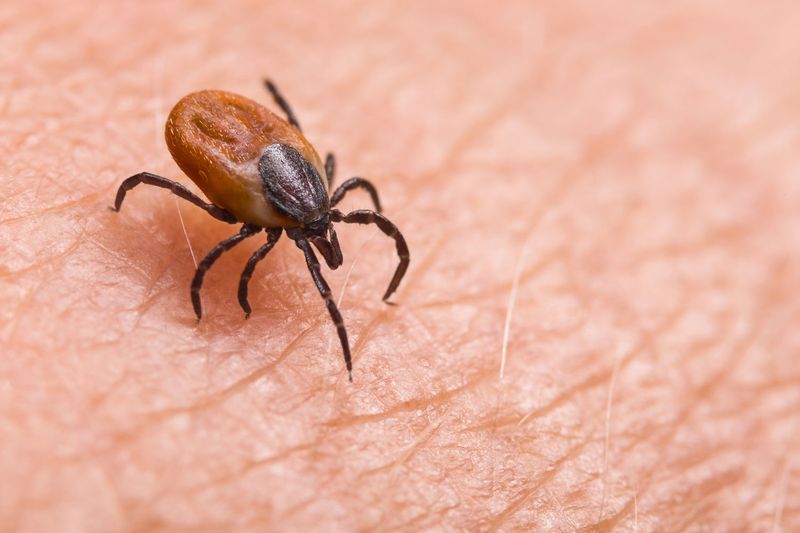
When the thermometer climbs past freezing, some ticks may stir. CDC prevention guidance notes that adult blacklegged ticks may seek hosts in winter when temperatures rise above freezing.
Notice the word “may.” It describes a possibility, not a promise.
The same guidance points out that the greatest bite risk is in spring, summer, and fall. A mild day in February does not suddenly turn the woods into peak tick season.
Winter is a smaller, less predictable concern.
Above freezing is a broad idea, not a magic number. Whether a tick moves depends on the stage of its life, how sunny or sheltered the spot is, and how the weather has been over the past few days.
A south-facing slope with leaves can act differently from a shaded, frozen yard.
CDC’s overview of where ticks live describes the leafy, wooded, and brushy places they favor. Those are the spots worth a bit more attention on a thaw day.
An open, well-trimmed lawn or a plowed sidewalk is a much lower concern than a trail through oak woods.
A dog can carry a tick across the threshold
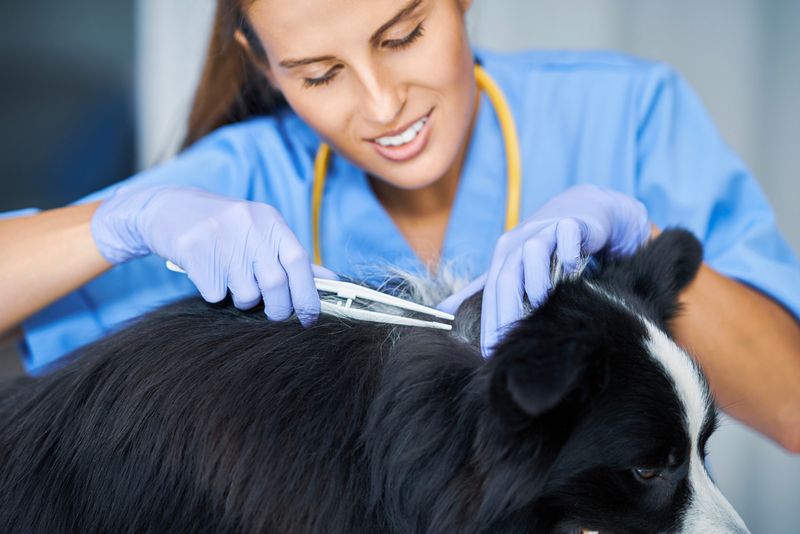
Picture your dog trotting through leaf litter on a mild day and coming home with a hitchhiker. A tick that attaches outdoors can ride indoors on a pet.
Later it may drop off or crawl onto a person on the couch or in bed.
That is the household concern: a dog can carry a tick indoors. It does not mean the dog passes Lyme disease directly to you.
The worry is that the tick itself could bite someone in the home later.
Most dogs on most walks will not pick up a tick in winter, so there is no need for alarm. A little routine goes a long way, though.
CDC advice on preventing ticks on pets recommends checking pets daily and removing ticks promptly.
The same guidance suggests asking your veterinarian which preventive product suits your dog. Age, weight, health, and lifestyle all matter, so a vet can match the product to the animal.
If you also have cats, do not apply dog tick products to them without veterinary advice, since some products made for dogs can be dangerous for cats.
Check people, pets, clothing, and gear after a walk
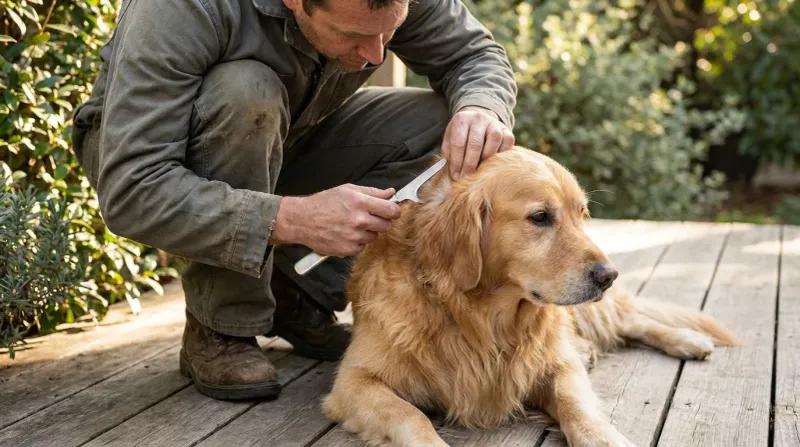
Make the check a habit, like wiping muddy paws. After a walk, especially through leaves, brush, or woods, look over yourself, your clothing, your gear, and your dog.
It takes a few minutes and works the same whether it is April or a thawed January afternoon.
Start at the door. Shake out jackets and hats, and look over boots, gloves, and backpack straps.
Ticks are small, so look closely at seams and folds.
Then check your skin, including the scalp, behind the knees, around the waist, and in the armpits. For the dog, run your fingers slowly through the coat and feel for small bumps.
Pay attention to the ears, the neck, between the toes, and the armpits and groin.
Prevention can start before you leave. CDC guidance recommends EPA-registered repellents and clothing treated with 0.5% permethrin for people, following the product label directions.
For your dog, ask your veterinarian about tick preventives for pets.
You do not need to treat every short winter stroll like a wilderness trek. Match the effort to where you went and how mild it was.
Remove an attached tick promptly and steadily
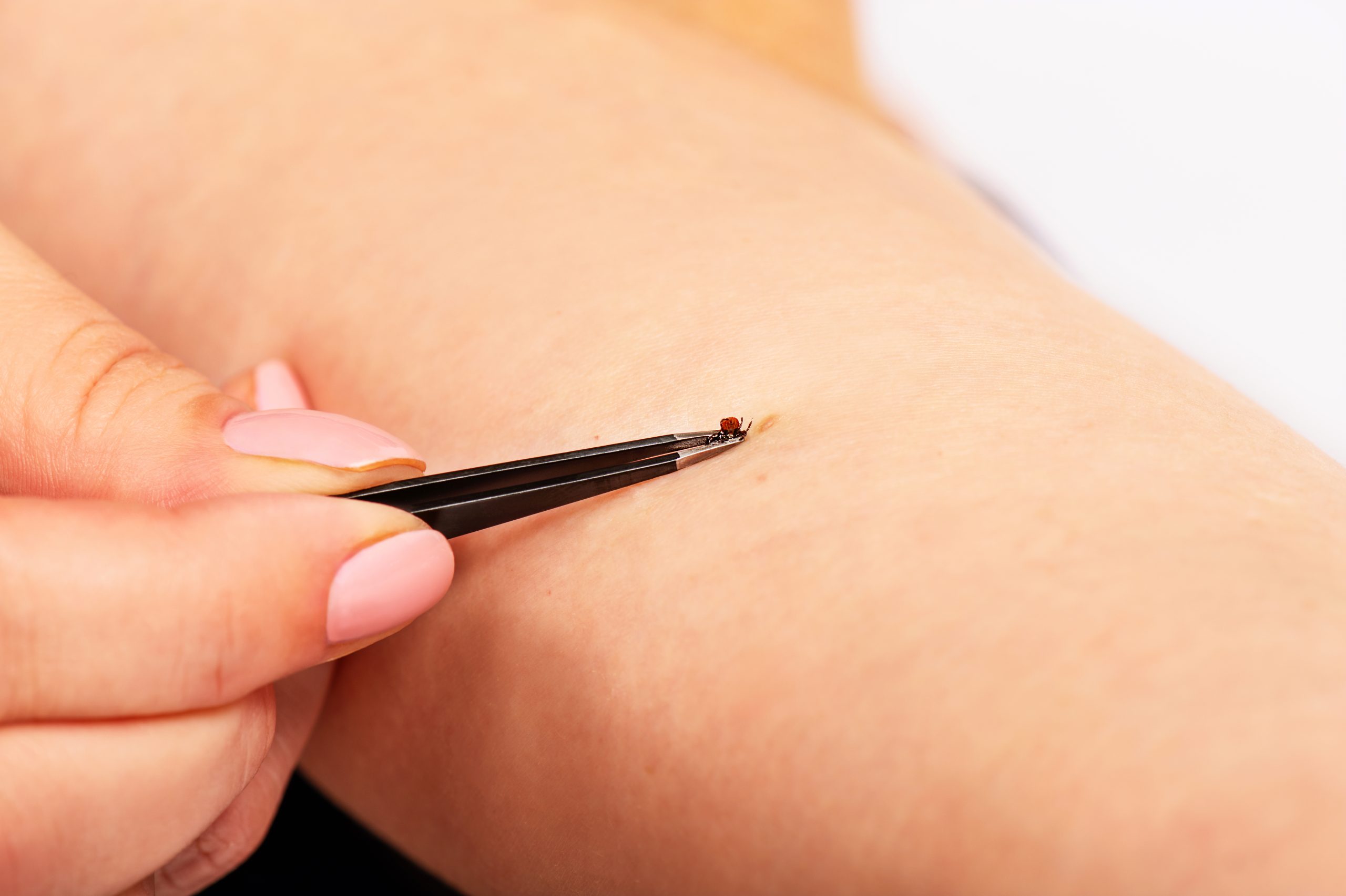
If you find a tick that has already attached, take it off right away. Do not wait to see what happens.
CDC guidance on what to do after a tick bite calls for prompt removal.
Grab a pair of fine-tipped tweezers. Grasp the tick as close to the skin as you can.
Then pull upward with steady, even pressure, without twisting or jerking.
Skip the folk remedies. Petroleum jelly, heat, and nail polish are not ways to remove a tick, and CDC advises against them.
Burning a tick or smothering it only wastes time while it stays attached.
Once the tick is out, clean the bite area and your hands with rubbing alcohol or soap and water. Keep an eye on the spot in the following weeks.
If a rash or fever appears, contact a health care provider and mention the bite.
If a tick is attached to your dog, the same careful, steady pull applies. Call your veterinarian if you are unsure or if the skin looks irritated.
Treat a thaw as a reminder, not a warning of constant danger

A mild winter day is a good reason to get outside, and a good reminder to take a quick look afterward. Blacklegged ticks may be active on favorable days, but that is not guaranteed everywhere in Iowa.
Spring, summer, and fall remain the main bite season, as CDC prevention guidance makes clear, and Iowa State’s records point the same way.
So enjoy the walk, then spend a minute checking people and pets. Winter ticks are a small possibility, and a small habit covers it.
Share this story