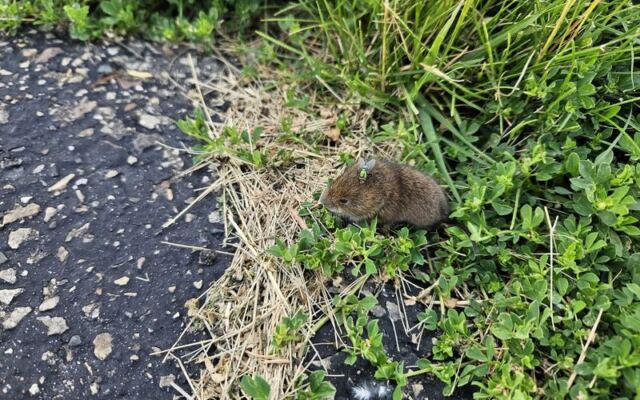
Those narrow trails showing up in your Iowa yard as the snow melts are most likely the work of meadow voles, small rodents that stay busy under the snow all winter. They nibble grass and wear thin runways into the turf, and the trails often show up once the snow pulls back.
The lawn may look rough, but the damage is often less serious than it seems. Here is how to confirm the culprit, what to expect, and what is actually worth your time.
Look for runways in the grass
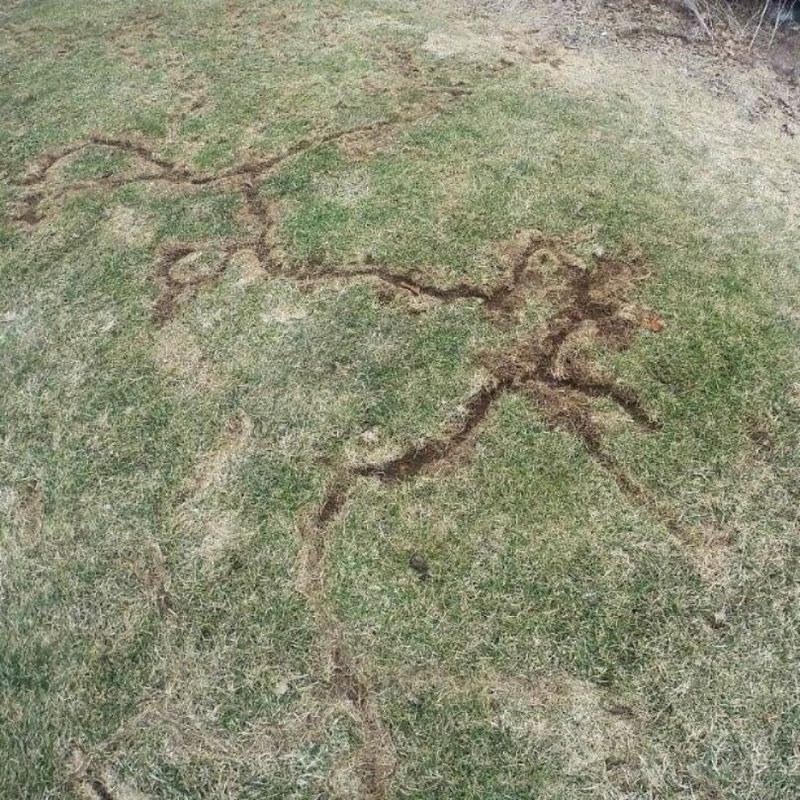
Once the snow recedes, walk the lawn and look for narrow, winding paths pressed into the turf. Iowa State University Extension describes vole runways as trails about 1 to 2 inches wide, with closely clipped or dead vegetation.
You may also spot small droppings along the path.
Tiny footprints on top of fresh snow are a weaker clue. Not every track is clear or conclusive, as the Iowa DNR points out in its guide to Iowa tracks.
Footprints alone do not prove that voles tunneled through or fed on your lawn. The grass runways, ideally backed up by other signs, are the better evidence.
Moles leave a different calling card. Their work is more associated with underground tunnels and raised soil, while voles leave clipped grass and shallow surface runways.
Penn State Extension stresses identifying the animal before you pick any control method.
Also check how fresh the trail looks. Newly clipped grass and fresh droppings suggest recent activity.
An old trail that has grown over with vegetation does not tell you voles still use it, so a quick look at the details can save you a lot of effort.
How voles make trails beneath snow
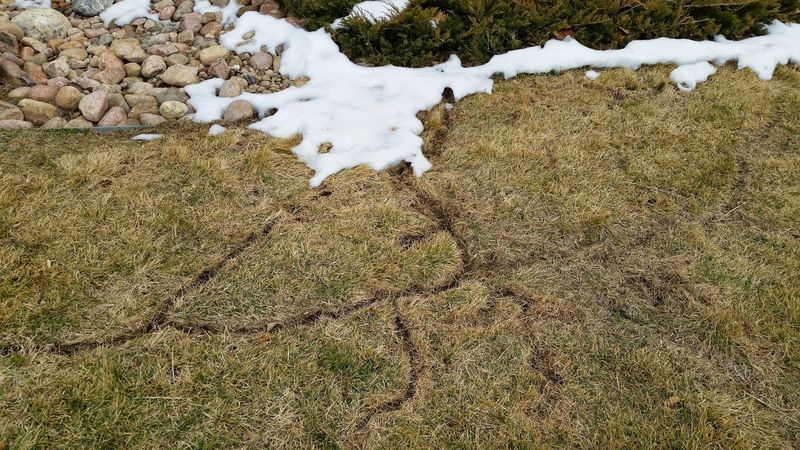
Winter does not slow meadow voles down much. According to Iowa State University Extension, they feed on grasses and other vegetation and stay active under the snow.
The blanket above them works like a roof, hiding them from view and holding in some shelter.
Beneath that roof, voles travel along shallow runways through the turf. They clip the grass as they go, which creates the narrow, winding trails you later see.
Because the paths sit right at ground level, they are hidden during the snowy months.
That hidden quality explains the timing. The runways usually become easiest to spot after snowmelt, when the covering vanishes and the flattened, clipped lanes lie exposed.
A fresh snowfall will not show you much of this activity.
It also helps to separate two things people call tracks. The turf runways are the lasting trails in the grass.
A set of tiny footprints across new snow is a different clue, and it is not a confirmed sign of vole tunneling by itself. When in doubt, wait for the melt and inspect the grass itself.
Spring damage may look worse than it is
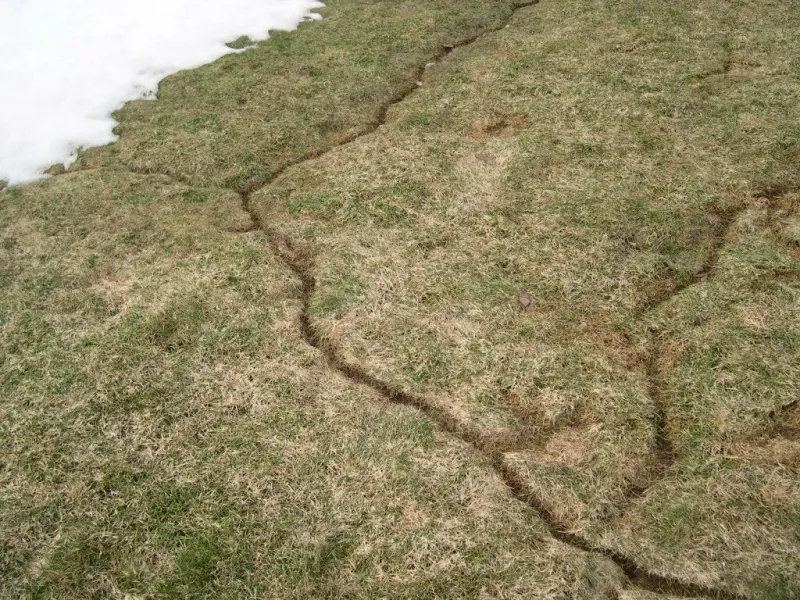
A lawn fresh out from under the snow can look alarming, with brown lanes crisscrossing the yard. Yet UMass Extension explains that vole feeding usually clips grass shoots near the crown, while the roots are typically left undisturbed.
That matters because grass with intact roots can send up new blades once the weather warms. The first look after snowmelt is often the worst look.
Many lawns improve noticeably as spring settles in.
Iowa guidance backs this up. Iowa State University Extension notes that affected lawn areas often recover within a few weeks.
Recovery is common, but it is not a promise. Severe damage may leave spots that need reseeding, especially where the turf was thin to begin with.
Treat the trails as something to watch for a few weeks, not as a sign your whole lawn is lost.
Give the lawn time, then repair bare spots
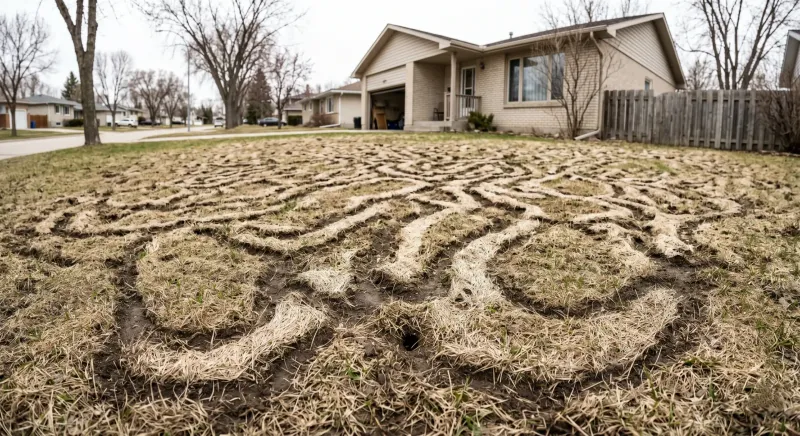
Patience is the first tool. As temperatures climb and grass starts growing, many trails fill in without any help.
A visible trail does not call for immediate treatment or reseeding.
Once the turf is dry enough to walk on, rake the damaged areas. UMass Extension recommends raking thoroughly but appropriately to clear accumulated debris and droppings.
Use a light touch so you do not tear up the healthy crowns that are trying to recover.
After raking, apply a light application of fertilizer to encourage new growth. Then give the lawn a few more weeks to show what it can do on its own.
Overseed only the areas that do not recover acceptably. Bare patches that stay bare after the grass has had time to wake up are the real candidates.
A trail that is slowly greening over can simply be left alone.
Reduce cover around the lawn
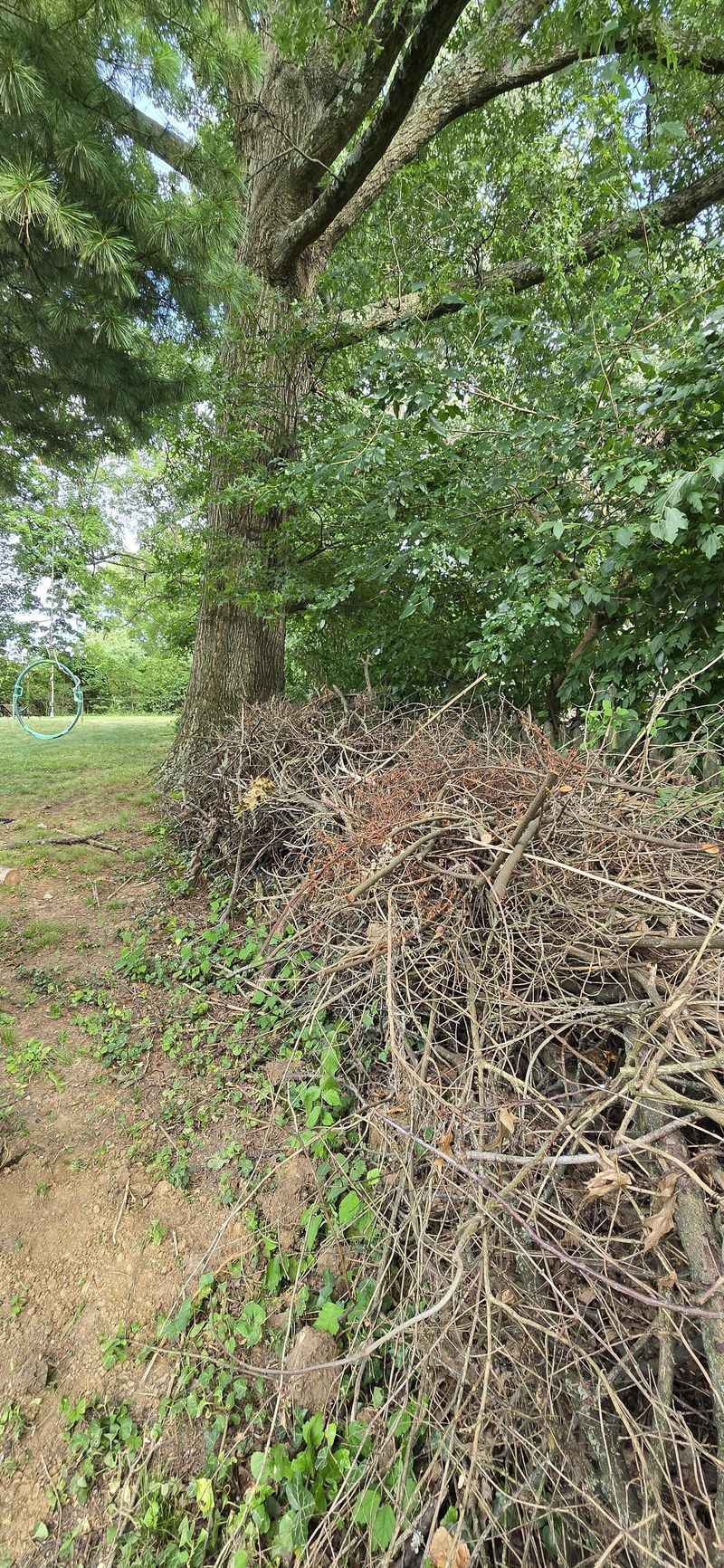
Voles like places to hide, so the goal is to make your yard feel less cozy. Iowa State University Extension points to habitat changes as a main prevention step.
Regular mowing keeps grass short and open.
Tall weeds along the lawn edge give voles protected travel routes, so keep them cut down. Brush piles, stacked wood, and compost piles are also handy shelters, so move them away from the turf.
Think of these steps as making the habitat less favorable, not as a guaranteed fix. Voles may still show up from neighboring yards or fields.
You are simply lowering the odds that they settle in next to your grass.
Mulch deserves a quick mention too. Iowa State advises keeping mulch at least 6 inches from tree trunks.
More detailed tree protection comes next.
Protect young trees and shrubs from gnawing
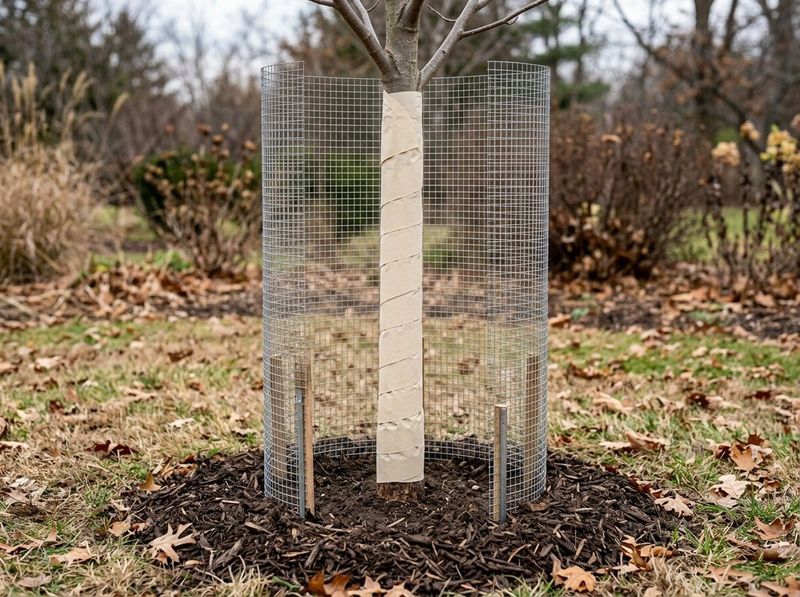
Trees and shrubs are where vole damage can truly matter. In winter, voles can gnaw and girdle bark, and the damage may not be noticed until spring.
Girdling a young trunk can seriously harm or kill the plant, unlike a clipped patch of lawn.
Iowa State offers a clear fix in its guidance on protecting trees and shrubs over winter. Wrap vulnerable plants in cylinders of 1/4-inch hardware cloth, with the bottom buried 2 to 3 inches in the soil.
Check any young trees now, since spring is when girdling often shows itself. Look low on the trunk for stripped or chewed bark.
Then plan to put guards in place before next winter.
This is separate from lawn repair and from clearing cover. A tree guard works plant by plant, so it is the step to prioritize if you have newly planted trees.
Trap only when active damage warrants it
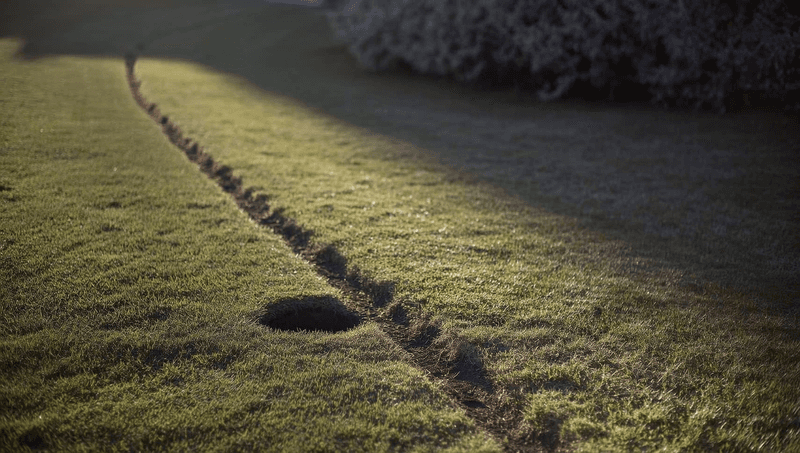
A trail alone is not a reason to trap. The sources give no numerical action threshold, so there is no magic count of runways.
UMass notes that lawn damage is normally short-lived, while ongoing damage or risk to trees can make control worth considering.
If control is warranted in a small area, Iowa State recommends mouse snap traps baited with peanut butter and placed perpendicular to active runways. Pick runways with fresh clipping and droppings.
Protect traps with a cover so children, pets, and non-target animals cannot reach them.
Do not count on ultrasonic devices, flooding, or fumigants. UC IPM says they are ineffective in landscapes, and repellents have questionable results.
Skip casual use of rodent bait. If you consider it, confirm the specific product is labeled for your intended use, and follow its label and site restrictions.
The EPA says to keep bait out of reach of children, pets, and wildlife and to promptly remove carcasses.
Most yards need far less than people expect. Watch the grass, guard the trees, and the lawn usually does the rest.
Share this story