Get the latest garden guides in your inbox →
Gardening Latest
  • General Gardening
  • Lawn Care
  • Plant Care
  • Composting
  • Soil Health
  • Backyard
  • Garden Muse Magazine
  • General Gardening
  • Lawn Care
  • Plant Care
  • Composting
  • Soil Health
  • Backyard
  • Garden Muse Magazine
  • News
  • Gardening Calendar
  • Garden Structures
  • Vegetable Garden
  • Vertical Garden
  • Raised Beds
  • Hydroponics
  • General Equipment
  • Community Gardens
Garden Themes
  • Spiritual Garden
  • Hydroseeding
  • Seeding and Laying Sod
  • Artificial Grass
  • Lawn Care Equipment
  • Plants
  • Trees
  • Planting Tools
  • Composting Basics
  • Fertilizer
  • Alternative Growing Mediums
  • Front Yard
  • Backyard Activities
  • Landscaping
Gardening Latest

Explore by state

Which state is your garden in?

Currently viewing Iowa

All states

Northeast

  • Connecticut —
  • Delaware 33
  • Maine —
  • Maryland 19
  • Massachusetts 35
  • New Hampshire —
  • New Jersey 19
  • New York 28
  • Pennsylvania 28
  • Rhode Island —
  • Vermont —

Southeast

  • Alabama 19
  • Arkansas —
  • Florida 19
  • Georgia 19
  • Kentucky 33
  • Louisiana 18
  • Mississippi —
  • North Carolina 17
  • South Carolina 32
  • Tennessee 16
  • Virginia 18
  • West Virginia —

Midwest

  • Illinois 18
  • Indiana 20
  • Iowa 32
  • Kansas —
  • Michigan 19
  • Minnesota 18
  • Missouri 18
  • Nebraska —
  • North Dakota —
  • Ohio 19
  • South Dakota —
  • Wisconsin 34

Southwest

  • Arizona 19
  • Colorado —
  • Nevada —
  • New Mexico —
  • Oklahoma —
  • Texas 18
  • Utah —

West

  • Alaska —
  • California 19
  • Hawaii —
  • Idaho —
  • Montana —
  • Oregon —
  • Washington —
  • Wyoming —

No state matches that search.

Site menu

Gardening Latest
  • General Gardening
    • News
    • Gardening Calendar
    • Garden Structures
    • Vegetable Garden
    • Vertical Garden
    • Raised Beds
    • Hydroponics
    • General Equipment
    • Community Gardens
    Garden Themes
    • Spiritual Garden
  • Lawn Care
    • Hydroseeding
    • Seeding and Laying Sod
    • Artificial Grass
    • Lawn Care Equipment
  • Plant Care
    • Plants
    • Trees
    • Planting Tools
  • Composting
    • Composting Basics
  • Soil Health
    • Fertilizer
    • Alternative Growing Mediums
  • Backyard
    • Front Yard
    • Backyard Activities
    • Landscaping
  • Garden Muse Magazine

Explore

  • About GardeningLatest.com
  • Contact Us

Get the latest from the garden

New guides on lawn care, plants and backyard projects, sent when they go up.

Subscribe →

Follow

  • Facebook
  • X
  • Pinterest
  • YouTube
Iowa Gardening

That Huge Silky Cocoon Hanging on Your Iowa Shrub This Winter Holds One of America’s Biggest Moths

That big, papery cocoon hanging on your bare lilac or maple may hold a cecropia moth, the largest native moth in North…

LP

By Lyle Petersen

November 25, 2026 · 5 min read

That Huge Silky Cocoon Hanging on Your Iowa Shrub This Winter Holds One of America’s Biggest Moths
That Huge Silky Cocoon Hanging on Your Iowa Shrub This Winter Holds One of America's Biggest Moths

That big, papery cocoon hanging on your bare lilac or maple may hold a cecropia moth, the largest native moth in North America. The moth is sleeping inside right now, waiting out the cold.

Whether you found it while pruning or while staring out the kitchen window, you have a small winter mystery on your hands. Here is how to read the clues and what to do about it.

At a glance

Where
Iowa Gardening
Hardiness zone
5 −20 to −10°F
Read
5 minutes
Published
November 25, 2026

Could that winter cocoon be a cecropia?
Could that winter cocoon be a cecropia?
© Insectio

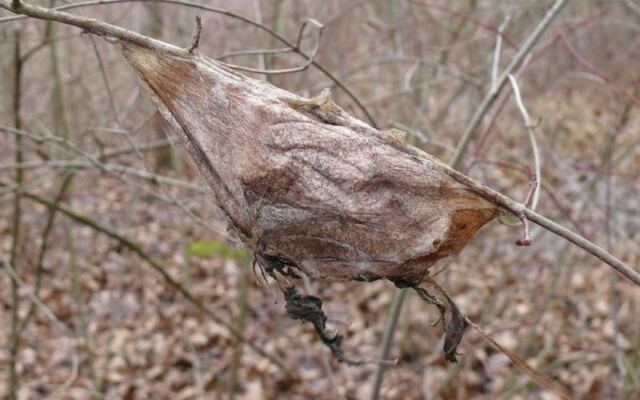
Bare branches make winter the best time to spot cocoons you would never notice in summer. Iowa State Extension describes a cecropia cocoon as dirty gray or brown and about 4 to 5 inches long.

It is usually attached to a twig or tucked between branches.

The host plant is a clue too. Lilac and maple are both among the plants cecropia caterpillars feed on, so a cocoon on either one fits the picture.

A thick, baggy, pod-like shape on a bare branch is a good reason to look closer.

Still, those clues make a cecropia plausible, not certain. Many moths spin cocoons on shrubs and trees, and the Vermont Atlas of Life notes that cocoon form and placement vary.

Cecropia cocoons are typically attached lengthwise to twigs, but that is a tendency rather than a rule.

Other giant silk moths show why. Polyphemus moths wrap cocoons on twigs, and Promethea moths use leaves reinforced with silk.

So if you find one, call it a possible cecropia cocoon and enjoy the guessing game.

What a cecropia becomes
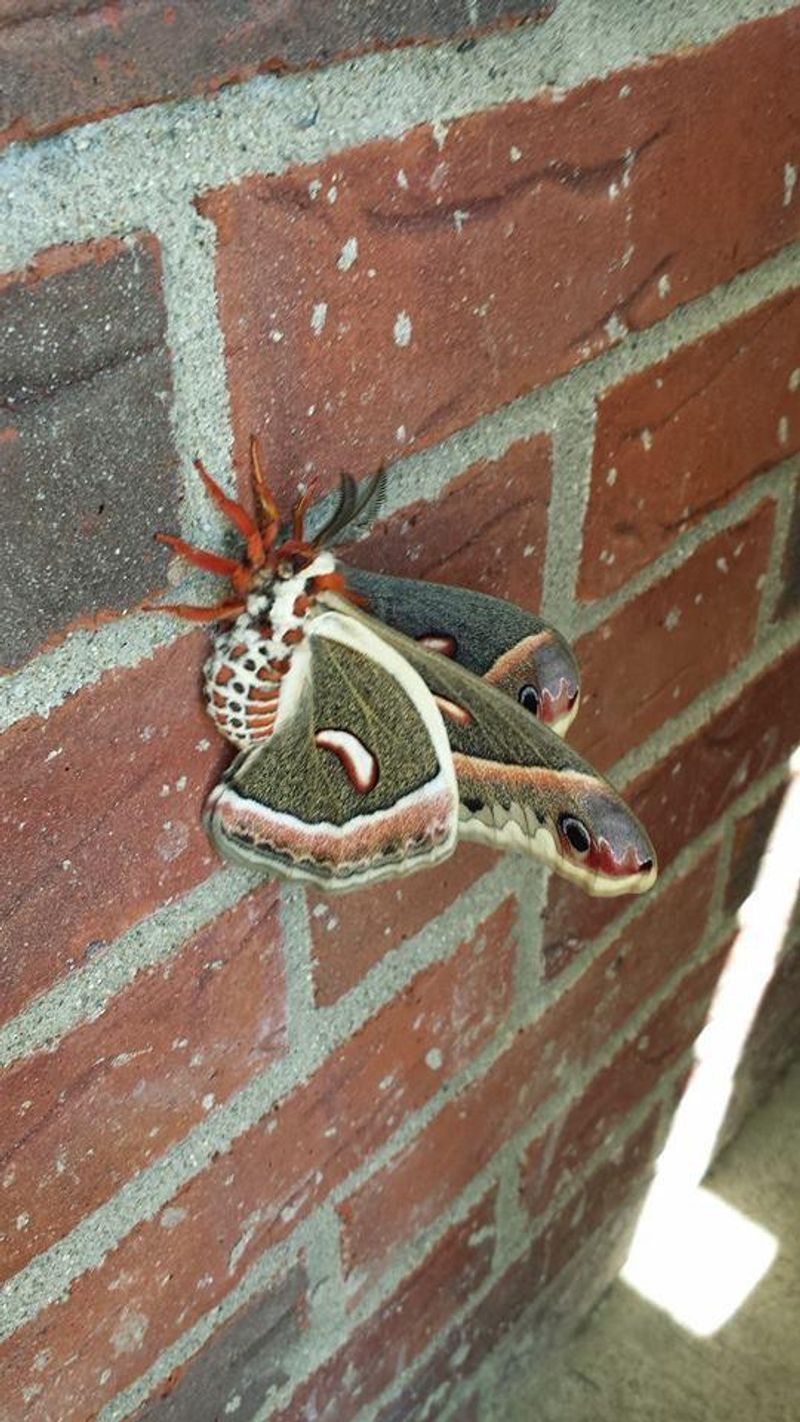
What a cecropia becomes
© Reddit

Picture a moth wider than your outstretched palm. The cecropia is North America’s largest native moth, and the National Park Service reports a wingspan of 5 to 7 inches.

That is bigger than many small birds look when they flit past a feeder.

If you suspect a cecropia cocoon, leave it attached to its branch and outdoors through winter.

The adult is a showpiece, with broad wings in rich reds, browns, and creamy whites. Seeing one in person feels like finding a tropical visitor in your Iowa yard.

That is why a plain brown cocoon deserves a second look.

The cocoon is the link between the lumpy winter pod and that spectacular moth. If your find really is a cecropia, this is the stage that comes before the adult.

A cocoon that looks like a cecropia’s does not prove it is one, though. It also does not promise an adult will emerge.

Think of it as a hopeful sign rather than a guarantee.

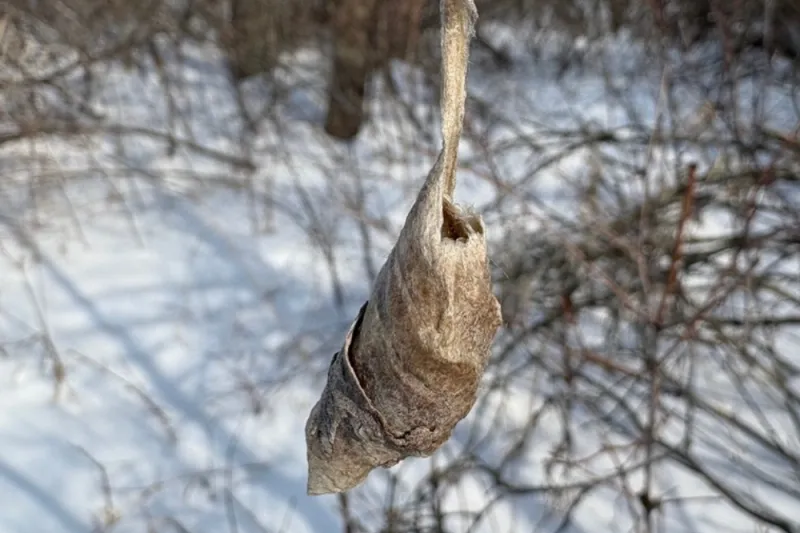
The cocoon carries the moth through winter
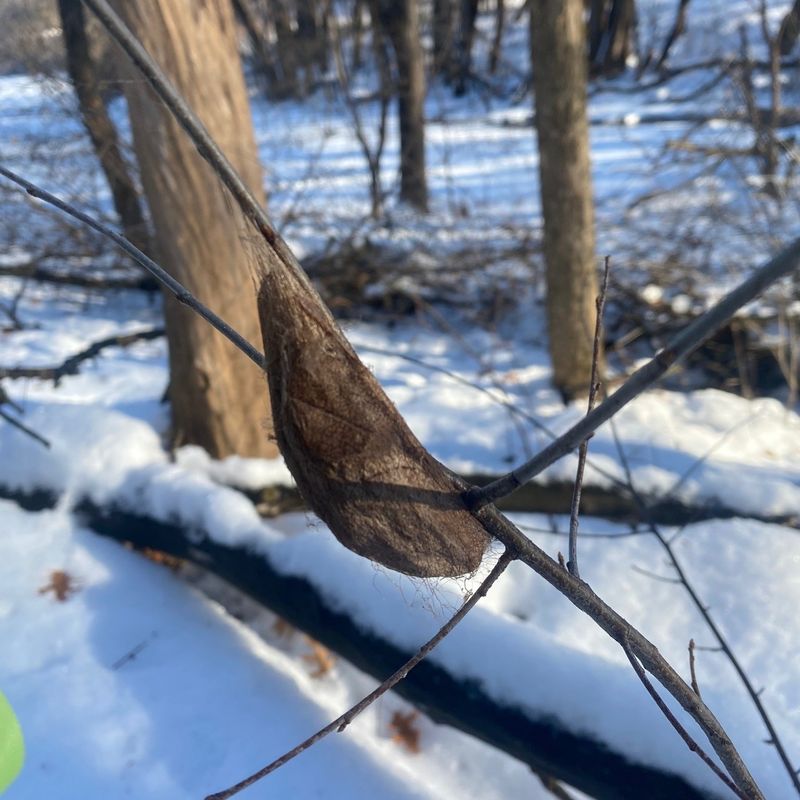
The cocoon carries the moth through winter
© rosevilleparksandrec

Snow, ice, and subzero nights are all part of the plan. A cecropia spends winter inside its cocoon, as Iowa State Extension explains, and the adult comes out the following spring.

So the cocoon you see in January is a resting stage. It is not an adult moth stuck in a bag, and it is not a caterpillar that needs feeding.

Nothing about it requires help from you.

That is good news for anyone who worries that a motionless pod looks lifeless. A cocoon that sits still, looks dull, and sways a little in the wind is behaving the way a winter cocoon should.

For a reader who just found one in cold weather, the takeaway is simple. Treat it as a quiet life stage that is best left undisturbed, and let the season do its work.

Leave it in its winter setting

Leave it in its winter setting
© The Post-Crescent

Resist the urge to snip it off and carry it inside. If you suspect a cecropia cocoon, leave it attached to its branch and outdoors through winter.

Iowa State says cocoons should not be kept in a house over winter, and the dry warmth of a heated home is a poor match for an insect built for cold.

You may have read that a garage or unheated porch is fine. That option applies to cocoons already collected or reared and being stored.

It is not a reason to detach one that is sitting safely outside.

UMass Extension also advises leaving cocoons in place. The practical rule is the same in both states: do not move what is already where it belongs.

If a branch must be pruned, wait until after spring emergence time has passed. If you must cut it sooner, keep the cocoon attached and place the branch outdoors in a sheltered spot.

Otherwise, simply walk past and let it be.

Cecropia caterpillars usually do little harm
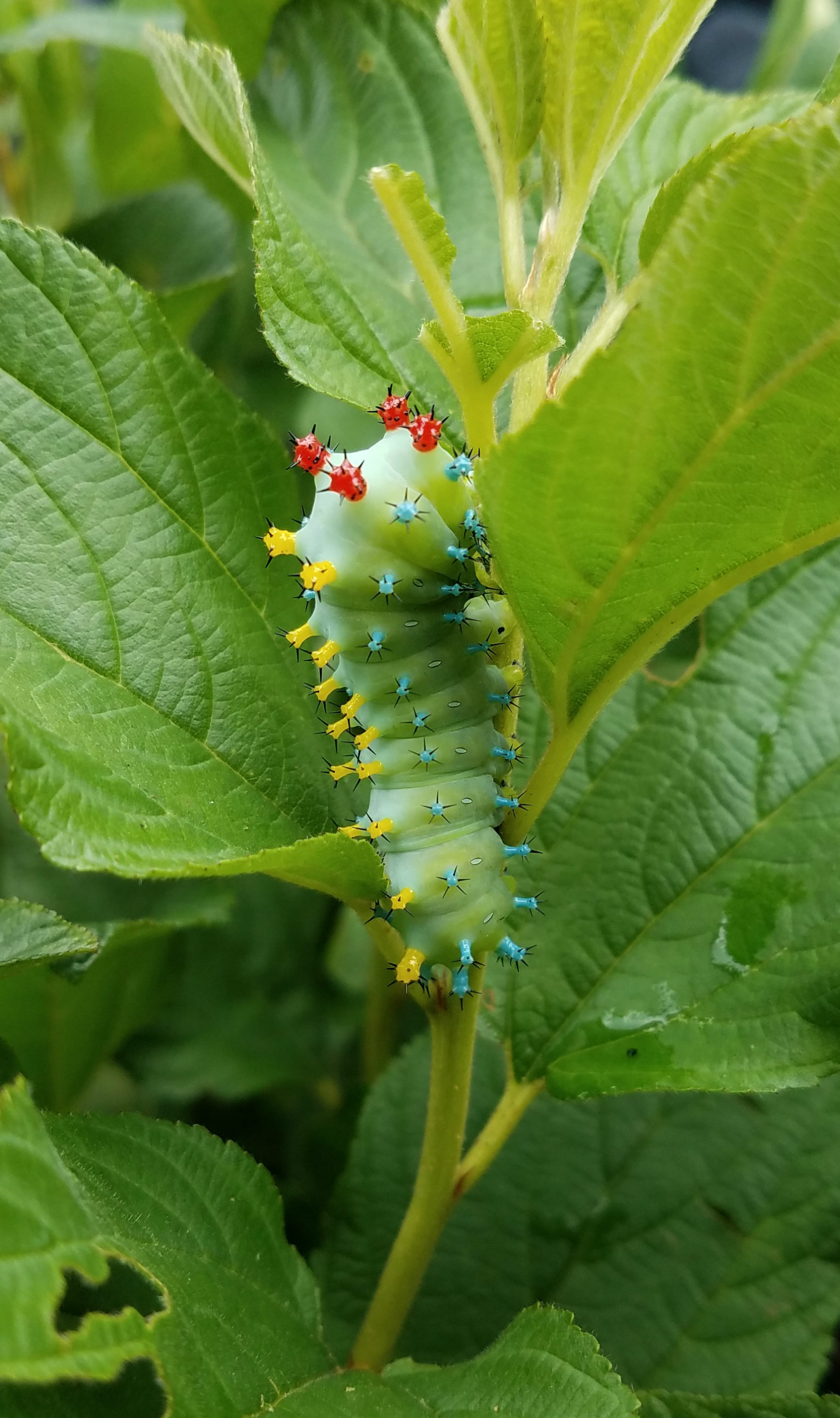
Cecropia caterpillars usually do little harm
© Tree Pittsburgh

Gardeners sometimes worry that a big moth means a big problem. For a cecropia, that worry is mostly unnecessary.

The caterpillars eat a wide range of trees and shrubs, including lilac, maple, apple, cherry, willow, and birch.

According to Iowa State Extension, they generally cause little harm to ornamental plants and need no control. That means you do not need sprays or removal if your cocoon turns out to be one.

Iowa State also says cecropia caterpillars and moths are harmless to people and pets. That statement is about cecropias specifically.

It is not a blanket promise for every cocoon or every moth you might find.

If you cannot tell what is inside a cocoon, the safest approach is still to leave it alone and enjoy it from a distance. Your shrubs will almost certainly be fine either way.

Watch for possible emergence in spring
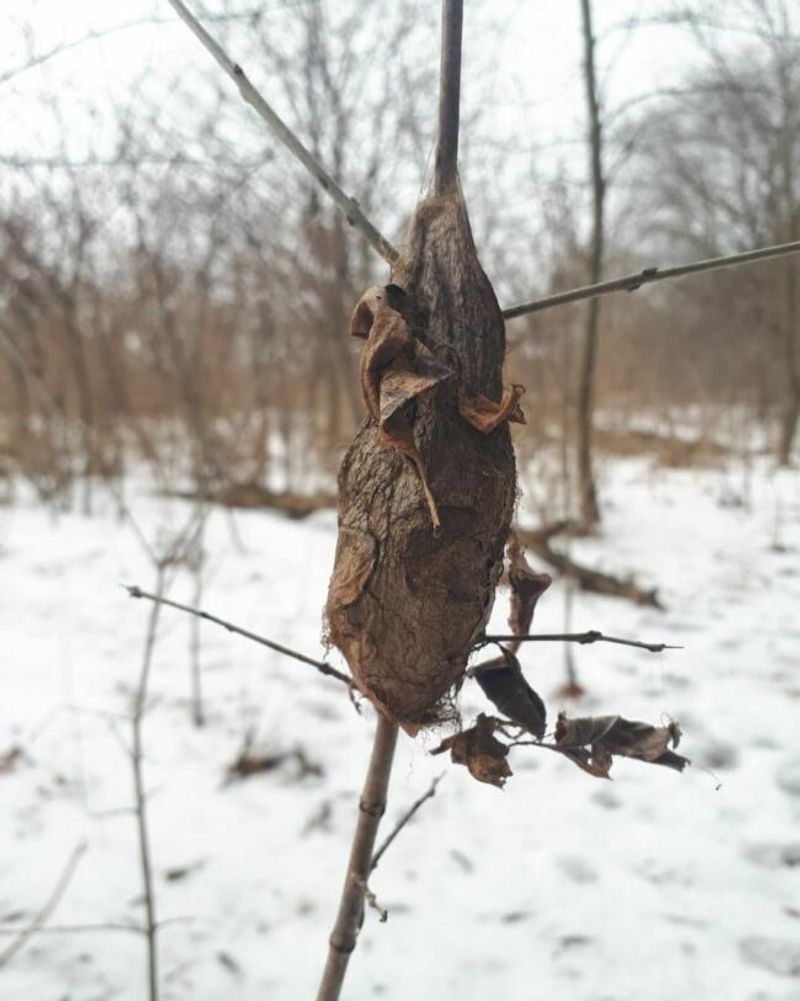
Watch for possible emergence in spring
© High Park Nature Centre

Mark your calendar loosely rather than tightly. In its account, Iowa State reports adults emerging in May.

That is helpful regional guidance for Iowa gardeners.

Timing can shift, though. Colorado State University describes a broader window running from spring into early summer.

So spring is the safer expectation than any single date.

Not every cocoon will produce a moth, either. Some may be empty, and some may belong to a different species.

Checking now and then costs nothing and adds a little anticipation to the season.

Leave the cocoon outdoors and watch without touching it. A fresh moth needs time to pump up its crumpled wings, and a quiet branch is the best nursery it could ask for.

Share this story
LP

Written by

Lyle Petersen

More from Lyle Petersen →

About Gardening Latest

Gardening Latest provides in-depth guides to maintaining and enhancing your garden and backyard. Learn how to make the most of the space you have and create a beautiful garden.

More about us →

Latest stories

  • California GardeningIf a Gray Fox Keeps Trotting Through Your California Yard This Winter, Here’s What It’s After

    If a Gray Fox Keeps Trotting Through Your California Yard This Winter, Here’s What It’s After

    11 hr ago
  • Arizona GardeningWhen a Gray Fox Trots Through Your Arizona Yard This Winter, It’s on a Mission

    When a Gray Fox Trots Through Your Arizona Yard This Winter, It’s on a Mission

    12 hr ago
  • Texas GardeningNeighbor Vines Crossing Into Your Texas Yard: Texas Tree-Branch Guidance Is Clear, but the Answer for Vines Is Less Settled

    Neighbor Vines Crossing Into Your Texas Yard: Texas Tree-Branch Guidance Is Clear, but the Answer for Vines Is Less Settled

    12 hr ago
  • Wisconsin GardeningWisconsin Neighbors Fight Over Snow Piled on Their Property, and Here’s What the Law Actually Says

    Wisconsin Neighbors Fight Over Snow Piled on Their Property, and Here’s What the Law Actually Says

    12 hr ago
  • Missouri GardeningYellow Jackets Nesting Near Your Missouri Home? This Is What You Should Do First

    Yellow Jackets Nesting Near Your Missouri Home? This Is What You Should Do First

    12 hr ago

Gardening by state

Stories for your state, and the hardiness zone most of it gardens in.

Keep exploring

Read next

All Iowa Gardening →
Iowa GardeningThat Black Bug With Red Stripes Swarming Your Iowa Siding Wants Inside for Winter
Iowa Gardening

That Black Bug With Red Stripes Swarming Your Iowa Siding Wants Inside for Winter

13 hr ago
Iowa GardeningYour Snowy Iowa Yard Hides a Tiny Mammal With a Venomous Bite That Hunts All Winter
Iowa Gardening

Your Snowy Iowa Yard Hides a Tiny Mammal With a Venomous Bite That Hunts All Winter

19 hr ago
Iowa GardeningIowa’s Venomous Yard Critters Get Easier To Spot Once Late Fall Sets In
Iowa Gardening

Iowa’s Venomous Yard Critters Get Easier To Spot Once Late Fall Sets In

22 hr ago

More from Iowa Gardening

  • You Pull It, It Comes Right Back: The Invasive Tree Taking Over Iowa Neighborhoods

    Nov 24
  • Your Neighbor’s Tree Just Fell Into Your Iowa Yard, So Here’s Who Actually Pays

    Nov 23
Back to top

Leave a response Cancel

Your email address stays private. Required fields are marked with an asterisk.

Gardening Latest

In-depth guides to maintaining and enhancing your garden and backyard: how to make the most of the space you have, and how to make it beautiful.

  • Facebook
  • X
  • Pinterest
  • YouTube

We may earn a portion of sales from products or services that are purchased through our site as part of our affiliate partnerships with retailers.

Explore

  • About GardeningLatest.com
  • Contact Us
  • Terms and Conditions
  • Privacy
  • Editorial Note:
  • FTC Disclosure

Newsletter

New garden guides and seasonal tips, straight to your inbox.

We’ll email you a link to confirm. Unsubscribe any time.

Almost there! Check your inbox and tap the link to confirm.

© 2026 Gardening Latest. All rights reserved.

Back to top