Get the latest garden guides in your inbox →
Gardening Latest
  • General Gardening
  • Lawn Care
  • Plant Care
  • Composting
  • Soil Health
  • Backyard
  • Garden Muse Magazine
  • General Gardening
  • Lawn Care
  • Plant Care
  • Composting
  • Soil Health
  • Backyard
  • Garden Muse Magazine
  • News
  • Gardening Calendar
  • Garden Structures
  • Vegetable Garden
  • Vertical Garden
  • Raised Beds
  • Hydroponics
  • General Equipment
  • Community Gardens
Garden Themes
  • Spiritual Garden
  • Hydroseeding
  • Seeding and Laying Sod
  • Artificial Grass
  • Lawn Care Equipment
  • Plants
  • Trees
  • Planting Tools
  • Composting Basics
  • Fertilizer
  • Alternative Growing Mediums
  • Front Yard
  • Backyard Activities
  • Landscaping
Gardening Latest

Explore by state

Which state is your garden in?

Currently viewing Indiana

All states

Northeast

  • Connecticut —
  • Delaware 40
  • Maine —
  • Maryland 26
  • Massachusetts 42
  • New Hampshire —
  • New Jersey 26
  • New York 35
  • Pennsylvania 36
  • Rhode Island —
  • Vermont —

Southeast

  • Alabama 26
  • Arkansas —
  • Florida 26
  • Georgia 27
  • Kentucky 40
  • Louisiana 25
  • Mississippi —
  • North Carolina 24
  • South Carolina 39
  • Tennessee 23
  • Virginia 25
  • West Virginia —

Midwest

  • Illinois 25
  • Indiana 28
  • Iowa 39
  • Kansas —
  • Michigan 26
  • Minnesota 25
  • Missouri 25
  • Nebraska —
  • North Dakota —
  • Ohio 26
  • South Dakota —
  • Wisconsin 41

Southwest

  • Arizona 26
  • Colorado —
  • Nevada —
  • New Mexico —
  • Oklahoma —
  • Texas 25
  • Utah —

West

  • Alaska —
  • California 25
  • Hawaii —
  • Idaho —
  • Montana —
  • Oregon —
  • Washington —
  • Wyoming —

No state matches that search.

Site menu

Gardening Latest
  • General Gardening
    • News
    • Gardening Calendar
    • Garden Structures
    • Vegetable Garden
    • Vertical Garden
    • Raised Beds
    • Hydroponics
    • General Equipment
    • Community Gardens
    Garden Themes
    • Spiritual Garden
  • Lawn Care
    • Hydroseeding
    • Seeding and Laying Sod
    • Artificial Grass
    • Lawn Care Equipment
  • Plant Care
    • Plants
    • Trees
    • Planting Tools
  • Composting
    • Composting Basics
  • Soil Health
    • Fertilizer
    • Alternative Growing Mediums
  • Backyard
    • Front Yard
    • Backyard Activities
    • Landscaping
  • Garden Muse Magazine

Explore

  • About GardeningLatest.com
  • Contact Us

Get the latest from the garden

New guides on lawn care, plants and backyard projects, sent when they go up.

Subscribe →

Follow

  • Facebook
  • X
  • Pinterest
  • YouTube
Indiana Gardening

Indiana Gardeners Keep Jumping Back From These 7 Critters, but They’re Completely Harmless

You reach for a weed, something wiggles, and suddenly you are three feet back with your heart pounding.

DH

By Dale Hutchins

November 28, 2026 · 5 min read

Indiana Gardeners Keep Jumping Back From These 7 Critters, but They’re Completely Harmless
Indiana Gardeners Keep Jumping Back From These 7 Critters, but They're Completely Harmless

You reach for a weed, something wiggles, and suddenly you are three feet back with your heart pounding. Indiana gardens are full of creatures that look scary but mean you no harm at all.

Many of them actually help your plants by eating pests or keeping the soil healthy. Once you know who they are, your next surprise in the flower bed might turn into a smile instead of a scream.

At a glance

Where
Indiana Gardening
Hardiness zone
6 −10 to 0°F
Read
5 minutes
Published
November 28, 2026

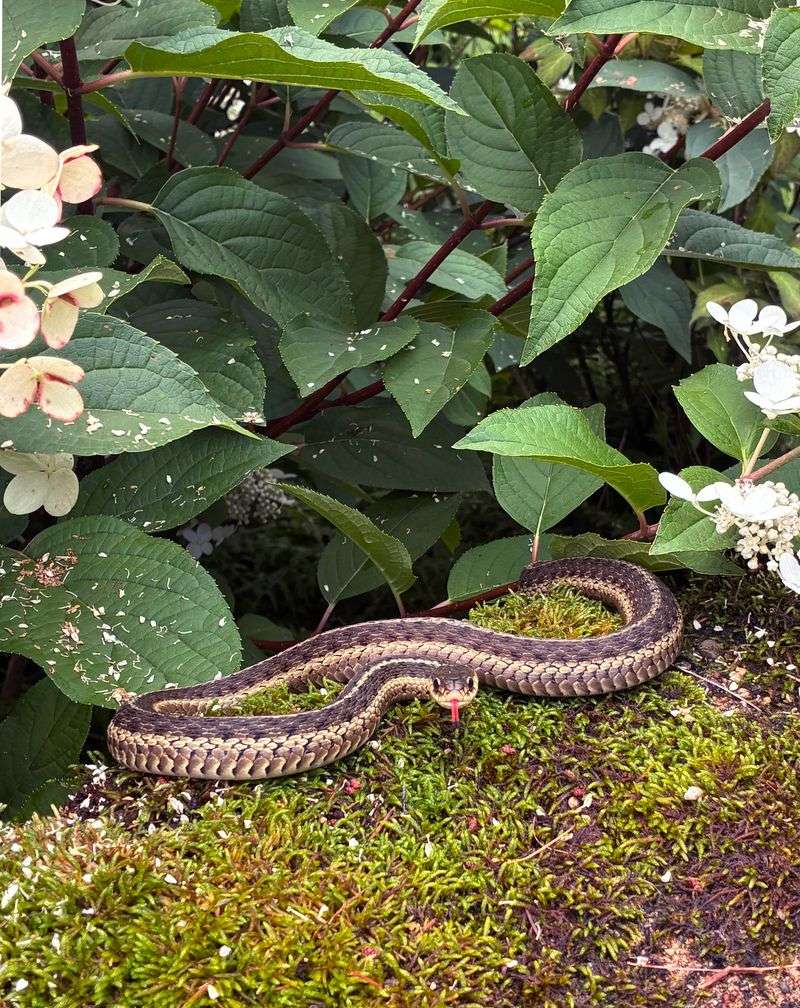
1. Eastern Garter Snake

Eastern Garter Snake
© greenwoodgardensnj

Picture pulling back a hosta leaf and seeing a striped snake staring back at you. That moment has sent plenty of Hoosiers sprinting for the porch.

Yet the eastern garter snake is one of the best neighbors your garden could ask for.

These slim snakes have three yellowish stripes running down a dark body. They are not venomous, and they would much rather slip away than face a giant human.

If you pick one up, the worst you will likely get is a smelly musk on your hands.

Garter snakes munch on slugs, earthworms, and small frogs, and they love a garden with rock piles or thick mulch. Fun fact: they are often among the first snakes to wake up in spring, sometimes basking on warm March days while snow still lingers in shady spots.

2. Wolf Spider
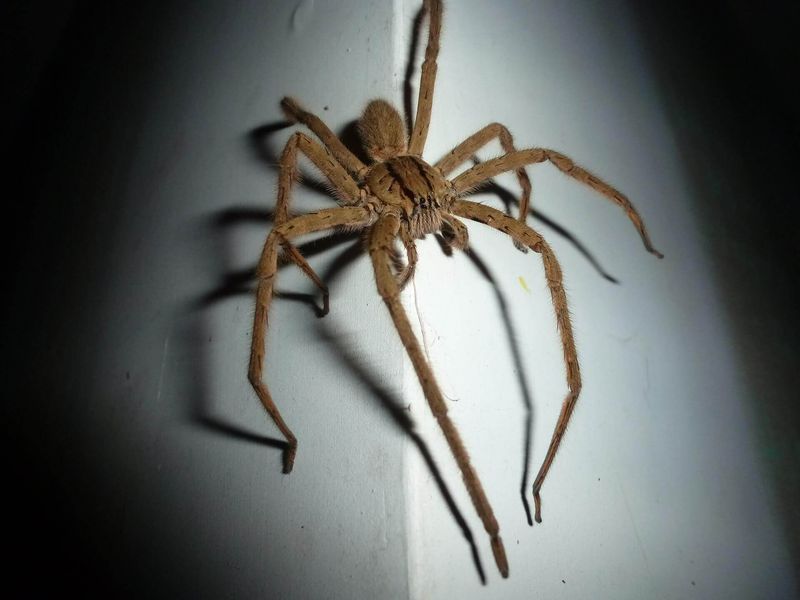
Wolf Spider
© OPC Pest Services

Big, hairy, and fast. Those three words explain why a wolf spider can make a grown adult drop a trowel.

Wolf spiders don’t spin webs to catch dinner. Instead, they chase prey across the ground like tiny hunters, which is why they seem to dart at you out of nowhere.

Many gardeners swear they saw a tiny hummingbird with antennae, and honestly, they are not far off.

They are really just running from your shadow.

Here is the sweet part: mother wolf spiders carry their babies on their backs. If you see a spider that looks fuzzy and lumpy, you might be looking at dozens of spiderlings hitching a ride.

A bite is rare and usually feels like a bee sting at most, and in return they gobble up crickets, beetles, and other bugs that nibble your crops.

3. American Toad
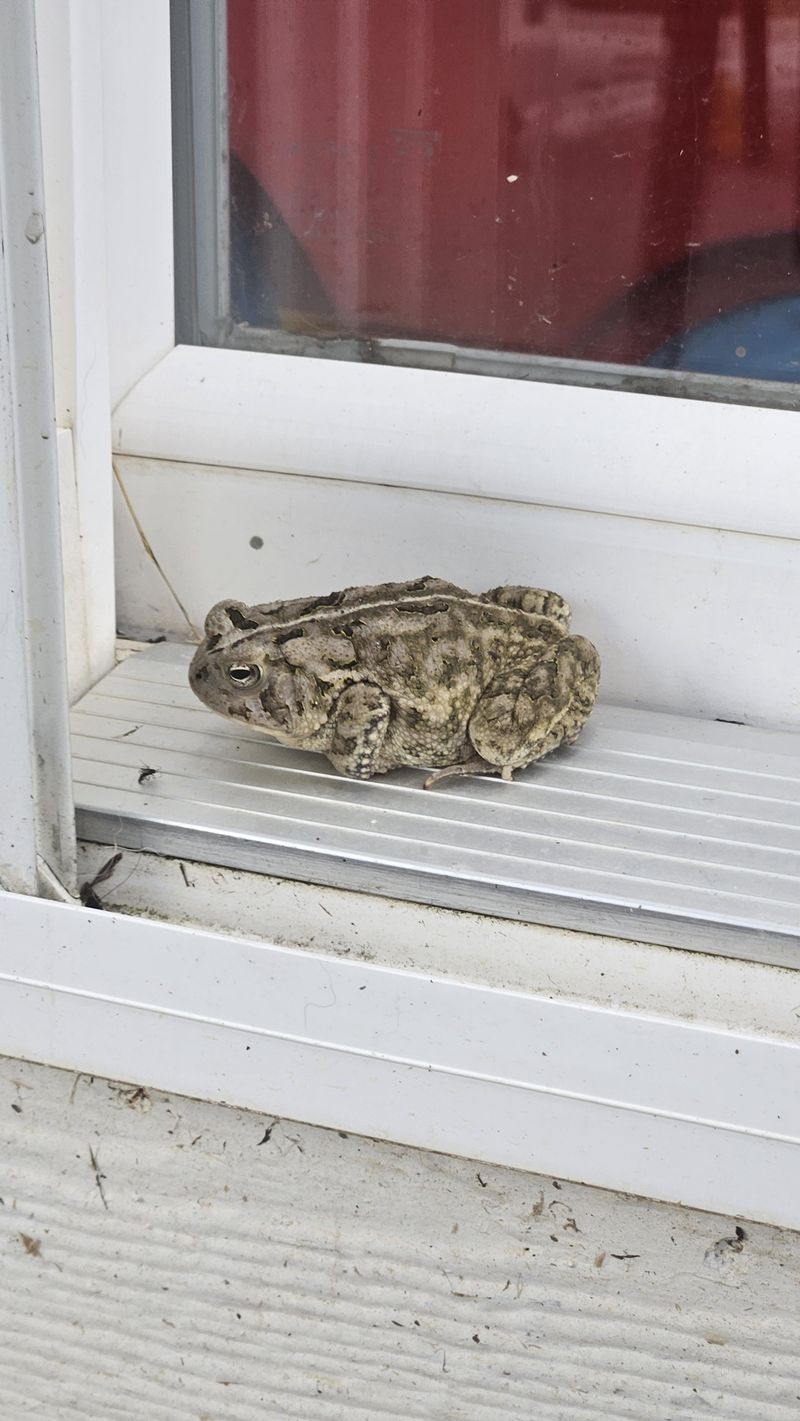
American Toad
© Reddit

Grandma probably warned you that touching a toad gives you warts. Good news: that old tale is completely false.

The American toad is a lumpy, brown, slow-moving buddy that often hides under pots, boards, or leaf piles. When you lift a planter and it blinks up at you, it can be startling.

But this little guy is just napping until evening.

At night, a single toad can eat hundreds of insects, including cutworms and slugs. Toads do release a mild bitter substance from bumps behind their eyes to keep predators away, so just wash your hands after holding one.

Want more of them? Flip a cracked clay pot on its side in a shady corner, and you have built a toad house.

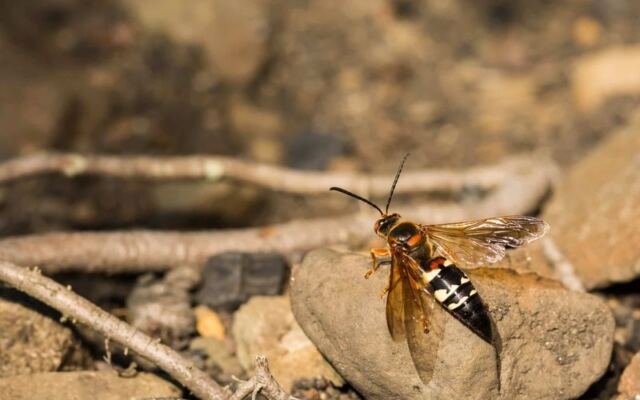
4. Cicada Killer Wasp
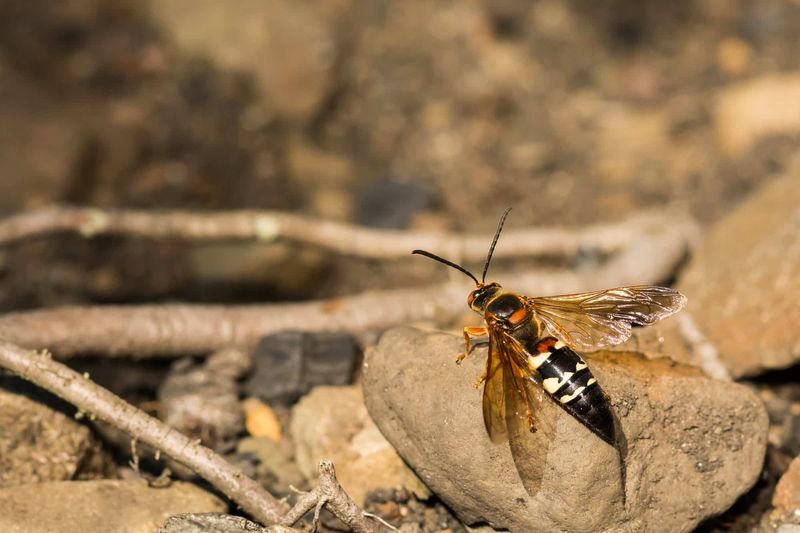
Cicada Killer Wasp
© Freedom Pest Control

Nearly two inches long, with yellow markings and a loud buzz, the cicada killer looks like something out of a monster movie. When it zooms toward your face in July, running seems like the only option.

Relax. Males, the ones that zip around and seem aggressive, don’t even have stingers.

They are just guarding their territory and checking you out.

Females can sting, but they almost never bother people. They save their energy for hunting cicadas, which they drag into burrows to feed their young.

You might notice small dirt mounds in sandy spots or along sidewalks. Those are their nests, and the wasps will be gone by late summer.

5. Tomato Hornworm Look-Alike: Hummingbird Clearwing Moth
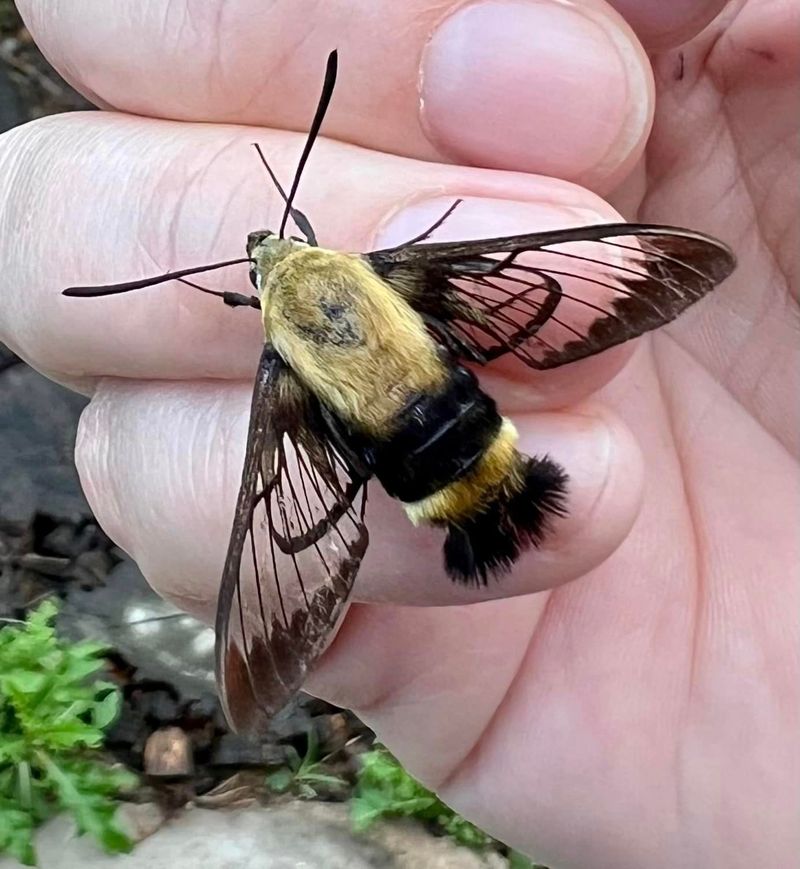
Tomato Hornworm Look-Alike: Hummingbird Clearwing Moth
© Indiana Nature LLC

Is it a bird? Is it a bee?

Many gardeners swear they saw a tiny hummingbird with antennae, and honestly, they are not far off.

The hummingbird clearwing moth hovers in front of flowers and sips nectar with a long tongue, just like a real hummingbird. Its fuzzy body and buzzing flight make people think it might sting.

It can’t, and it won’t.

Its caterpillar does have a horn on its tail like the tomato hornworm, but it feeds on honeysuckle and viburnum instead of your tomatoes. Plant bee balm, phlox, or butterfly bush, and you may get a front-row seat to one of summer’s most charming shows.

6. Five-Lined Skink
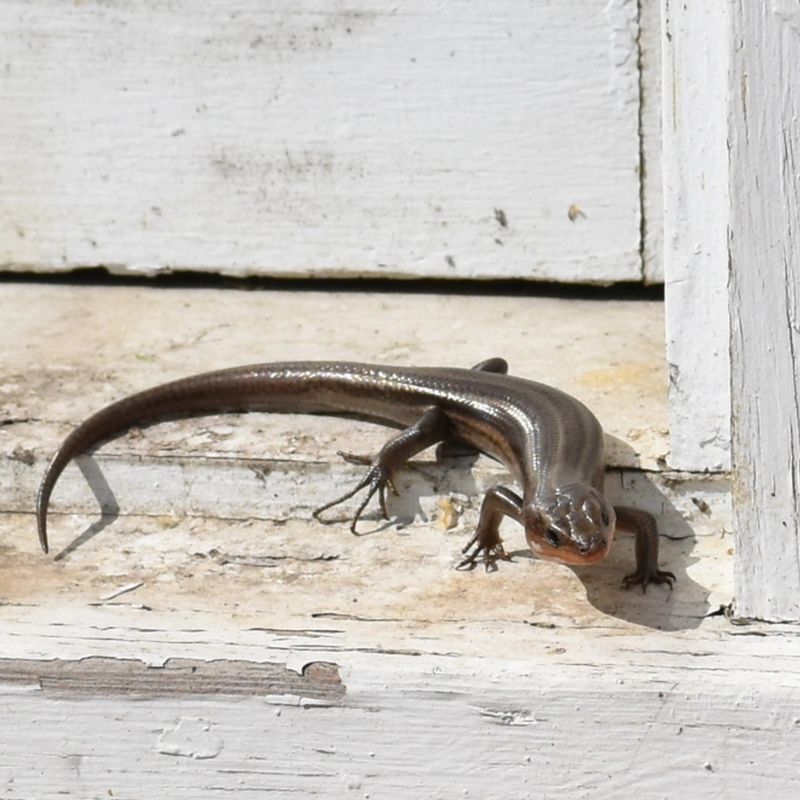
Five-Lined Skink
© centralindianalandtrust

A flash of electric blue disappears under a stepping stone. If you garden in southern Indiana, there is a good chance you just met a five-lined skink.

Young skinks have shiny black bodies with cream stripes and a tail so blue it almost glows. Adults fade to brown as they age, and males can develop orange-red heads in spring.

That bright color makes some folks think they are dangerous, but the skink is totally harmless to people.

If a predator grabs its tail, the skink can drop it and grow a new one later. Pretty clever trick!

These quick lizards eat spiders, crickets, and beetles, so a stone wall or woodpile that shelters them is a gift to your garden.

7. Daddy Longlegs
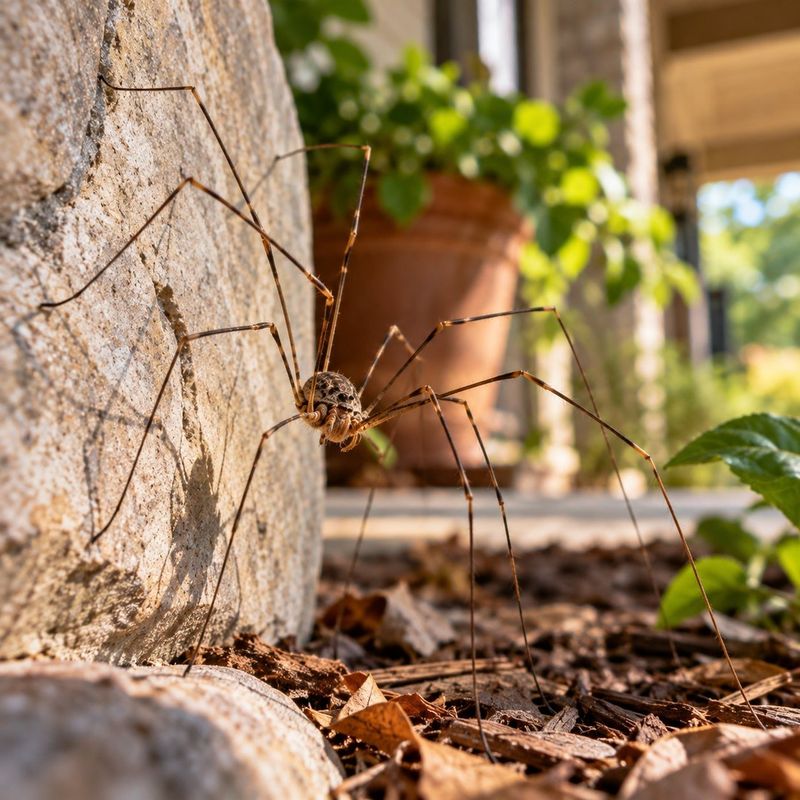
Daddy Longlegs
© ecoprotx

Somewhere along the way, a rumor spread that daddy longlegs are the most venomous creature alive but their fangs are too short to bite you. It is a fun story, and it is completely made up.

Most of the daddy longlegs you see in Indiana gardens are harvestmen, which aren’t true spiders at all. They have no venom glands, no silk, and one round body instead of two parts.

Their spindly legs just make them look creepier than they are.

Harvestmen are the cleanup crew of the garden, eating aphids, decaying plants, and tiny bugs. Next time one tiptoes across your arm, let it stroll.

It is simply on its way to tidy up.

Learning about these seven critters can turn a jumpy afternoon into a curious one. Give them space, and they will keep working hard for your Indiana garden.

Share this story
DH

Written by

Dale Hutchins

More from Dale Hutchins →

About Gardening Latest

Gardening Latest provides in-depth guides to maintaining and enhancing your garden and backyard. Learn how to make the most of the space you have and create a beautiful garden.

More about us →

Latest stories

  • Pennsylvania GardeningThe Fresh Ant Hills You Find After a Pennsylvania Rain Reveal More About Your Lawn Than You’d Think

    The Fresh Ant Hills You Find After a Pennsylvania Rain Reveal More About Your Lawn Than You’d Think

    7 min ago
  • Arizona GardeningThis Invasive Tree Keeps Outrunning the Arizona Homeowners Trying to Pull It

    This Invasive Tree Keeps Outrunning the Arizona Homeowners Trying to Pull It

    12 min ago
  • Texas GardeningA Texas Storm Just Put Your Neighbor’s Tree in Your Yard, and Here’s Who Really Pays

    A Texas Storm Just Put Your Neighbor’s Tree in Your Yard, and Here’s Who Really Pays

    17 min ago
  • Georgia GardeningDon’t Panic Over That Giant Flower Stalk on Your Georgia Sweet Onions. Here’s What It Means and Whether to Cut It

    Don’t Panic Over That Giant Flower Stalk on Your Georgia Sweet Onions. Here’s What It Means and Whether to Cut It

    22 min ago
  • Wisconsin GardeningWisconsin Winters Don’t Kill Your Brown Recluse Worries, Because Hobo and Yellow Sac Spiders Move Indoors Now

    Wisconsin Winters Don’t Kill Your Brown Recluse Worries, Because Hobo and Yellow Sac Spiders Move Indoors Now

    28 min ago

Gardening by state

Stories for your state, and the hardiness zone most of it gardens in.

Keep exploring

Read next

All Indiana Gardening →
Indiana GardeningIndiana Lets You Cut Back a Neighbor’s Overhanging Branches, as Long as the Saw Stays on Your Side of the Line
Indiana Gardening

Indiana Lets You Cut Back a Neighbor’s Overhanging Branches, as Long as the Saw Stays on Your Side of the Line

2 hr ago
Indiana GardeningSpot Fresh Ant Hills in Your Indiana Lawn After It Rains? Here’s What They’re Telling You
Indiana Gardening

Spot Fresh Ant Hills in Your Indiana Lawn After It Rains? Here’s What They’re Telling You

6 hr ago
Indiana GardeningThis Invasive Tree Is Racing Through Indiana Neighborhoods, and Hand-Pulling Just Won’t Catch It
Indiana Gardening

This Invasive Tree Is Racing Through Indiana Neighborhoods, and Hand-Pulling Just Won’t Catch It

9 hr ago

More from Indiana Gardening

  • Venomous Critters Quietly Share Your Indiana Yard, Until Late Fall Pulls Them Into View

    Nov 26
  • Indiana Gardeners Who Grab a Saddleback Caterpillar by Mistake Need These First-Aid Steps Fast

    Nov 25
Back to top

Leave a response Cancel

Your email address stays private. Required fields are marked with an asterisk.

Gardening Latest

In-depth guides to maintaining and enhancing your garden and backyard: how to make the most of the space you have, and how to make it beautiful.

  • Facebook
  • X
  • Pinterest
  • YouTube

We may earn a portion of sales from products or services that are purchased through our site as part of our affiliate partnerships with retailers.

Explore

  • About GardeningLatest.com
  • Contact Us
  • Terms and Conditions
  • Privacy
  • Editorial Note:
  • FTC Disclosure

Newsletter

New garden guides and seasonal tips, straight to your inbox.

We’ll email you a link to confirm. Unsubscribe any time.

Almost there! Check your inbox and tap the link to confirm.

© 2026 Gardening Latest. All rights reserved.

Back to top