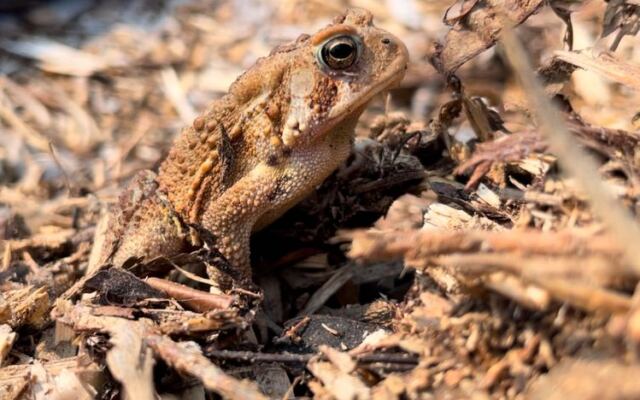
A toad tucked under your firewood in late fall is most likely getting ready to ride out the winter, and the best thing you can do is leave it right where it is. American toads spend the cold months on land, and the cover over their heads is part of how they stay alive.
A quick bit of yard work can strip that cover away in minutes. Here is how to read the situation calmly and protect the toad without guessing.
A woodpile can shelter a toad without proving it is dormant
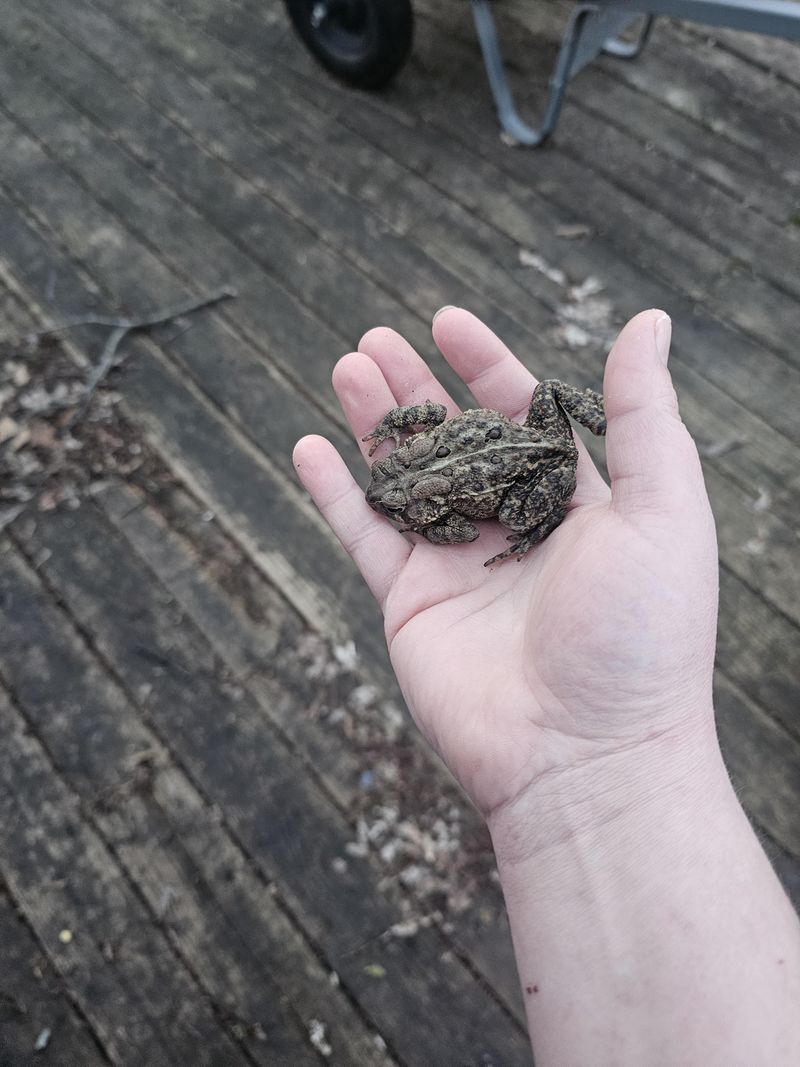
A toad under your woodpile in late fall may well be sheltering for winter. That is the useful starting point, and it is a good reason to slow down before you pull another log.
American toads live throughout Kentucky, and Kentucky Fish and Wildlife describes them as using a wide range of habitats, from forests and fields to suburban yards and gardens. A stack of firewood fits right in.
Gaps between logs hold steady moisture and block wind, which is exactly what a small amphibian wants.
Here is the catch. Toads also use woodpiles during the warm months, tucking in during the day to stay cool and damp.
So a sighting alone does not prove that this particular toad has entered winter dormancy. New Jersey wildlife biologists note that American toads commonly shelter under structures and woodpiles, and may spend the winter in or near their summer hiding spot.
Appearance will not settle the question either. These toads can look brown, grayish, yellowish-brown, light brown, or reddish, so a lumpy brown toad could be one of several things.
Kentucky also has Fowler’s toads, which can look quite similar, and color or a quick glance is not enough to tell them apart.
What you can say with confidence is simple. You have found a toad in a spot that toads like, at a time of year when many are looking for winter shelter.
That is enough reason to treat the pile with care, even if you cannot say exactly what the toad is doing.
American toads overwinter on land and avoid freezing
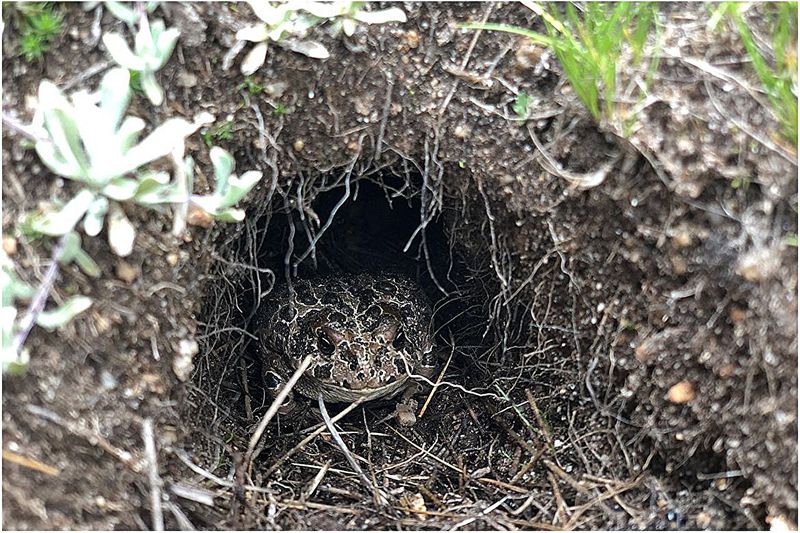
Unlike some frogs, American toads cannot survive being frozen solid. A U.S.
Forest Service review of the species indicates they are not freeze-tolerant and get through winter by burrowing below the frost line. Deep, protected ground keeps them out of the worst cold.
That is a different strategy from wood frogs, which can survive partial freezing and thawing. A toad does not have that backup plan.
Its safety depends on finding a spot where ice does not reach.
Toads do this on land, not in ponds. A University of Maine Extension fact sheet describes winter sites as soil or soft leaf litter.
In a yard, that can mean loose ground under a woodpile, beneath a log, or in a thick layer of fallen leaves.
Some of the most detailed overwintering observations come from places like Minnesota. Those dates and burrowing depths belong to those populations, so they should not be treated as Kentucky rules.
Kentucky winters are different, and the sources here do not give a depth or a date that applies to your yard.
There is also no single temperature that tells a homeowner a given toad has gone dormant. A cold morning does not prove it, and a mild afternoon does not disprove it.
The practical takeaway is to judge by the season and the setting, and to lean toward leaving things alone.
Disturbing the cover can change conditions around the toad
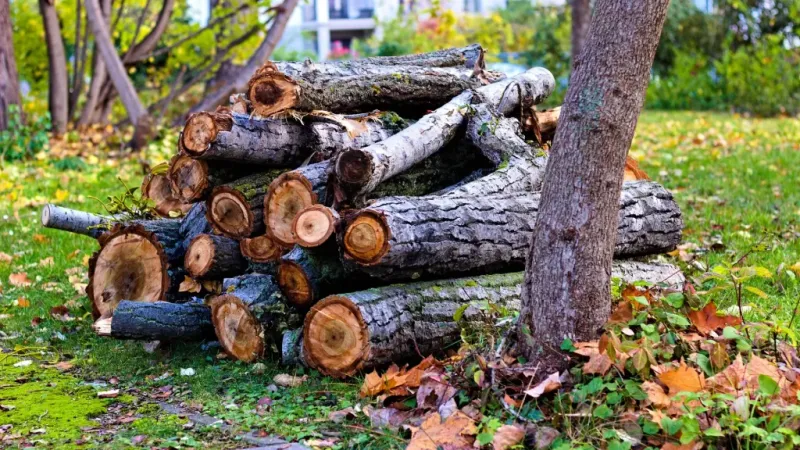
Think of a woodpile as a blanket. Logs, rocks, and leaf litter hold in moisture and keep temperatures steadier than the open air.
Partners in Amphibian and Reptile Conservation advises leaving such cover objects in place, because they maintain the particular moisture and temperature conditions amphibians rely on.
When you tear that blanket off, the toad can suddenly be exposed to drying air or cold it was not prepared for. Since American toads are not freeze-tolerant, as the Forest Service review explains, exposure to freezing conditions is the real worry.
That is a risk, not a certainty. The evidence supports concern about disrupting cover.
It does not show that every move or brief disturbance is fatal, and a toad uncovered for a moment on a mild day is not automatically doomed.
So the sensible approach is cautious rather than alarmed. If you can leave the toad and the material around it where they are, do that.
Skip the urge to lift one more log to get a better look.
A good habit is to stop as soon as you see the toad. Set down what you are holding, and consider whether the rest of the job can be done from another side of the pile or on another day.
If yard work cannot wait, minimize disturbance
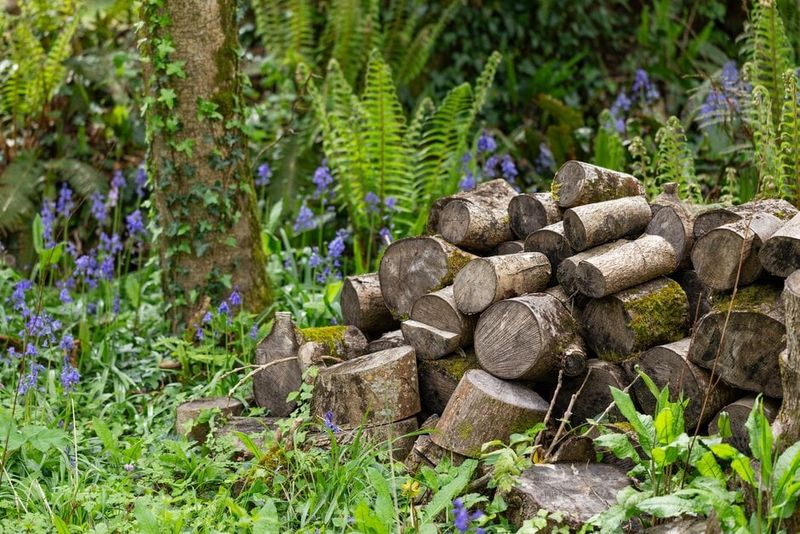
If the job can wait, let it. Moving the pile in late winter or spring, once the weather has settled and animals are active again, avoids the whole problem.
Debris piles and leaf heaps can often sit for a few weeks without harm.
Sometimes waiting is not realistic. You may need dry wood for tonight’s stove or a cleared path before a storm.
In that case, aim to touch as little as possible.
Pull logs from a different part of the stack, away from where you saw the toad. Take only what you need.
If you must disturb the spot, put the cover back as it was, so the toad still has shelter.
Please keep in mind what this advice is. It is cautious guidance drawn from how American toads overwinter, as described in the Forest Service review, and from habitat advice to protect microhabitats.
It is not a tested rescue method for this species.
For that reason, do not carry the toad to a new spot, and do not take it indoors. Do not tear apart the pile just to check on it either.
Every extra step adds disturbance, and nobody has shown that those steps help.
A few easy options help in practice:
- Start with the side of the pile farthest from the toad.
- Work slowly so you notice other animals.
- Replace any leaves or bark you move.
Leave it alone even if you cannot identify the species
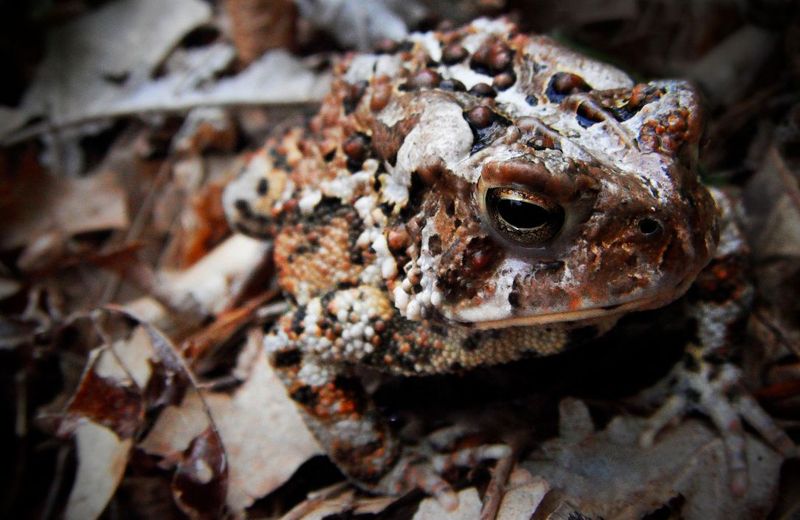
You do not need to know exactly which toad you have to do the right thing. Color and warts alone may not separate an American toad from a Fowler’s toad.
Kentucky Fish and Wildlife points to details such as wart patterns and other features, which are hard to judge on a cold toad in a dark gap.
Both are native toads, and the advice is the same. Leave them be.
Handling is best avoided unless it is truly necessary. PARC notes that handling can stress amphibians and raise the chance of injury or disease.
Their skin is thin and absorbs things easily. For that reason, USGS field guidance says hands should be free of potential toxins and moistened before any necessary handling.
As for the old tale, touching a toad does not give you warts. New Jersey wildlife officials say plainly that this is not true.
American toads do have glands behind the eyes that produce toxins, though. If you do have to touch one, keep it brief, avoid touching your eyes or mouth afterward, and wash your hands well.
Children and pets are worth watching around toads too.
Contact a permitted rehabilitator if the toad is visibly injured
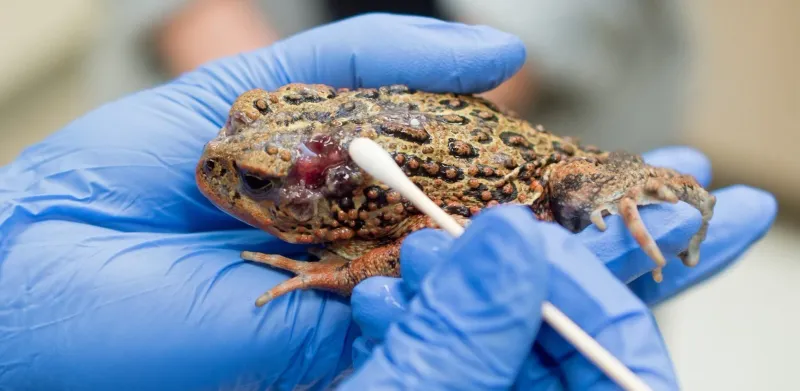
Most toads you find under a woodpile are simply resting, and they need nothing from you. An injured toad is a different case.
Signs might include an open wound, a damaged limb, or obvious trouble moving after a log or tool hit it.
Resist the urge to treat it yourself. Do not bandage it, put anything on it, warm it up, or bring it inside.
Wild toads are not pets, and well-meant care can do more harm than good.
Instead, call a permitted wildlife rehabilitator. Kentucky Fish and Wildlife keeps a searchable rehabilitator list that includes a filter for amphibians.
Use it to find someone near you who is legally able to take in the animal, and ask them what to do until you reach them.
Keep this referral for true injuries. A toad that is sitting quietly under cover is not a patient.
Calling for help in that situation would likely lead to more handling than the toad would otherwise face.
When nothing looks wrong, the best default stays the same. Leave the toad and its shelter undisturbed when you can.
A quiet woodpile is one of the easiest bits of wildlife habitat you will ever protect.
Share this story