Venom usually brings to mind copperheads, rattlesnakes, and spiders, not a furry mammal that tunnels through leaf litter. Yet Kentucky is home to short-tailed shrews, and at least one of them makes a toxin in its saliva.
Here is what scientists actually know about these small animals, where they live, and what to do if you ever meet one.
A small shrew, not one smaller than a thumb
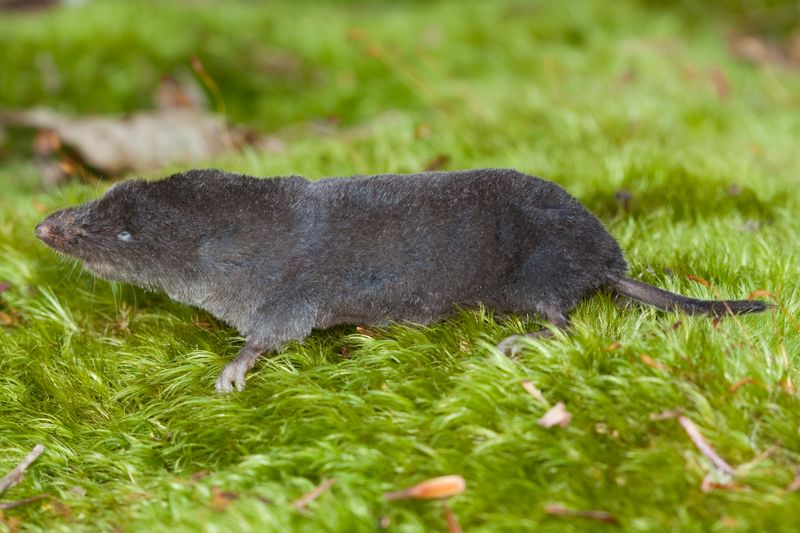
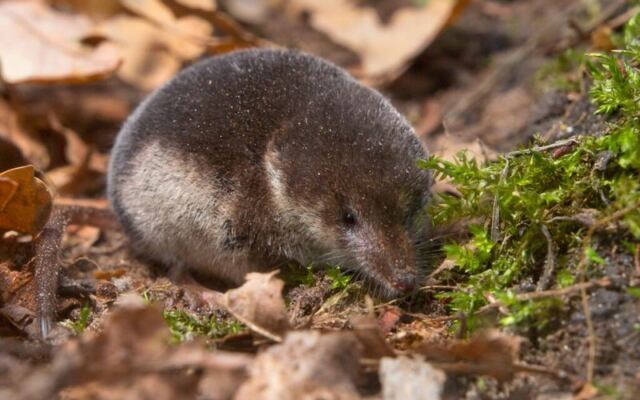
Tiny is a fair word for the northern short-tailed shrew, but “smaller than your thumb” does not hold up. Tennessee Wildlife Resources Agency lists its total length at 3.7 to 5 inches and its weight at 0.5 to 1 ounce.
Stretch that out next to a thumb and the shrew wins on length by several inches.
What makes the animal feel so slight is its weight. An ounce or less is about what a few coins add up to.
Dense, velvety gray fur, a blunt snout, and tiny eyes give it a compact, tube-shaped look, and the short tail is the feature that earned the group its name.
Those measurements belong to the northern species, Blarina brevicauda. They should not be stretched to cover every short-tailed shrew, since a second species also lives in Kentucky and gets its own spotlight in the next section.
Another common mix-up is the idea that a shrew is a kind of mouse. It is not.
Shrews are mammals, but they are not rodents, as the National Park Service explains in its species spotlight. They belong to a separate group that eats mostly small invertebrates, and their pointed snouts are built for rooting through soil and litter.
So the right picture is a small, quick, fur-covered insect hunter, not a thumb-sized creature and not a menace.
Two short-tailed shrew species occur in Kentucky
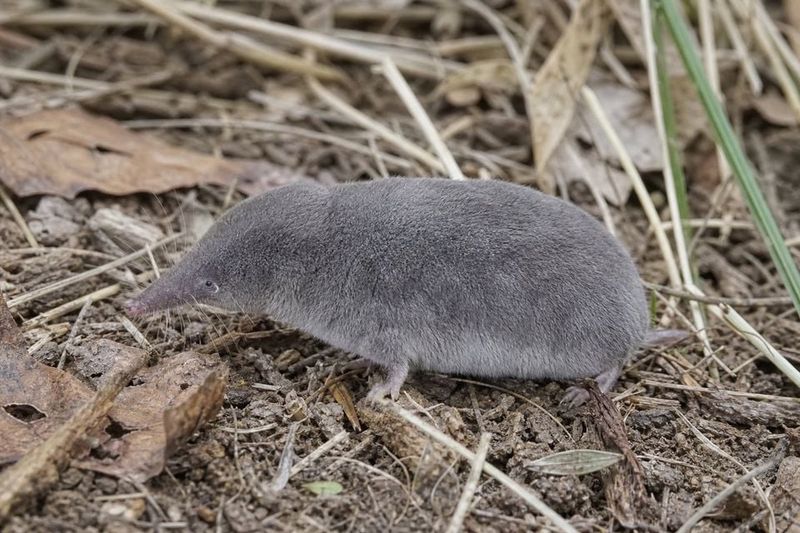
Kentucky has two kinds of short-tailed shrew on record, and they do not share the map evenly. The northern short-tailed shrew, Blarina brevicauda, has been recorded across nearly all of the state.
The southern short-tailed shrew, B. carolinensis, shows up only in the far southwest corner.
A Kentucky county-by-county survey, published in the Journal of the Tennessee Academy of Science, laid out these distributions. Researchers built that kind of picture by trapping and recording where each species turned up.
A later regional species account of the southern shrew, in the journal Mammalian Species, backs up the same split.
Why does a gardener care about the line between the two? If you live in Paducah or elsewhere in the far southwest, either species is a possibility.
Farther east, the northern one is the only candidate on the record.
A range map is a record of where animals have been found, not a promise about any one address. Nearly statewide does not mean every county has one, and it certainly does not mean every yard does.
Shrews are secretive and tend to stay under cover, so a species being on the map says little about whether one is living near your tomato bed.
Think of the maps as a way to narrow down which animal to expect if one ever does show up.
Researchers have documented toxic saliva in the northern species
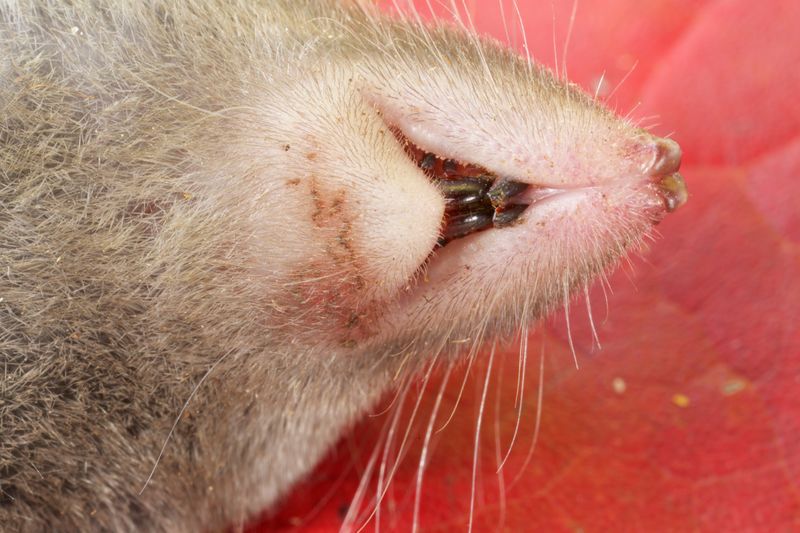
A shrew’s toxin does not spray, drift, or travel through the air. It sits in the saliva, and the animal delivers it by biting.
That is why a shrew is no hazard to someone simply watching it from a few feet away.
The strongest evidence comes from a laboratory team that studied the northern species. In a 2004 study in the Proceedings of the National Academy of Sciences, researchers isolated a toxin from the salivary glands of Blarina brevicauda and characterized it.
They named it blarina toxin. When they injected it into mice, it had lethal effects.
Notice what that does and does not show. Those were injected doses given to lab mice.
The results do not tell us what a bite does to a person, and they do not turn a shrew into something comparable to a rattlesnake.
The southern short-tailed shrew is a more qualified story. Reference works describe it as having modified salivary glands and a probably venomous bite.
Still, the Animal Diversity Web species account notes that a venom test has not been performed on B. carolinensis. So it is best described as likely venomous, not proven by the same experiments.
Finally, venom is not unique to shrews among mammals, and not every shrew species has it. The Kentucky story is about particular species, not the whole family.
Suitable habitat does not confirm a shrew in your yard
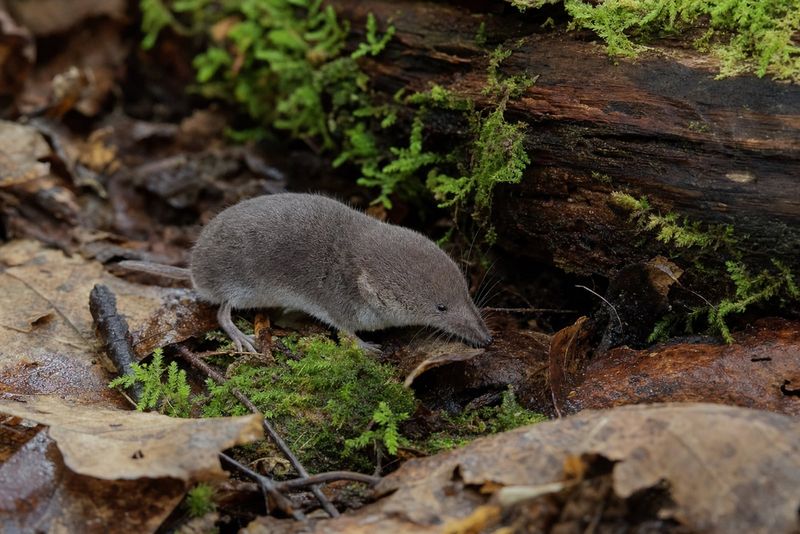
Walk the edge of a damp garden and you may be looking at the kind of ground a northern short-tailed shrew likes. According to the Animal Diversity Web, the species favors damp, brushy ground cover, weedy field edges, leaf litter, and logs.
Across its broad range it also turns up in gardens and cultivated fields.
Those features all offer the same things: cover from hawks and owls, moist soil, and plenty of small prey such as insects, worms, and snails. A thick mulch bed or a stack of old boards can look like a fine hunting ground from a shrew’s point of view.
But a good-looking habitat is only a maybe. It tells you a yard could host shrews, not that one does.
Plenty of suitable spots sit empty, and shrews spend most of their time under litter and in tunnels where people rarely look.
If you want a sense of what lives near you, practical clues beat guesses. Small runways in grass, tiny burrow openings, or a cat bringing home a carcass can all be signs, though none is proof on its own.
Even then, the animal is just doing what shrews do, eating invertebrates and moving on.
Treat habitat as a reason to be curious and careful, not a reason to worry.
Human bite accounts suggest pain, but leave important uncertainty
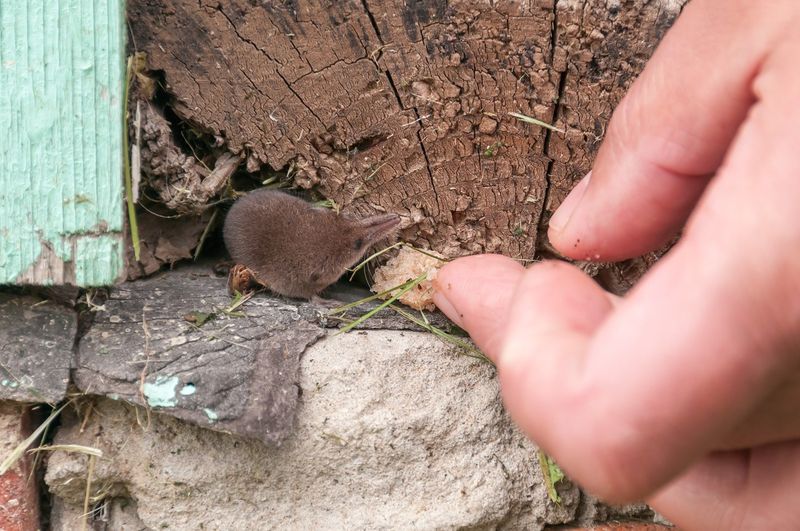
What happens when a person is bitten? The research literature, as summarized in the same toxin study, describes localized burning and swelling.
Those details come from human accounts, not from controlled testing.
That difference matters. Stories from people who were bitten are useful, but they vary, and they cannot tell us how a typical bite plays out.
Nobody has run controlled experiments on human outcomes, so firm statements are hard to make.
It also helps to keep the mouse results in their own box. Mice that received injections of purified toxin were part of a lab experiment.
A shrew bite on a finger involves a tiny amount of saliva and a very different body, so the mouse findings cannot be carried over to people.
Where does that leave a worried reader? A bite should be taken seriously enough to deserve ordinary wound care and some attention.
It should not be brushed off as harmless, and it should not be described as deadly or as something like a venomous-snake bite. The honest answer sits in the middle.
Most encounters never get that far. Shrews are quick, shy, and busy, and they bite mainly when grabbed or trapped.
Leaving them alone removes almost all of the risk.
Leave shrews alone and follow general wildlife-bite guidance
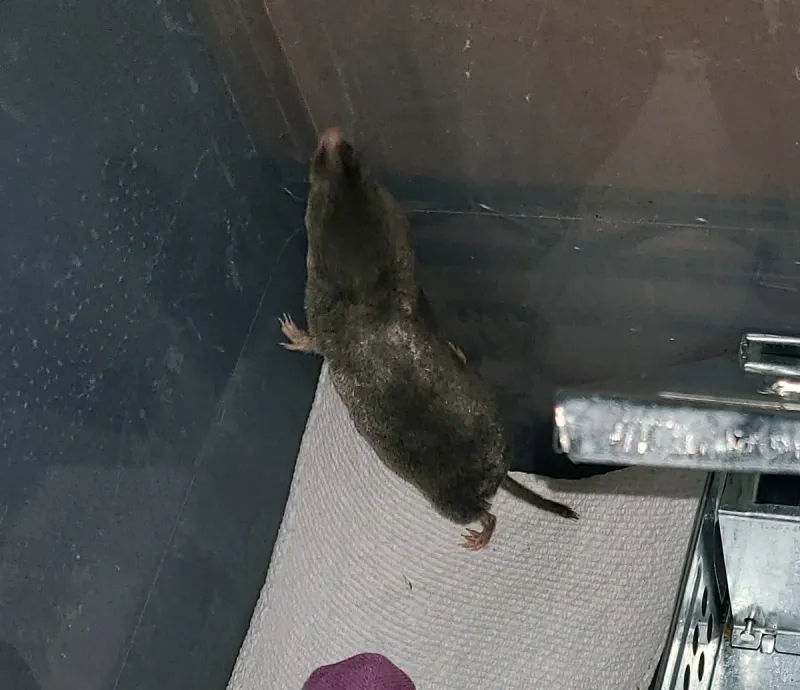
The best plan is simple: do not pick up or corner a shrew. If one is in your garage or shed, give it an open path outside and let it go on its way.
If you are bitten, wash the wound promptly with soap and water, then contact a healthcare or public-health professional. The CDC’s wildlife guidance covers this step, and you can ask whether rabies care is needed using its advice on when to seek care.
That is general advice for any wildlife bite, not a sign that Kentucky shrews commonly carry rabies.
Your yard may be shrew habitat, but that is not the same as shrews living in it. Either way, the animals are small helpers worth leaving alone.
Share this story