Yes, those late-night yips and howls are messages, and coyotes are sending them to each other. The calls carry information, but they are not a word-for-word code that a person can decode from the porch.
Hearing them is common across Missouri, from suburban St. Louis and Kansas City edges to Ozark farmland. Knowing what the sounds can and cannot tell you makes the night feel a lot less spooky.
Coyote calls share information
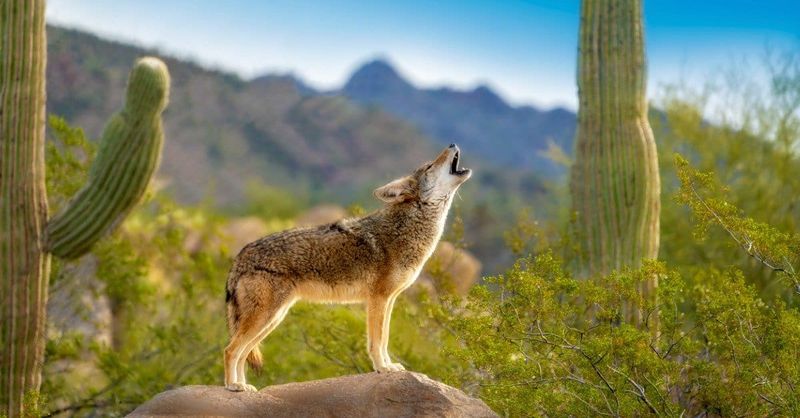
Yips, barks, and howls are all ways coyotes communicate. A call can pass along information to other coyotes, such as where one animal is or that it is nearby.
That does not mean each sound is a sentence with a fixed meaning.
Researchers who studied coyote vocalizations, in a study on the information content of coyote barks and howls, describe the calls as varied. They also found that what particular features of a call convey is not fully understood.
So even experts are cautious about translating one howl into one exact message.
Think of it like hearing a faraway car horn. You know someone is trying to get attention, but the sound alone will not tell you whether it is a greeting, a warning, or a mistake.
Coyote calls work in a similar way for human listeners.
Broad purposes are fair game. Calls may help coyotes find or answer one another, and they may signal that an area is occupied.
Those are general jobs the sounds can do, not a decoder ring for the yips outside your window.
The Missouri Department of Conservation notes in its coyote field guide that coyotes vocalize year-round. That fits the idea of a regular, everyday way of keeping in touch rather than a special alarm.
Hearing a chorus tells you coyotes live nearby, and little more than that.
If you catch yourself guessing, such as deciding a certain yip means a family reunion, treat it as a fun guess and not a fact. Sound alone cannot pin down a single exact purpose.
Calls can help coyotes find one another
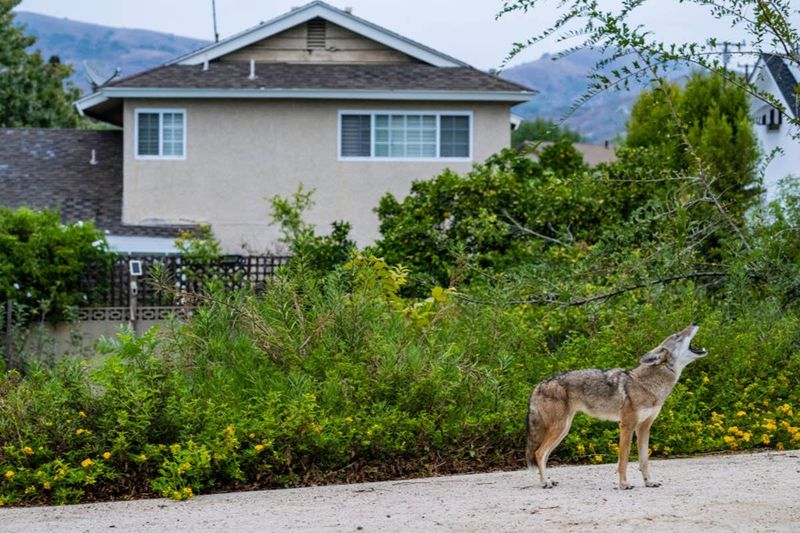
Coyotes spend a lot of time apart, especially when hunting, so a way to reconnect is handy. Calls may help them locate or respond to one another across fields, creek bottoms, and subdivisions.
They may also signal that an area is already occupied by coyotes.
According to the Missouri Department of Conservation, calls can also be set off by outside sounds, such as sirens. If a fire truck passes and a chorus erupts a minute later, the siren may be the trigger.
It is a good reminder that not every howl is about another coyote.
You will often hear people say a howl is a territory warning or a family check-in. Those are reasonable possibilities, since the animals do use calls to keep track of each other and mark their presence.
Still, researchers working on coyote bark and howl research say the details of what specific sounds convey are not fully understood. Treat territory and family contact as context, not a translation.
One popular myth deserves to be set aside. Some folks believe coyotes howl to celebrate or announce a kill.
A wildlife agency in Massachusetts, in its guide to coyotes, lists that as a misconception, and howling has other communication explanations.
Next time you hear a call from the backyard, picture two animals simply staying in touch. It is ordinary coyote conversation, and it is not aimed at you.
Missouri’s seasons shape when howling increases
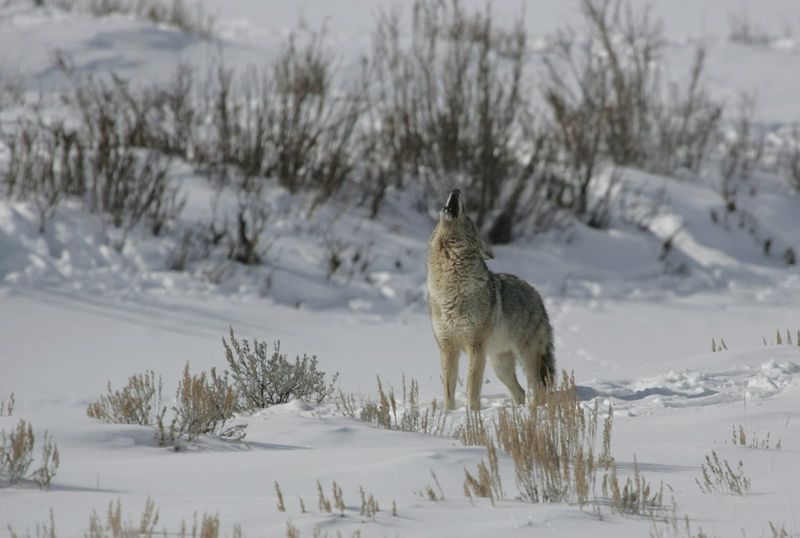
Missouri coyotes vocalize all year. The Missouri Department of Conservation says in its coyote field guide that howling is more frequent during mating season and less frequent when young are present.
So the calendar nudges how often you hear them, but it never switches the sound on or off.
The agency places mating in early spring, with a peak around late February or early March. Pups are usually born in late April or May.
That means late winter is when many Missourians notice the volume turning up.
Spring and early summer, with pups around, tend to be quieter by comparison. A family with newborns has reasons to stay low-key, so fewer howls fits that pattern.
Those are general seasonal trends, not rules for every coyote.
Now for the careful part. If you hear a chorus in late November, mating season and pup-rearing are not good explanations, because the timing does not match.
A fall chorus could be coyotes keeping in touch, reacting to a siren, or something you will never know.
A handy habit is to jot the date when you hear a lot of calling. Over a few years you may notice that nights get livelier as late winter approaches, which lines up with the state guidance.
That small notebook beats guessing, and it tells you something real about the coyotes in your neighborhood.
A chorus does not reveal the head count
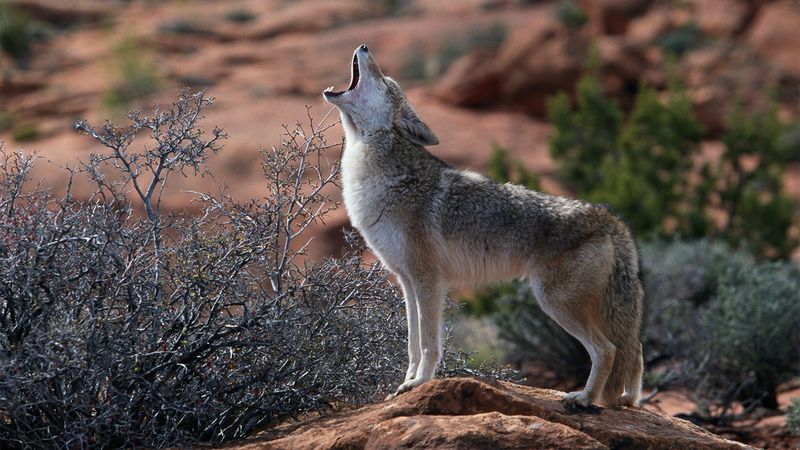
A chorus of yips can sound like a whole army. Overlapping voices, echoes off hills and houses, and the way coyotes change pitch can make a small group seem much bigger.
Your ears are easy to fool in the dark.
A study of human listeners put this to the test. In research reported in Human-Wildlife Interactions, 427 listeners heard recordings of coyotes, and people commonly overestimated how many animals they heard.
On average, the guesses were nearly twice the actual number.
That number describes what happened in that study. It is not a formula you can apply to your own backyard, and it does not mean you are always off by double.
The takeaway is simply that counting by ear is unreliable.
So when you hear what feels like a dozen coyotes behind the barn, try not to jump to a big number. It could be a few animals, and it could be a different number than you think in either direction.
Sound alone cannot settle it.
If you really want to know more about what is around, look for daylight clues instead, such as tracks in mud or snow, or a trail camera photo. Those give you something solid, while the night chorus gives you atmosphere.
A nighttime call is not a warning by itself
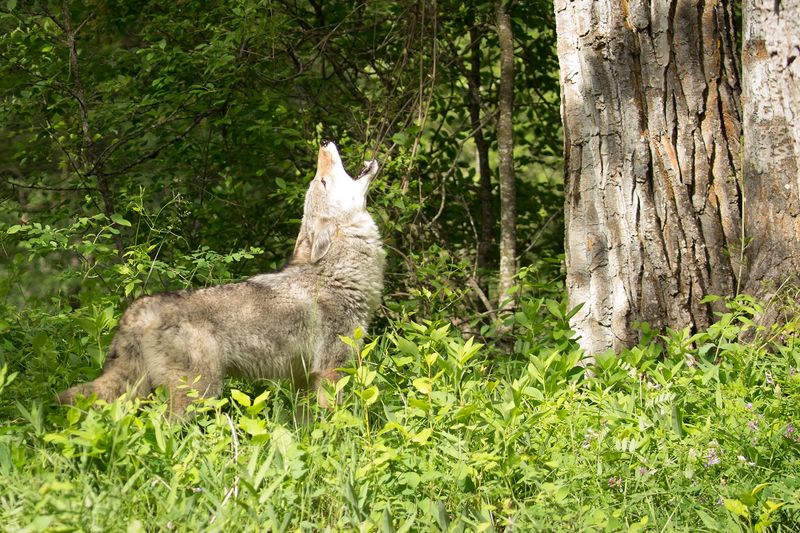
Coyotes live all over Missouri, including cities and suburbs. The Missouri Department of Conservation says most people hear their howling between sunset and sunrise, though calls can happen during the day too.
Hearing one, or even spotting one at night, is ordinary.
What counts as a real concern is specific behavior. A coyote that acts unusually bold, or that approaches people or pets, is different from one that simply trots across a yard or howls from a distance.
A howl, a nighttime sighting, or a daytime appearance by itself is not proof of danger.
Rabies is another place where people jump to conclusions. The CDC advises keeping your distance from wildlife, and concern belongs with clearly abnormal or threatening behavior.
Seeing a coyote out in daylight does not mean it is sick.
If a coyote does act boldly or comes toward people or pets, keep your distance and do not try to approach it. Contact local animal control or the Missouri Department of Conservation for guidance, as outlined on its coyote control page.
Never go looking for a den to check it out.
For most nights, the right response is to enjoy the sound from inside, or at least from a safe distance. Make a note of anything that seems truly out of the ordinary and share it with local officials if it repeats.
Protect pets and avoid attracting coyotes

Good habits at home do more than any howl-decoding ever could. The goal is to make your yard boring to coyotes.
A few steady routines go a long way.
Start with food. Never feed coyotes, even on purpose or by accident.
Bring pet food indoors, and secure garbage so animals cannot get into it. These steps come straight from the Missouri Department of Conservation’s guide to Missouri coyotes, which recommends them to reduce conflicts.
Next, think about pets. Keep small dogs and cats indoors, or supervise them closely when they are outside.
Where coyotes may be present, keep dogs on a leash. A quick flashlight check before a late-night potty break is a simple extra step.
Prevention beats confrontation. You do not need to chase, corner, or challenge a coyote, and you should not try to get close for a photo.
Stepping back and giving the animal room is the sensible choice.
If a bite or possible rabies exposure ever happens, wash the wound and urgently seek medical advice. The CDC gives the same guidance for any possible exposure.
Do not wait to see how it goes.
Coyotes were singing in Missouri long before our porch lights came on, and a tidy, well-secured yard lets both sides get on with their nights.
Share this story