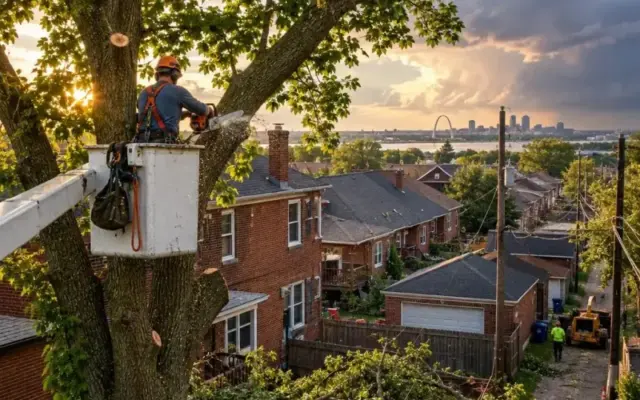
Missouri court decisions let you cut a neighbor’s branches, but only the part that hangs over your own land. That limited right does not let you step across the line or take down the tree.
Knowing where the line sits, and what you can safely do, can save you from a costly dispute or a serious injury. Here is how the rule works in everyday terms.
Missouri allows trimming only up to your property line
Old court decisions still shape this everyday problem. In Tanner v.
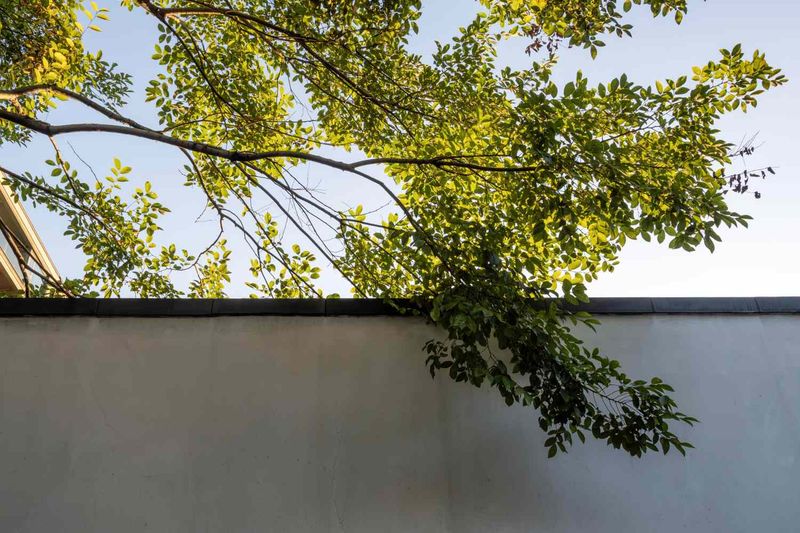
Wallbrunn, an 1898 Missouri Court of Appeals case, the court said an adjoining owner may cut branches only as far as they overhang that owner’s property.
The court also turned down an order that would have forced the neighbor to remove the whole tree. Instead, it recognized that the person whose yard is overhung has a legal right to trim those branches without first obtaining an injunction.
In plain words, you do not have to sue first and wait for a judge before cutting what hangs over your land.
The rule comes from court decisions, not from a detailed homeowner procedure written into a broad Missouri statute. That matters because the rule is short and narrow.
It speaks to branches over your side of the line and nothing more.
It also does not mean the tree owner’s permission is always required. Tanner recognizes the right to trim overhanging branches even when the tree owner has not acted.
Still, a friendly heads-up to the neighbor is often smart, even if the law does not demand it.
What the cases do not give you is just as important. They do not authorize crossing the boundary, cutting down the neighbor’s tree, or substantially damaging it.
The right covers only the overhanging portion.
Start by confirming where the boundary actually lies
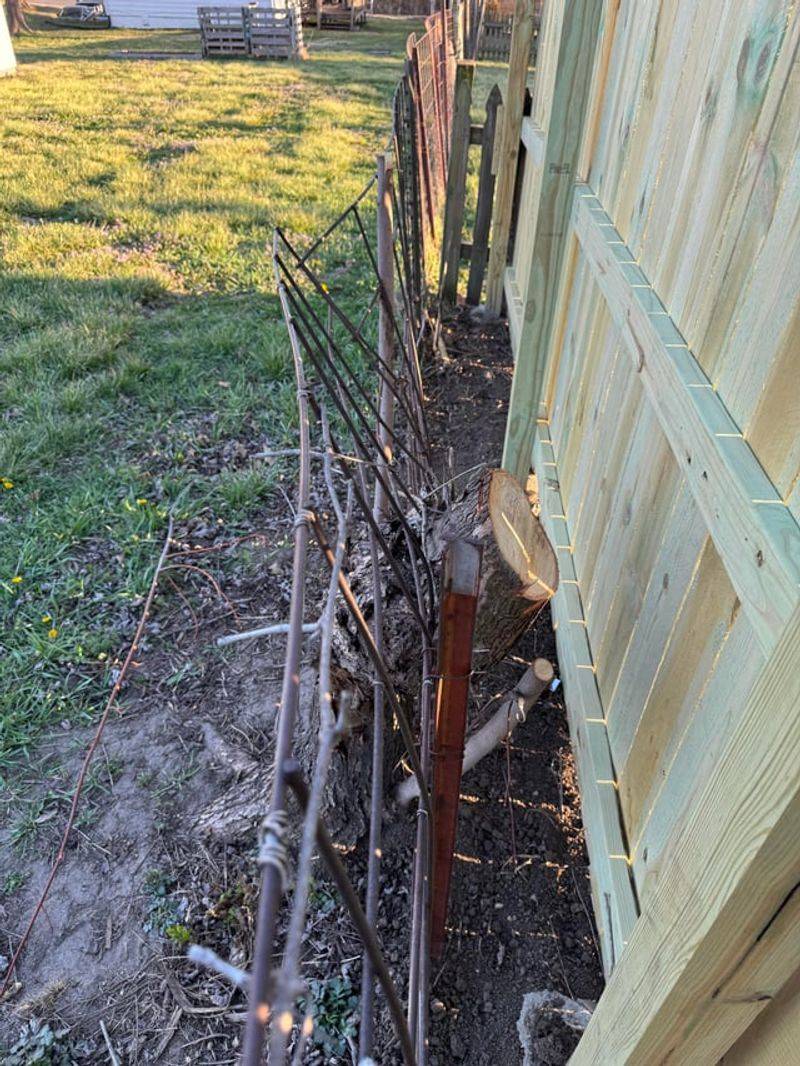
The trimming right stops at your property line, so the first job is knowing where that line is. A fence or an apparent yard line is a reason to verify, not proof of the legal boundary.
Fences get built a few feet off the line all the time.
If the boundary or the location of the trunk is uncertain, pause. Look at reliable boundary records, such as your deed and plat, or hire a qualified surveyor.
A short wait costs far less than cutting growth on someone else’s land.
Keep the court-made trimming rule separate from the statutes. Section 537.340 addresses covered injury or destruction of another person’s tree or property and provides for treble damages in covered cases.
Its specific trimming provisions concern electric suppliers, not homeowners.
That does not mean every trim automatically triggers triple damages. The statute covers particular kinds of injury, and the facts and legal claims matter.
Section 537.360 provides for single damages when the defendant had probable cause to believe the land or item was their own.
Probable cause is not a free pass, though. It helps most when you took real steps to learn where the line was.
Cutting only the overhang, as Tanner describes, keeps you on firmer ground.
What Hasapopoulos does—and does not—decide
Hasapopoulos v. Murphy, a 1985 Missouri Court of Appeals case, is often brought up in tree disputes.
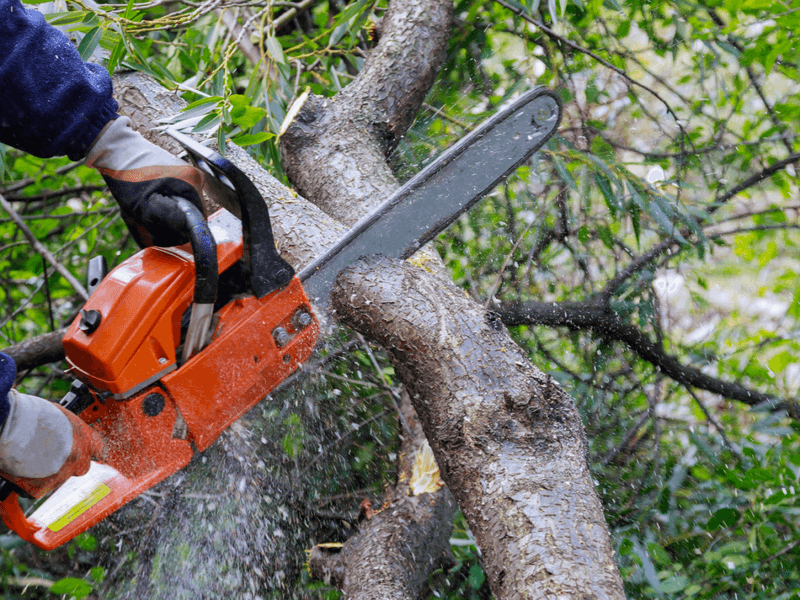
It matters because the court relied on the older trimming rule while rejecting claims over encroaching branches and roots. Its holding is tied to the facts before it, so it should be read carefully.
In the Hasapopoulos opinion, the court rejected the claims on the evidence presented. That evidence did not include proof that the trees were defective.
The plaintiffs simply offered none.
The court did talk about how other courts treat defective or diseased trees. But it did not decide a specific claim involving a known dangerous tree.
That question was left without a definitive ruling in that case.
So avoid two shortcuts. A neighbor is not automatically liable whenever a branch or root causes trouble, and a tree owner cannot safely assume they can never be liable for a hazardous tree.
If a neighbor’s tree looks dead, cracked, leaning, or diseased, treat that as a practical warning sign. Photograph it, tell the owner in writing, and consider asking an arborist for an opinion.
A lawyer can tell you how the law applies to your exact facts.
How do you make a limited cut without harming the tree?
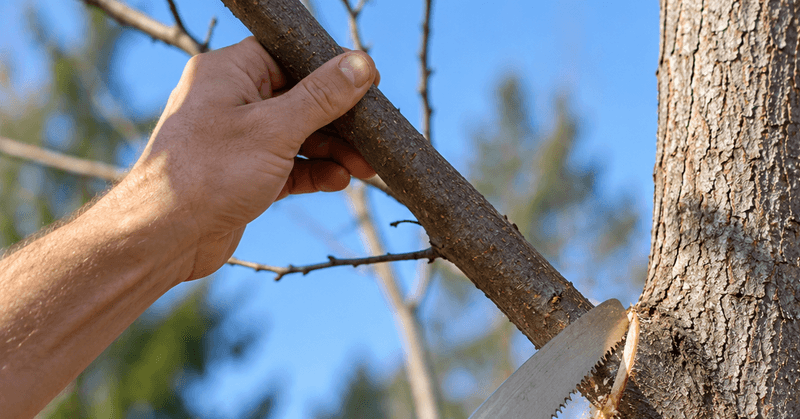
Legal limits and good pruning work together. Keep every cut to the portion that hangs over your land, and make it cleanly so the tree is not left torn or wounded.
A sloppy cut can hurt the tree and invite a dispute.
According to University of Missouri Extension, you should preserve the branch collar, the slightly swollen ring where a branch meets a larger limb or trunk. Avoid flush cuts, which slice into that collar and leave a larger wound.
For branches over two inches thick, Extension describes a three-cut method to reduce bark tearing. First, make an undercut a short distance out from the final spot, going part way through the branch.
Second, cut from the top a bit farther out so the branch drops and the weight is gone.
Third, remove the remaining stub just outside the branch collar. This keeps the falling limb from ripping a long strip of bark down the trunk.
If the overhanging branch joins the tree on the neighbor’s side, you may only be able to cut it back to your boundary. That is fine.
Cutting at the line is the legal limit, even when a better pruning cut would be farther back.
Power lines call for utility and line-clearance professionals
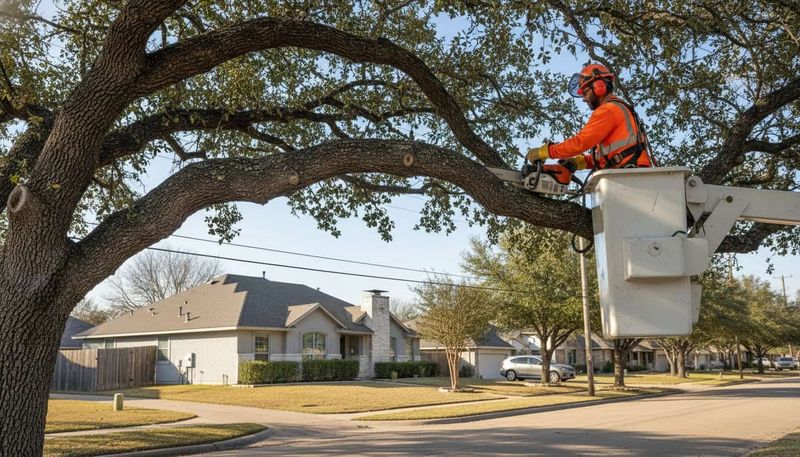
Electricity changes the whole picture. If a branch is near a power line, do not treat it as a weekend pruning job.
Assume the lines are energized and call the utility.
OSHA’s tree trimming guidance says work within 10 feet of power lines must be done by trained, experienced line-clearance tree trimmers. That is safety guidance for covered tree-trimming work, not a rule written for homeowners.
It still shows how serious the danger is.
Wood, ladders, and pruning poles can all carry current under the wrong conditions. A branch that looks dry and harmless can still put you in danger.
A tree touching or leaning on a line deserves the same caution.
Stay well back, keep children and pets away, and phone the utility company to report the problem. They can tell you whether they will handle it or whether you need to hire qualified line-clearance professionals.
The legal right to trim overhanging branches does not outweigh this safety line. Even if the branch hangs over your yard, leave anything near wires to the people trained for it.
When a branch calls for an arborist
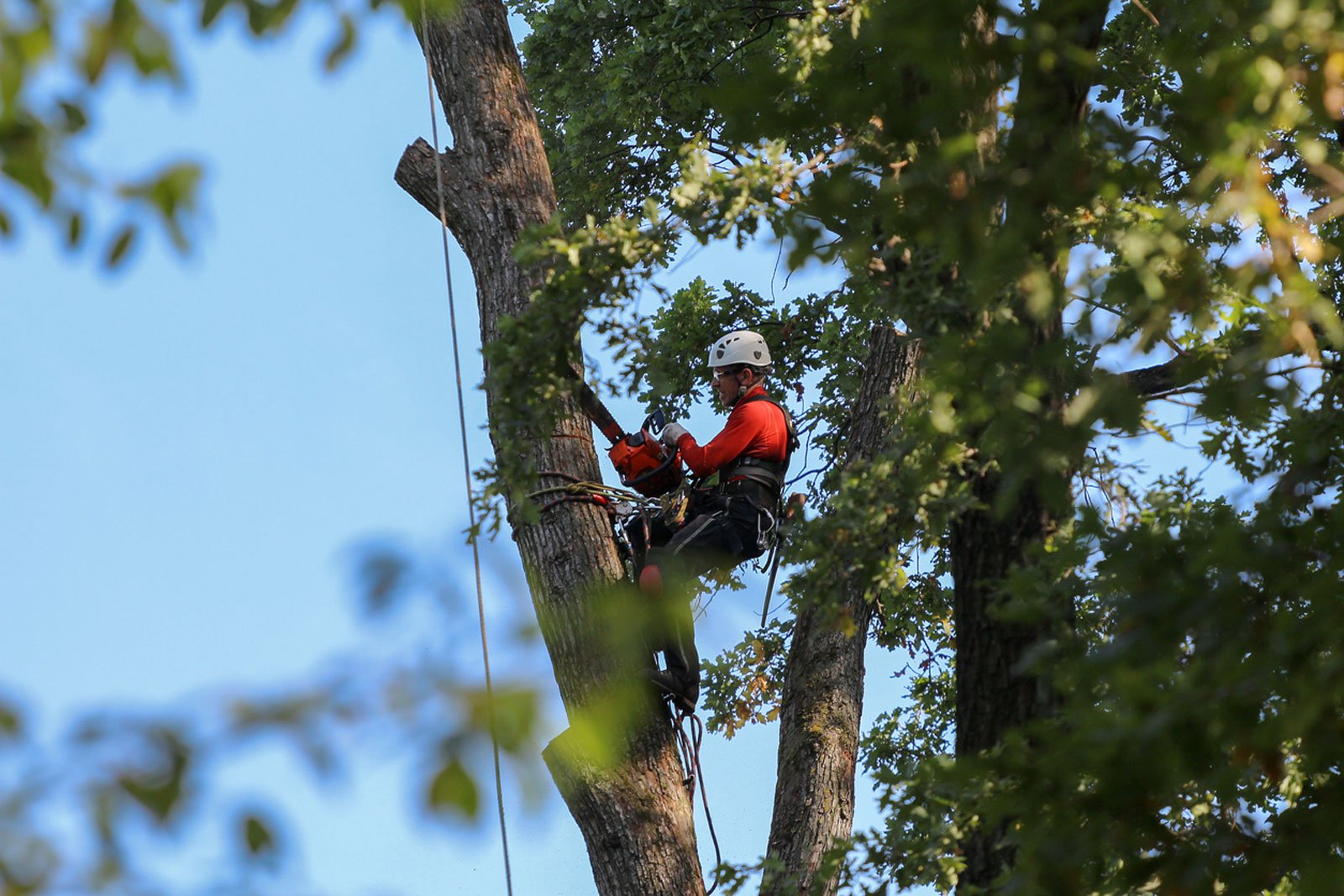
Some branches are simply too big or too risky for a ladder and a hand saw. Think of limbs that are high, thick, heavy, leaning, cracked, or hanging over a roof, car, or play area.
If a mistake could cause real damage, calling an arborist is a prudent choice.
That is practical advice, not a legal requirement. Missouri’s trimming rule does not say you must hire a professional for every overhanging branch.
Small, low branches over your yard may be easy to handle yourself.
When you do hire, the Missouri Department of Conservation advises checking qualifications, safety practices, and insurance. Ask for proof of insurance and get the details in writing.
The department also notes that certification is not a guarantee. A credential is a helpful sign, but it does not replace references, good safety habits, and clear work instructions.
Tell the arborist exactly where your property line is and that the work must stay on your side. That keeps a skilled crew from drifting into the neighbor’s tree and turning a simple trim into a dispute.
Stop where your property ends
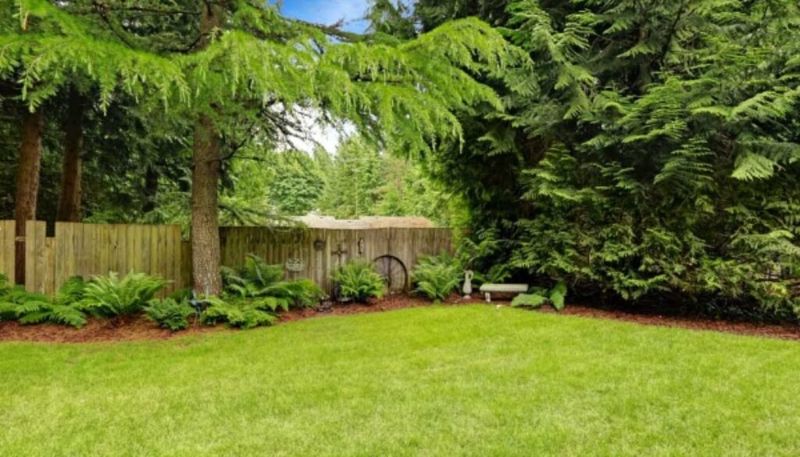
Check the line, cut only what hangs over your side, and stop when the boundary, the tree, or the safety conditions are unclear. Missouri’s limited self-help rule is not permission to remove or substantially damage a neighbor’s tree.
Your rights end at the fence, or rather the real line behind it.
Share this story