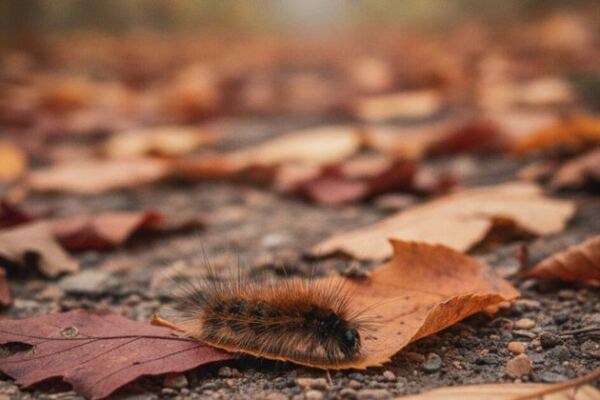
Keep your hands off that big, dark caterpillar with the pale spots until you know what it is. One good match is the forest tent caterpillar, which does not bite people, but a few lookalikes can irritate skin.
Plenty of garden caterpillars are harmless, yet the ones that are not can look surprisingly similar. A few simple habits will keep you comfortable while you figure out who is crawling through your plants.
White spots alone do not identify a caterpillar
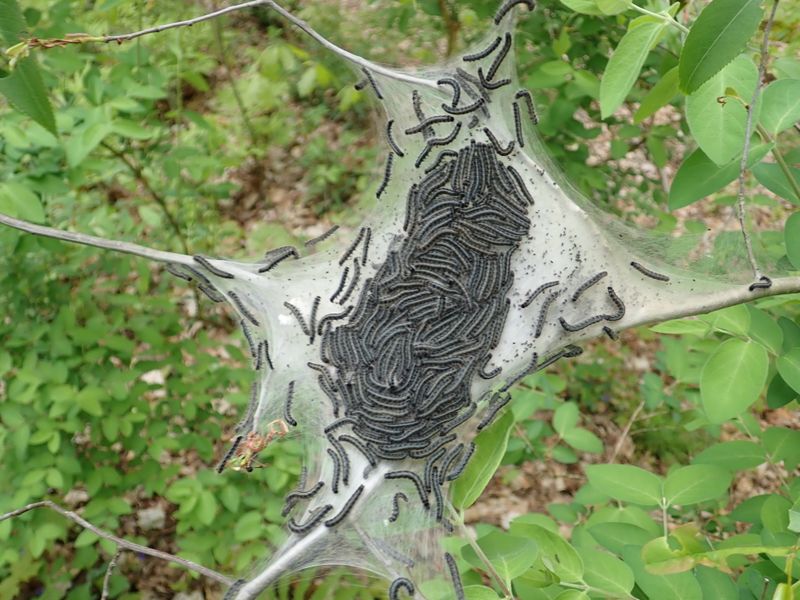
Leave an unidentified caterpillar where it is, and look at it from a comfortable distance instead of picking it up. A large, dark body with pale marks sounds specific, but it can fit more than one species.
Color is the least reliable clue you have.
Pattern matters more. Check the shape of the pale marks, whether the caterpillar has tufts or bumps, how long the hairs are, and what it is eating.
Where and when you found it also helps, since some species show up in spring and others later in summer.
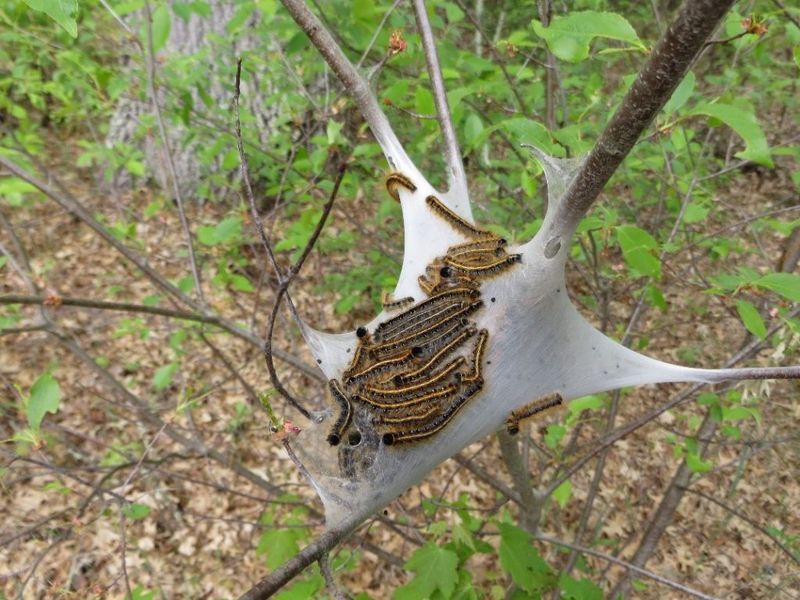
One plausible match for your find is the forest tent caterpillar. University of Minnesota Extension describes it as a hairy, blue-black caterpillar with pale marks down its back.
That description is a starting point, not a final answer, because other caterpillars share parts of that look.
Some of those lookalikes have hairs that bother skin. Identification guides such as Purdue Extension’s spongy moth identification page exist because several hairy species get mistaken for one another.
That is the reason to take a photo, compare features, and keep your fingers out of it.
The next sections walk through the forest tent caterpillar, its common lookalikes, and what to do if you do touch one. Think of it as a short field guide for a gardener who wants to stay calm and informed rather than worried.
A forest tent caterpillar is one plausible match
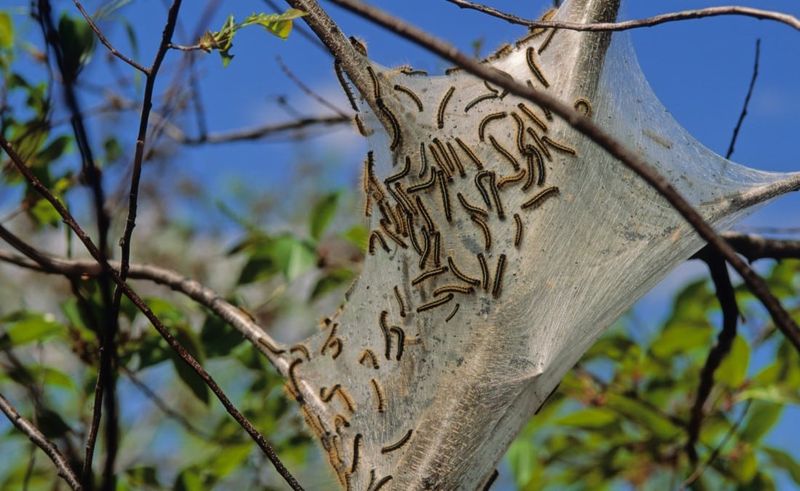
Picture a caterpillar about 2 inches long with a blue-black, hairy body. Down its back runs a row of pale, footprint-shaped or keyhole-shaped marks, and its sides often look bluish.
If your find matches that, a forest tent caterpillar is a reasonable guess.
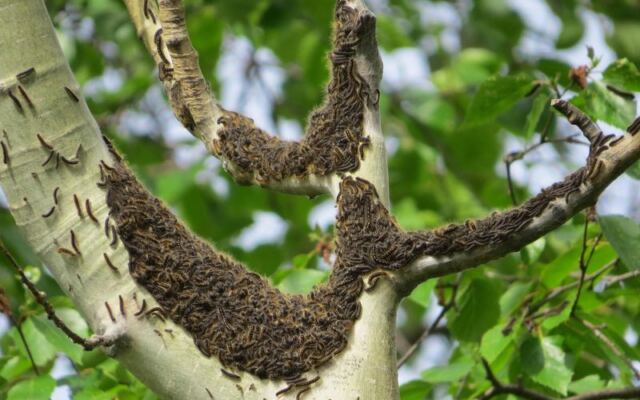
Spring is when most Michigan gardeners spot them, often clustered on tree trunks and branches. Seeing one in the right season adds a clue, though it still does not settle the question on its own.
Here is the reassuring part. According to University of Minnesota Extension, this caterpillar does not bite people.
It is not a stinging species, and it is not considered dangerous.
There is one small caveat. A few people may have an allergic reaction after handling one, so touching it is still not a great idea.
Think of it as a mild precaution, much like avoiding other plants or insects that bother sensitive skin.
If the pale marks on your caterpillar look more like tufts, paired colored dots, or a frosty white fuzz, you are probably looking at something else. That is where the comparison in the next section helps.
Lookalikes can carry a different skin risk
Spongy moth caterpillars are easy to separate once you count the dots. According to the Michigan Invasive Species Program, they carry five pairs of blue spots followed by six pairs of red spots.
Purdue Extension notes that their hairs can irritate some people’s skin.
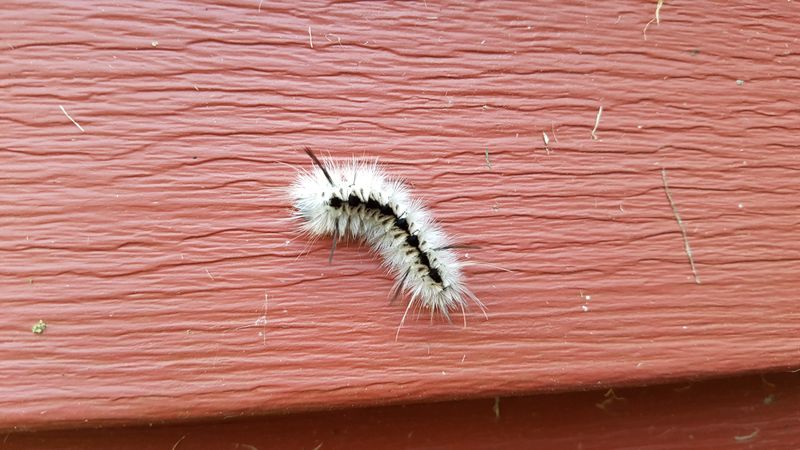
The hickory tussock caterpillar looks very different. It is conspicuously fuzzy and mostly white with black markings.
Penn State Extension says its hairs can cause an itchy rash in some people.
The white-marked tussock moth caterpillar is another one to know. NC State Extension describes four pale tufts on its back, long black hair pencils at the front and rear, and red bumps.
Some of its hairs can cause dermatitis in sensitive people.
Compare that with the forest tent caterpillar, whose pale marks are flat, footprint-like shapes on a dark body rather than tufts or paired dots. Each of these caterpillars could be called dark or white-spotted by a quick observer.
That overlap is exactly why color alone cannot give you a confident name. Look at the structure, count the markings, and take a clear photo before you decide anything.
Why “look, don’t touch” is the smart choice
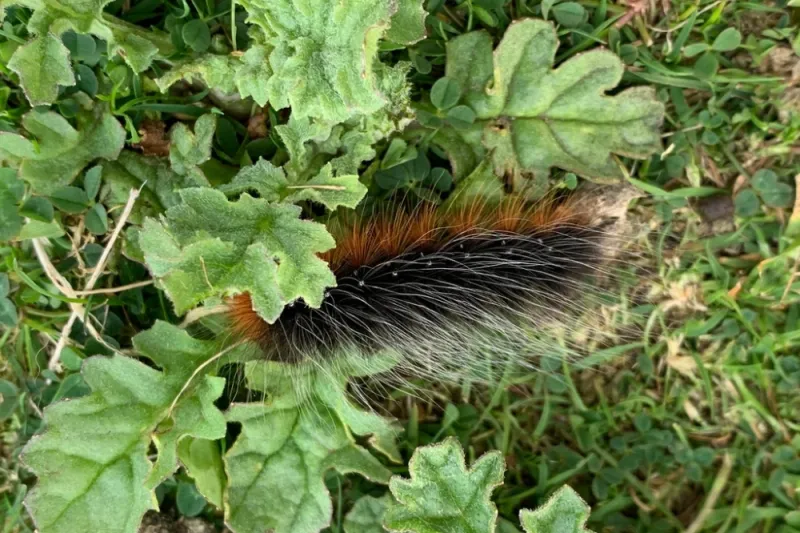
Most caterpillars are harmless. Poison Control says only particular species cause reactions, and they do it through hairs, spines, or quills.
That does not make every hairy caterpillar poisonous, and it does not mean every touch leads to a rash.
Since reactions depend on both the species and the person, a mystery caterpillar is a gamble you do not need to take. The simplest plan is to leave it exactly where it is.
Watch it, snap a photo, and let it go about its business.
Sometimes a caterpillar is on a spot you cannot avoid, like a doorknob, a picnic table, or a play area. In that case, Poison Control’s caterpillar guidance supports skipping bare-hand contact.
Gloves or a tool such as a stick or a piece of cardboard are a cautious way to nudge it along.
Gloves are a precaution, not proof that the caterpillar is venomous. They simply cover the unknown.
Please do not squeeze, crush, or flick the caterpillar, because broken hairs can end up on skin and sleeves.
Children and pets are the ones most likely to grab first and ask questions later. A quick reminder about looking with eyes, not hands, goes a long way.
After contact, remove hairs and watch for serious symptoms
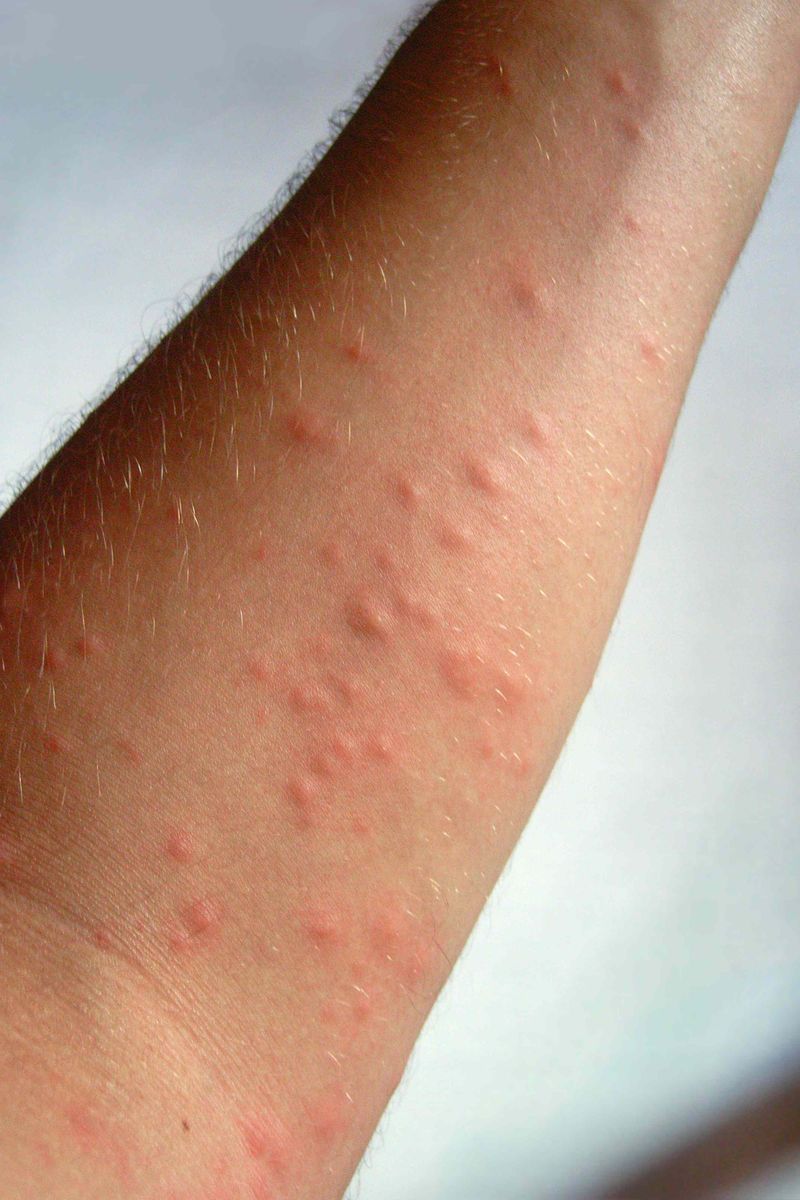
If your skin touched an irritating caterpillar, start with sticky tape. Press a strip lightly over the area and peel it off to lift away tiny hairs.
Repeat with fresh pieces of tape, since rubbing or scratching can push the hairs deeper.
Next, wash the skin gently with soap and water. Poison Control also says you can consider hydrocortisone for itching.
Most reactions stay mild and fade without trouble.
Eyes need different care. If hairs or irritation reach the eye, rinse with lukewarm water.
Avoid rubbing, which can make irritation worse.
For questions about symptoms or what to do next, call Poison Control at 1-800-222-1222. The service is free, and the staff can walk you through the right steps for your situation.
Serious reactions are rare, but know the signs. Call 911 for difficulty breathing, fainting, or swelling of the lips, face, or tongue.
A red, itchy patch after a brush with a caterpillar is not an emergency, but those symptoms are.
One caterpillar does not call for a pesticide
Spotting a single caterpillar is not a reason to reach for the sprayer. Personal safety and pest control are two separate questions.
Keeping your hands off the caterpillar answers the first, and it says very little about the second.
Michigan State University Extension says homeowners rarely need to control forest tent caterpillars. Its guidance on landscape trees explains that healthy trees can often leaf out again after the caterpillars feed.
Tree condition is what changes the picture. Weak or already stressed trees may be more vulnerable to the damage caused by heavy feeding.
If you have a tree that is struggling, that is a better reason to look closer than a lone caterpillar on a leaf.
This advice applies to forest tent caterpillars specifically. Other species behave differently, and a spray meant for one pest can harm helpful insects without solving anything.
Please do not apply a generic pesticide because of one sighting.
If you are unsure what you have or how worried to be, a local extension office can help with identification and next steps. A photo and a note about where you found it go a long way.
Leave the mystery caterpillar alone
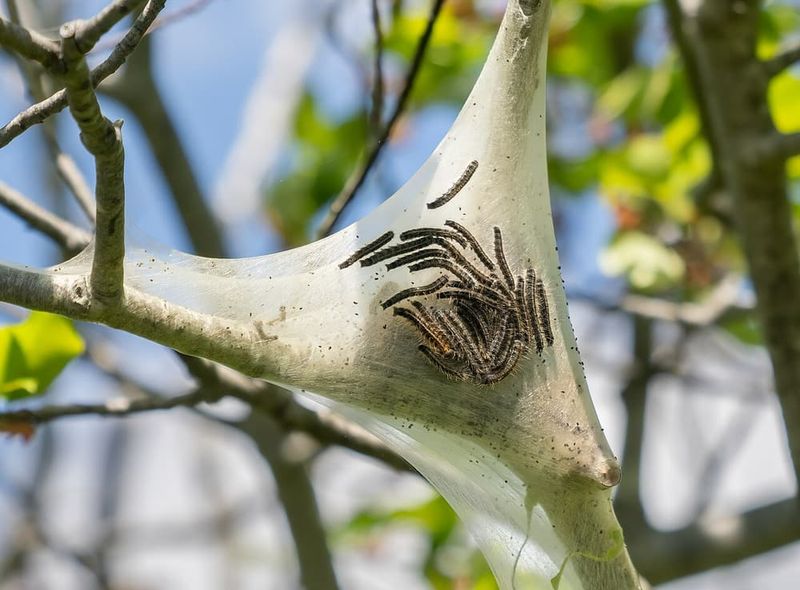
Pale spots on a dark caterpillar do not settle what it is. A forest tent caterpillar does not bite people, yet some lookalikes can irritate skin.
Watch from a distance, use gloves or a tool only if you must move it, and call Poison Control after a worrying exposure.
A garden is full of small strangers, and most of them mean no harm. Getting a good look costs nothing, and your hands stay out of the question.
Share this story