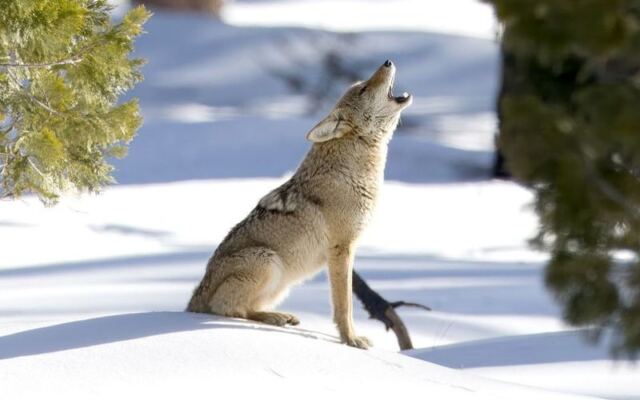
When coyotes yip and howl near your Michigan home at night, the sound tells you that coyotes are calling somewhere close. It does not tell you how many there are, where their den sits, or whether the noise has anything to do with you.
Those calls are mostly coyotes talking to each other. Knowing what the sound can and cannot show helps you stay calm and focus on what actually matters around your yard.
Coyote calls carry information among coyotes
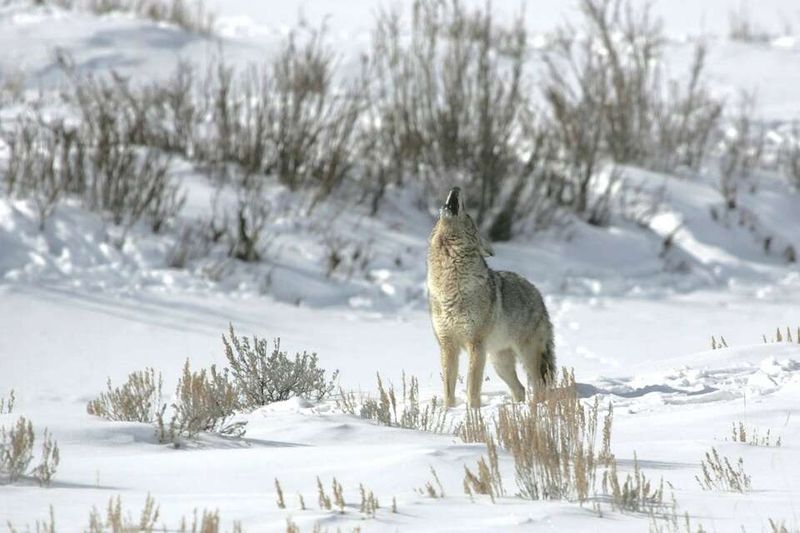
A chorus of yips and howls after dark is good evidence that coyotes are vocalizing nearby. That is the solid part of the story, and it is a useful starting point for anyone listening from a back porch or bedroom window.
Coyote calls are a form of communication among coyotes. They can help family members locate one another, and they can help coyotes keep spacing between groups or mark out territory.
Massachusetts wildlife officials describe these communication roles, and researchers in a 2017 study of how people hear coyote groups discuss the same functions.
Here is where the clues end. From inside a house, you cannot tell which of those jobs a particular chorus is doing.
A family reuniting after a night of hunting and a group reminding neighbors where the boundary sits can sound much the same to a human ear.
The sound also does not point to a den, a property line, or a particular yard. Calls travel a long way on a still night, so a coyote that sounds like it is at the edge of your lot may be far off.
Finally, a chorus is not aimed at you. Nothing in the research suggests the calls are a message to a homeowner, a warning, or a sign that coyotes know you are there.
Treat the sound as coyotes going about their own business, the way you might hear a distant train and know it is passing without meaning anything personal.
Can a chorus tell you how many coyotes are calling?
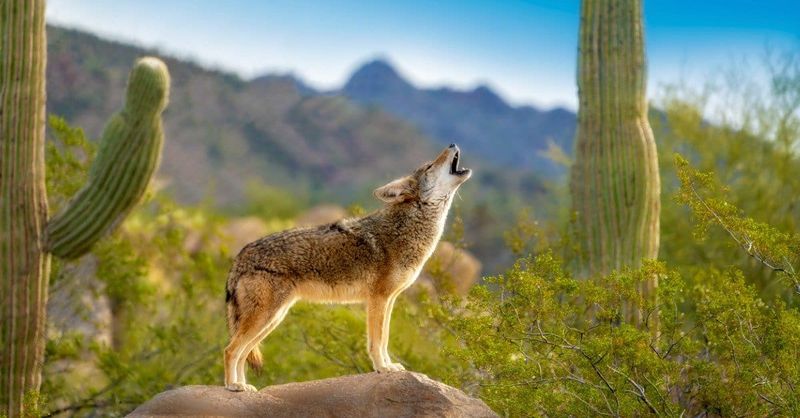
Not reliably. A few coyotes can sound like a crowd, because their yips, barks, and howls overlap and bounce around in the dark.
A study published in Human-Wildlife Interactions put this to the test. In it, 427 people in southern Texas listened to recordings of one to four coyotes.
The listeners could tell that the number changed as more animals were added, but they overestimated how many coyotes were calling by nearly twofold.
That result is worth remembering the next time a chorus makes your neighborhood feel surrounded. Your ears may be adding coyotes that are not there.
There are limits to what the study shows. It used recordings and measured human guesses, not real choruses outside real Michigan homes.
So it does not give you a formula such as dividing what you hear by two, and it cannot tell you how many coyotes live near your house.
What it does offer is a good reason for humility. If you hear a burst of sound and think you counted six animals, the honest answer is that you heard coyotes, and the number is unknown.
A handful of callers, or even one or two, can produce that wall of noise.
If you truly want to know what animals are around, sound is a weak tool. Tracks, scat, or a trail camera give much better information than a guess made from your bed.
A Michigan “pack” may be a changing family group
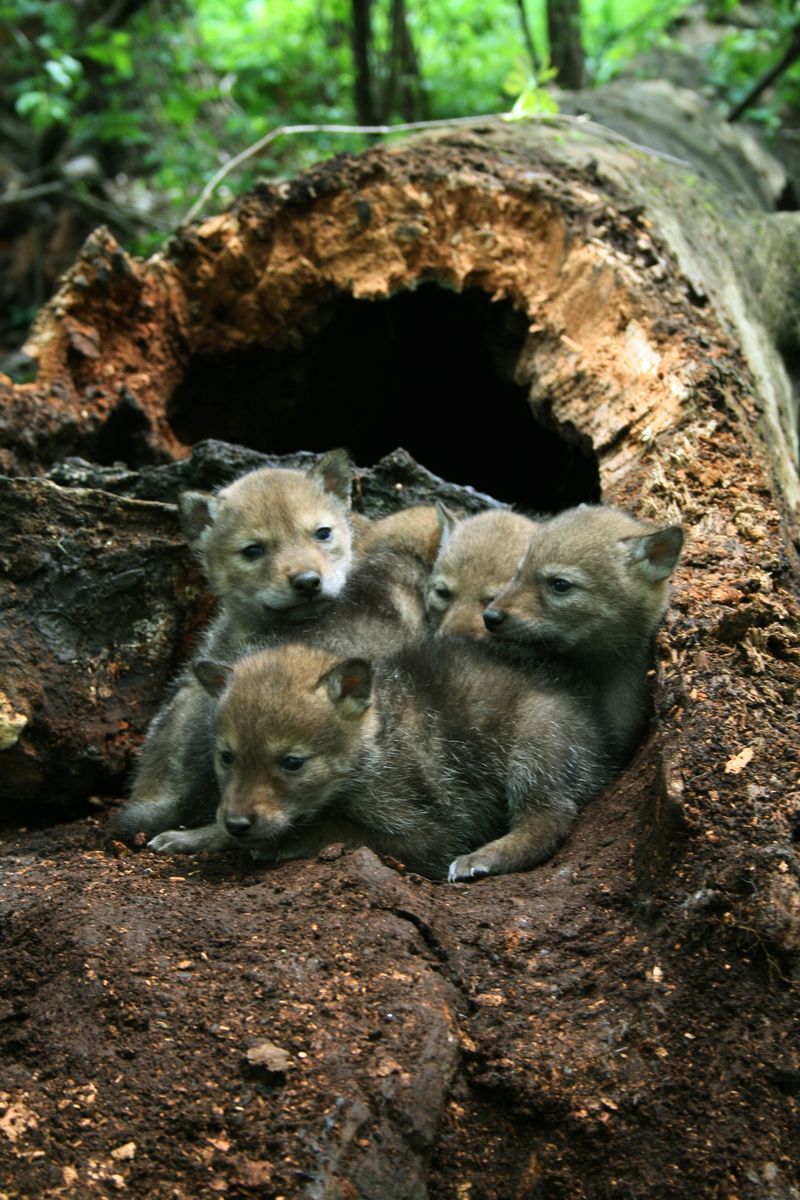
The word pack makes many people picture wolves moving in a large, tight group. Coyotes are more flexible than that, and their groups often work like families.
According to the Michigan DNR, a mated pair and four to seven pups may occupy a home range in spring and summer. As the young grow up and disperse, the makeup of the group changes.
Federal references such as USDA APHIS and the USDA Forest Service also describe family groups and a variable social structure.
The seasons add context. The DNR notes that coyotes can be more visible in winter during breeding season, that adults are active near dens in summer, and that dispersing young are more visible in fall.
Those patterns are background, not a decoder. A chorus in February does not prove mating, a chorus in June does not prove pups, and neither one proves a den is close by.
Timing makes some explanations more plausible, but it cannot confirm any of them from the sound alone.
So when you hear a group calling, think family members in a shifting arrangement, not a large wolf-style pack. The number, the ages, and the reason are all things the sound leaves out.
The full moon is not a dependable explanation
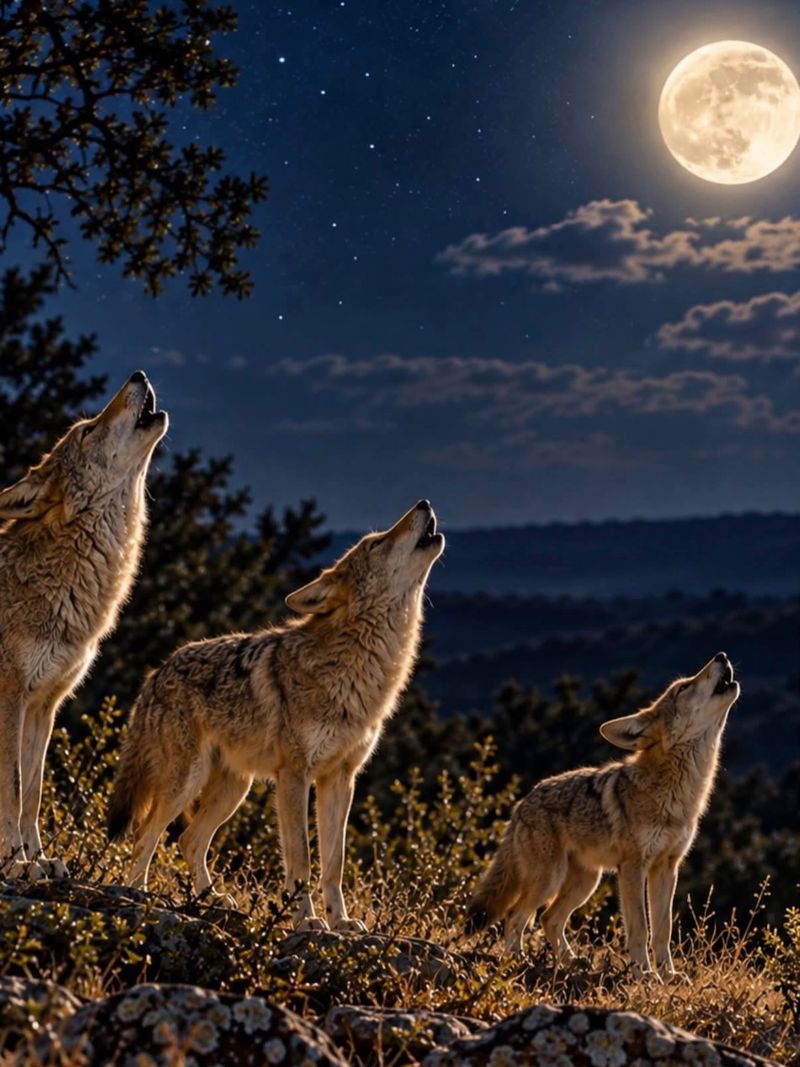
Cartoons have taught us that coyotes howl at a full moon. Real field research tells a more careful story.
A field study in Saskatchewan, Lunar Condition Influences Coyote Howling, looked at how howling related to moonlight. Group howling and group yip-howling were negatively related to increasing moonlight, meaning they tended to drop as the nights got brighter.
Lone howling showed no relationship with moonlight at all.
That finding cuts against the simple idea that a bright moon makes coyotes sing. If anything, group calling went the other direction in that study.
It does not prove that moonlight never matters. One study in one place cannot settle every setting, and coyotes are adaptable animals.
A better takeaway is that moon phase is a weak explanation for the chorus you hear.
So if the moon is full when the yips start, you can enjoy the coincidence without reading much into it. If the moon is a thin sliver and the chorus starts anyway, that is normal too.
Hearing calls is different from encountering a coyote
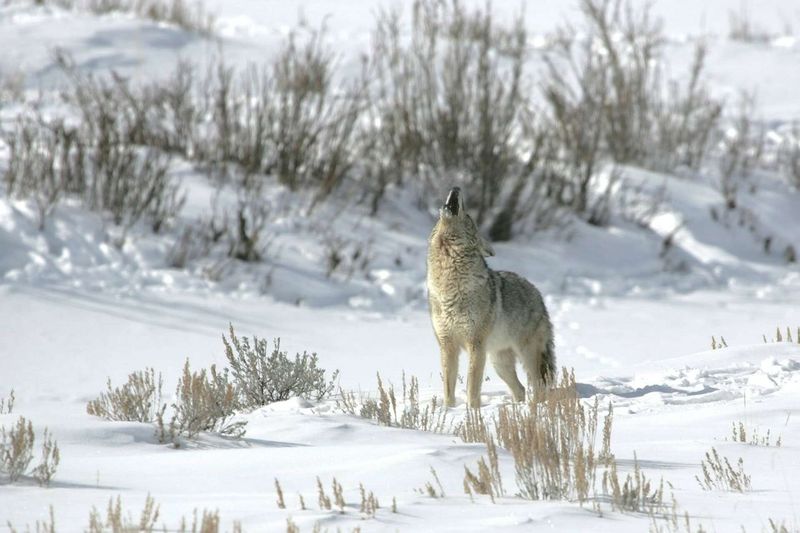
Hearing coyotes and meeting one are two very different situations. Calls from the dark, on their own, do not call for hazing or any kind of intervention.
There is no reason to go outside and look for them, answer them, or try to chase them off.
If you do see a coyote, the Michigan DNR advises keeping your distance. Most coyotes move off on their own when given space.
If a coyote approaches you, the DNR says to make yourself look large and make noise. Walk away while facing the animal rather than turning your back and running.
If children are with you, put yourself between the coyote and the kids.
Do not feed coyotes, try to tame them, or corner them. Giving a wild animal an escape route is part of keeping everyone safe.
Aggressive behavior is rare, but it does happen. If a coyote snaps, growls, or snarls at people, report it to the DNR RAP line, the state’s Report All Poaching hotline, so wildlife officials can follow up.
The key difference is behavior you can see. A chorus tells you coyotes are somewhere.
A coyote walking toward you is the moment to use these steps.
A safer yard starts with fewer attractants
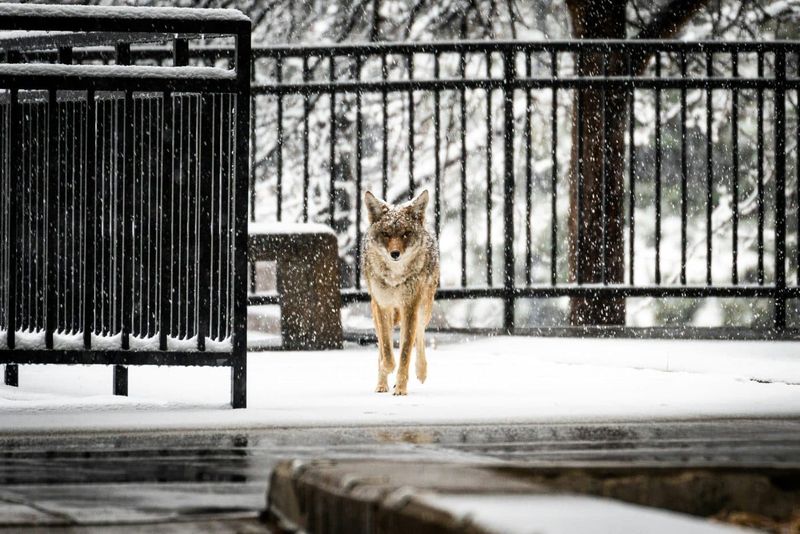
You cannot control when coyotes call, but you can control what your yard offers them. Food is the biggest lever, and the Michigan DNR lists several simple steps.
Secure garbage, compost, pet food, and bird food. A bin with a tight lid, pet bowls brought indoors at night, and seed that does not spill on the ground all remove easy meals that draw wildlife to a property.
Pets deserve extra attention. Supervise small pets when they are outside, especially around dawn and dusk, when coyotes are often moving.
Keep dogs leashed or inside secure fencing instead of letting them roam.
If a coyote keeps showing up or causes damage, a trail camera can help identify which animal is involved. Set it up where it can watch without you being close, and let it do the looking.
There is no need to approach, follow, or confront the animal to learn more.
These habits help whether you hear a chorus every night or never at all. They keep your yard boring to a coyote, which is the best outcome for both sides.
What the chorus can and cannot tell you
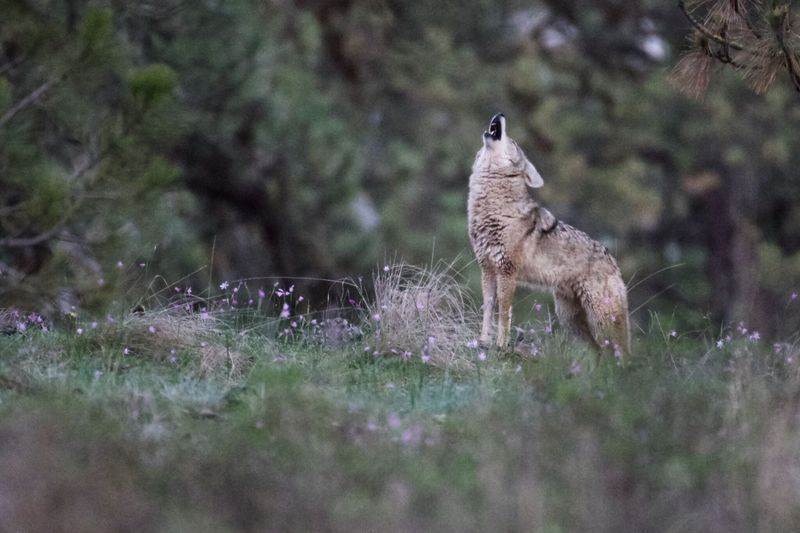
A chorus tells you coyotes are communicating nearby. It does not give a dependable count, as the listening study showed, and it does not pin down a den, a boundary, or a message meant for you.
The sound alone needs no action. Keep your distance if you see one, remove food sources, and follow the Michigan DNR guidance if a coyote approaches or keeps returning.
Think of it as overhearing a conversation in a language you only partly know.
Share this story