
Hydroseeding and hydromulching are incredibly flexible processes and have a number of different use cases, both in terms of residential and industrial applications. These include establishing vegetation, revegetating a given area, erosion control, dust control, and a number of other industrial applications.
Both of the processes are becoming increasingly popular solutions for each of these fields of use. In some cases, they have superseded more traditional methods through a combination of success rate and cost-effectiveness. In conjunction with their ability to be deployed over difficult terrains, it is probable that hydroseeding and hydromulching are going to be increasingly used as the preferred processes in many different scenarios.
Why Does Hydroseeding Have So Many Use Cases?
People wrongly assume that hydroseeding is just an alternative method of laying down a lawn. This is probably because it is seemingly its most prevalent application, making it appear as its main function. However, hydroseeding is so much more and can be proposed for an ever-increasing array of areas.
The best way to think about hydroseeding and hydromulching and what they might be able to do is to look at the mechanics of the processes. Both are hydraulic distribution processes that broadcast a slurry through a hose or turret gun, using pressure. The slurry is a mix of water, seed, fertilizer, and mulch that is combined together in the machine’s tank.
The main difference between hydroseeding and hydromulching lies in the mix with the inclusion of seed among other things being the principal difference. You will, however, often find the process names being conflated to just hydroseeding.
The important point here is that there is huge flexibility in terms of the materials that can be used in a mix, particularly if using larger paddle-agitated machines. It doesn’t have to be grass seed and there is a considerable variety of mulches that serve different end-use sectors. It is because of this that the hydroseeding processes can be adapted to such a wide variety of tasks.
Where is hydroseeding commonly used?
As we have mentioned, hydroseeding has both residential and commercial use cases. Although diverse, there is some crossover between residential and commercial, with differences often coming down to mix specifications.
Establish Vegetation

The very aim of hydroseeding is to establish vegetation. This, of course, can be for multiple different purposes but hydroseeding, as opposed to hydromulching, is about seed distribution. The seed can be practically any type of seed but generally, it is grass seed or a mix of plant seed that also includes grass seed.
The most common application of hydroseeding for residential purposes is to establish a new lawn. Hydroseeding is an alternative to traditional dry seeding or laying sod. I has become an increasingly popular way of establishing a new lawn or grass area. It is flexible, considerably cheaper than sod, and has a comparable cost, or sometimes cheaper, than dry seeding.
Flexibility, ease of deployment, even over difficult terrains, accelerated germination times over dry seeding, sometimes as fast as three to five days, which in turn allows the householder to see fast results, makes hydroseeding the choice of many contractors and specifiers. The final lawn is often of equal or superior quality to both dry seed and sod.
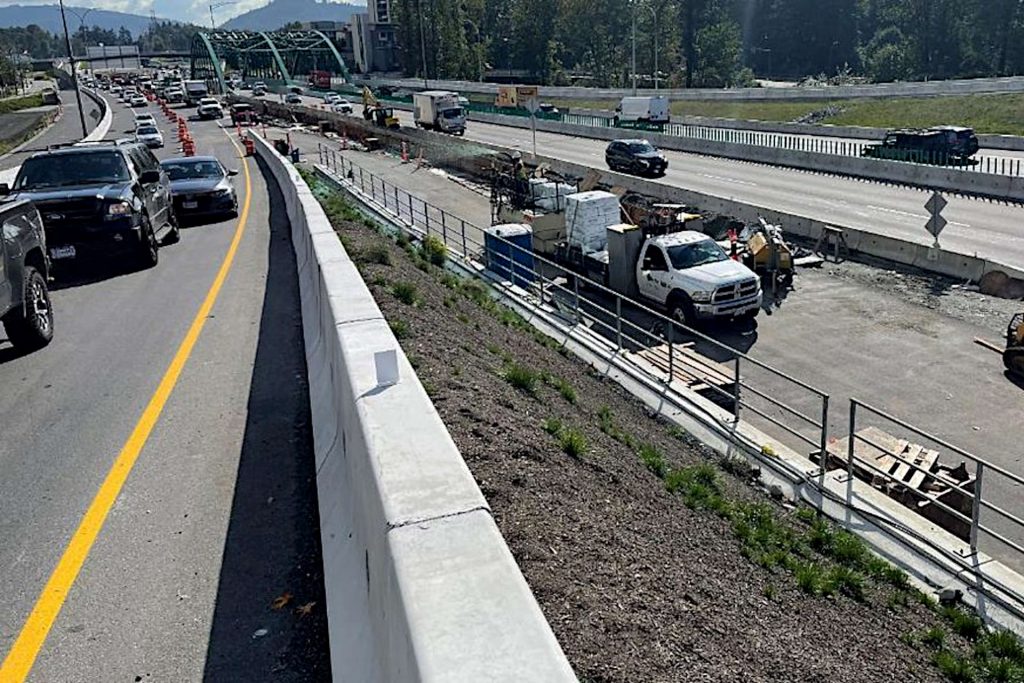
These benefits drive industrial applications that require vegetation to be established. One example of this is roadsides and highways. Indeed, hydroseeding came about from these industrial applications when, in the late 1940s, Maurice Mandell, an engineer who worked for the Highway Department of Connecticut, developed the hydroseeding process to more efficiently put down seeds for establishing vegetation along newly constructed roadways.
Revegetation Strategies
Similar to establishing new vegetation, hydroseeding is increasingly used as a way of re-establishing vegetation. This is largely an industrial process although hydroseeding as a method of overseeding existing lawns and grass areas is now becoming increasingly widespread.[1]
There is a huge requirement for the revegetation of old industrial brown-field sites, old mining areas, and disused quarries. The main problem with many of these areas is the quality of the soil. In a lot of cases, the soil is infertile, often full of iron and manganese as well as other industrial by-products. In addition, there is almost no organic matter present in the soil.
Here, hydroseeding plays a significant role. Its ability to deliver organic material from mulches, as well as fertilizers, and vegetation seeds that can grow in poor soil, makes the process an important element in trying to establish perennial, herbaceous vegetation on these sites. It also serves to help regenerate the soil’s ecosystem, allowing the soil to come back to life and self-sustain its own nutrient balance.
In addition, to hydroseeding’s potential in terms of regenerating vegetation, it also lends itself to being the process of choice because of its ability to deal with difficult terrain, often a problem with old mines and quarries, which aids its usefulness.
Erosion Control
Soil stabilization is one of the most important roles hydromulching plays with its ability to hold the soil together. Where ground conditions include problems with loose soil, using a bonded matrix mulch can fix the soil in place by creating a temporary barricade against wind and rain. This prevents the soil from washing away while vegetation, that has been planted, has time to put down deep enough roots to hold the soil together of its own accord.
This type of erosion control is widely used in industrial scenarios. This can be stabilizing slopes, where often the incline is too steep for traditional drill seeding and dealing with large areas of poor soil quality. More traditional methods such as erosion matting can be more expensive, more difficult to put down over undulating terrain, and not always as effective.
The advance in mulches, such as bonded fiber matrix and flexible growth medium, has taken hydroseeding’s erosion control capabilities to another level. These mulches create an interlocking matrix from the fibers that allow the seeds to germinate and grow through but create such a strong barricade that it effectively locks the soil to the ground.
Combating Wildfire Damage
These enhanced capabilities have led to hydromulching and hydroseeding playing a major role in dealing with the aftermath of wildfires.
In many cases, the ground and soil have been shorn of all their nutrients and the fabric of the soil has been destroyed leaving it prone to erosion and infertile. In the same way that hydroseeding can deal with poor soil quality of old industrial brown-field sites, the same principles can be used to help revitalize the soil and re-establish vegetation.
Dust Control
In a similar way to erosion control, hydroseeding has also begun to play a significant role in dust control. The hydraulic process of hydroseeding and hydromulching lends itself to new and exciting products being developed for it.
One such product is Hydrobond which is a form of mulch that works in a similar fashion to bonded fiber matrix and flexible growth medium. This mulch creates a hard biodegradable skin across the surface of the ground but allows moisture and air to get through to enable seed germination.
Weed Control
Another common use case for hydroseeding is weed control. Hydroseeding is a great alternative to herbicides and insecticides obtaining a weed-free surface. The mulch used in hydroseed mixes is
“weed seed”-free mulch is used in hydroseeding, unlike straw mulches put down when dry seeding. This has the effect of preventing weed development in the grass or landscaping
Further, the mulches and fertilizer used in the mix provide high-quality organic material, that can help revitalize the soil’s ecosystem and aid the growth of grass.
Ground Cover
The aesthetic value of the final lawn provides options in terms of ground cover that can hide unsightly areas such as driveways, and other unattractive elements of a yard or area. This is why hydroseeding is often used on highway central reservations and roadside but is equally effective in residential yards.
Final Thoughts: Where Is Hydroseeding Used?
We have looked at the use cases of hydroseeding and hydromulching and the variety of different ways they can be adapted to deal with a variety of issues concerning establishing vegetation, revegetation, erosion control, and much more.
It is the hydraulic process itself that makes hydroseeding so adaptable. New mulches are being created to combat various problems related to soil and vegetation management.
Notes
[1] Project Resources Inc: Evaluation of Hydroseed for the Re-establishment of Residential Lawns
Share this story