
When looking at worm castings compared to general garden compost, worm castings have a higher concentration of macronutrients than that of general compost: Nitrogen 2.5% vs 1.5%, Phosphorous 2.0% vs 0.6%, and Potassium 1.9% vs 1.0%.
While most people know about composting and the benefits of composting for their gardens, not many people have thought about worm castings as an alternative form of compost. Both worm casting and compost are typically used in the soil as a natural fertilizer. But what is the difference between worm castings and compost? Do worm castings make a better organic fertilizer than compost?
The distinctions between compost and worm castings are quite varied. From the way each is produced to the resulting nutrient values of the humus created, there are considerable differences. In this article, we will look to compare these forms of organic fertilizer and explain how and why they are different from each other.
Download FREE Composing Guide
This FREE 29-page guide helps you turn kitchen scraps and garden waste into valuable compost. The comprehensive guide explains hot, cold and worm composting, as well as looks at no-turn (passive) composting methords with clear technical diagrams, detailed instructions and practical solutions for common composting problems.
What Do We Mean by The Term Compost?
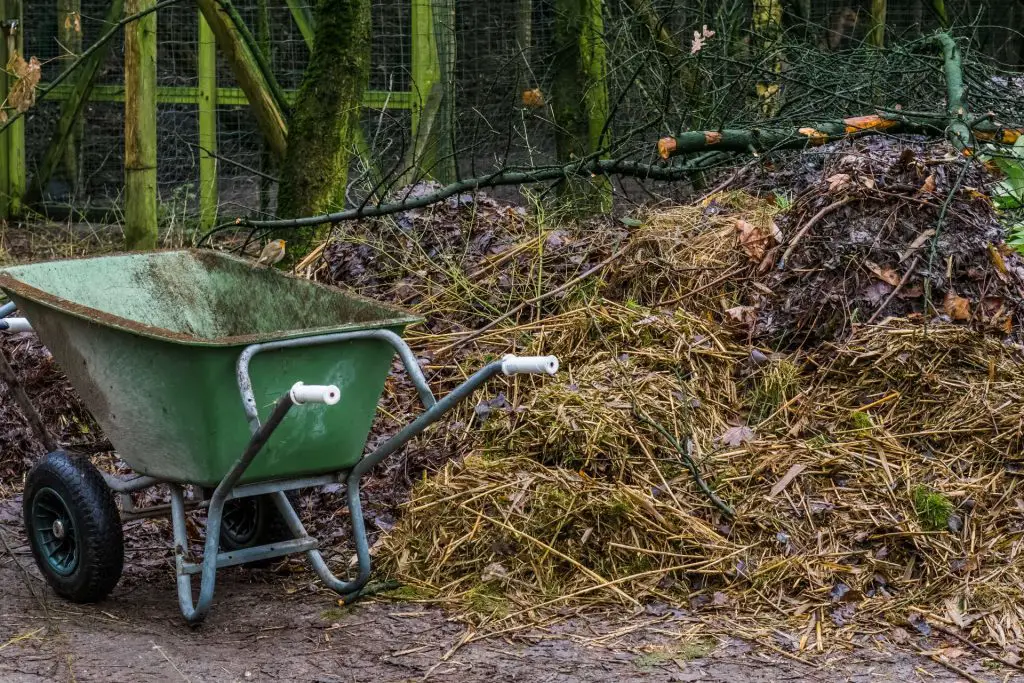
In terms of worm castings vs compost, both are natural forms of organic fertilizer that create nutrient-rich humus. Indeed, vermicompost is generally considered another form of compost. In order to get a better idea though, of the value of worm castings as a soil amendment, we will compare them against other common forms of compost that gardeners use.
There are several types of compost that are widely used, the most common being general compost, manure compost, and mushroom compost. The process whereby each type produces its nutrient-rich humus as finished compost is different and this has a bearing on its nutrient values, structure, and best end-use cases.
General Compost
Composting is a natural process of biological decomposition. In other words, it’s the breakdown of organic materials by microorganisms in the presence of oxygen. This process occurs when you add fresh material to your compost pile and moisture content reaches about 40-60% (compost should feel dry).
General compost can be produced via multiple different processes, conventional cold composting, hot composting, and trench composting being the most common. There is also industrial composting which composts materials that are harder to break down in controlled conditions.
Types of organic material that can be composted include:
- Leaves and grass clippings from lawns, gardens, or parks
- Kitchen scraps, like vegetable peels and food scraps (avoid meat or dairy products)
- Wood chips, sawdust, cardboard, paper, and cotton
Mushroom Compost
Mushroom compost is essentially the spent growing medium used to grow mushrooms from spores. It is a 100% organic material that was originally produced from a mixture of hay, straw, corn cobs, husks, and chicken or horse manure. Chalk is often added to mushroom compost and this makes it alkaline in nature.
The spent material is sterilized meaning that it is free of pathogens, fungi, and spores that can be found in general-purpose compost. However, the sterilizing process denudes the material of a lot of the remaining nutrients and so is far less nutrient-rich than most mature or general compost.
Its key advantage is that it combines exceptional water retention qualities with excellent drainage properties, making it a very useful soil amendment for heavily compacted soils.
Manure Compost
Manure compost is simply the waste product of animals that has been cured over a period of two to six months to ensure that there are no pathogens that could enter the human food chain.
There is a wide variety of manures available, and nutrient values differ between them. Manure’s nutrient content differs from one type of animal droppings to the next, and it also changes depending on the animal’s diet, living conditions, bedding, and how it’s stored and handled.
There is a wide range of animal manures and their nutrient content based on animal species. For instance, compared to manure from other animals, poultry manure tends to have a higher concentration of nitrogen and phosphorus.
What the animal eats also has a direct impact on the nutrient content of its droppings. Nitrogen levels tend to be greater in manure produced by animals fed a high-protein diet compared to those produced by animals fed a low-protein diet.
Worm Castings: Vermicomposting
While many gardeners have produced their own general compost through piles, tumblers, or bins, few have considered alternative ways to decompose organic material.
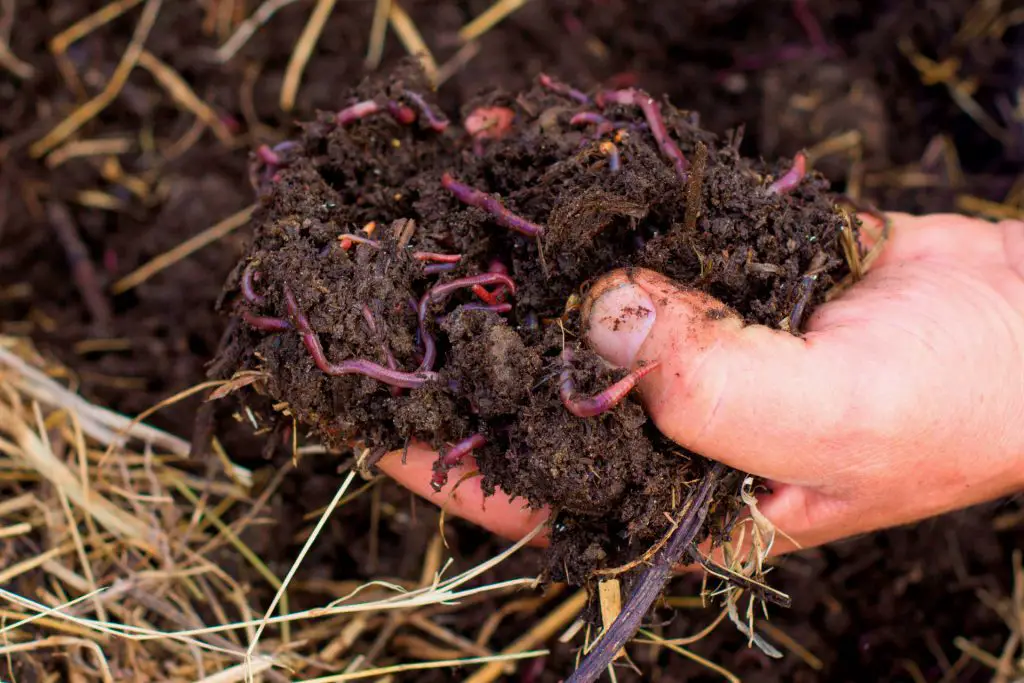
One such way is vermicomposting. This is a process whereby worms are used to eat through your organic material leaving behind a nutrient-rich humus called worm casting, literally the waste product of worms.
Worms are extraordinary organisms that consume almost all organic materials. Vermicompost is formed when organic matter passes through the digestive tract of worms and is converted into worm waste or manure – commonly known as “worm castings”. Ingestion, digestion, and assimilation of organic material, are three of the principal metabolic processes responsible for the transformation of waste into nutrient-rich humus.
Table of Nutrient Values for Worm Castings vs Compost
| Worm Castings[1] | General Compost[2] | Mushroom Compost-spent[3] | Horse Manure Compost*[4] | |
| Nitrogen % (Dry Weight) | 2.5% | 1.5% | 1.12% | 2.35% |
| Phosphorous % (Dry Weight) | 2.0% | 0.6% | 0.67% | 1.0% |
| Potassium (Dry Weight) | 1.9% | 1.0% | 1.24% | 1.8% |
| Calcium | 2.5% | 2.4% | 2.29% | 3.8% |
| Magnesium | 0.7% | 0.48% | 0.35% | 0.63% |
| pH Values | 7 | 7.0 | 6.6-8.0** | 8.4 |
*There are various types of Maure in this table we have used horse manure for our values but other manures such as chicken and sheep manure have much higher phosphorous and potassium levels.
**This pH level is deceptive. Mushroom compost usually contains chalk which actually makes it alkaline in nature.
Which Is Better Worm Castings vs Compost
In trying to determine which is the best you really need to evaluate in regards to what your use case scenario is.
Worm Castings vs General Compost
Worm castings are better for your garden than compost because they contain more nitrogen than general compost —which means they help plants grow faster, and bigger and increase their yield.
Macronutrients to that of general compost: Nitrogen 2.5% vs 1.5%, Phosphorous 2.0% vs 0.6%, and Potassium 1.9% vs 1.0%
Another significant difference is the end particle size that is produced. With general compost, these can be irregular with some larger pieces being present. On the other hand, the worm castings produced with the vermicompost process give a much finer more consistent material.
Worm Castings vs Mushroom Compost
Worm castings have considerably higher nutrient values than that of mushroom compost:
Macronutrients to that of mushroom compost: Nitrogen 2.5% vs 1.51%, Phosphorous 2.0% vs 1.0%, and Potassium 1.9% vs 1.8%.
However, if you were looking for a way to improve soil drainage, or have plants that need more alkaline soil, then mushroom compost, would be a better solution.
Worm Castings vs Compost Manure
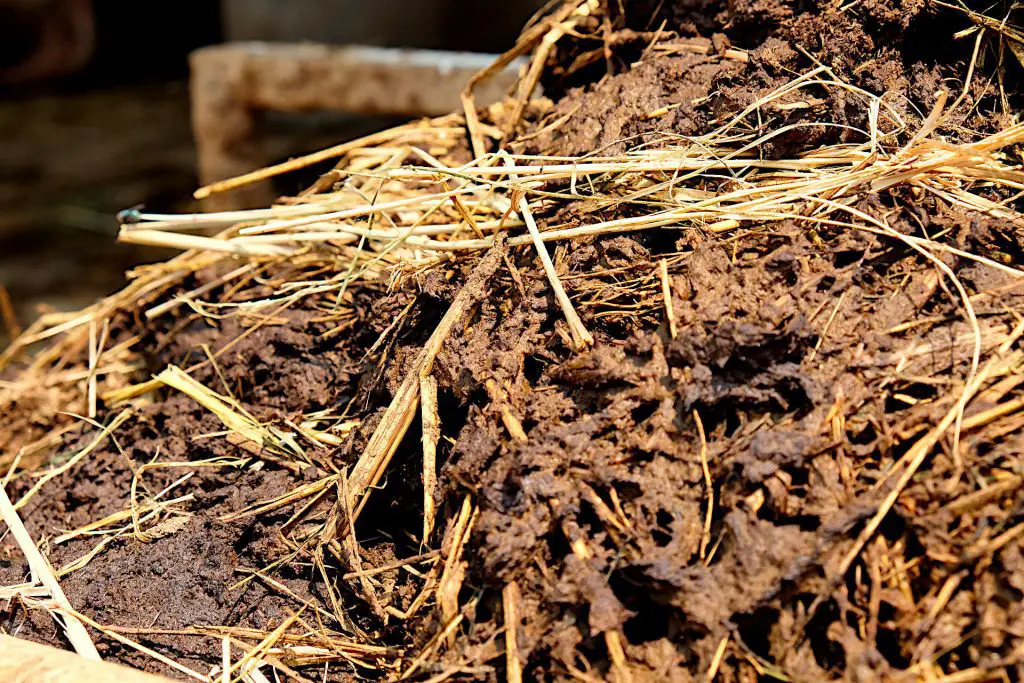
It is more difficult to compare worm casting to compost manure on a whole because there are so many different types of animal manure available. One of the most common and easily available manures is horse manure and if we compare the nutrient values of both, worm casting has slightly higher nutrient levels:
Macronutrients to that of compost manure: Nitrogen 2.5% vs 2.35%, Phosphorous 2.0% vs 0.6%, and Potassium 1.9% vs 1.2%.
Unless you own a farm, have a stable or keep chickens it is likely that you would need to buy in, or acquire your compost manure, and then cure it.
Summary: Worm Castings vs Compost
In regards to their nutrient levels, worm castings score more highly than general compost and other types of compost. However, each type of compost has its own benefits and its own uses and the eventual choice will come down to your use case scenario.
Notes
- Griffith University, Sinha, Rajiv: Earthworms Vermicompost: A Powerful Crop Nutrient over the Conventional Compost & Protective Soil Conditioner against the Destructive Chemical Fertilizers for Food Safety and Security – https://research-repository.griffith.edu.au/bitstream/handle/10072/30336/62923_1.pdf
- Oregon State University, Dan M. Sullivan, Andy I. Bary, Robert O. Miller, and Linda J. Brewer: Interpreting Compost Analyses – https://catalog.extension.oregonstate.edu/sites/catalog/files/project/pdf/em9217.pdf
- American Mushroom Institute – https://www.americanmushroom.org/consumers/mushroom-compost-faq/
- Knott’s Handbook for Vegetable Growers. 1997. John Wiley & Sons, Inc.
Share this story


