Juggling work deadlines, errands, and family commitments can leave anyone feeling like a deflated balloon. If you find yourself constantly on edge, craving a space to unwind and recharge, then consider creating a Zen garden.
Zen gardens, originally found in Japanese temple courtyards, are more than just pretty landscaping. They’re spiritual gardens designed to promote tranquility and mindfulness. With their clean lines, natural elements, and focus on simplicity, Zen gardens offer a welcome escape from the daily hustle.
The best part? You don’t need a sprawling backyard to create your own slice of serenity. Below we will look at the process, from planning a Zen garden that fits your space to selecting the right elements and putting it all together. Let’s rake away the stress and create a calming haven right at home.
Planning Your Small Zen Garden
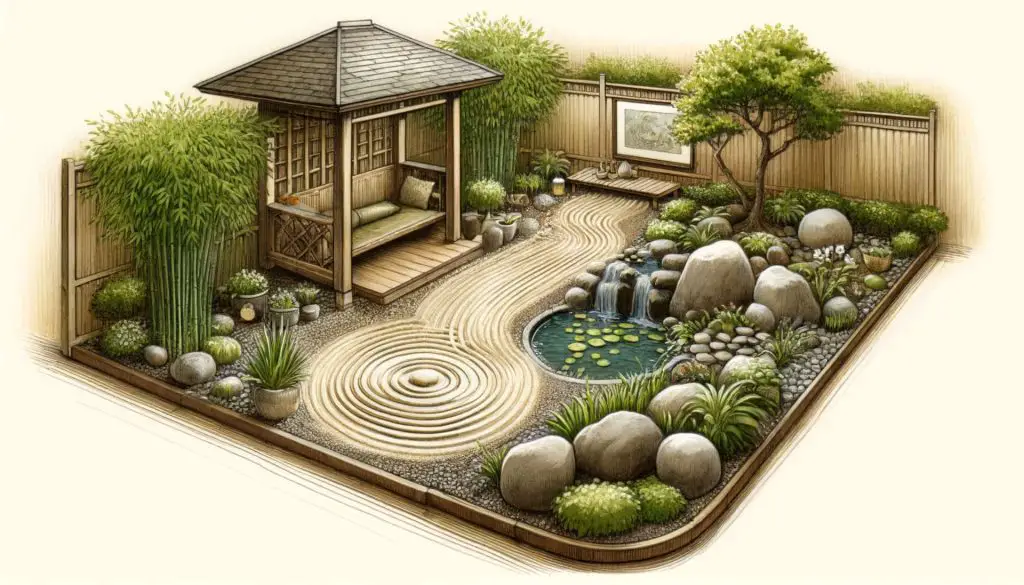
Choosing the Right Spot
The first step in designing your Zen garden is finding the ideal location. Look for a spot that offers a balance of sunlight and shade, depending on the plants you choose. Ensure the area is easily accessible so you can enjoy it regularly. A quiet corner of your backyard can be perfect, away from the main activity zones.
Size and Scale
Designing for a small space requires thoughtful planning. Even a modest area can become a tranquil retreat with the right elements. Focus on simplicity and minimalism to create a sense of openness. Use compact plants and small rocks to keep the design proportional to the space.
Setting Your Intentions
Before you start, think about what you want to achieve with your Zen garden. Is it a place for meditation, a visually calming spot, or a combination of both? Defining your intentions will guide your design choices, ensuring that each element contributes to the overall sense of peace and tranquility.
Essential Components of a Zen Garden
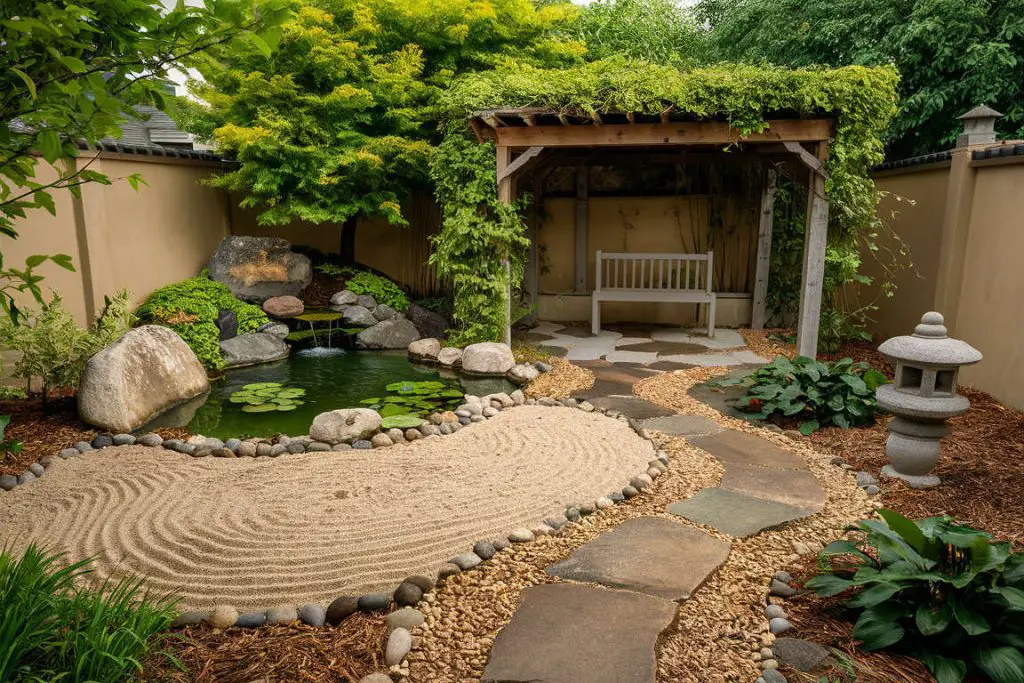
Creating a Zen garden involves more than just arranging rocks and plants; it’s about incorporating elements that evoke a sense of peace and balance. The key components of a Zen garden each have their unique significance and role in fostering tranquility. Let’s explore these essential elements, from the symbolic use of gravel and sand to the calming presence of water features, and learn how to blend them seamlessly into your garden design.
Gravel and Sand
Gravel and sand are fundamental to a Zen garden. They symbolize water and can be raked into patterns to represent ripples. Choose fine gravel or sand in natural colors for the best effect. Raking these materials can be a meditative practice, enhancing the tranquil atmosphere of your garden.
Rocks and Stones
Rocks and stones add structure and focal points to your Zen garden. Use a variety of sizes and shapes to create a natural, balanced look. Place larger stones strategically to anchor the space, and use smaller stones to complement them. Their placement should feel organic, as if they have always been there.
Plants and Greenery
Select plants that are easy to maintain and fit the minimalist aesthetic of a zen garden. Moss, ferns, and small shrubs are excellent choices. Bamboo can also add a vertical element, providing height and privacy. Keep the plant selection simple to maintain a serene, uncluttered look.
Water Features
Incorporating water features adds a soothing element to your garden. A small pond, fountain, or even a simple water basin can bring a sense of calm. The sound of flowing water enhances the peaceful environment, making it easier to unwind and relax. Choose a feature that fits the scale of your garden to maintain harmony.
Traditional Zen Elements
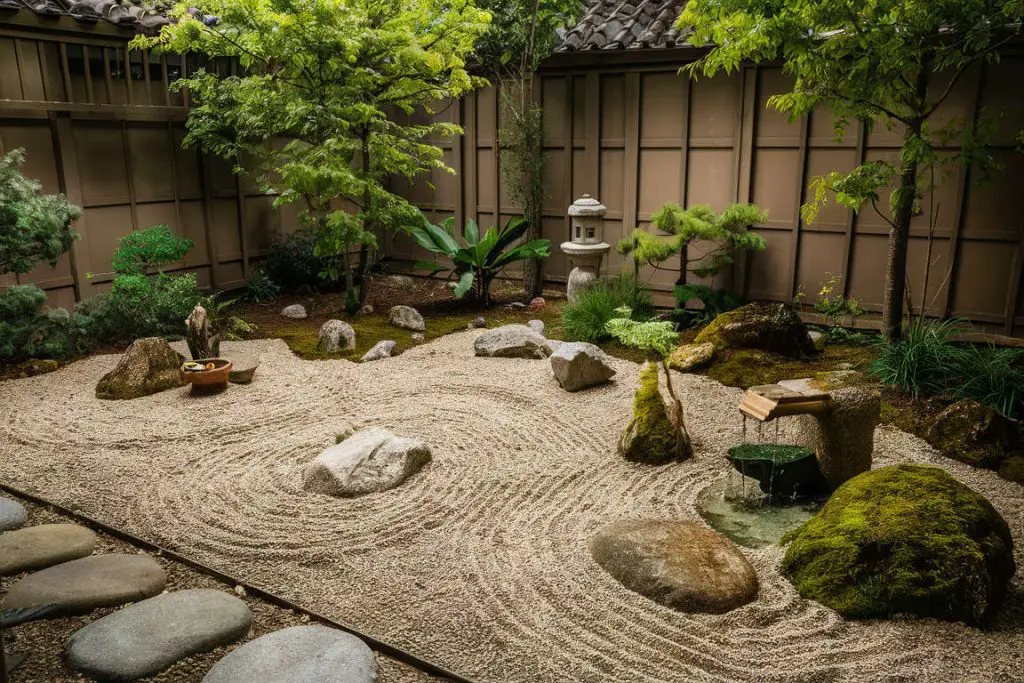
A zen garden draws much of its calming power from traditional elements that have been used for centuries. These elements carry deep symbolic meanings and help create a harmonious and balanced environment. Understanding these components will help you design a space that feels both authentic and serene.
Symbolic Features
Incorporating features like bridges, lanterns, and statues adds cultural depth and visual interest to your Zen garden. Bridges can symbolize a journey or transition, while stone lanterns provide a subtle, timeless illumination. Statues, such as Buddha figures, offer focal points and a sense of reverence. Each of these elements should be placed thoughtfully to enhance the garden’s overall balance.
Minimalism and Simplicity
Embracing minimalism is essential in Zen garden design. Keep the layout uncluttered and focus on a few key elements to create a sense of space and tranquility. Avoid overcrowding with too many plants or decorations. Instead, let each component breathe and contribute to the peaceful atmosphere.
Balance and Harmony
Achieving balance and harmony in your Zen garden involves careful consideration of every element’s placement. Use symmetry and asymmetry to create visual interest and a natural flow. The arrangement should feel effortless, reflecting the natural world’s beauty. Aim for a design that brings together different textures and shapes in a cohesive, pleasing manner.
Layout Tips for a Serene Zen Garden

Designing a Zen garden is an art that combines thoughtful arrangement with a sense of tranquility. Proper layout ensures that every element contributes to the garden’s peaceful ambiance. Here are some practical tips to help you create a serene and harmonious space.
Creating Paths and Walkways
Paths and walkways guide movement through the garden, encouraging slow, mindful walking. Use natural materials like stone or gravel to create meandering paths that invite exploration. The curves and bends in the paths should feel organic, enhancing the garden’s tranquil atmosphere.
Focal Points
Focal points draw the eye and provide places for contemplation. Consider using a striking rock formation, a beautiful plant, or a small statue as a centerpiece. These focal points should be strategically placed to encourage pause and reflection, adding depth to the garden’s design.
Use of Space
Making the most of the available space involves thoughtful planning. Vertical elements like bamboo or trellises can add height and interest without overcrowding the ground level. Multifunctional areas, such as a seating nook that doubles as a meditation spot, can maximize the garden’s utility. Ensure that every part of the garden contributes to the overall sense of peace and relaxation.
Personal Touches and Maintenance

Adding personal touches and maintaining your Zen garden are key to ensuring it remains a peaceful retreat. Personalizing the space allows it to reflect your unique style and preferences, while regular upkeep keeps the garden looking its best. Let’s explore how to infuse your personality into the garden and keep it serene over time.
Adding Personal Elements
Incorporating elements that resonate with you makes the garden truly yours. Whether it’s a favorite plant, a cherished piece of art, or a custom-made feature, personal touches add character. Consider items that have personal significance or evoke positive memories. These additions will make your Zen garden not only beautiful but also deeply meaningful.
Ongoing Care and Maintenance
Regular maintenance is essential to preserve the tranquility of your Zen garden. Simple tasks like raking the gravel, trimming plants, and cleaning water features keep the garden tidy and inviting. Set aside a little time each week for upkeep, allowing you to enjoy the garden fully without letting maintenance become overwhelming. Small, consistent efforts ensure your Zen garden remains a serene haven for years to come.
Final Thoughts
Creating a Zen garden at home offers a rewarding way to cultivate peace and beauty in your outdoor space. Each step, from planning to adding personal touches, contributes to the garden’s unique charm and tranquility. Embrace the process and enjoy the calm and serenity that your Zen garden brings into your life.
Share this story

