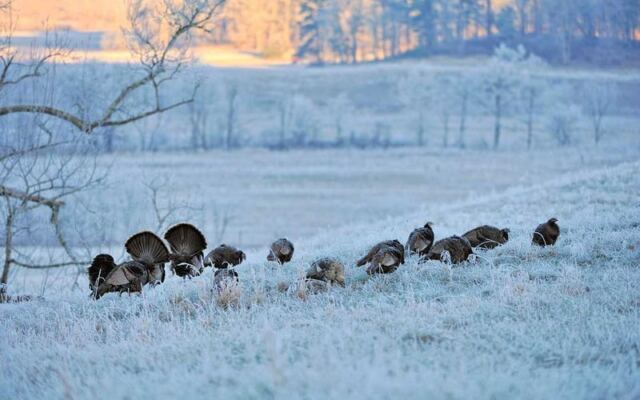
A winter turkey flock shows up in a yard because the yard sits inside a bigger area that offers food, cover, and trees for sleeping. Turkeys eat on the ground all day and climb into trees at night, so the pattern you see out the window is only part of the story.
Knowing how these birds live helps you respond calmly and keep them wild. Here is what Wisconsin guidance says about why they visit and what to do about it.
Winter flocks are normal
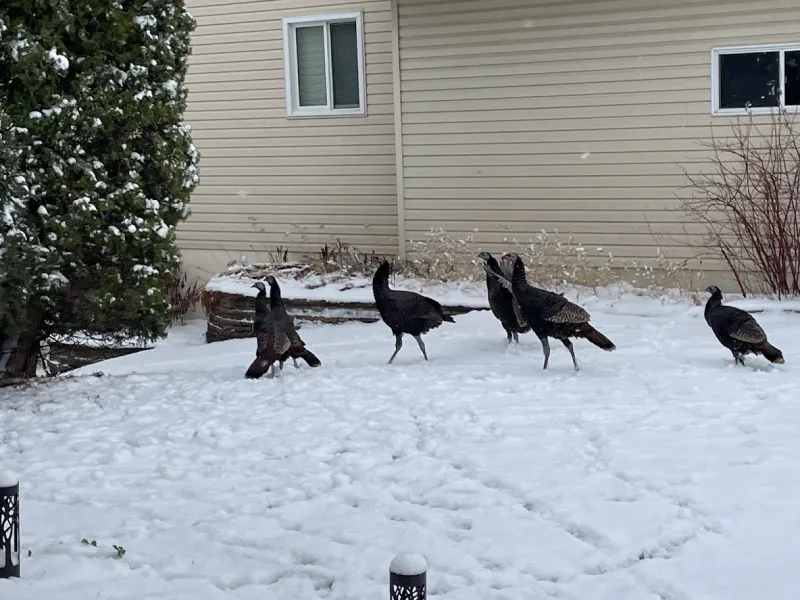
Seeing a crowd of turkeys in January is a normal part of the season. UW-Madison Extension wildlife guidance explains that turkeys gather into flocks in the fall, and the biggest groups often form in winter.
That means a flock crossing your lawn does not signal that something is wrong with your property or your neighborhood. Birds that spend the warm months in smaller family groups join together when cold weather arrives.
Moving as a group is simply how they get through the season.
Winter diets also help explain the crowds. According to UW-Extension land management advice for wild turkeys, they rely on acorns, other nuts, seeds, and grains, and standing corn or unplowed corn stubble can draw them in.
A flock walking through your yard once, or even several mornings in a row, is a snapshot. It does not prove the birds have settled on your lot, and it does not tell you why they picked it.
Think of your yard as one stop on a route that likely covers a much wider area.
The next sections look at what makes an area useful to turkeys, where they sleep, and what to do if they become a nuisance.
Food and cover can make a neighborhood useful
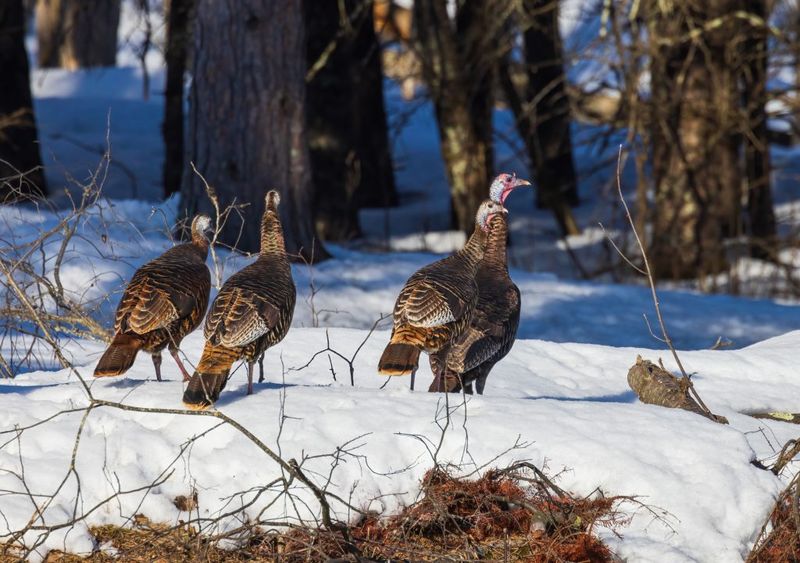
Picture a turkey’s winter grocery list: acorns, other nuts, seeds, and grain. Standing corn and corn stubble that has not been plowed under are also on the menu, as described in UW-Extension guidance on managing land for wild turkeys.
Spilled birdseed under a feeder can fit right into that list.
Turkeys are especially common where open ground and woods meet. Wisconsin guidance from UW-Madison Extension also notes that winter flocks can forage in suburban areas.
Many Wisconsin neighborhoods have exactly that mix of lawns, hedgerows, woodlots, and nearby farm fields.
So your yard may be one piece of a larger puzzle. The birds could be eating from a field down the road, cutting through your lawn on the way to a wooded ravine, and picking up a bit of seed along the way.
It is tempting to name one cause, such as your feeder or your oak tree. Nothing in the sources lets anyone say that about a specific flock.
Food, cover, and roost habitat nearby are reasonable possibilities for why an area works for turkeys, not proof of why they chose your property.
A useful clue is what is on the ground. Look for spilled seed, fallen nuts, or fruit, and notice whether corn or woods sit close by.
Those details tell you what the wider neighborhood offers.
Turkeys roost at night and forage on the ground
Turkeys keep two different schedules. By day they walk and scratch for food on the ground.
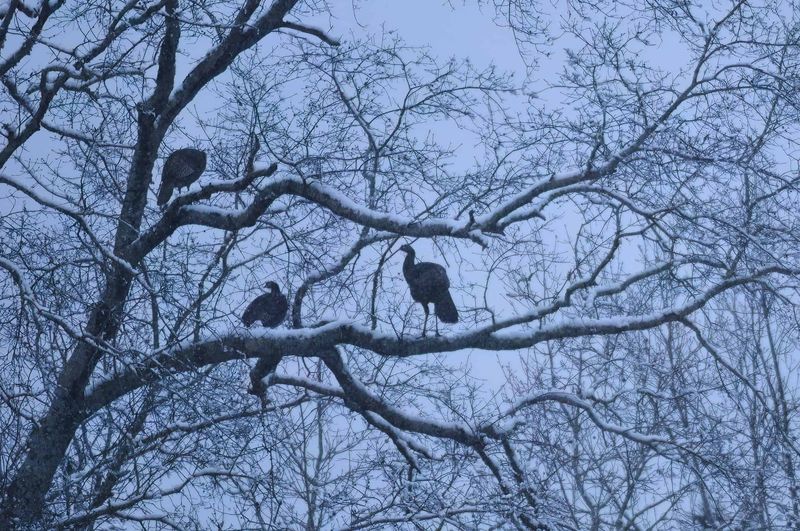
At night they fly up into trees to roost, which helps protect them from predators and weather, according to UW-Extension guidance for wild turkey habitat.
The type of tree depends on where you live. In northern Wisconsin, large conifers are typical roosts.
In southern Wisconsin, mature stands of deciduous trees are more common, as UW-Madison Extension describes. In winter, conifers and trees that hold their leaves can offer extra cover.
Here is the catch for homeowners. A flock feeding on your lawn at noon tells you where the birds ate, not where they slept.
They may have flown down from a woodlot a quarter mile away and may head back there at sundown.
Tall trees in your yard make roosting possible, but they do not prove it. The best way to know is to watch.
If you see birds flying up into your own trees near dusk, or flying down at first light, that is a real clue. Droppings and feathers under a tree can also hint at it.
If you never see that, the birds are probably using your yard as a daytime food stop. Either way, the flock is acting like turkeys, and the answer does not change how you should handle feeding or damage.
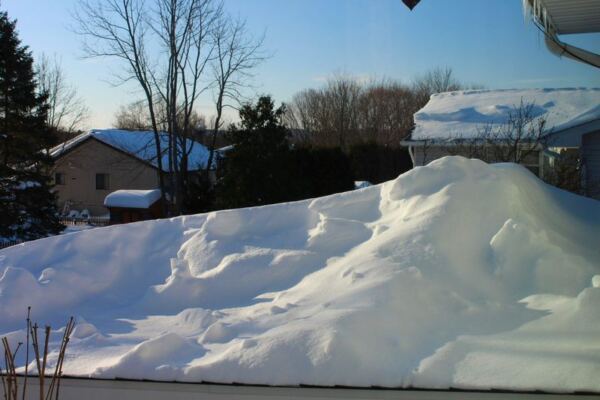
Snow can change where turkeys forage
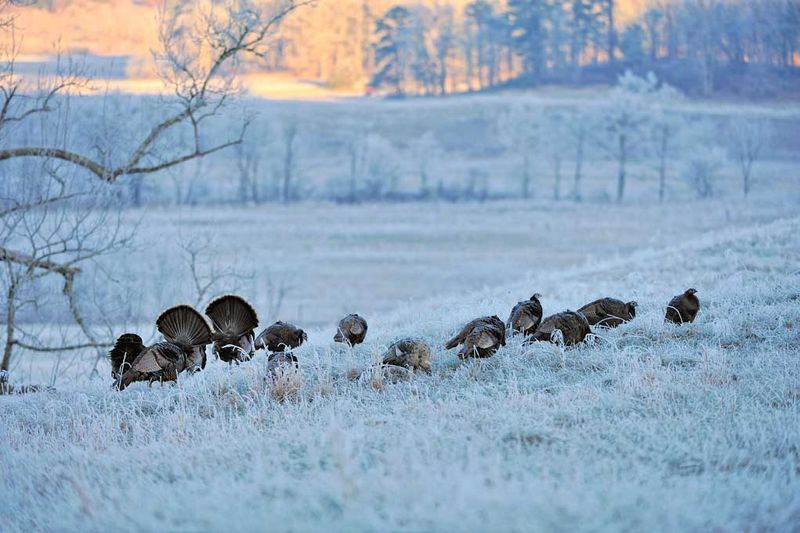
Snow matters to turkeys mainly because it affects how easily they can move and reach food. When the ground is buried, scratching for acorns and seeds gets harder.
UW-Extension habitat guidance points out that south-facing slopes and springs tend to hold less snow, so turkeys can forage there more easily. Places like these can become useful spots during a hard winter.
Severe conditions can also take a toll. A Wisconsin DNR research update says deep snow combined with prolonged extreme cold can be damaging to turkey populations.
It is easy to jump from that to a tidy story: snow fell, so the flock came to your yard. The sources do not support that link for any one flock.
Ordinary snow does not automatically send turkeys to a particular property, no specific snow depth works as a trigger, and a yard being warmer is not a proven draw.
What you can do is notice patterns. If the birds appear after a big storm, ask what else changed nearby, such as a plowed field or a buried woodlot floor.
Treat the snow as one piece of the picture and leave the explanation open.
Nonmigratory turkeys can still travel
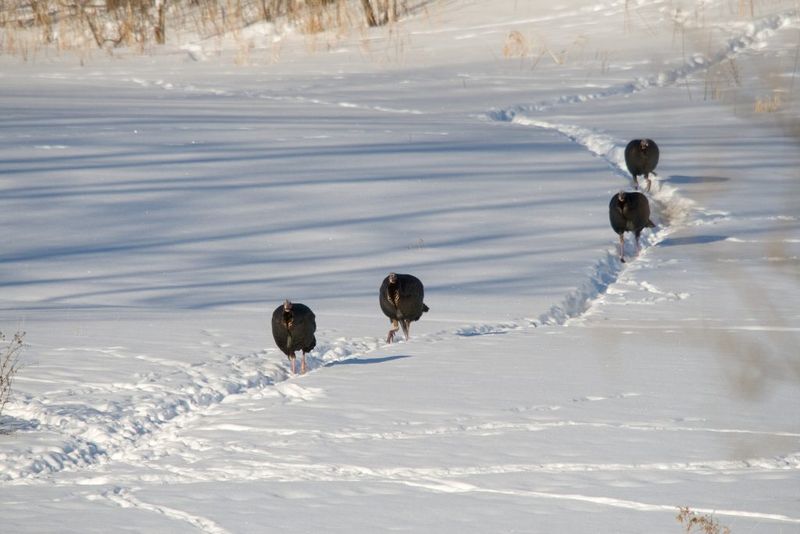
Wisconsin DNR describes wild turkeys as nonmigratory. They do not fly south for the winter the way geese do.
That word can trick people into thinking turkeys stay put in one spot all year.
The same Wisconsin DNR research update notes that tracked birds can travel. Nonmigratory means no long seasonal migration.
It does not mean a flock stays inside the boundaries of one yard.
This matters when you spot the same flock more than once. Turkeys that show up at your feeder area three mornings in a week may be working a loop that includes neighboring yards, a field, and a patch of woods.
You see them on the days they pass through.
Repeated visits, then, do not prove the birds have moved in for good. They may come every day for a while and then vanish when food or conditions change somewhere else along their route.
A practical approach is to keep a simple log. Jot down the time of day, what the birds were doing, and where they came from or went.
After a couple of weeks you will have a better sense of whether your yard is a regular stop or just an occasional one, without guessing about the flock’s reasons.
Skip feeding and clear spilled seed
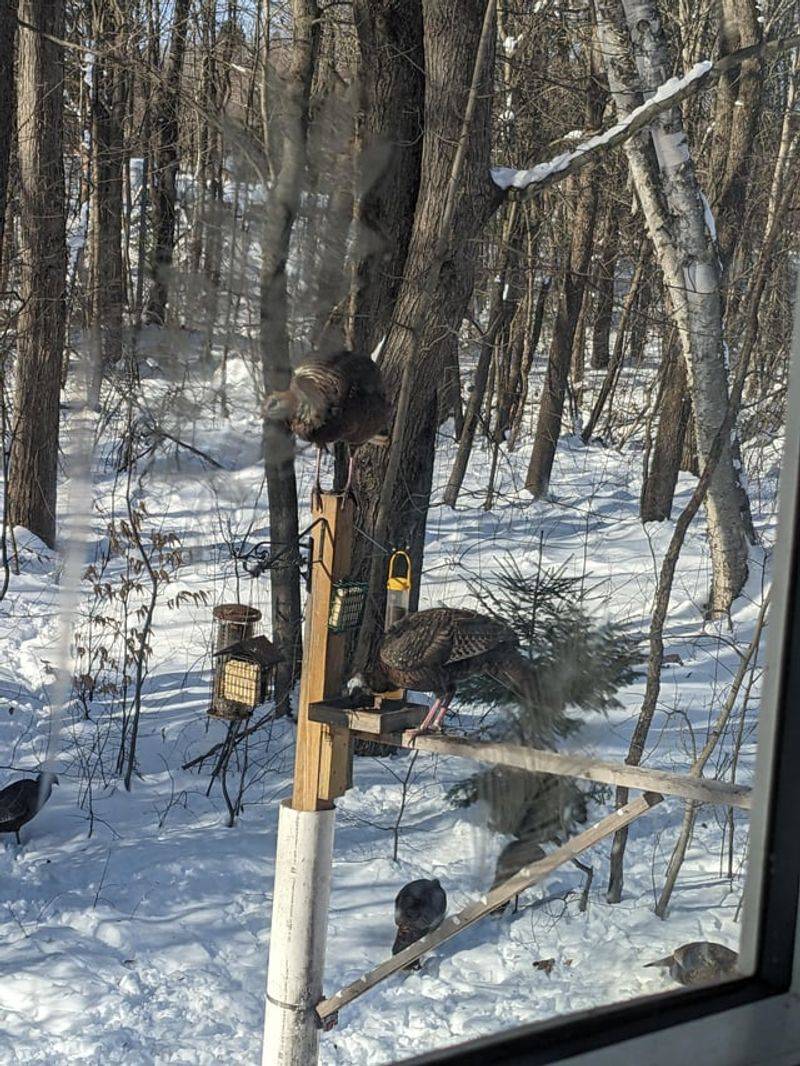
If turkeys are hanging around, the best thing you can do is resist feeding them, even if the weather looks harsh. Wisconsin DNR guidance on nuisance and damaging wildlife warns that feeding can contribute to aggressive birds and to human-health and safety risks.
Birds that learn to expect food from people lose some of their natural wariness. That can lead to pushy behavior around homes and a closer, more frequent gathering of large birds where kids, pets, and cars are close by.
The easier step is cleanup. Sweep or rake spilled birdseed off the ground under feeders, since seed on the ground is exactly what turkeys scratch for.
Using a tray or catch pan under a feeder can cut down on what falls.
Also look around for other food that is easy to reach. DNR suggests considering things like fallen fruit or nuts.
Picking those up regularly can make a yard less of a snack bar.
None of this means cutting down trees or clearing away natural habitat. Hedgerows, woodlots, and oaks are part of a healthy landscape.
The goal is just to avoid handing out easy meals so the flock treats your property as a place to pass through rather than a place to be served.
Use changing deterrents and ask DNR for help
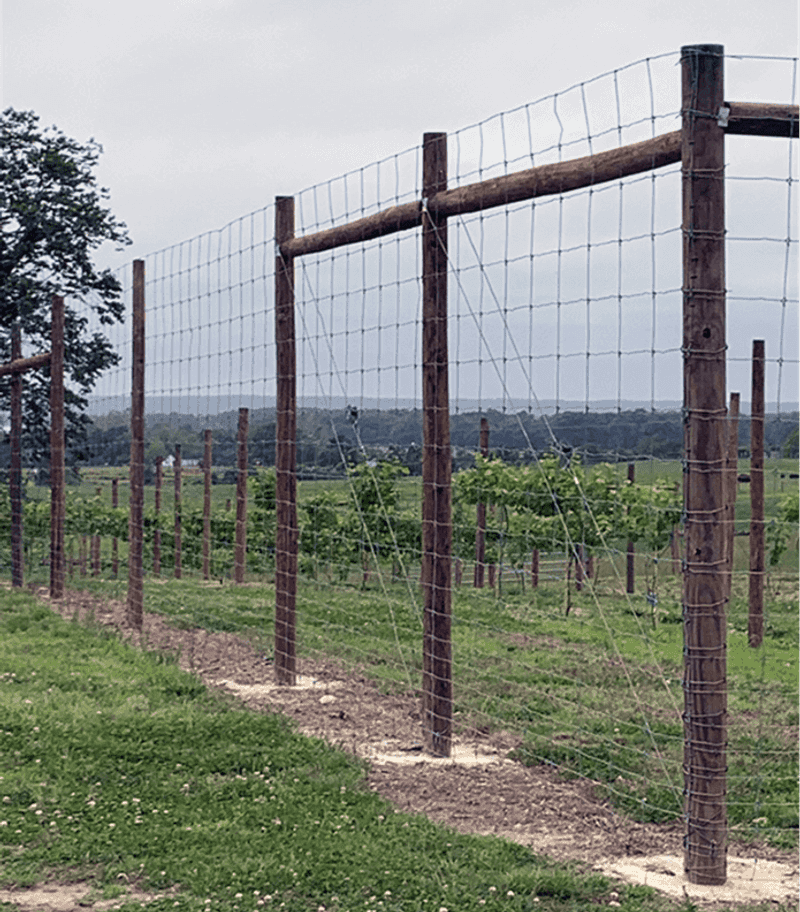
If turkeys are damaging plants or property, DNR suggests garden fencing and changing scare devices or objects from time to time. Moving a pinwheel, a reflective strip, or a scarecrow every few days keeps birds from getting used to it.
Neither option is a guarantee. Turkeys can fly, so a low fence may not stop them.
Think of these tools as ways to limit damage, and expect to adjust as you go. Details are in Wisconsin DNR nuisance wildlife guidance.
Aggression is possible but not inevitable. DNR particularly flags concerns toward people and pets during the spring mating season.
The UW-Madison Extension wildlife guide also describes unwanted behavior where birds are used to people. Keep a respectful distance and do not hand-feed.
For serious nuisance problems or any question about removal, contact Wisconsin DNR. Please do not trap, relocate, harm, or kill turkeys yourself.
State rules, including Wisconsin Administrative Code NR 12.10, mean permits or department authorization may be required.
A flock in the yard is usually just wildlife passing through a good neighborhood. Keep the table bare, and most of the time they will move on.
Share this story