Leave the nest alone, keep everyone away from it, and decide what to do next based on who might bump into it. Some nests can safely stay put, while others need a pest management professional.
Yellow jackets can sting more than once, so a calm plan matters more than a quick fix. Here is how to sort out which situation you have.
Keep away from a suspected nest
Start by moving people and pets away from the spot where you saw the insects. Tell children and neighbors to stay clear, too, and keep dogs on a leash or indoors for now.
Nobody needs to get a closer look.
Yellow jackets defend their colony when it feels threatened, and they can sting more than once. According to UF/IFAS Gardening Solutions, even a nest that looks quiet at night can turn active if it is disturbed.
An injured wasp can also set off defensive behavior in other members of the colony, so one bad move can bring many stings.
For that reason, do not mow near the area, dig, block an entrance, or try to knock the nest down. Skip fire, gasoline, and homemade treatments as well.
None of these are safe ways to deal with a nest, and each can provoke the very response you want to avoid.
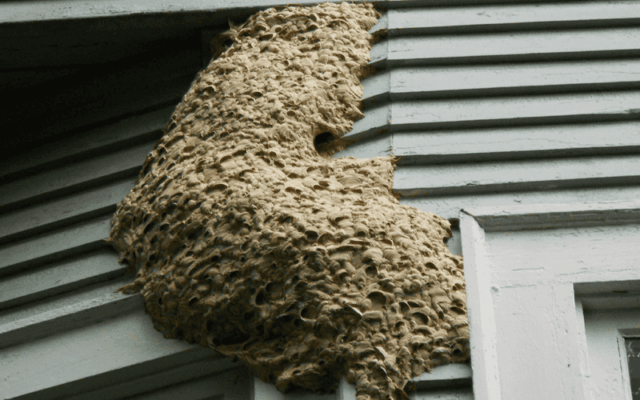
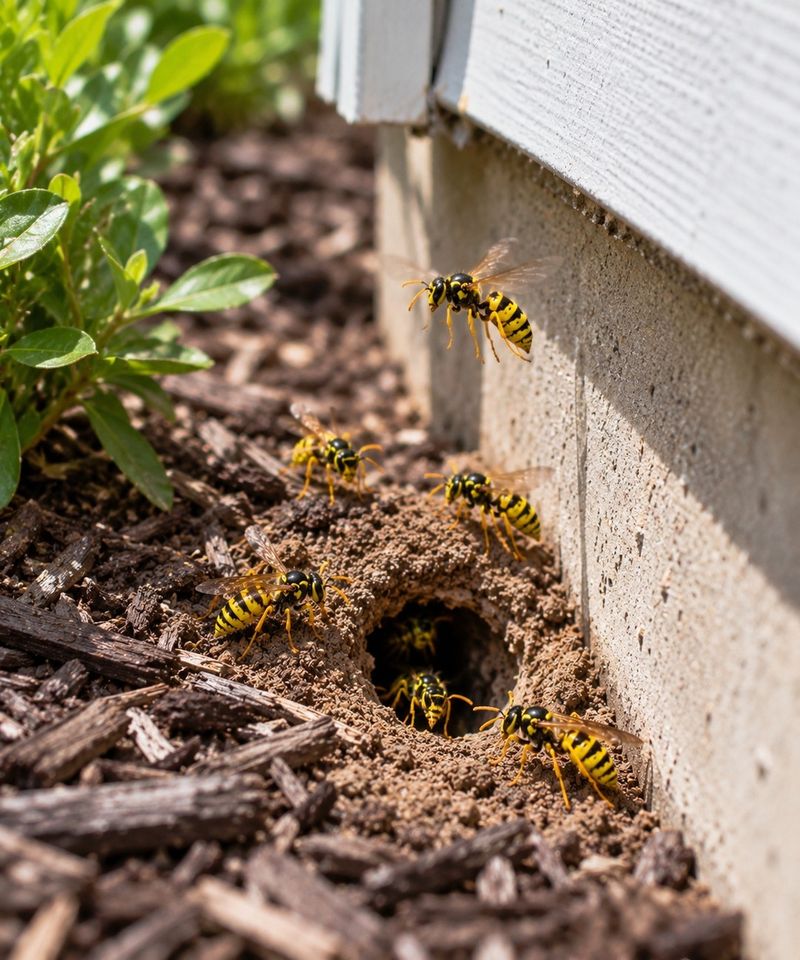
You may picture a gray paper ball hanging from a branch, but that is not the only kind of nest. As UF/IFAS Featured Creatures explains, yellow jackets may build underground or inside cavities.
Florida has eastern and southern yellow jackets, and the black and white bald-faced hornet counts as a yellow jacket too, despite its name.
Because the nest can be hidden, the steady path of insects flying in and out may hint at where the entrance is. Treat that as a reason to stay away from that stretch of yard, not as an invitation to investigate.
Watching from a window or a long way off is plenty. You do not need to confirm what species it is or how busy it is before deciding what comes next.
How close is too close?
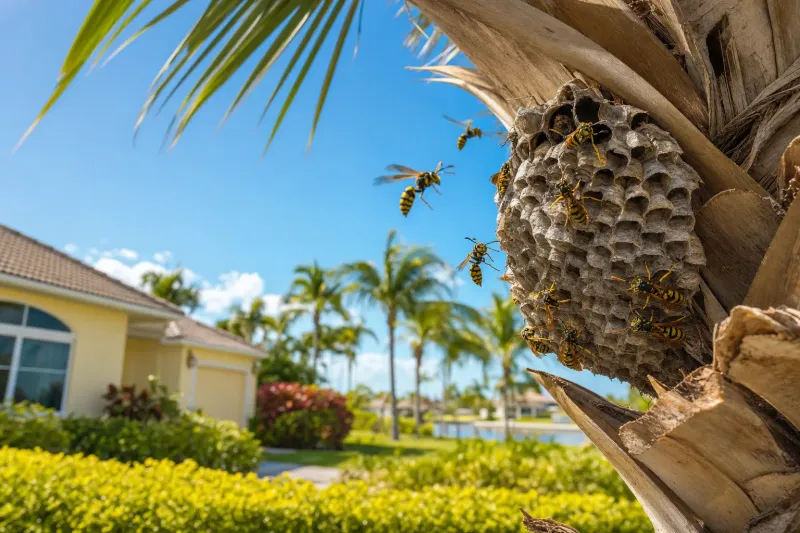
Distance from the house is a weak way to judge a nest. A better question is whether anyone is likely to bump into it while going about a normal day.
Think about where your family walks, plays, eats outside, gardens, and mows.
Picture two nests that are the same number of steps from your back wall. One sits at the far edge of a fenced corner nobody visits.
The other is beside the front step, along the route the mower takes, or near the swing set. The second one is far more likely to be disturbed by accident, even though the two are equally close to the home.
That is the idea behind guidance from University of Georgia Extension, which treats nests in out-of-the-way spots differently from those where people are likely to run into them. A likely accidental encounter raises the stakes.
An out-of-the-way nest may not call for any action at all.
Make this judgment from what you already know about your household. Walk through a typical week in your mind: pets heading out to the yard, kids chasing a ball, a visitor using the side gate, someone trimming hedges.
Do not step closer or measure anything to figure it out.
Wasps can also be an issue around buildings. Penn State Extension notes that nests may be found in wall voids and similar sheltered spots.
If insects seem to be entering a structure, treat the exposure as higher and get help.
An out-of-the-way nest can stay
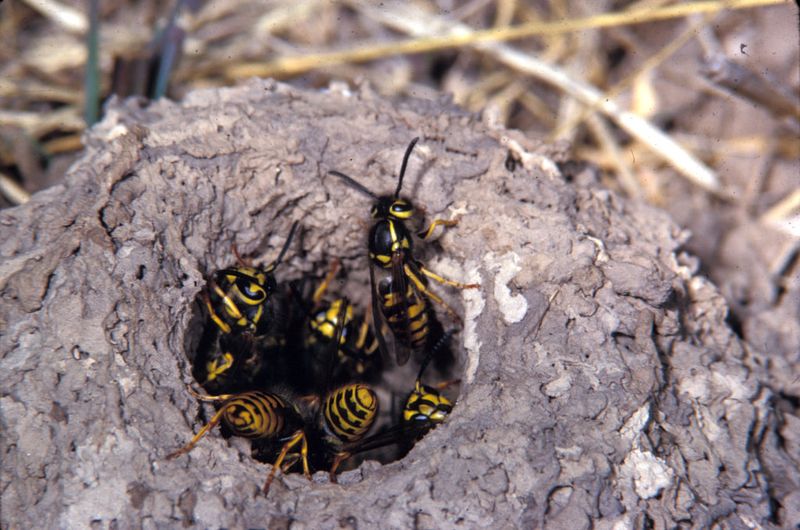
Not every nest is a problem to solve. Where people and pets are unlikely to disturb it, leaving it alone can be a sensible choice.
The University of Georgia Extension says out-of-the-way nests can be left alone, partly because yellow jackets prey on landscape pests.
Those wasps hunt other insects, including caterpillars and flies, and that gives them real value in a yard. Still, that benefit has limits.
It does not outweigh the risk of a nest beside a path, a play space, or a spot where you mow. In busy areas, the safety concern comes first.
Seasons matter too, but be careful with them. UF/IFAS describes colonies in Florida dying off in winter, while queens survive to start new colonies.
Colonies may decline or die seasonally, yet the sources give no single cutoff date for the whole state. Georgia guidance notes colonies can stay active into November there, which shows how much timing varies.
So do not look at the calendar and decide a nest is dead. Do not walk up to check, either.
A quiet nest can still defend itself if disturbed.
If you do leave a nest alone, keep the area off limits. Let everyone in the household know where it is, and avoid yard work nearby.
If your routines change, say you start using that corner of the yard, take another look at your plan.
When should you call a professional?
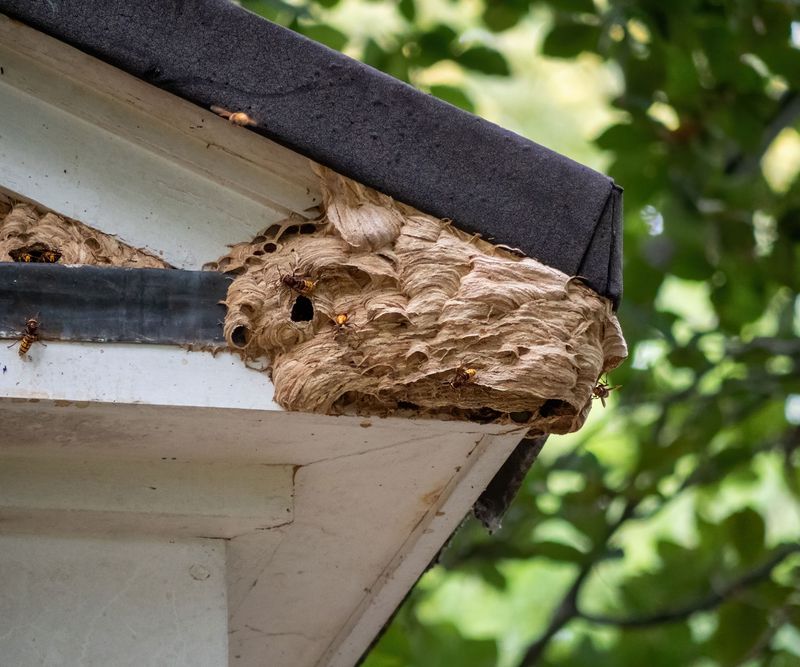
Call a pest management professional when exposure makes an encounter likely. That includes a nest near places people or pets routinely use, such as an entry, a walkway, a patio, a garden bed, or a mowing route.
Here, near people or pets does not simply mean close to the house. It means a spot where accidental disturbance is likely.
Professional help is also the safer choice for a nest that is large or hard to approach. UF/IFAS recommends professionals for nests close to the home and for those that are large or difficult to reach.
Activity connected to a wall or attic is another reason to call, since the nest cannot be seen or reached safely. UF/IFAS Featured Creatures also describes nests in cavities, which are hard to judge from outside.
If insects are going in and out of a wall, do not plug the opening. Penn State Extension warns that wasps may chew a new route into the living space.
Blocking it could bring them indoors.
Please do not look for a do-it-yourself pesticide recipe, and do not assume any wasp spray will work. Products differ in what they allow, and the EPA explains that using a registered pesticide in a way that does not match its label violates federal law.
Any pesticide use must follow the product label.
When you call, describe where you have seen the insects, which areas your family uses, and whether activity seems tied to a wall or the ground. Keep your distance while you wait for the visit.
Reduce food attractants, not the nest
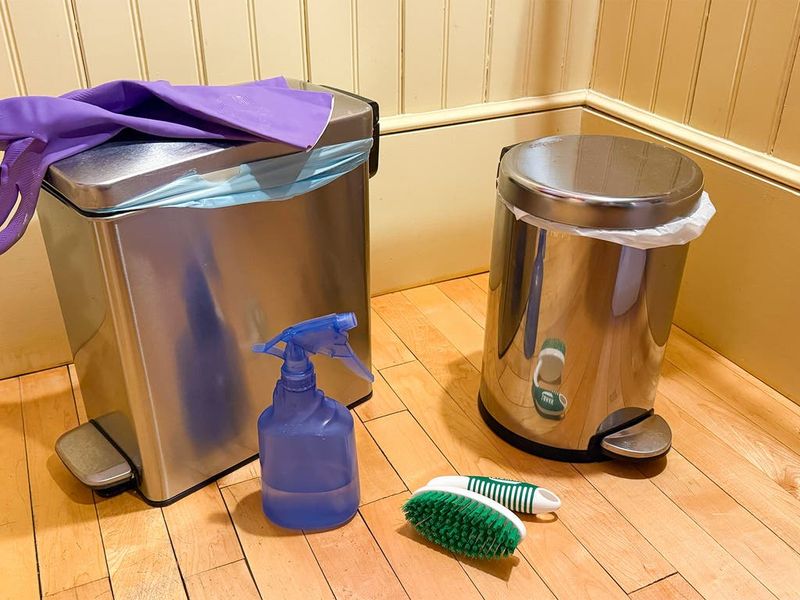
Yellow jackets are drawn to sweet drinks, scraps, and open trash when they go looking for food. Cutting down on those lures can mean fewer wasps hovering around your cookout.
It is a good habit for outdoor eating areas, whatever you decide about the nest.
Start with garbage. Keep cans covered, and rinse bottles and cans before they go in the recycling.
Wipe down tables right after a meal, and clean up spilled food and drinks promptly. Cover dishes and cups when you are eating outside, and check that nobody is about to sip from a can a wasp has crawled into.
Fallen fruit is another draw. If you have trees, pick up the fruit from the ground often and keep it away from patios and play spaces.
Pet food bowls left outdoors can attract insects as well, so bring them in after meals.
The Oregon State University Extension lists steps like these to reduce foraging. They may cut down on wasps visiting your table, but they do not remove or neutralize an active nest.
That difference matters. A clean yard will not make a colony leave, so sanitation is no substitute for a professional assessment when someone is likely to run into the nest.
Think of these steps as a way to make outdoor meals more comfortable while you handle the nest itself safely.
Know when a sting is an emergency
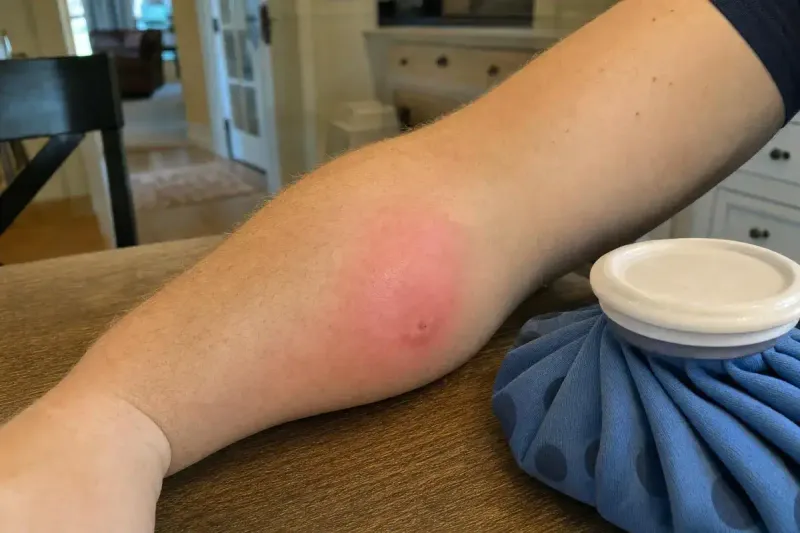
Most stings hurt and swell a bit, but some reactions are medical emergencies. Call 911 if someone has trouble breathing, throat tightness, difficulty swallowing, or swelling of the face or mouth after a sting.
Do not wait to see whether it passes.
MedlinePlus lists these signs among the symptoms that need emergency care after an insect sting. Because yellow jackets can sting more than once, move the person away from the area as you get help, without going near the nest yourself.
People with a known severe sting allergy should follow their clinician’s emergency plan. If a doctor has prescribed epinephrine, use it as directed.
The American College of Allergy, Asthma and Immunology advises using prescribed epinephrine and calling 911 at the first sign of anaphylaxis.
If anyone in your home has this kind of allergy, talk with their clinician before a problem comes up. Make sure everyone who spends time with them knows where the medicine is kept and what the plan says.
A suspected nest near a place they use is a good reason to be extra careful about getting professional help.
Beyond these steps, this article does not cover other treatments. When symptoms are serious or you are unsure, getting emergency help is the safest move.
Make the decision from a safe distance
Keep away first, then judge the nest by how likely anyone is to disturb it. University of Georgia Extension says out-of-the-way nests can stay, and UF/IFAS points to professionals when a nest is too close for comfort.
Closeness to the house alone does not settle it, and no one needs to approach to check on activity.
The best view of a yellow jacket nest is usually the one you never get.
Share this story