When the first cool mornings roll into Florida, cold-blooded animals start hunting for warm spots to soak up the sun. That means snakes, spiders, and other venomous critters often end up on sidewalks, patios, and woodpiles right where people walk.
Knowing who is out there and how to spot them can keep your family and pets safe. Here are ten venomous yard visitors you are more likely to notice during late fall, plus tips on what to do when you meet them.
1. Eastern Diamondback Rattlesnake
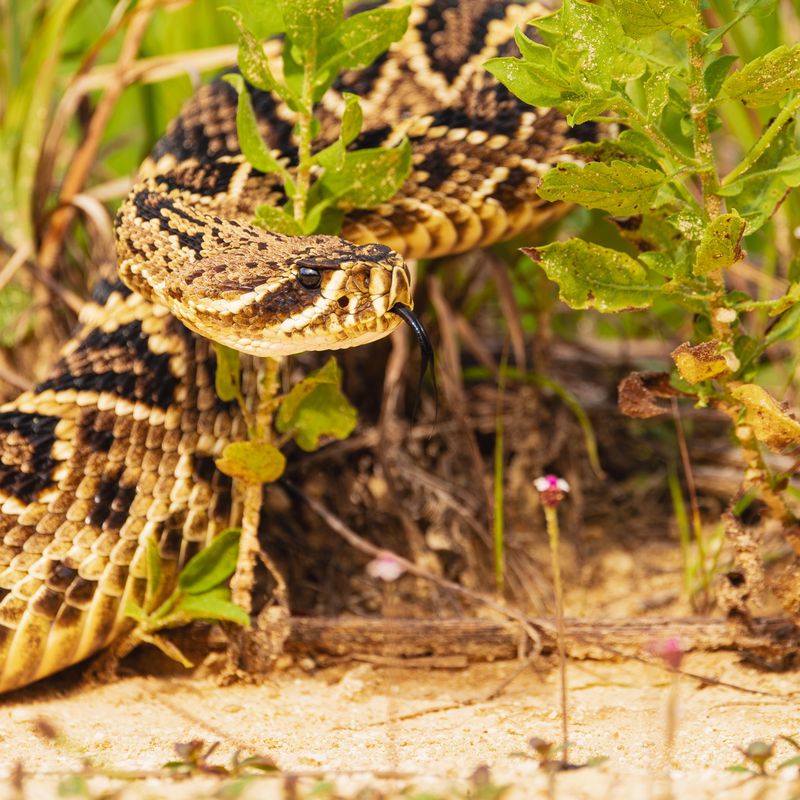
Picture a cool November morning, coffee in hand, and a thick, patterned log stretched across your sunny driveway. That log might be the largest venomous snake in North America.
Eastern diamondbacks can grow over six feet long, and they love warm sand and pavement once temperatures dip.
The bold diamond pattern, outlined in cream, makes them fairly easy to identify. Most will rattle as a warning long before they ever strike.
Give that warning the respect it deserves and back away slowly.
Fun fact: a rattlesnake adds a new rattle segment each time it sheds, not each year. So counting rattles will not tell you its age.
2. Dusky Pygmy Rattlesnake

Small but feisty, the pygmy rattler rarely tops two feet. Its rattle sounds more like a buzzing insect than a warning, so many people never hear it.
Look for a gray body with dark blotches and a faint orange stripe down the back. In late fall, these little snakes curl up in pine straw, mulch beds, and the edges of lawns to catch some heat.
Gardeners pulling weeds are the folks most likely to surprise one.
Bites are painful but rarely deadly for adults. Still, wear gloves when working in mulch and always look before you reach.
3. Cottonmouth
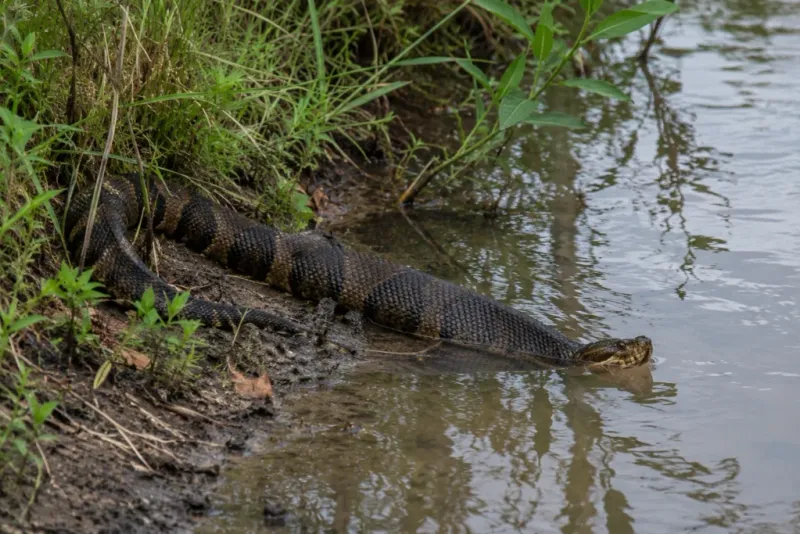
Live near a retention pond, canal, or ditch? Then you have probably met a cottonmouth, or at least a snake you thought was one.
Also called water moccasins, these heavy-bodied snakes bask on banks and docks when the air turns crisp.
When threatened, a cottonmouth opens its mouth wide to flash the bright white lining. Older adults look dark and plain, while young ones have bold bands and a yellow tail tip.
Many harmless water snakes get mistaken for them, so keep your distance either way.
Never try to move one with a stick or shovel. Most bites happen when people try to handle or kill snakes.
4. Eastern Coral Snake
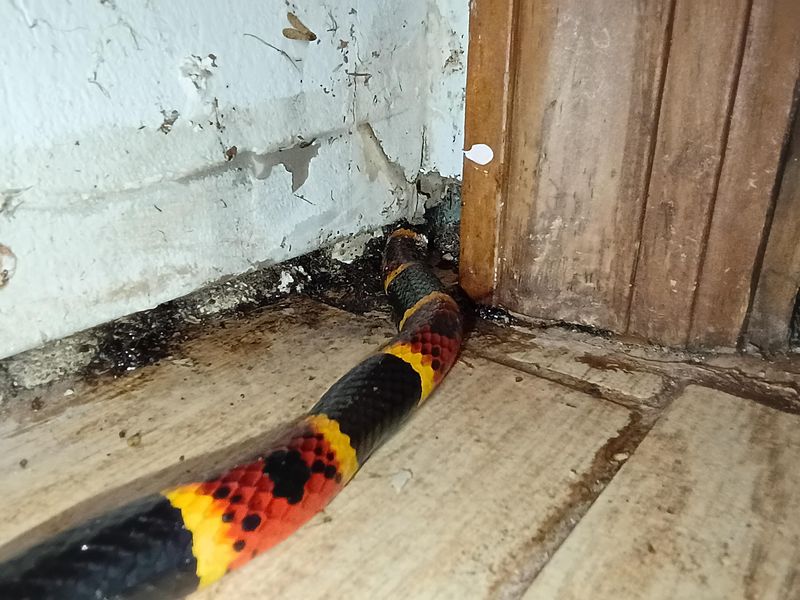
“Red touches yellow, kills a fellow.” Generations of Floridians learned that rhyme for a reason. The eastern coral snake carries some of the most potent venom of any snake in the state.
Shy and secretive most of the year, coral snakes poke out of leaf litter on warm fall afternoons. Their small heads and bright rings make them look almost like toys, which is exactly why kids should never pick one up.
Harmless scarlet kingsnakes share the colors, but on those, red touches black.
Coral snake bites may not hurt much at first. Symptoms can be delayed for hours, so seek medical care right away after any bite.
5. Southern Black Widow
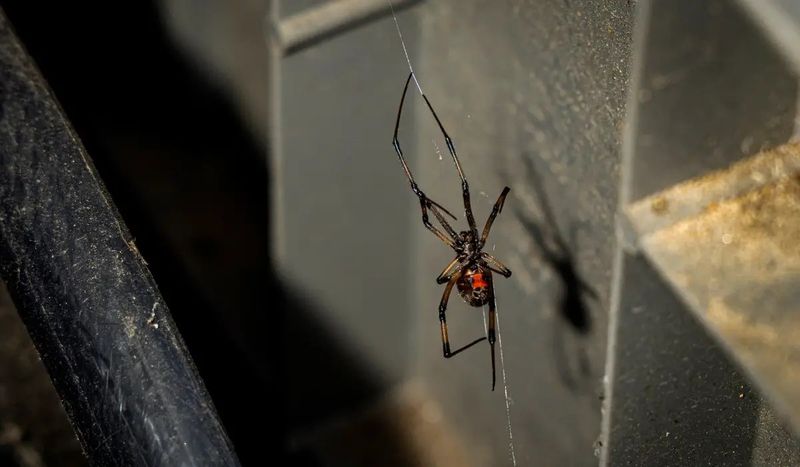
Shiny, black, and marked with a red hourglass underneath, the southern black widow is a true classic. Females build messy, tangled webs in dark, protected corners.
As nights cool, you will find more of them in garages, sheds, irrigation boxes, and under patio furniture. People get bitten when they reach blindly into these spots.
A quick flashlight check before grabbing stored pots or shoes goes a long way.
Her venom affects the nervous system and can cause cramps and sweating. Only the female is dangerous, since males are tiny and harmless.
6. Brown Widow
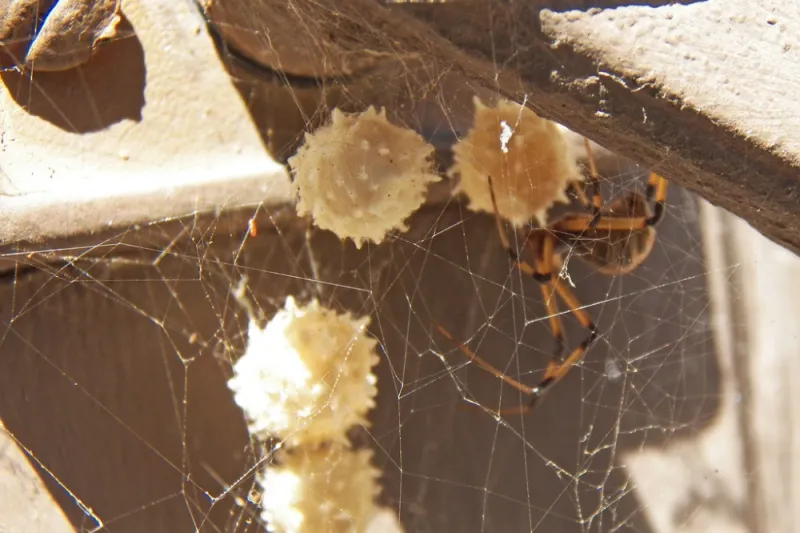
Flip over a plastic patio chair in Florida and there is a good chance you will find a brown widow. These newcomers arrived decades ago and spread fast across the state.
Brown widows have a tan, mottled body with an orange hourglass. The easiest clue is their egg sac, which looks like a tiny spiked ball, almost like a sweetgum seed.
Mailboxes, grill covers, and playground equipment are favorite hideouts.
Good news: they tend to be timid and deliver less venom than black widows. Even so, brush them away with a stick, not your fingers.
7. Florida Bark Scorpion
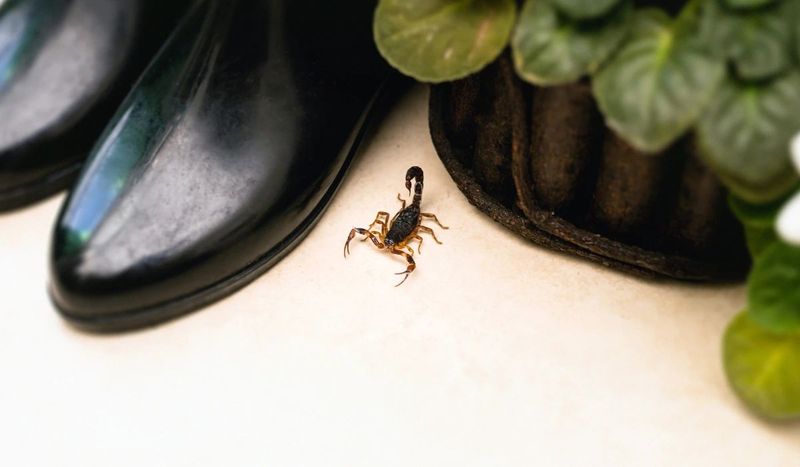
Hauling firewood for the first chilly bonfire of the season? Check each log twice.
Florida bark scorpions love tucking themselves under loose bark and stacked wood.
These slender, yellowish-brown scorpions can climb walls and slip into homes through tiny gaps. Their sting feels like a sharp bee sting, with tingling that may last a while.
For most healthy people it is not dangerous, but young kids and allergic folks should get checked.
Here is a cool trick: scorpions glow blue-green under a blacklight. A UV flashlight at night makes them easy to find around your yard.
8. Puss Caterpillar
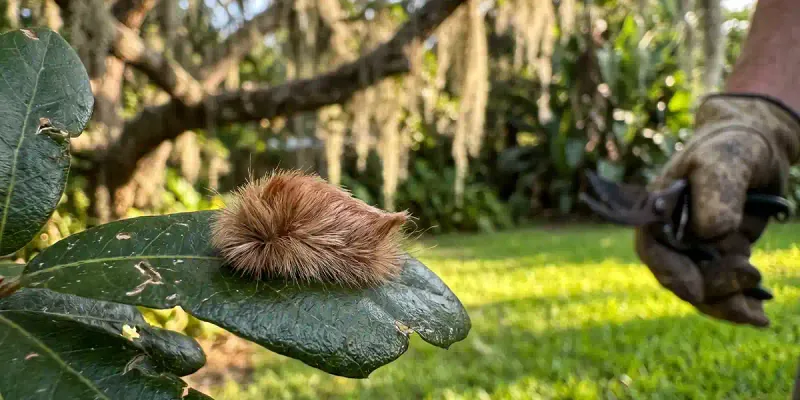
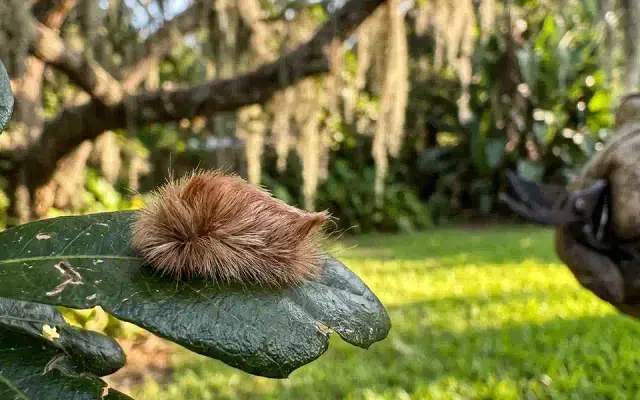
It looks like a tiny fur toupee or a fluffy bit of cat hair. Kids want to pet it.
Please do not let them.
Hidden under that soft-looking fluff are venomous spines that cause throbbing pain, sometimes for hours. Puss caterpillars often have a second generation in fall, so they show up on oaks, citrus, and sidewalks into October and November.
If someone touches one, press clear tape on the skin to pull out the spines. Then wash the area and use an ice pack.
Severe reactions need a doctor.
9. Saddleback Caterpillar
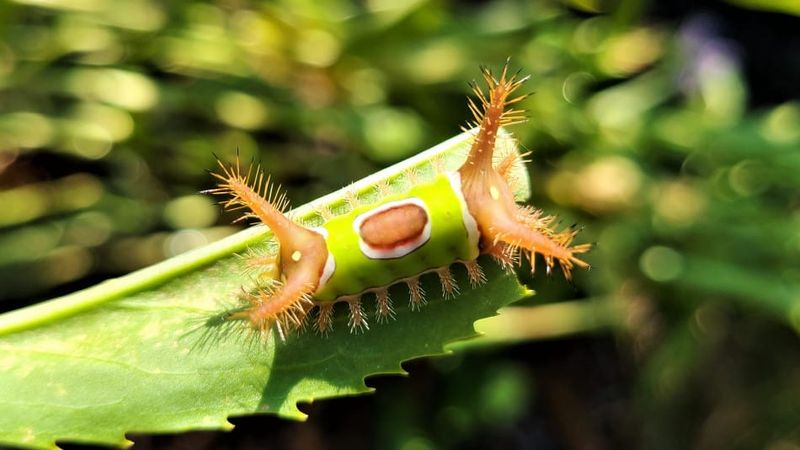
Nature gave this caterpillar a costume: a bright green blanket with a brown saddle right in the middle. The spiky horns on each end are not just for show.
Brush against a saddleback while trimming shrubs or palms and you will feel a sting similar to a wasp. Swelling and itching can follow.
Late fall gardening chores like pruning put people right in their path.
Wear long sleeves and gloves when cutting back plants. Treat stings the same way as puss caterpillar stings, starting with the tape trick.
10. Southern Copperhead
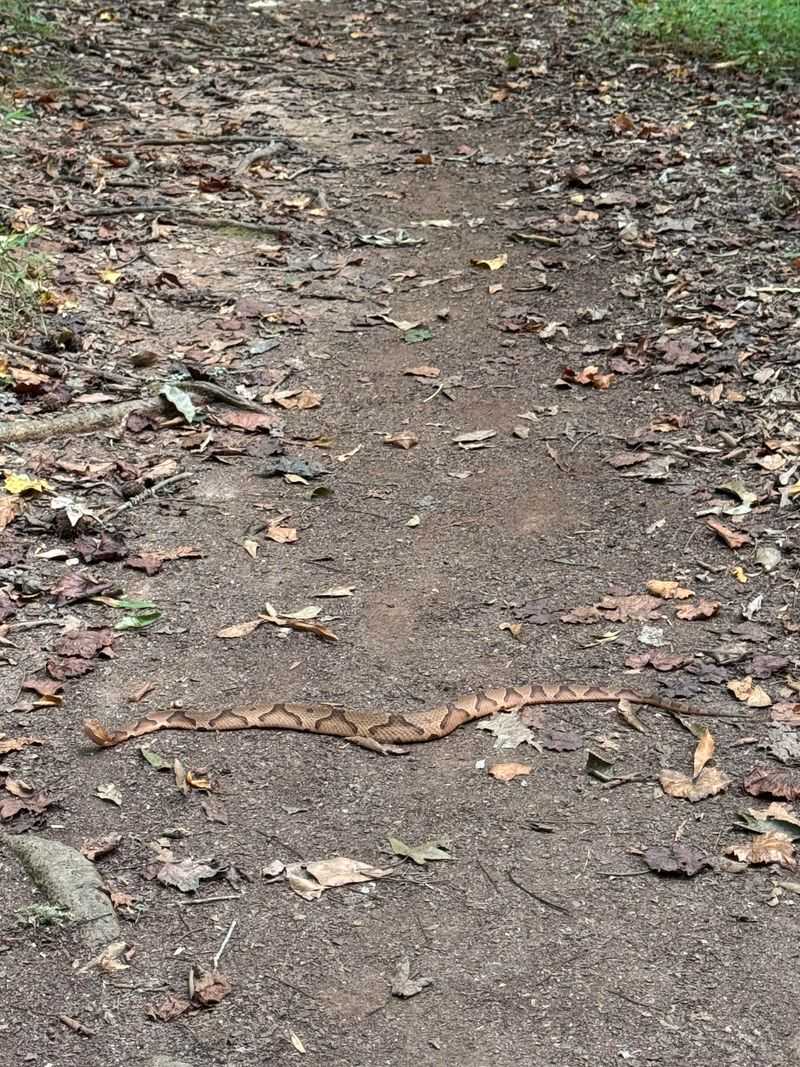
Panhandle residents, this one is mostly yours. Southern copperheads live in north Florida and blend almost perfectly with fallen autumn leaves.
Their coppery bodies carry hourglass-shaped bands that look like a pattern of Hershey Kisses from the side. Because they freeze instead of fleeing, people often step close before noticing.
Raking leaves and walking barefoot at dusk are common ways to get bitten.
Copperhead bites are rarely fatal but still need hospital care. Keep leaf piles away from the house and wear shoes outside, especially after sunset.
A simple plan works best with every critter here: look first, keep your yard tidy, and give wildlife room. Most of these animals want nothing to do with you.
Share this story