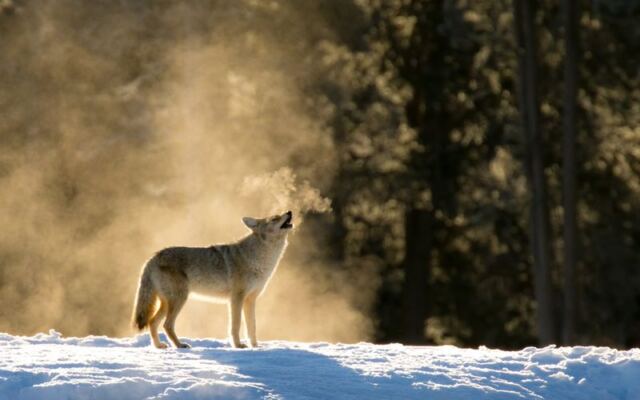
Those late-night howls near your New York home fit a seasonal pattern: coyotes get especially vocal as winter approaches. They howl all year, but the cold months bring a noisy stretch tied to breeding season.
Hearing a chorus can feel spooky, especially if you have a dog or cat. Here is what the sounds can tell you, what they cannot, and what to do around your yard.
Coyotes Howl All Year, with a Vocal Period in Winter
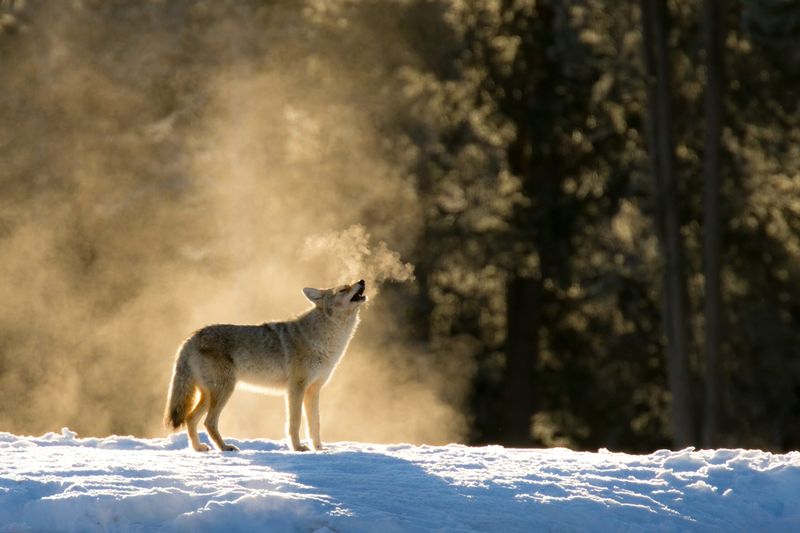
Late November nights can bring a surprising amount of noise from the woods and fields near New York homes. The state Department of Environmental Conservation (DEC) explains that eastern coyotes howl year-round, but they are especially vocal in late summer and early fall and again during the winter breeding season.
That means a howl heard now fits the approaching winter pattern. Winter is a vocal period associated with breeding, yet no single howl can be pinned on breeding.
A coyote calling at 2 a.m. could be doing it for reasons nobody listening from a bedroom can work out.
It also helps to keep the coyote calendar in separate pieces. Winter is the breeding season.
Early spring is when females use dens and raise pups. Late summer and early fall bring another burst of calling, which can involve family groups and young coyotes.
Each stretch has its own story, and they should not be blended together.
Howling is also not limited to the dark or to one season. Coyotes can be heard at other times of day and in other months, so a sudden chorus is not a sign that something unusual has changed.
Think of the winter stretch as a louder part of a sound that is always around, not a new event.
What a Howl Can Tell You
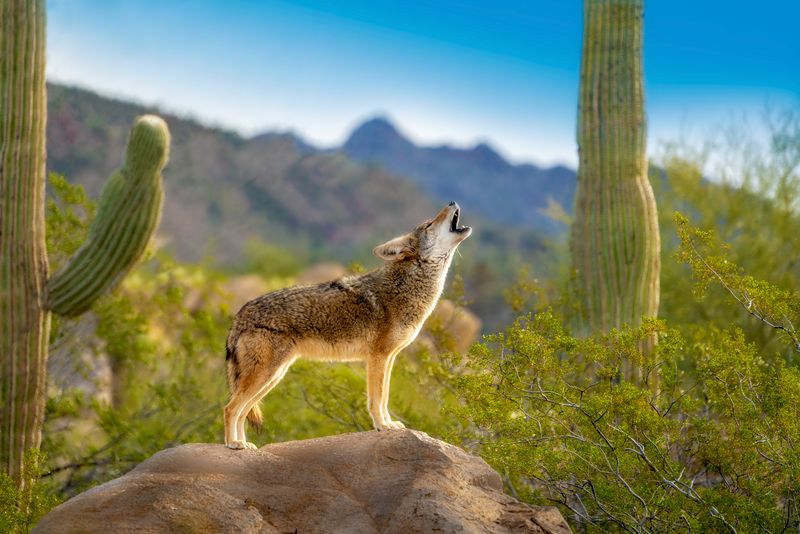
Coyotes use howls and yips to stay in touch. According to DEC, these calls can communicate how a territory is being used and help coyotes keep track of other coyotes nearby.
In plain terms, it is a way of saying who is where without having to meet face to face.
That is a useful picture, but it stops short of translation. A sound drifting through your window does not come with a label.
You cannot tell whether it is a warning, a call between mates, or a greeting between family members.
You also cannot tell exactly where the caller is standing. A chorus does not prove there is a den close by, and it does not show that pups are in a nearby yard.
Those are guesses, and the sound alone cannot back them up.
What you can say is simple. Coyotes live in the area, and they are talking to each other.
In the colder months they tend to do more of it. The full moon gets blamed for howling a lot, but the research reviewed for this article does not link howling to moonlight, so there is no need to check the calendar for answers.
A Family Chorus Can Sound Like a Crowd
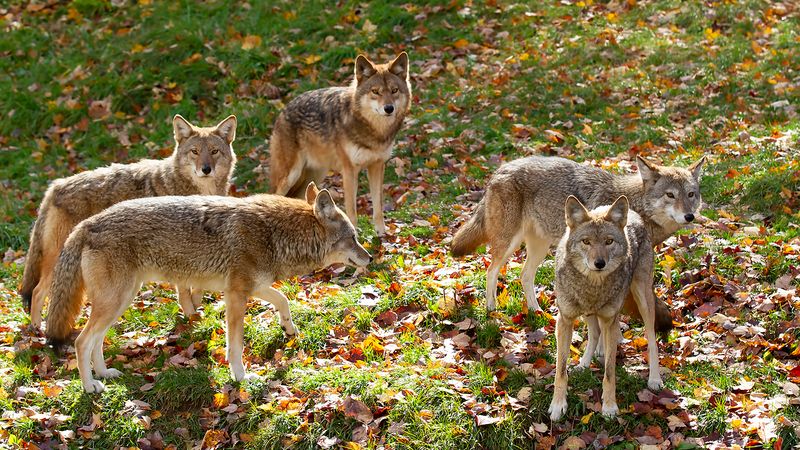
Ever heard a burst of yips and howls that sounded like a dozen animals? A DEC description of the eastern coyote says a typical family unit is an adult pair and that year’s pups, and a chorus that sounds like many coyotes may come from only five or six animals.
Our ears are not great at counting. In a 2017 study in Texas, participants listened to recordings of howling and consistently overestimated the number of coyotes by nearly twofold.
That result came from Texas participants hearing recordings, so it is not a measurement of New York residents or neighborhoods. It simply shows why counting by ear is shaky.
Distance adds another twist. Howls can carry well beyond the edge of your property, and how far they travel depends on conditions such as terrain and weather.
The same paper mentions audibility of up to about 3.2 kilometers, but that is not a fixed rule for every night or every yard.
So a loud chorus cannot establish how many callers there are or where they are. It may be a small family a good way off.
A practical habit is to describe what you heard, such as a series of howls from the direction of the woods, without guessing at numbers or distance.
Hearing a Howl Does Not Mean Coyotes Are in Your Yard
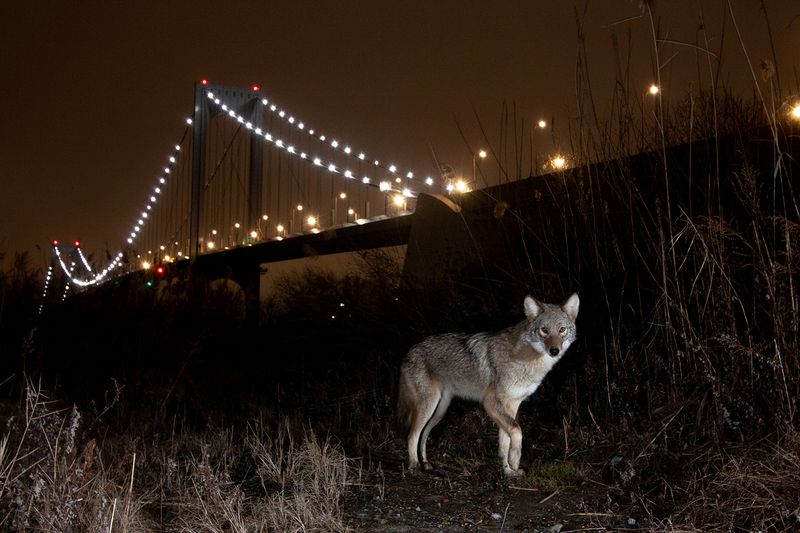
Coyotes are part of the landscape in New York, including suburbs and cities. DEC notes that they can live in suburban and urban areas, so hearing or even glimpsing one does not by itself mean danger.
The concern lies in behavior, not in the sound. DEC’s coyote incident procedures focus on actions such as approaching people, repeatedly lingering, or threatening pets.
A chorus echoing across the neighborhood is none of those things.
Say you step out with your dog and hear howls from far off. That alone is a reason to stay aware, not a reason to panic.
Now say a coyote walks toward you in daylight and does not leave when you make noise. That is a different situation and deserves a report, as covered in DEC’s coyote conflicts guidance.
None of this promises that a coyote is far away or harmless every time. Wild animals are unpredictable, and pets are smaller than people.
The sensible approach is to keep a calm mind and sharpen your habits, which the next section covers.
Reduce Food Attractants and Supervise Pets
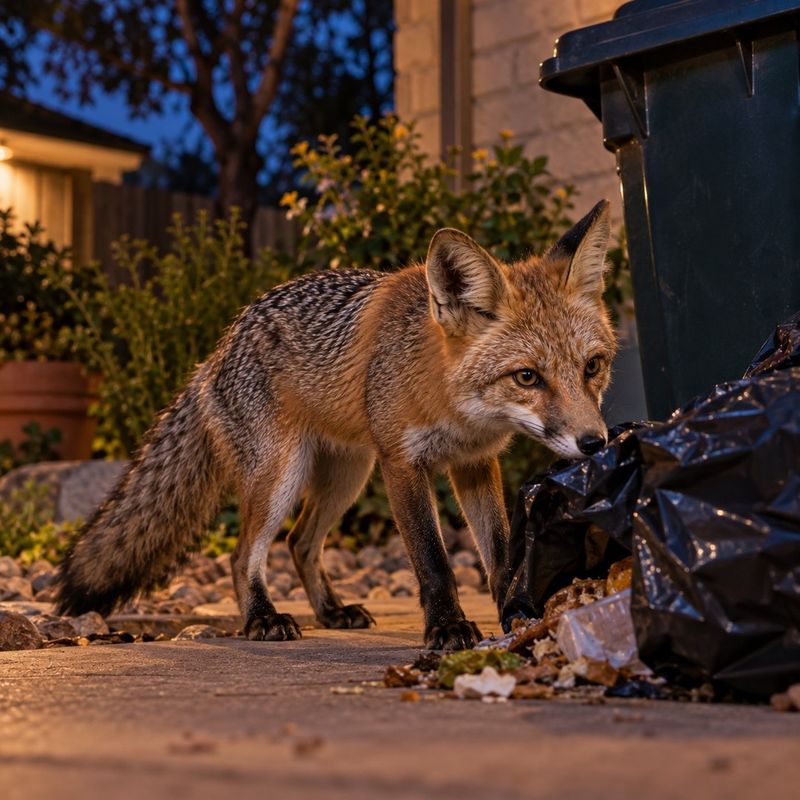
Good habits matter whether or not you ever see a coyote. DEC’s advice starts with one firm rule: do not feed coyotes.
Fed animals lose their natural wariness, and that is how ordinary neighbors turn into problem animals.
Next, take a walk around your property and look for easy meals. Keep pet food indoors, especially overnight.
Use garbage cans with tight lids, or store them in a garage or shed until pickup day. Fallen birdseed and fruit under trees can draw small animals, which in turn can draw coyotes.
Pets need attention too. DEC recommends supervising them outdoors, especially at dusk and at night, and walking dogs on a leash.
Cats are safest indoors after dark. If your dog likes a late bathroom break, go along and stay close instead of leaving the door open.
These steps reduce attractants and make any encounter easier to manage. They do not guarantee that coyotes will stay away, and they are not a sign that a howl means a visit already happened.
Think of them as routine safety, like locking a door.
If a Coyote Approaches, Keep Your Distance

Hearing howls is one thing. Having a coyote walk your way is another, and it calls for a clear plan.
The first rule is simple: do not approach the animal. Give it room and let it move on.
If a coyote comes toward you, DEC advises that you stand tall, make yourself look large, and make noise if it lingers. Shouting, clapping, or waving your arms are all ways to do that.
Keep a dog close on a short leash, or pick up a small pet if you can do so safely.
Do not feed the animal, chase it, or try to catch it. Any of those moves can make a tense moment worse and put you or your pet at risk.
Back away calmly while keeping an eye on it.
A coyote that seems unafraid of people, keeps coming closer, or hangs around should be reported. DEC’s guidance on coyote conflicts says to contact your local police and a DEC regional office about bold behavior.
A quick report helps officials spot patterns in your area.
Use the Sound as a Cue for Awareness, Not Alarm
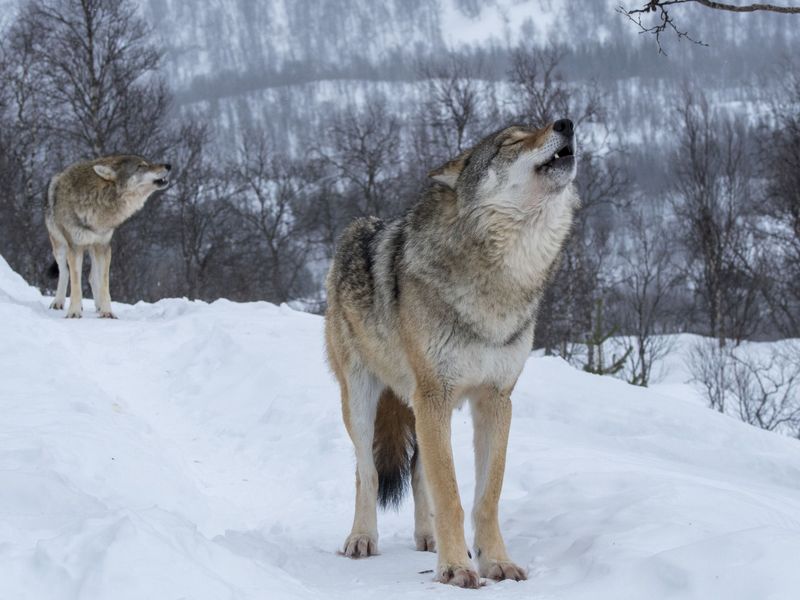
Winter is a vocal season for coyotes, and DEC links it with breeding, so more howls are no surprise. Still, a single call cannot tell you why the animals are singing or how close they are.
Let the sound nudge you toward good habits: lock up food and trash, keep pets close after dark, and know what to do if one approaches. Concerning behavior is what deserves a call to police and DEC.
The howl itself is just the neighborhood’s wild side clearing its throat.
Share this story