A small tower of mud balls can appear in a soggy corner of your lawn almost overnight. It looks a bit like a tiny chimney, and it often has a round hole right in the middle.
Many South Carolina homeowners spot these towers in spring and wonder what made them. Here is how to tell what you are probably looking at, and what to do about it.
What does a crawfish chimney look like?
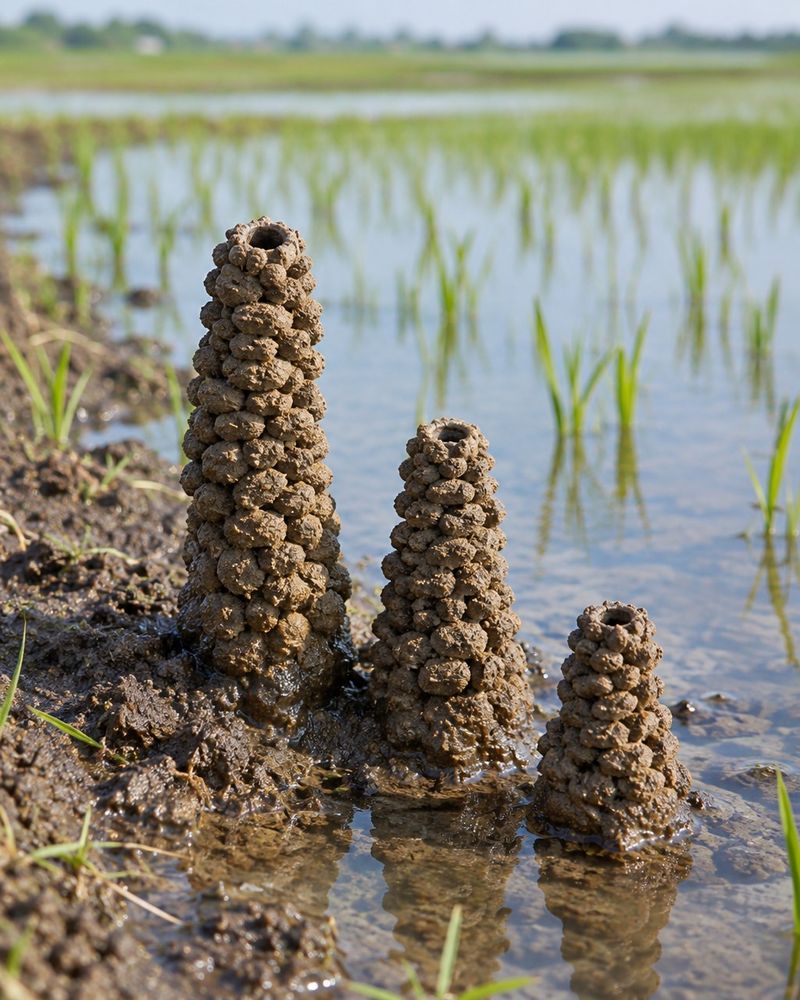
Picture a little tower built from pellets of wet mud, stacked up like clumpy bricks. Clemson Extension describes crawfish chimneys as mud-ball towers roughly 2 to 4 inches high, with a round opening about 1 inch wide at the top.
If your yard structure matches that picture, a burrowing crayfish is a likely builder. Likely is the key word, though.
Nobody can confirm what made a mound without looking at it closely, and a description in an article cannot replace an inspection.
Start by checking the shape. A characteristic chimney rises above the ground and has a hole running down through the center.
The mud is usually made of small, rounded balls rather than loose, fluffy soil.
That is different from a generic hole in the grass. Many animals and insects leave openings in lawns, and most of them do not stack up a tower of mud around the entrance.
Clemson’s guide to holes in the lawn covers other common culprits, so it is worth a look if your mound does not fit the tower pattern.
Try a simple comparison. Measure the height with a ruler, check the width of the opening, and snap a photo from the side and from above.
Those details give you a much better basis for a decision, and they help if you decide to ask your county Extension office for a second opinion.
Why do the towers appear in damp parts of the yard?

Burrowing crayfish dig tunnels, and all that dug-out dirt has to go somewhere. NC State Extension explains that they carry soil up and deposit it around the burrow entrance, which slowly builds the chimney-like mound.
These animals are tied to water. They tend to turn up in damp, low-lying ground and in places where water sits fairly close to the surface.
Think of the low spot where puddles linger, the area near a ditch, or the patch that never quite dries out after a storm.
Timing matters too. Clemson says the chimneys commonly show up in spring, when rain keeps the soil soft and workable.
A fresh tower after a wet week is not a surprise.
Treat all of this as a tendency, not a rule. Some yards with soggy soil have no chimneys at all, and the towers may appear in other seasons or in spots that look only moderately damp.
The Clemson fact sheet on crawfish chimneys is a good place to read more about when and where they appear.
A practical clue is to look at where the mounds cluster. If they gather in the wettest section and fade out toward higher, drier ground, that pattern fits burrowing in water-influenced soil.
It does not mean your whole yard has a drainage disaster.
The chimney’s purpose is not fully settled
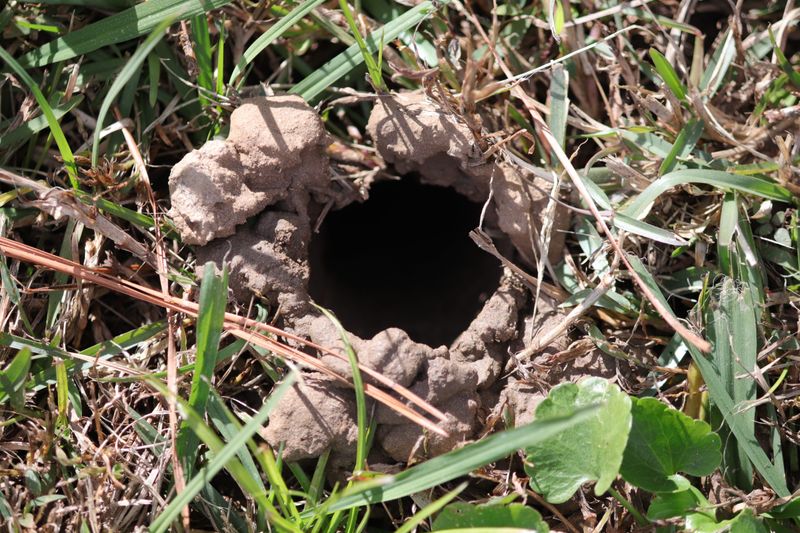
A chimney is part of a crayfish burrow, the visible top of a tunnel system running down into wet ground. Why the crayfish bother to build it is a question scientists are still working on.
One useful finding comes from a peer-reviewed study in the Journal of Crustacean Biology. In field and wind-tunnel tests, researchers found that chimneys can increase airflow through burrows.
That suggests a chimney may help freshen the air below ground.
The same study also noted that the reasons crayfish build chimneys are not fully settled. Airflow is one documented effect, but it does not close the case.
You may come across other explanations, such as the idea that chimneys are escape routes, that only males build them, or that the tunnels serve as nurseries for females and young. Those ideas get repeated, but none of them is a proven general explanation.
Crayfish behavior varies, and much about it is still unknown.
For a homeowner, the takeaway is simple. You do not need to know exactly why a chimney exists to decide what to do about it.
Think of it as a sign of a burrow below, and leave the deeper mystery to the researchers.
The main lawn problem is usually the mound
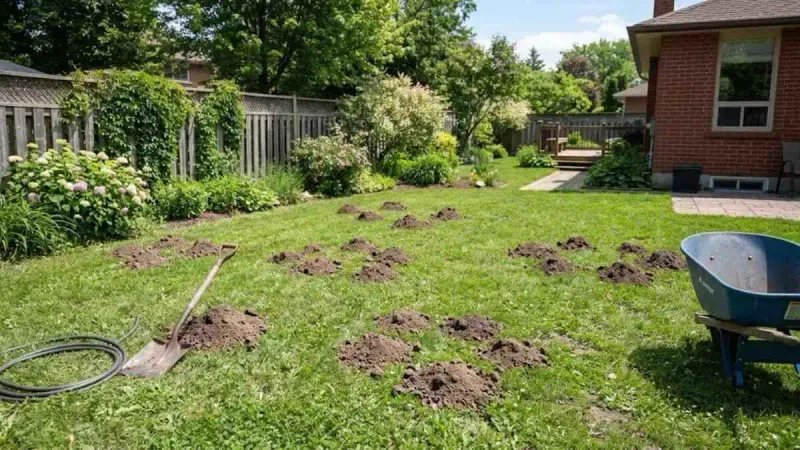
Picture the usual complaint. Someone looks out at an otherwise tidy lawn and sees lumpy brown towers scattered across one corner.
It is an eyesore, but it is rarely a sign that the grass is dying.
NC State Extension notes that the typical objection is how the mounds look or how hard they make mowing, rather than serious injury to the turf. So there is generally no need to panic about your grass.
Mowing is where the real trouble starts. Once a chimney bakes in the sun, it turns hard and brick-like.
A mower blade that hits it can lose its edge, and the machine may fling chunks of mud across the yard.
The simple rule is to avoid mowing directly over hard, dried chimneys. Walk the area before you cut, and you will spot the ones that could cause a problem.
If you cannot deal with a mound right away, mow around it and come back to it later. Wearing closed shoes and keeping pets and kids away from the mowing zone is a sensible habit in any case, since thrown mud can sting.
Soft, fresh mounds are less of a hazard, but they can still smear and leave messy patches on the grass. Tackling them early keeps your mowing routine smooth.
Smooth nuisance mounds and skip chemical treatments
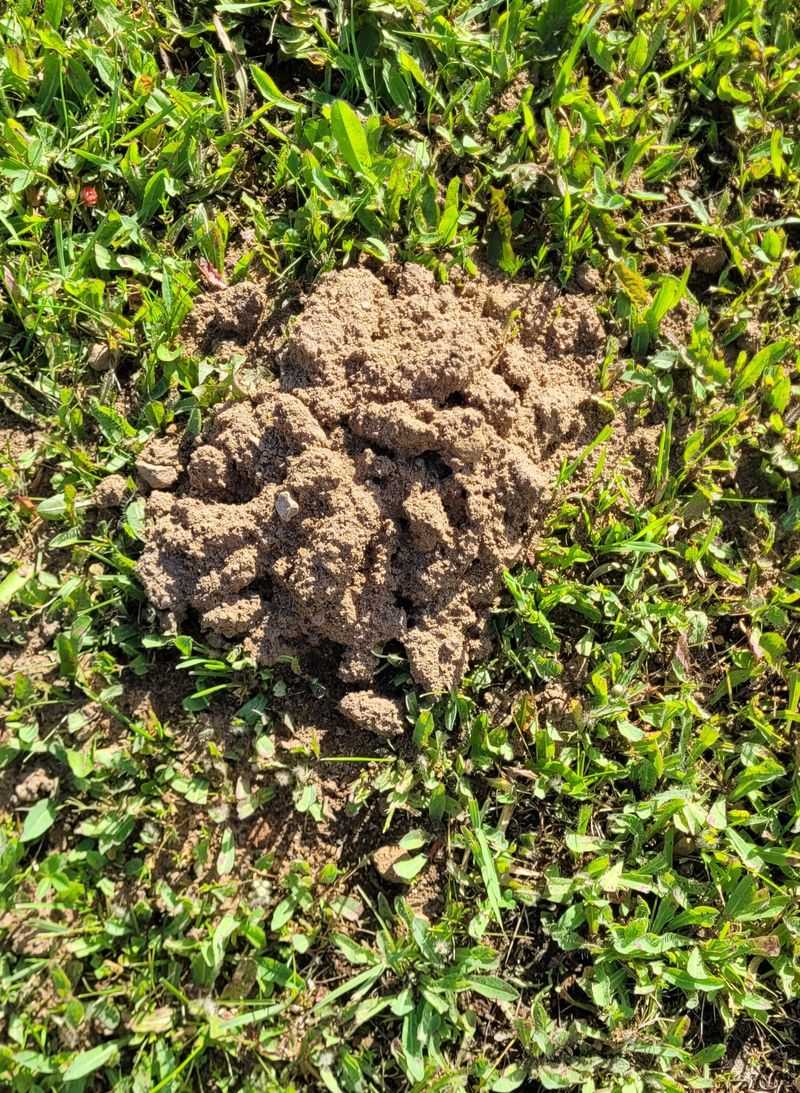
If a mound bothers you, the low-risk fix is also the easiest one. NC State Extension suggests raking nuisance mounds smooth or breaking them up with a stream of water from a garden hose.
Doing this while the mud is still soft takes only a minute or two per chimney. After a rain, the job is even quicker.
You may see new chimneys pop up again, so a quick check every week or two keeps things tidy.
Wiping out the crayfish is a different matter. Reducing their numbers is generally not encouraged, so treat the mounds as a cleanup chore instead of a battle to win.
Changing the drainage in a wet area may discourage crayfish, since they follow damp soil. That kind of work can be costly, though, and it is a big step to take for a few mud towers.
It makes more sense if soggy ground is causing other problems too.
Please skip pesticides and homemade chemical mixes. Clemson says that no chemicals are labeled for crawfish control.
Unapproved treatments can contaminate water and harm people, pets, wildlife, and the wider environment.
Because these burrows sit in water-influenced soil, anything poured into them can travel farther than you expect. A rake and a hose are cheaper, safer, and just as effective for appearance.
A chimney is a clue, not a wetland ruling
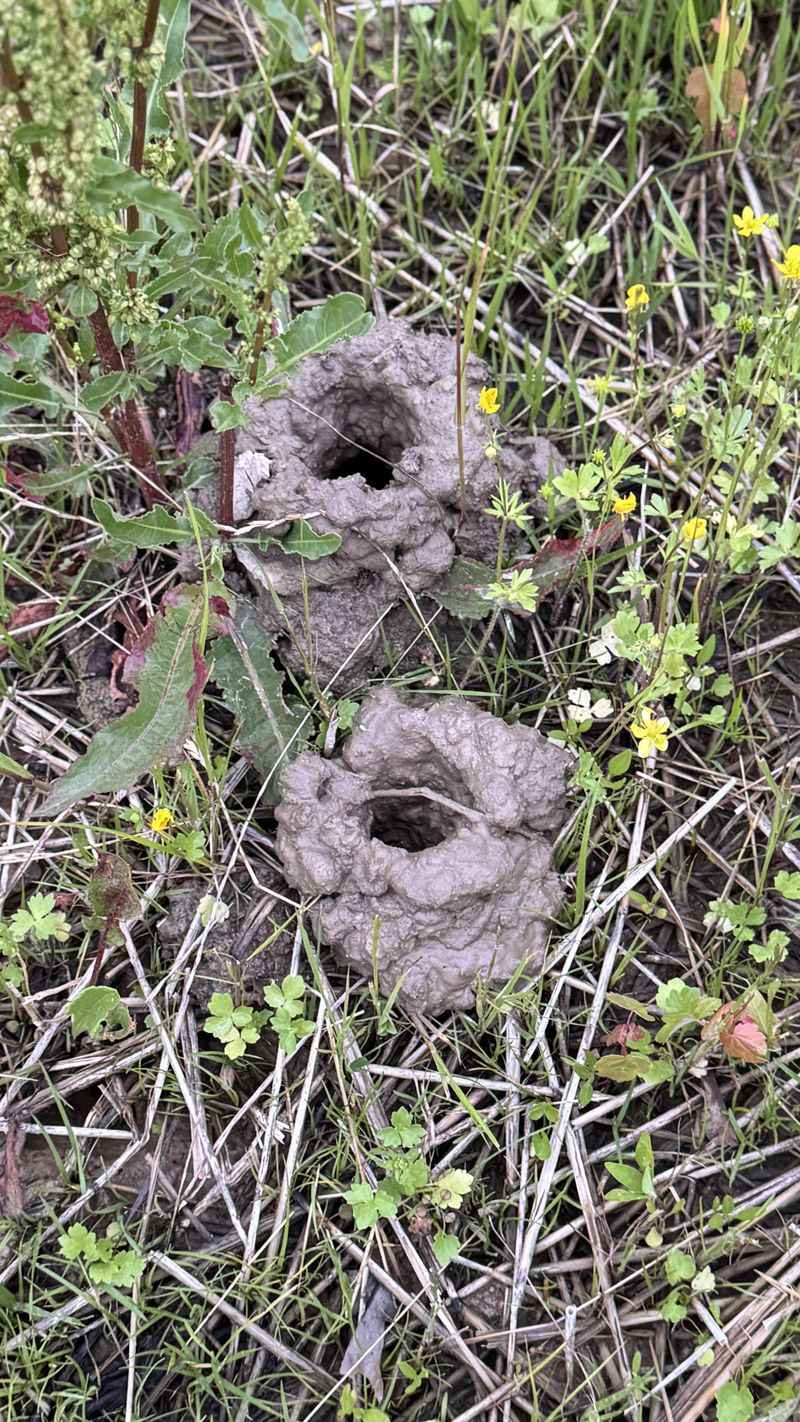
Think of a chimney as a clue, like a footprint. It points to burrowing activity in soil influenced by water, but it cannot tell you the full story about your yard.
Wetlands are a good example. The U.S.
Army Corps of Engineers, in its Atlantic and Gulf Coastal Plain guidance, lists crayfish burrows as a secondary indicator only. Other evidence is needed before anyone can make a wetland call, so a mud tower alone does not change how your property is classified.
The same caution applies to species. A chimney does not tell you which crayfish made it.
The South Carolina Department of Natural Resources describes several burrowing strategies among the state’s crayfish, and it says knowledge about identification and life history is still incomplete. Not every species burrows, either.
If a formal answer matters, such as for a building project, contact your local Extension office or a qualified professional. A photo with a ruler for scale will help them a great deal.
A tower with a round opening in soggy ground is probably crayfish work, but the mound itself cannot diagnose your yard. Sometimes a little mud is only a little mud.
Share this story