Seeing wasps zip in and out of a hole in your yard can make your heart jump. Yellowjackets can sting more than once, and they defend their nests fiercely.
The good news is that a nest does not always mean an emergency. Here is how to stay safe and decide what to do next.
Start by keeping clear
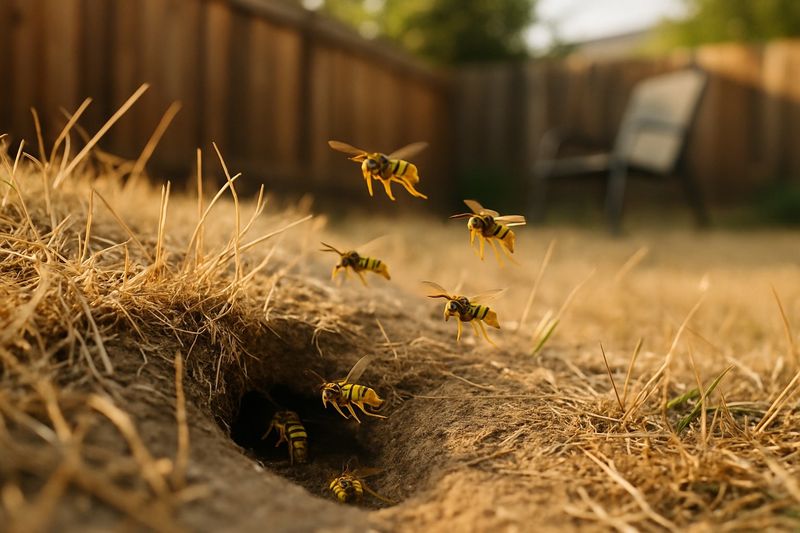
Before anything else, put distance between your household and the spot where wasps keep coming and going. Keep children and pets away from the suspected entrance, and do not poke, probe, or lean in for a closer look.
The entrance can be small and easy to miss, which is part of the problem.
Yard work is a common trigger. Oregon State Extension guidance notes that mowing, weed-whacking, and other work near a nest can disturb the colony.
If you spot a stream of wasps in one area, skip that patch of lawn for now.
Yellowjackets can sting repeatedly, so a disturbed nest can lead to several stings in seconds. If you do bump a nest, leave the area right away and keep moving until the wasps stop following you.
Do not stop to swat at them.
Staying clear is the first step because it costs nothing and lowers your risk right now. Once everyone is at a safe distance, you can calmly work out how much of a problem the nest really is.
Even a short stretch of yard marked off with a few stakes or a chair can remind everyone to keep out. University of Georgia Extension also advises against disturbing nests unnecessarily.
Location—not mere proximity to the house—sets the risk
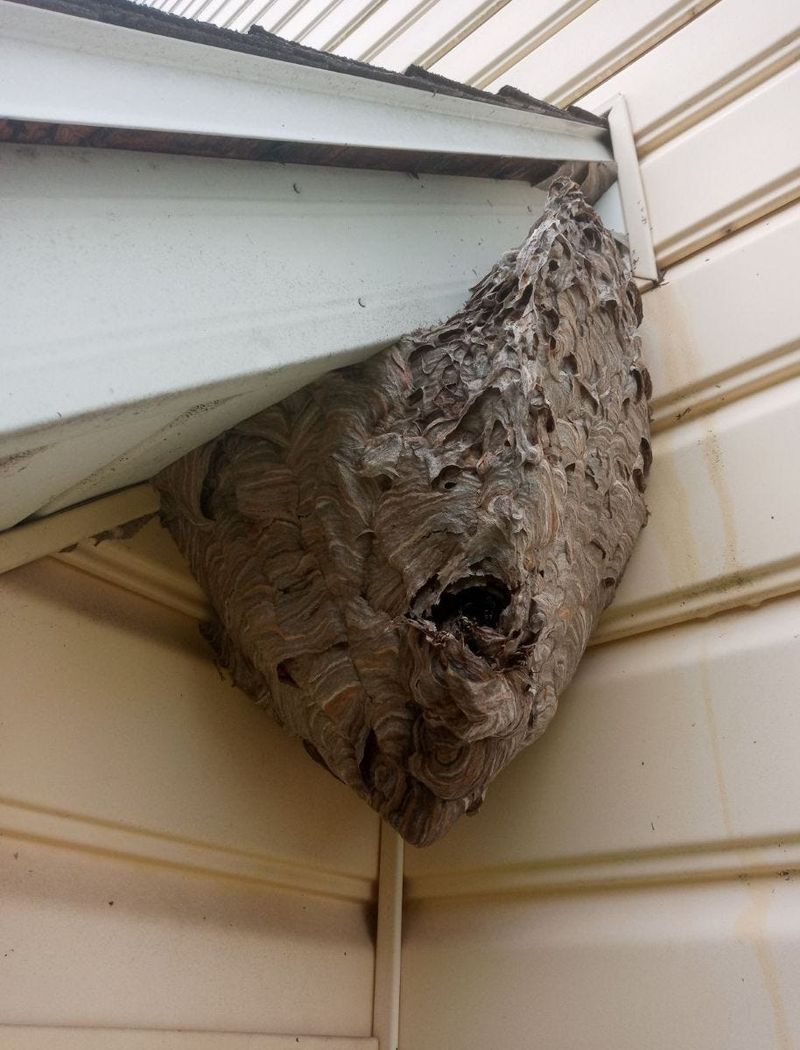
Saying a nest is near your home does not tell you much. What matters is who is likely to bump into it.
A nest on the far edge of a wooded lot is a very different situation from one beside the front steps.
Try a simple walk-through of your property. Ask which spots your family uses daily, such as doors, driveways, garbage can areas, patios, play sets, and the path to the mailbox.
Then ask how close the nest is to each one.
Remember your pets. Dogs sniff along fence lines and dig in the dirt, and they may stumble into an entrance without warning.
A nest by a dog run or a favorite sniffing spot deserves more concern than one in an area nobody visits.
Timing matters too. Clemson Extension says colonies in South Carolina start small in spring and can grow to several hundred workers by August.
That means a quiet nest in May may feel very different by late summer, especially as more wasps defend it.
The goal is to judge likely encounters, not just whether a nest exists on your property. University of Georgia Extension advises leaving out-of-the-way nests alone, which fits this approach.
A nest people and pets are unlikely to approach is a lower risk than one along a route you use every day.
A hole or yellow-and-black insect is not a sure identification
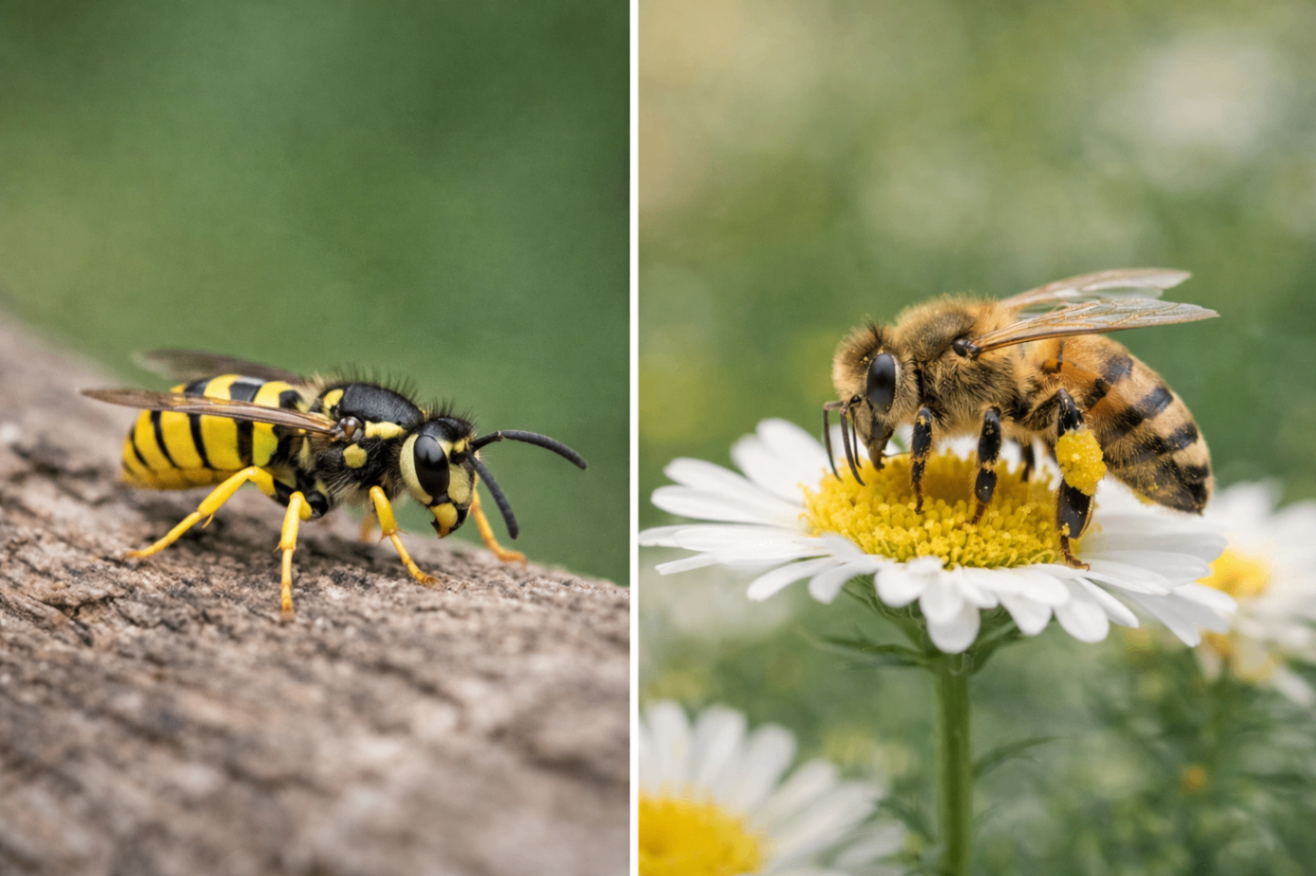
Plenty of stinging insects wear yellow and black. A hole in the ground or a patch of exposed comb may point to yellowjackets, but neither one proves it.
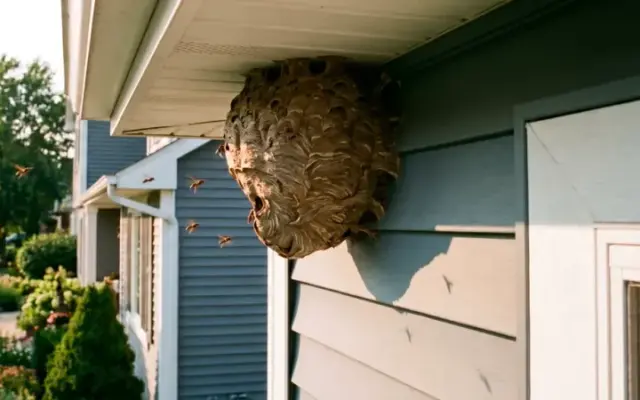
Clemson Extension explains that the name yellowjacket covers several wasp species. Nests can sit underground or in cavities in trees and buildings, so location alone will not settle the question.
Getting the identification right matters because other insects can call for different responses. Bees, paper wasps, and hornets each behave a little differently.
The American Academy of Allergy, Asthma and Immunology also describes several types of stinging insects, not just one.
Do not creep closer to get a better look or snap a photo from inches away. A few minutes of watching from a safe distance is enough to notice how many insects are coming and going and where they enter.
If you need a firm identification, a pest-management professional can sort it out safely.
When in doubt, treat the spot with caution. Distance protects you better than guessing right.
An out-of-the-way nest can often be left alone
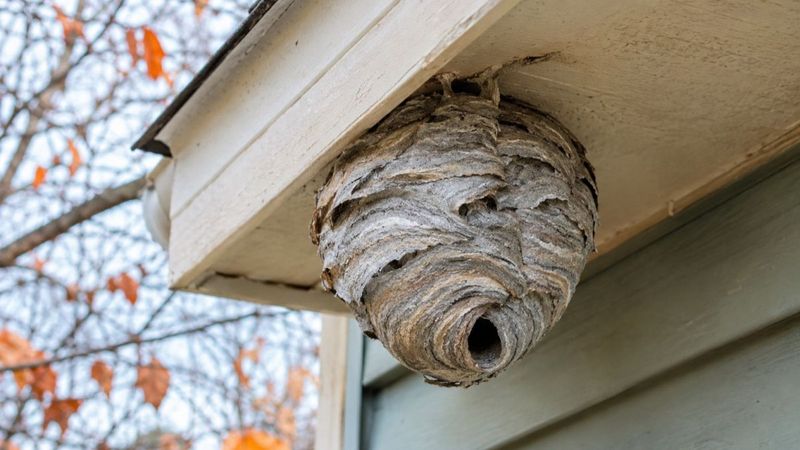
If the nest sits far from the places your family walks, plays, or parks, you may not need to do anything beyond staying away. Yellowjackets are not just pests.
University of Georgia Extension describes them as beneficial predators of other insects, and it advises leaving out-of-the-way nests alone.
Time is also on your side. According to Clemson Extension, colonies usually decline in fall and die with cold weather.
So a nest in a remote corner may simply run its course.
That said, waiting is not the same as ignoring. Keep checking from a distance to be sure nobody has started using that area, such as kids building a fort or a new path being cut through.
Cold weather is also not a quick fix for a nest that people are running into right now. A colony that is still active can be a hazard until it dies off, and a first chilly night does not guarantee every colony is gone.
Finally, a dead colony does not mean a nest-free yard next year. Mated queens overwinter and can start new colonies the following spring, so watch for new activity in warmer months.
A nest near daily activity calls for control
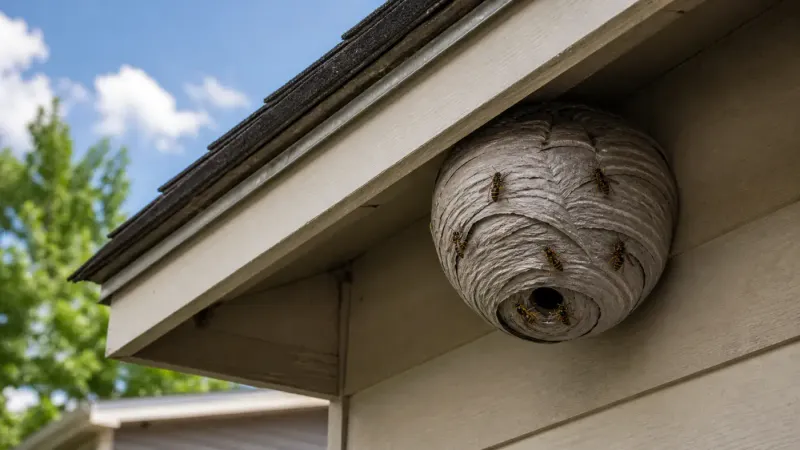
Some nests are simply in the wrong spot. If wasps are coming and going near a front door, a garage entry, a walkway, a play area, or a deck where you eat, someone is likely to get stung.
In those places, arranging control makes more sense than waiting.
A pest-management professional is the safer choice when the nest is in a busy area, hard to reach, or hidden. The Oregon State Extension guidance also points out that treating certain nests is risky for homeowners.
Nests inside walls need extra care. University of Minnesota Extension says wall nests are harder to control and recommends a pest professional.
Spraying into a wall can push insects toward another exit, which could be inside your house.
For the same reason, do not seal up an active entrance yourself. Wasps that cannot get out the way they came in may look for another route.
If you see wasps indoors near a wall or ceiling, keep your family away from that area and call for help.
When you call, describe where the wasps enter, how busy that spot is, and who uses the area. That helps the company plan the visit.
DIY measures have limits
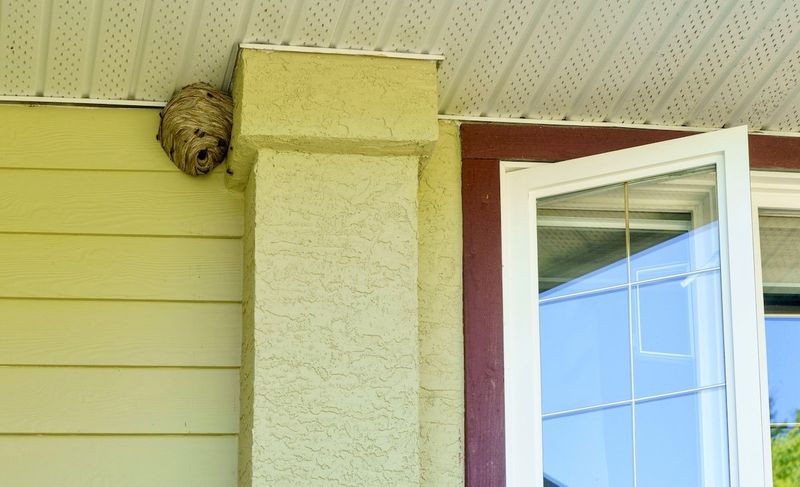
Some home steps can reduce how many wasps wander around your patio. Keep trash covered, wipe up spilled food and drinks, and pick up fallen fruit.
Virginia Tech Extension lists steps like these to cut down on foraging.
Be clear about what they do. They may reduce foraging around the home, but they do not remove an established nest.
Traps are similar. They may catch some foraging workers, but they do not eliminate the colony.
Their results also vary by species and lure, so do not count on one to solve a nest problem.
Some do-it-yourself ideas are flatly unsafe. Do not burn or smoke out a nest, and do not pour gasoline, diesel, bleach, or other household chemicals into it.
NC State Extension also warns against gasoline and fire accelerants. Soapy water is no guarantee either, since University of Minnesota Extension notes liquid treatments may not reach a ground nest.
If someone does use a pesticide, Oregon State Extension says night is commonly recommended because more of the colony is in the nest. That does not make a concealed or hard-to-reach nest safe for a homeowner to treat.
Always follow the specific product label. The EPA explains that using a registered pesticide in a way its label does not allow violates federal law, and a label such as this wasp and hornet killer example shows the kind of directions to read first.
Severe sting symptoms need emergency care
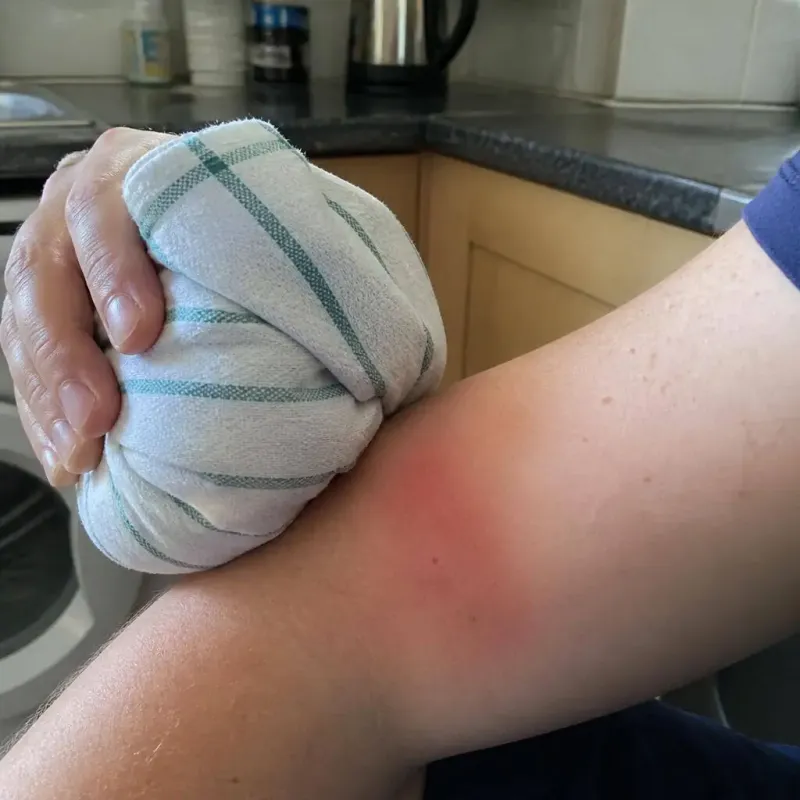
Most stings hurt and swell, but some people react much more strongly. According to the American Academy of Allergy, Asthma and Immunology, signs of a severe allergic reaction include swelling of the throat or tongue, trouble breathing, dizziness, and loss of consciousness.
If any of these happen after a sting, get emergency medical care right away. Call 911 rather than waiting to see if symptoms pass or driving yourself.
Anyone with a known severe sting allergy should follow the emergency plan from their clinician. That plan may include carrying prescribed medicine and knowing when to use it.
People with this kind of allergy should not try to treat a nest themselves, even a small one. Let someone else keep watch from a distance, and arrange professional help if the nest needs to be dealt with.
Make the next move based on exposure
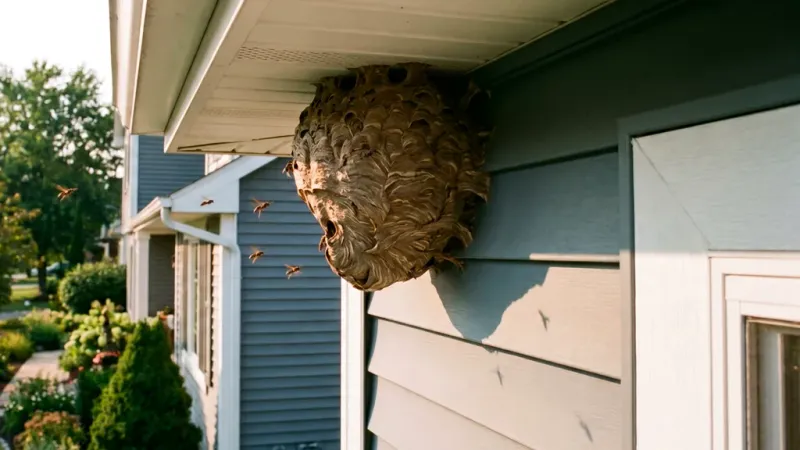
Start by keeping people and pets away. If the nest is far from daily routines, you can often leave it alone and watch from a distance.
If it is near a path or door, or if it is hidden or hard to reach, arrange professional control. Severe allergic symptoms mean emergency care.
A nest only becomes a problem once someone is likely to meet it.
Share this story