South Carolina yards are full of life, from chirping crickets to sunbathing lizards. A few of those backyard neighbors, though, carry venom that can hurt you, your kids, or your pets.
Knowing what they look like is the best way to stay safe without panicking every time something moves in the grass. Here are ten venomous critters worth learning to spot before your next round of yard work.
1. Copperhead
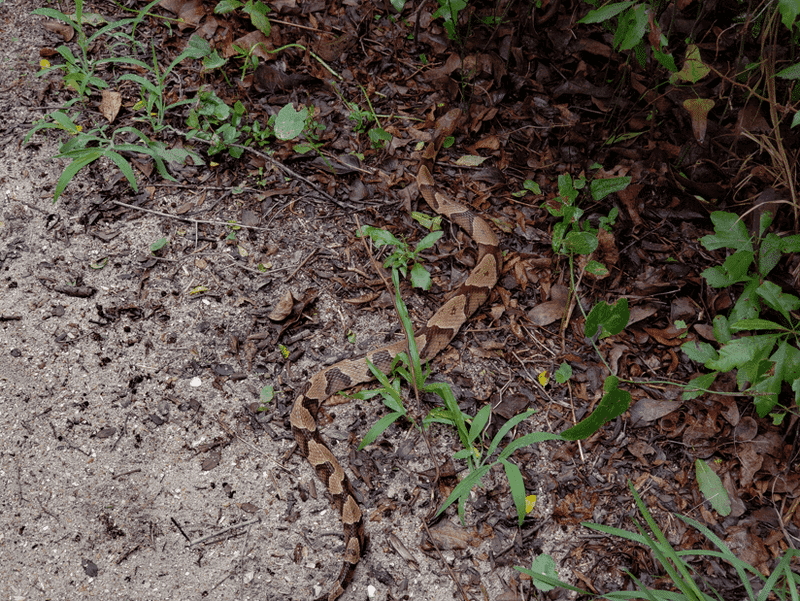
Ask any South Carolina gardener about a close call, and odds are the story involves a copperhead. These snakes cause more bites in the state than any other species, mostly because they blend into leaf piles so well that people step right next to them.
Look for a tan or pinkish body crossed by darker chestnut bands shaped like hourglasses or Hershey’s Kisses. The bands are wide on the sides and skinny along the spine.
Young copperheads have bright yellow-green tail tips they wiggle to lure frogs.
Copperheads usually freeze rather than flee, which is why bites happen. Wear gloves when pulling weeds, and use a rake before reaching into mulch or woodpiles.
Their bites are painful but rarely deadly, though a trip to the ER is always the right call.
2. Timber Rattlesnake
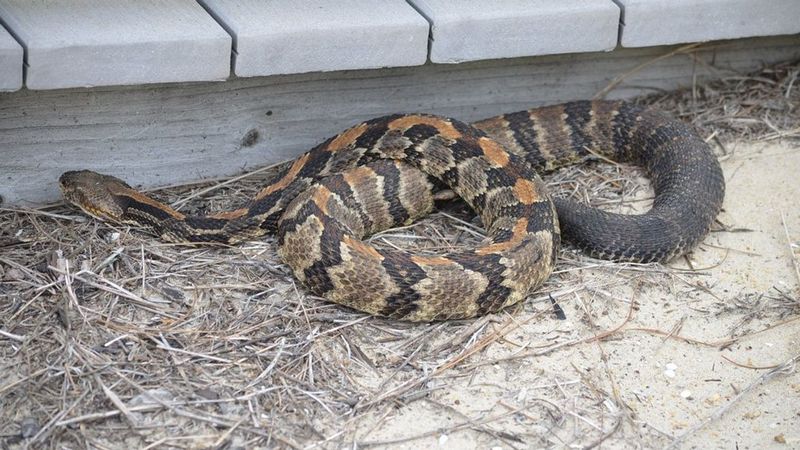
Lowcountry folks call it the canebrake rattler, and it has a calm reputation that surprises people. A big one can stretch past five feet, yet it often lies perfectly still and lets hikers pass without a single buzz.
Spotting one means looking for dark, zigzag chevrons across a grayish or pinkish-tan body. Many South Carolina specimens have a rusty orange stripe running down the spine.
The tail is solid black, ending in that famous rattle.
Yards that border woods, swamps, or farm fields see these snakes most often. Their venom is potent, so give them plenty of room.
If one shows up near your house, call a wildlife removal pro instead of grabbing a shovel.
3. Eastern Diamondback Rattlesnake
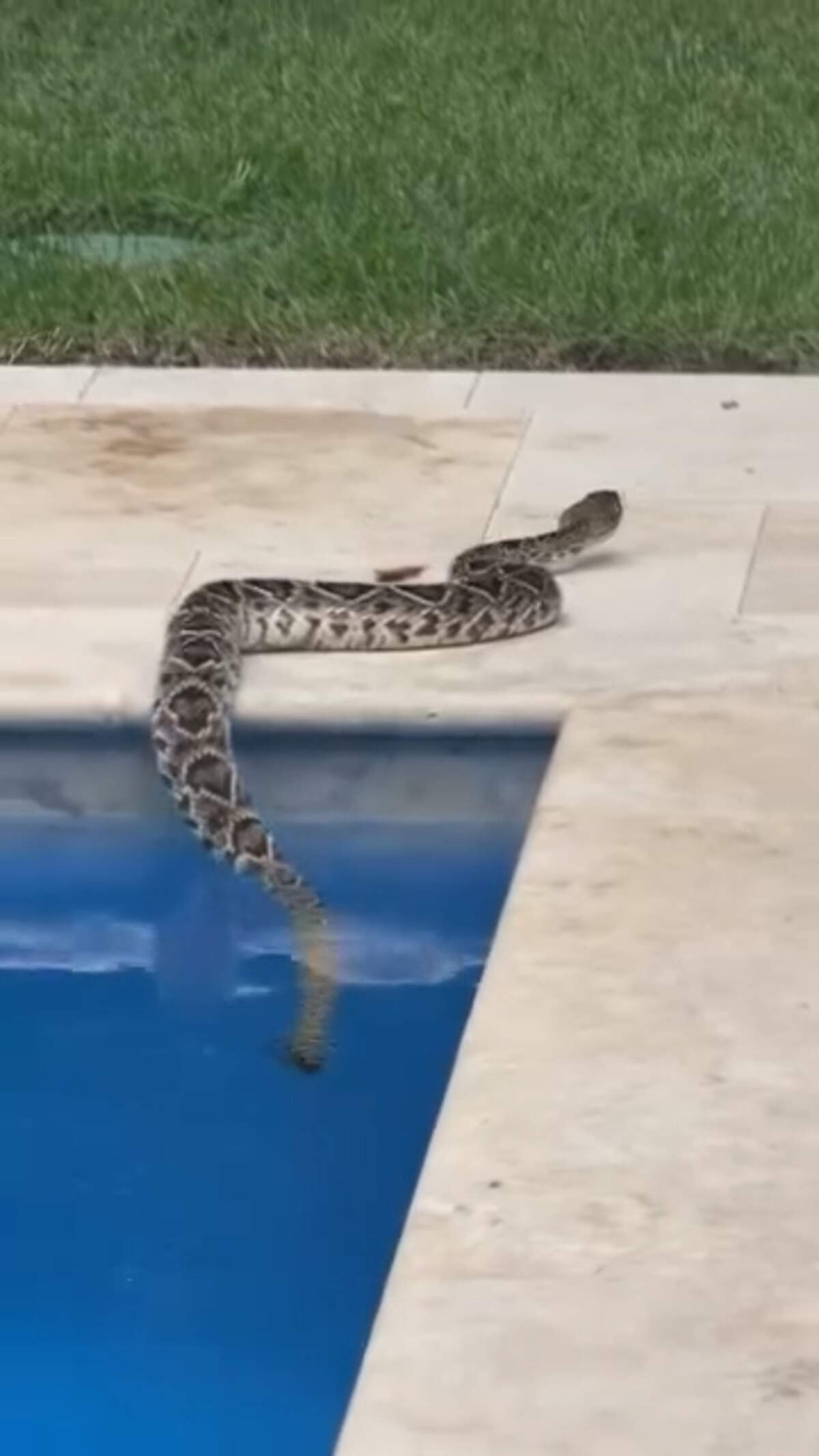
Picture the heaviest venomous snake in North America, and you’ve got the eastern diamondback. Adults can weigh close to ten pounds, making them a true giant among rattlers.
Bold, dark diamonds edged in creamy yellow march down the back like a fancy quilt pattern. Two pale lines run diagonally across each side of the face.
Once you see one, you won’t forget it.
Diamondbacks prefer sandy pinelands near the coast, so homeowners in Beaufort, Charleston, and Horry counties should stay alert. Sadly, their numbers are shrinking due to habitat loss.
Keep your distance, admire the pattern, and let it move along on its own.
4. Pigmy Rattlesnake
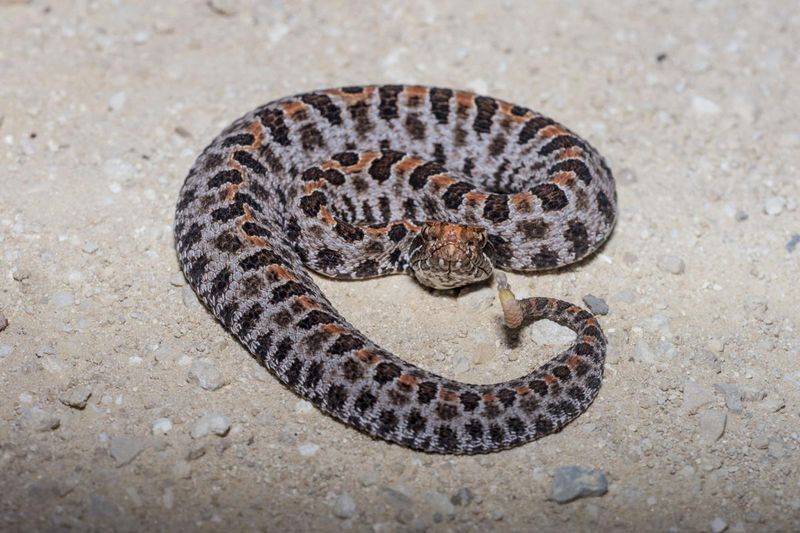
Small but feisty sums up the pigmy rattlesnake perfectly. Most adults measure under two feet, and their tiny rattle sounds more like an insect buzzing than a warning.
Gray bodies with dark, roundish blotches along the back and sides are the giveaway. Many have a reddish stripe down the spine.
Because they’re so small, kids and dogs are more likely to stumble on them in pine straw or near ponds. A bite rarely threatens an adult’s life, but it hurts a lot and needs medical care.
Teach little ones that any snake with a rattle, even a tiny one, is a hands-off snake.
5. Cottonmouth

Here’s a fun fact that saves a lot of harmless snakes: most “water moccasins” people report are actually common water snakes. Real cottonmouths have a few clear traits that set them apart.
They’re thick and heavy, usually dark olive, brown, or nearly black. The head is blocky, with a dark stripe through the eye.
When threatened, they gape wide to flash the cotton-white inside of their mouth.
Another clue is how they swim. Cottonmouths float high with their whole body on the surface, while harmless water snakes swim lower.
If your property touches a pond, marsh, or drainage ditch, keep that difference in mind.
6. Eastern Coral Snake
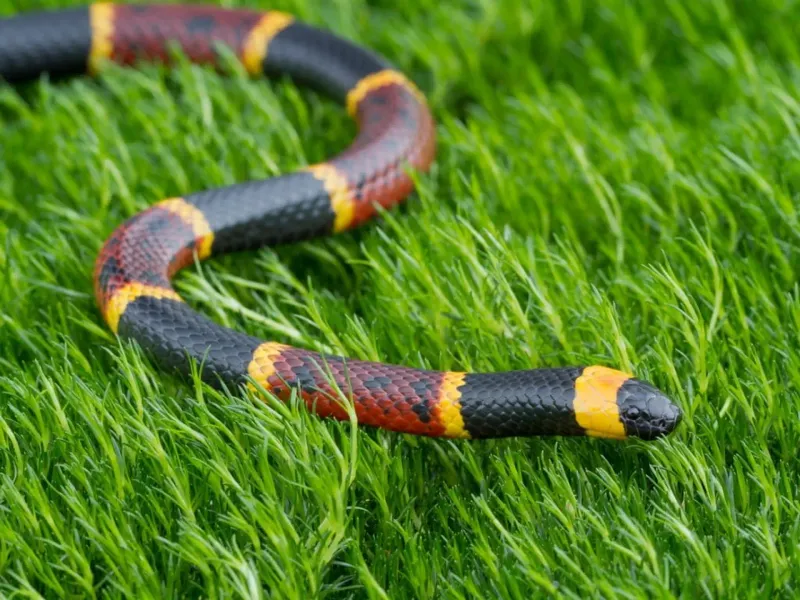
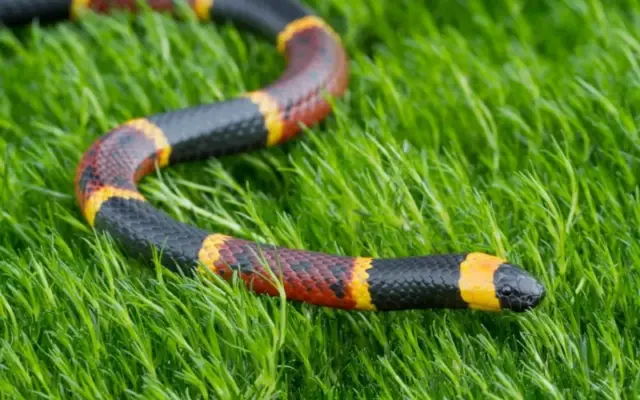
“Red touches yellow, kills a fellow.” That old rhyme helps you tell the eastern coral snake from harmless look-alikes like the scarlet kingsnake.
Coral snakes have wide red and black bands separated by thin yellow rings, with the red touching the yellow. The nose is black.
They’re slim, shy, and spend most of their time hidden under leaves or logs.
Bites are rare because these snakes have tiny mouths and avoid people. Still, their venom affects the nervous system, so any bite is an emergency.
Never pick up a brightly banded snake, no matter how pretty it looks.
7. Southern Black Widow
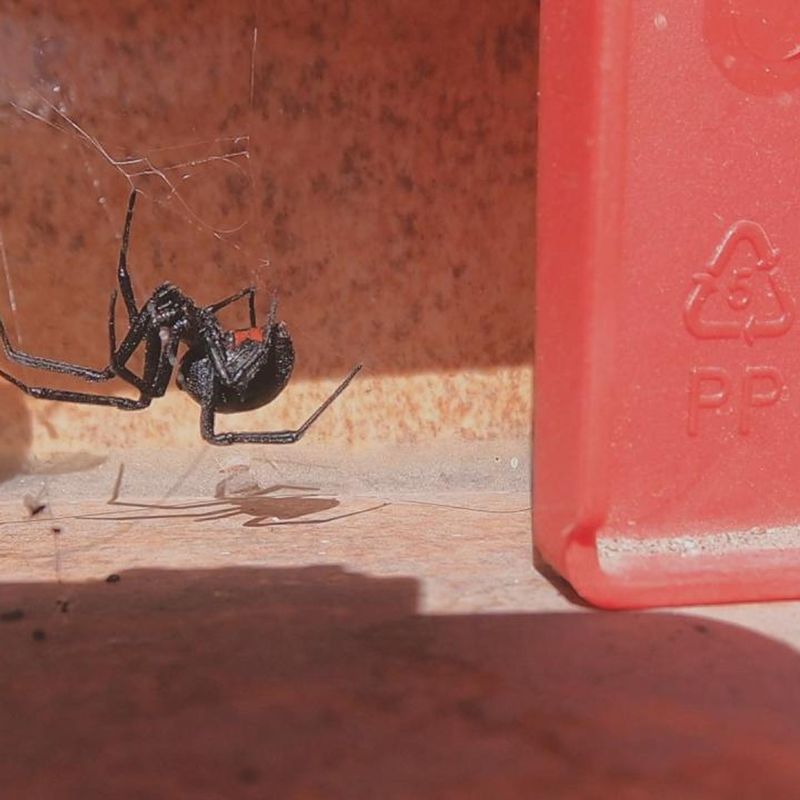
Flip over a flowerpot on a muggy evening, and you might meet the most famous spider in the South. Female black widows are shiny jet black, with a bright red hourglass on the underside of the belly.
Their webs look messy and tangled, not neat like a garden spider’s. You’ll find them in dark, quiet places: under deck boards, inside water meter boxes, in sheds, and around woodpiles.
Males are small and harmless, but a female’s bite can cause muscle cramps, sweating, and stomach pain. Shake out gloves and boots stored in the garage.
Most bites happen when someone reaches blindly into a hidden corner.
8. Brown Widow
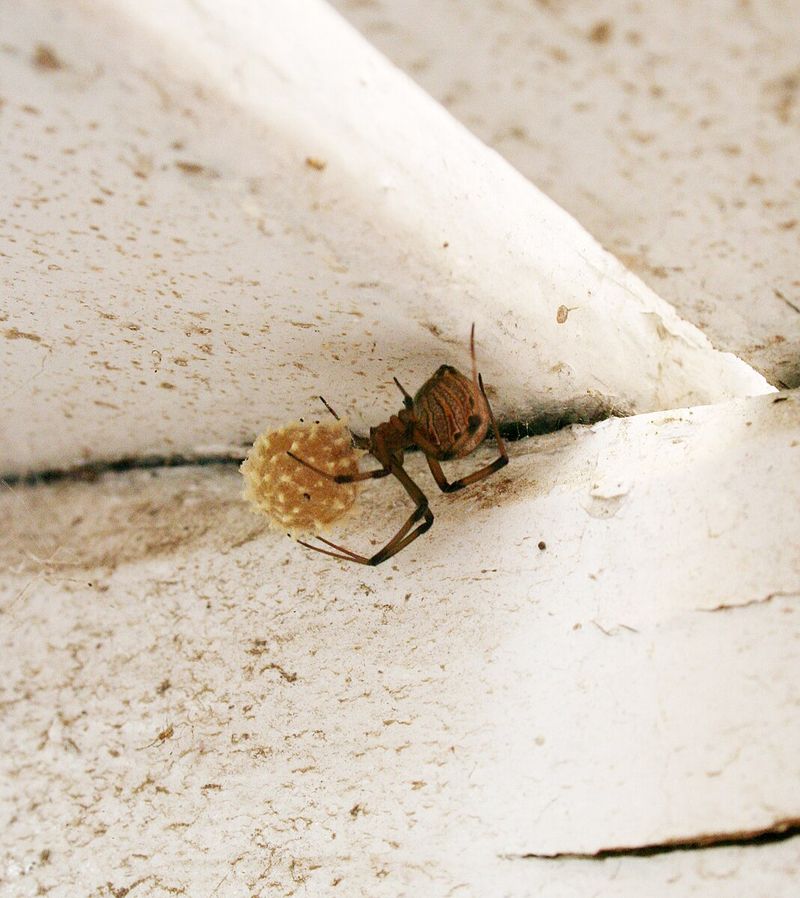
Newcomer alert! The brown widow arrived in the Southeast from other parts of the world and has spread quickly across South Carolina.
It’s tan to brown with a mottled pattern and an orange hourglass underneath. The best clue is the egg sac, which looks like a tiny round ball covered in spikes, almost like a seed from a sweetgum tree.
Patio furniture, mailboxes, and grill covers are favorite hideouts. Brown widow venom is strong, but these spiders deliver much less of it than black widows, so bites are usually milder.
Still, wipe down outdoor chairs before sitting, especially after they’ve been stored.
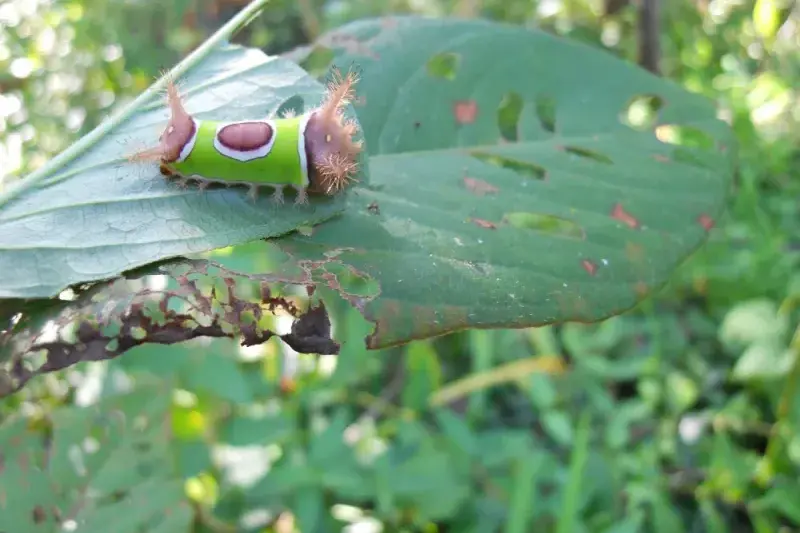
9. Southern Flannel Moth Caterpillar (Puss Caterpillar)
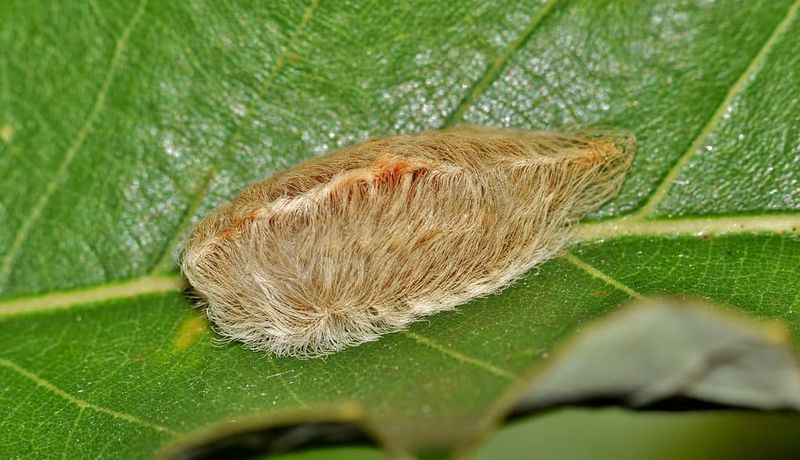
It looks like a tiny wig or a fuzzy slipper for a mouse. Kids naturally want to pet it, which is exactly the problem.
Hidden under the soft hair of the puss caterpillar are venomous spines. Touch one, and you could feel burning pain that spreads up your arm, along with redness and sometimes nausea.
Many people say it’s one of the worst stings they’ve ever had.
Watch for them on oak, elm, and maple leaves, as well as on fences and walls in late summer and fall. Teach children a simple rule: fuzzy bugs are for looking, not touching.
If someone gets stung, pressing tape on the area can help pull out spines.
10. Red Imported Fire Ant
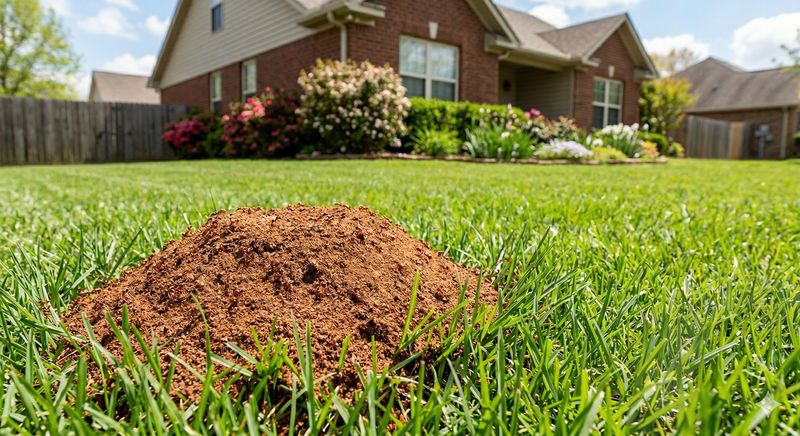
Few creatures send more South Carolinians to the first aid kit than fire ants. They’re small, but they attack as a team, and each ant can sting over and over.
Look for fluffy, dome-shaped mounds of loose dirt in sunny lawns, especially after rain. The ants are reddish-brown and swarm fast when the mound is disturbed.
Stings leave itchy white pustules a day later.
For most people, stings are just miserable, but some folks are allergic and need help right away. Check the grass before letting toddlers play or setting down a picnic blanket.
Treating mounds early keeps colonies from taking over your yard.
Share this story