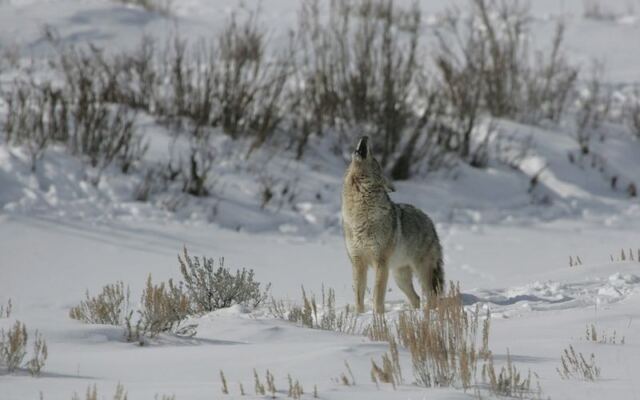
Hear a yipping, wavering chorus outside your window and it can feel a little eerie. Across Wisconsin, residents may hear coyotes calling after dark and wonder what it means.
The answer is usually simpler than it sounds. Knowing what those calls are, and what they are not, helps you stay calm while still looking out for your pets.
Coyotes howl to communicate with family and neighbors
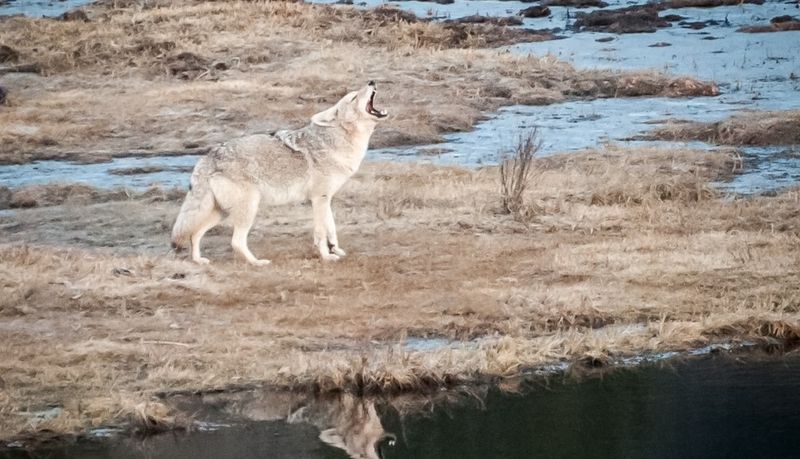
Howling is mostly about staying in touch. Penn State wildlife expert Gary San Julian explains in a Penn State Q&A on why coyotes howl that coyotes use calls to bring family members back together after they have split up to hunt.
The same calls also advertise their presence to other coyote groups nearby.
Think of it as a mix of a group text and a property sign. One coyote calls, others answer, and everyone learns who is where.
Neighboring families hear the message too, which can help them keep their distance from each other without a face-to-face meeting.
Coyotes often live in family groups, usually a breeding pair and their young. Wisconsin DNR notes in its Keep Wildlife Wild coyote guidance that pups may leave their parents in fall or winter, while some stay with the family longer.
So a chorus from a woodlot or creek edge may be one small family sorting itself out, not a big hunting pack like the ones people imagine from wolf stories.
That is the main takeaway for anyone hearing calls near home. Howling is ordinary coyote conversation.
It does not, on its own, tell you that animals are heading for your house, and it does not mean something has gone wrong in the neighborhood.
Coyotes may call after dark, but nightfall is not a trigger
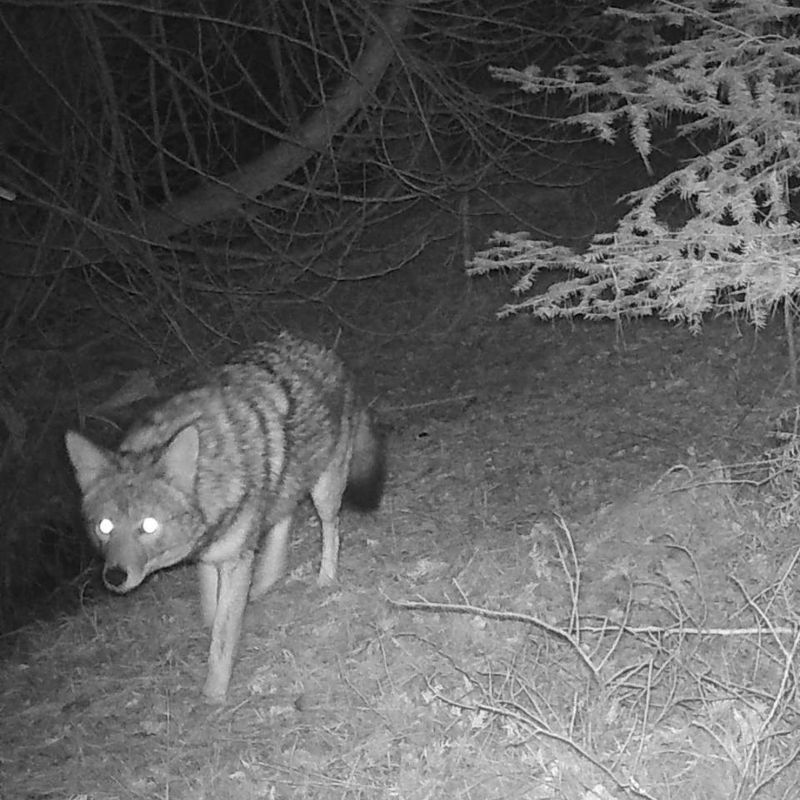
Plenty of Wisconsin residents say they hear coyotes in the evening or overnight, and that is a fair observation. Still, coyotes do not clock in at sunset.
Wisconsin DNR says in its guidance on urban and damaging wildlife that coyotes can be active by day or night.
DNR trail cameras tell a similar story. A Snapshot Wisconsin article on nocturnal animals describes coyotes as cathemeral, meaning their activity can happen at different times depending on conditions such as food availability.
A wildlife agency in New York says in its eastern coyote profile that coyotes are more active after sunset and at night but may be seen during the day.
So the calls you hear after dark are something you may run into, not a nightly appointment. Some evenings are quiet, and some are noisy.
Nothing in the sources points to a fixed schedule.
You might wonder why the howls seem louder or more frequent once the lights go out. The sources do not explain that, so it would be a guess to offer a reason.
What they do show is that hearing a call after dark fits normal coyote behavior and is not a sign of a special event.
A chorus can sound larger than it is
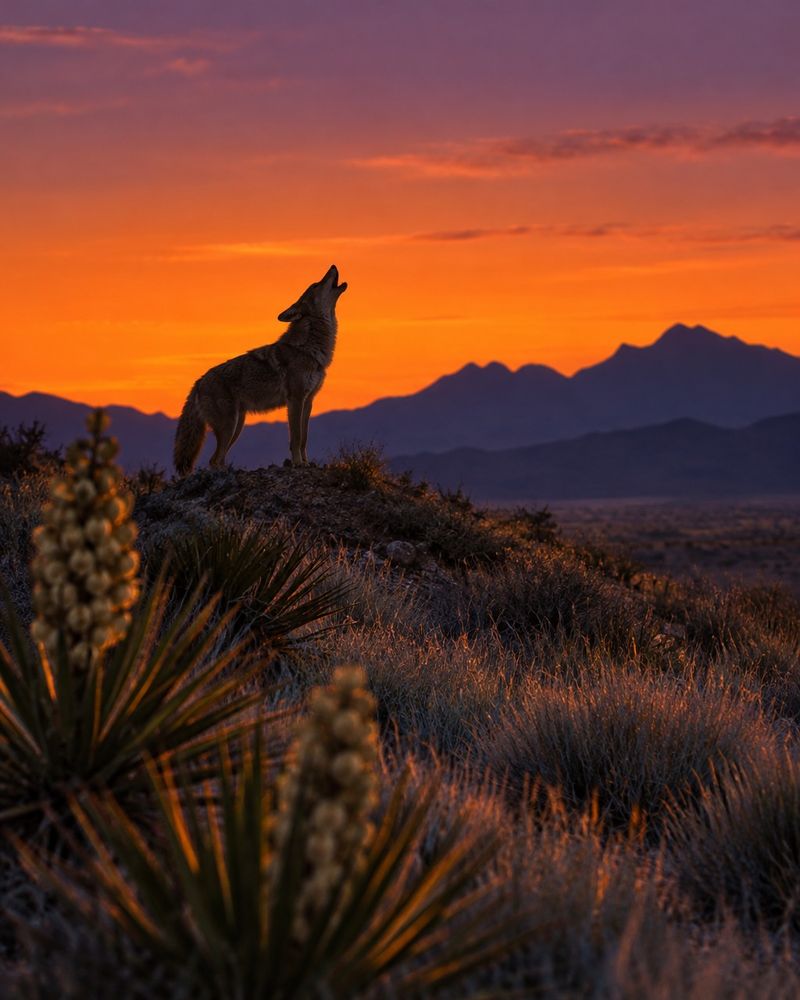
Ever counted voices in a coyote chorus and come up with a dozen? You may be off by quite a bit.
In a study of human perception of coyote group size, 427 listeners estimated the size of recorded groups of one to four coyotes. On average, their guesses were nearly twice the actual number.
The reason is easy to picture. Coyote calls overlap, rise and fall, and mix high yips with longer howls.
A few animals can sound like many more, especially when the sound bounces across fields, ponds, and rows of houses.
This matters because a loud night can feel alarming. If you assume a huge pack has moved in, you may worry more than the situation calls for.
Two or three coyotes from a single family could easily produce the same racket.
Sound also cannot tell you where the animals are standing. A call that seems to come from your back fence might be coming from a quarter mile away.
Direction and distance are hard to judge from sound alone, so a chorus does not show how many coyotes are near, how close they are, or what they plan to do.
Howling alone does not signal a kill or an attack
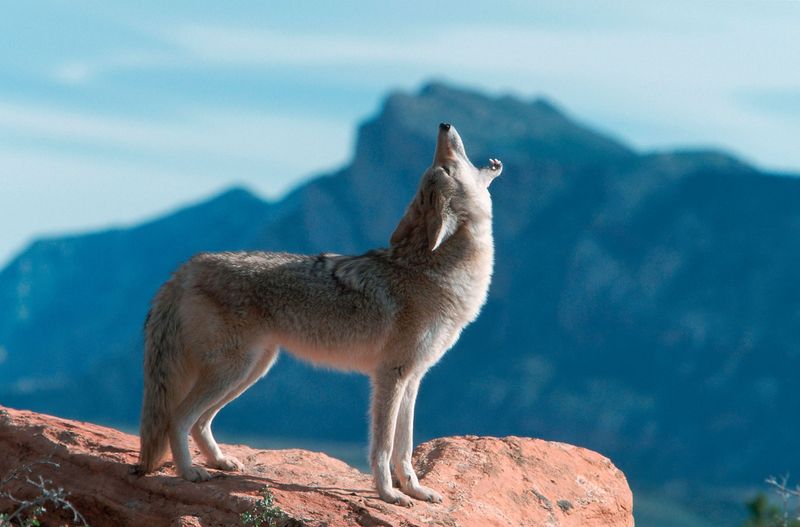
A few popular beliefs about howling do not hold up. One is that coyotes howl to celebrate a kill.
Wildlife officials in Massachusetts address this in a piece on whether coyotes howl at the moon, calling it a misconception and describing the calls as communication, including family and territorial signaling.
The same source says coyotes do not howl more often during a full moon. So a bright night is not a reason to expect extra noise.
And a howl does not prove that an animal has just been killed, or that coyotes are closing in on your home.
Calls simply cannot tell you where coyotes are or what they intend. Treating every chorus as a threat is a bit like assuming every barking dog down the street is about to break in.
Reassurance has limits, though, and the DNR is clear about them. Its urban wildlife guidance says attacks on people are exceptionally rare, but coyotes can kill small pets.
That is a good reason to take simple precautions with cats and small dogs, even when the howling itself is harmless.
Remove food attractants from your yard
If you want fewer coyote visits, start with what your yard offers. Wisconsin DNR recommends in its coyote management guidance removing food attractants, including unsecured garbage and pet food.
Coyotes are opportunists, so an easy meal can turn a yard into a regular stop.
Some practical steps fit most households. Use garbage cans with tight lids, and keep them in a garage or shed until pickup morning if you can.
Feed pets indoors, or pick up bowls as soon as they finish eating.
Other food sources count too. Fallen fruit, spilled birdseed, and compost that is not contained can all draw small animals, and small animals can draw coyotes.
A quick evening walk around the yard to look for leftovers takes only a few minutes.
The DNR also says not to feed coyotes or other wildlife. Handouts teach animals to link people with food, which is how a shy neighbor becomes a bold one.
Scare tactics have a specific place. The DNR suggests making noise or using other ways to scare a coyote when one is actually present in your yard.
Hearing a distant call is not that situation, so there is nothing to chase off. Clapping, shouting, or banging pots is for when you see the animal nearby.
Protect pets and respond safely to an encounter
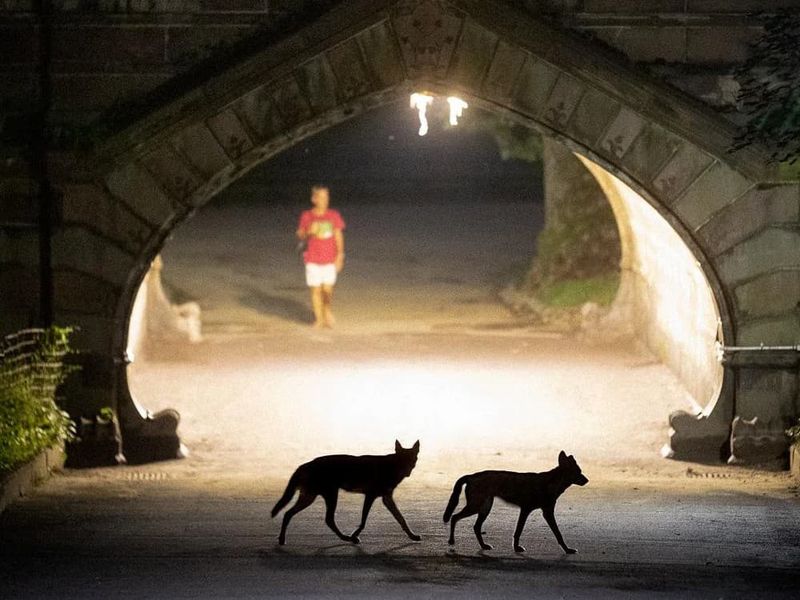
Pets are where coyote concerns are most real. The Wisconsin Humane Society notes in its guide to coexisting with coyotes and foxes that cats and small dogs may be prey, while larger dogs could be injured in a confrontation.
Supervise and leash dogs outdoors, keep cats inside, and do not leave small pets outside unattended.
If a coyote approaches or follows you, do not feed it or try to tame it. Stand tall, make yourself look big, and make plenty of noise.
Never approach, corner, or try to handle the animal.
Seeing a coyote in daylight is not a sign of illness by itself, since coyotes can be active at any hour. Unusual behavior is different.
Lack of fear, disorientation, or excessive drooling are reasons for caution.
With a sick, injured, or oddly acting animal, keep your distance and contact the appropriate local authorities. Do not try to help it yourself.
If you may have touched fresh saliva, or been bitten or scratched, follow Wisconsin DNR rabies guidance. Wash the affected area promptly and contact your local health department.
After a bite, get medical attention right away.
Most nights, the howling outside is just your neighbors talking. A leash and a closed cat door let you enjoy the sound without worry.
Share this story