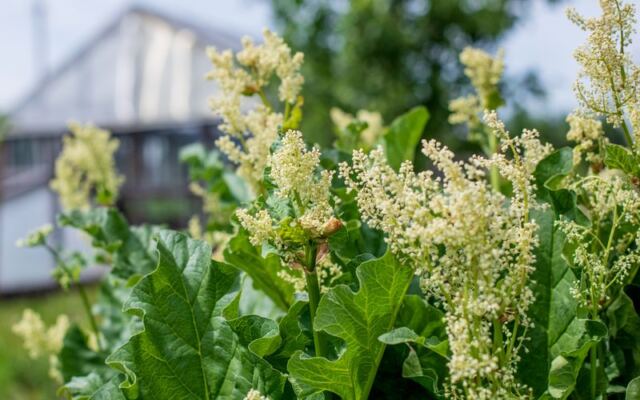
A giant flower stalk on your rhubarb is normal, and if you want to harvest the leafstalks, you should cut it off at the base. The stalk is just the plant doing what plants do, which is trying to make flowers and seed.
It does not mean your rhubarb is dying or that you did something wrong. Here is how to decide what to do and when a closer look at the plant makes sense.
A flower stalk is normal rhubarb growth
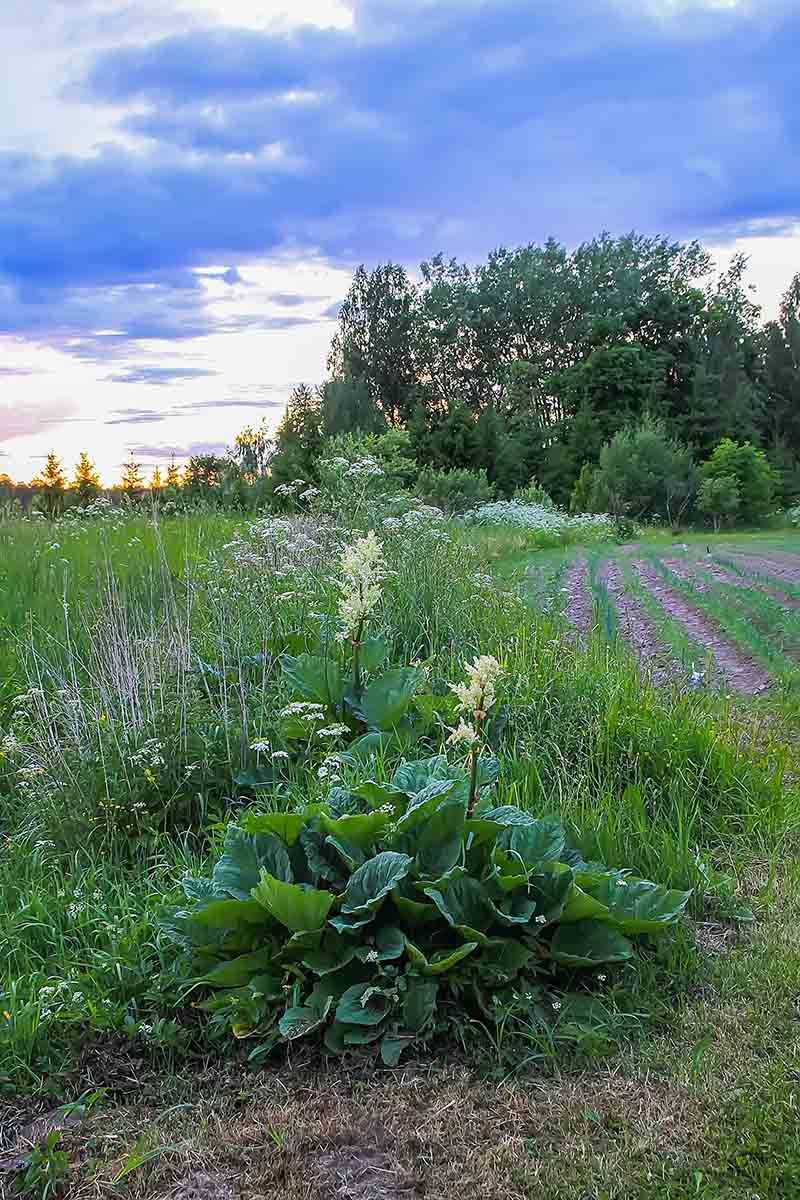
Walk out to the garden one morning and there it is: a thick, knobby stalk shooting up from the middle of your rhubarb, topped with a puffy cluster of tiny flowers. It looks dramatic, but it is simply part of the plant’s normal reproductive growth.
Rhubarb is a perennial, and making flowers and seeds is a regular part of its life.
A big stalk on its own does not tell you the plant is dying. It also does not prove you neglected it.
Iowa State Extension describes flowering as a natural thing rhubarb does, and healthy plants can send up a stalk in a good year or a rough one.
The flower stalk also looks different from the edible leafstalks. It is rounder, often thicker, and grows straight up from the center with a flower head at the top.
Once you know what it is, you can relax and decide what you want from the plant.
If your goal is a good harvest of tart leafstalks for pies and sauce, the simple move is to remove it. University of Illinois Extension advises cutting the flower stalk and discarding it.
Nothing about this needs to happen in a rush, so you can finish your coffee first.
The next sections cover why rhubarb flowers, how to cut the stalk, what is safe to eat, and when to look more closely at the plant.
Several factors can encourage flowering
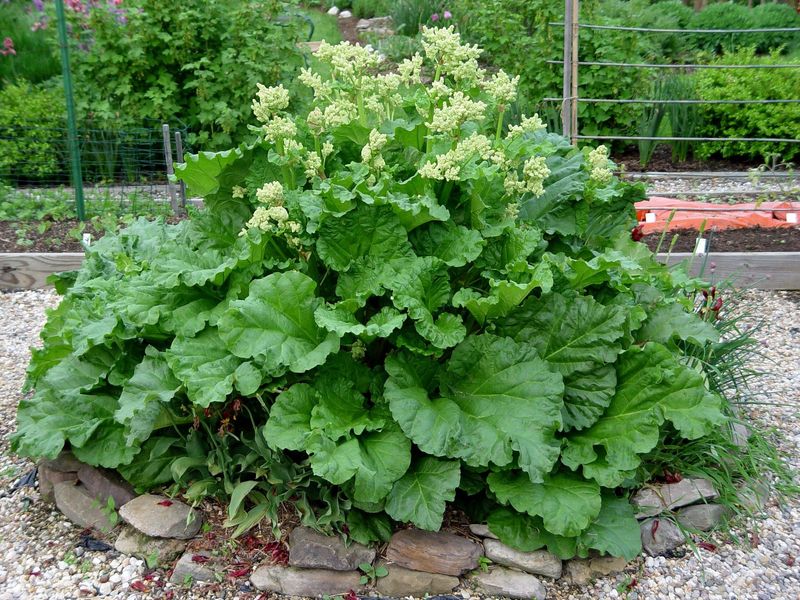
Gardeners love a simple answer, but rhubarb does not give one. A number of things can nudge a plant toward flowering, and a single stalk cannot tell you which one is at work.
Think of the list below as possibilities, not a diagnosis.
Iowa State notes that drought, extreme heat, infertile soil, and plant age may encourage flowering, and older plants tend to flower more often. A dry stretch in an Illinois July or a run of scorching days could play a part.
So could a plant that has simply been growing in the same spot for many years.
Illinois Extension also links seed stalks to crowding, old plants, low soil fertility, and some plants grown from seed. A crown that has filled out its space may be competing with itself for water and nutrients.
Seed-grown plants deserve a special mention. Named varieties that are propagated from divisions of the crown, rather than from seed, are generally selected to produce fewer seed stalks.
If you started your rhubarb from seed or got a pass-along plant of unknown parentage, flowering may simply be in its nature.
The size of the stalk does not point to any one cause either. A huge stalk can appear on a well-fed young plant, and a small one can show up on a tired old clump.
Treat the stalk as a prompt to cut it, not as a verdict on your gardening.
Cut the flower stalk if you want a harvest
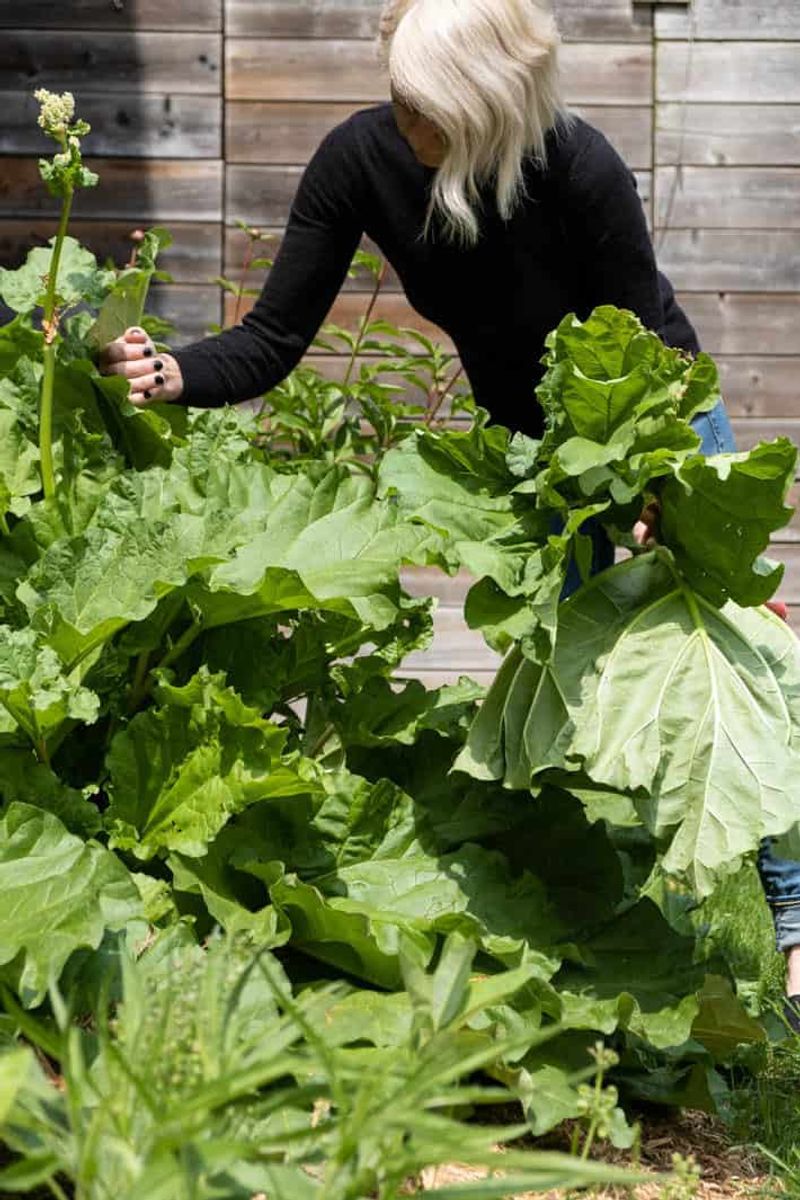
When leafstalks are your priority, grab a clean knife or pruners and cut the flower stalk right at its base. Then toss it in the trash or compost bin rather than leaving it to drop seed.
Illinois Extension recommends exactly this, and the job takes about a minute.
The reasoning is that making flowers and seed takes energy. Iowa State says plants may be less productive if they are allowed to flower and set seed.
Removing the stalk lets the plant put its effort into leaves instead.
That said, nobody can promise a bigger pile of stalks because you snipped one. Cutting is a sensible habit for harvest, not a guarantee, and it is not required for the plant to survive.
Rhubarb will carry on either way.
Leaving the stalk is a perfectly fine choice too. University of Alaska Fairbanks Extension notes that gardeners can let it go if they want seed.
Some people simply enjoy the tall, feathery blooms, which bees do visit.
If you go that route, expect a possible tradeoff in how much you can pick. A good compromise is to leave a stalk on one plant for the show and cut the stalks on the rest of your patch.
Flowering does not make leafstalks unsafe
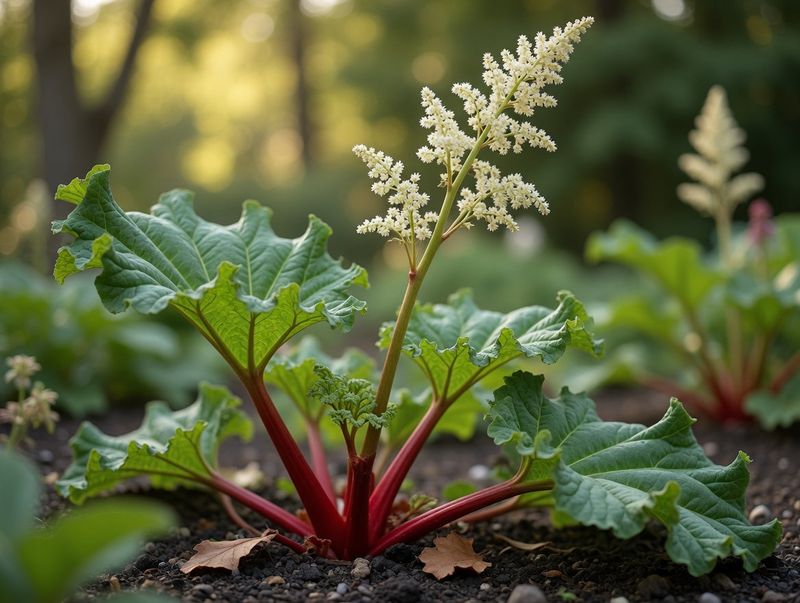
Here is a worry that comes up every summer: does a flower stalk mean the rhubarb has turned poisonous? It does not.
Purdue Extension says the leafstalks remain edible when flower stalks are present, so the ordinary stalks you pick for baking are still fine.
The part you should never eat is the leaf blade. MedlinePlus lists oxalic acid and other possible poisonous ingredients in rhubarb leaves, and says the stalk can be eaten.
Trim the blades off when you harvest and discard them.
You may also have heard that all rhubarb turns toxic after June. University of Minnesota Extension calls that a myth.
Stalks picked later in summer may be tougher, but a calendar date does not make them dangerous.
There is one separate situation to know about. Illinois Extension advises against eating leafstalks damaged by a severe freeze, because of poor quality and possible movement of oxalic acid into the stalks.
That is a frost issue, not a flowering or summer issue.
So the rule is easy to remember: skip the leaves, skip freeze-damaged stalks, and otherwise pick healthy leafstalks as usual.
Check the plant if flowers return with weak growth
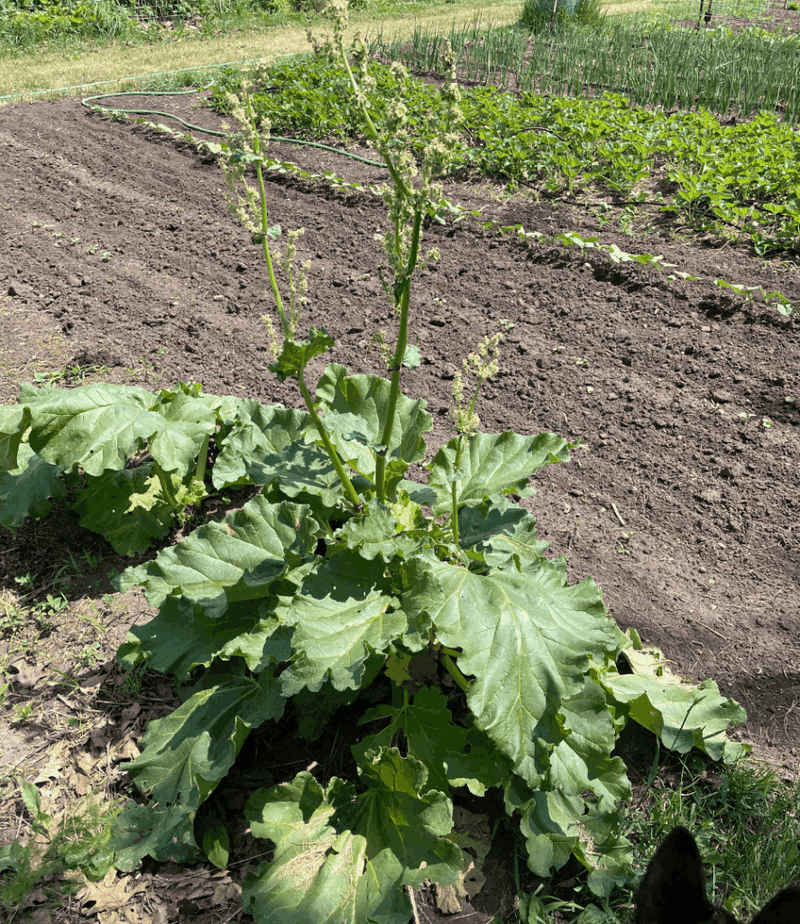
One stalk in one year is no cause for concern. The picture changes a little when flowers keep coming back and the leafstalks you pick are thin or small.
That combination is a good reason to take a closer look at the plant and its surroundings.
Start with age. If the clump has been in the ground for many years, it may simply be past its peak.
Next, look at spacing: Illinois Extension names crowding, age, and low fertility as possible issues behind seed stalks and small leafstalks.
Then think about the soil. Rhubarb is a hungry plant, and a bed that has not been fed in a long time may be running low.
Compost or a balanced fertilizer worked in around the plant is a gentle first step.
Division is another option to consider. UConn Extension says seed stalks can be a sign that a plant needs dividing.
Treat that as a possibility, since the stalks alone cannot confirm it.
Notice what is not on this list: tearing the plant out. Flowering by itself is no reason to replace the crown.
Adjust the conditions first, watch the next season’s growth, and let the plant show you whether it improves.
Give a young plant time to establish
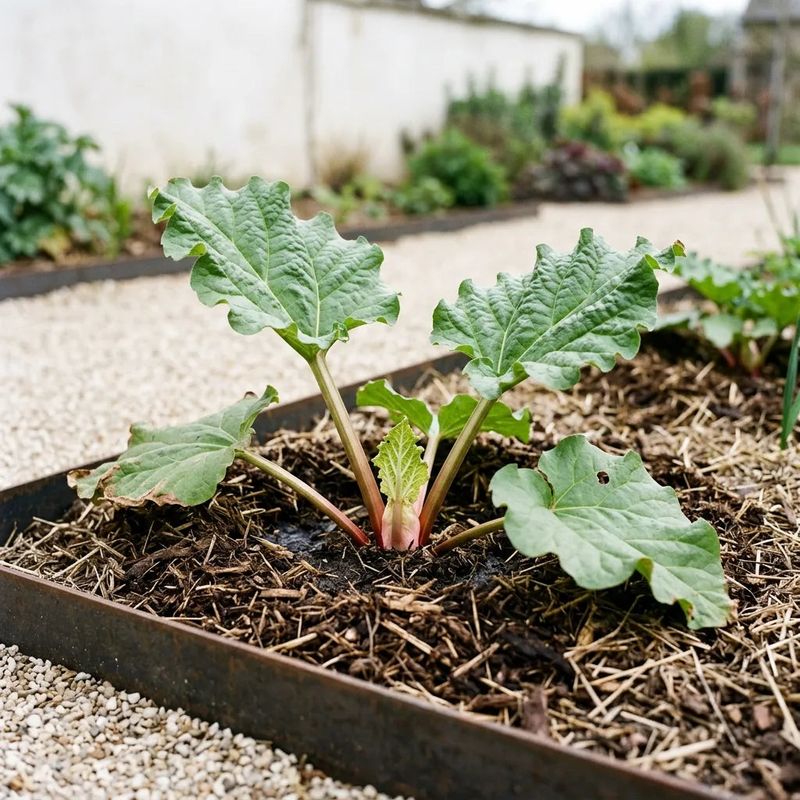
New rhubarb needs patience. A young plant is busy building the thick roots that will feed it for years, and picking too much too early can set it back.
If a first-year plant sends up an early flower stalk or looks a bit slim, resist the urge to harvest heavily to make up for it.
Illinois Extension’s local guidance is simple to follow. Do not harvest at all in the planting year.
In year two, keep the harvest limited to one or two weeks. From year three onward, you can enjoy a full eight-to-ten-week harvest.
Whatever the year, take only a portion at a time. Illinois Extension advises removing no more than about one-third of the leaves at once, so the plant always keeps enough foliage to feed itself.
Mark your calendar or tuck a garden label by the plant so you remember its planting year. That small note saves guesswork when the first spring stalks look tempting.
If a flower stalk appears along the way, cut it if harvest matters to you and carry on. Flowering alone does not mean the plant must be replaced.
A patient gardener usually gets rhubarb that outlasts the garden fence.
Share this story