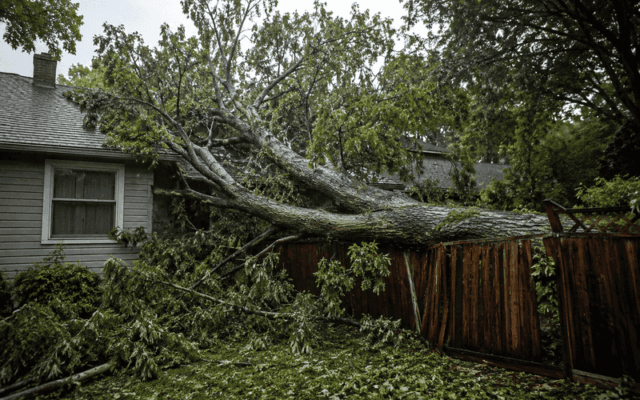
When a neighbor’s tree lands in your Illinois yard, the bill usually starts with your own homeowners insurance, not the neighbor’s. The neighbor pays only if a claim shows they were careless about a danger they should have seen coming.
Paying for damage and paying to haul the tree away are also two different questions. Knowing the difference can save you money and stress.
Make the scene safe before sorting out payment
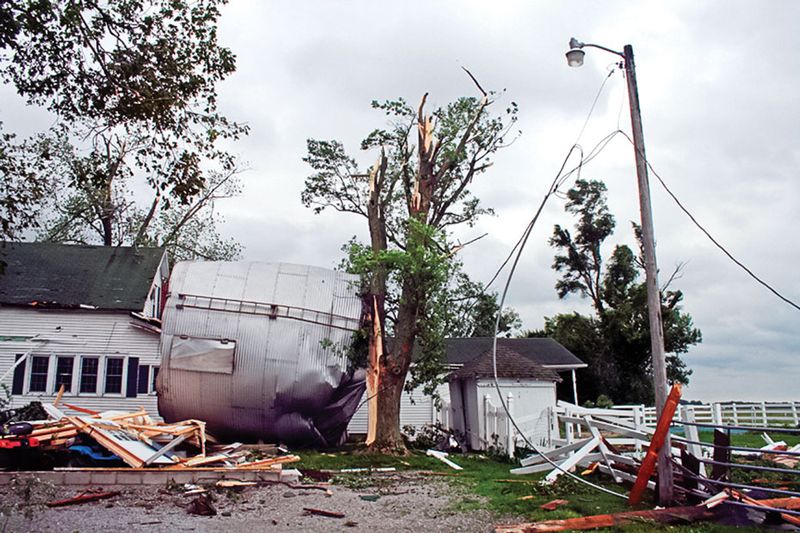
Before you call anyone about money, stay away from the tree. Fallen trunks, hanging limbs, and trees leaning on a house or on other trees can shift without warning.
Branches that are bent or pinned may spring back with real force.
Power lines are the other big worry. A tree can touch a line even when nothing looks wrong, so treat any downed wire as live.
Illinois Department of Natural Resources storm guidance points people toward emergency services, the utility company, or an arborist, depending on the situation, and says dangerous storm cleanup belongs with professionals.
If anyone is hurt or a wire is down, call emergency services first. If the tree is touching a line, call the utility.
If the tree is stable but heavy and tangled, a qualified arborist can judge how to remove it.
Keep children and pets indoors until the area is cleared. Skip the chainsaw, even if the tree looks easy to cut.
Conversations with your neighbor and your insurance agent can wait until everyone is out of harm’s way.
The tree’s landing spot does not answer who pays
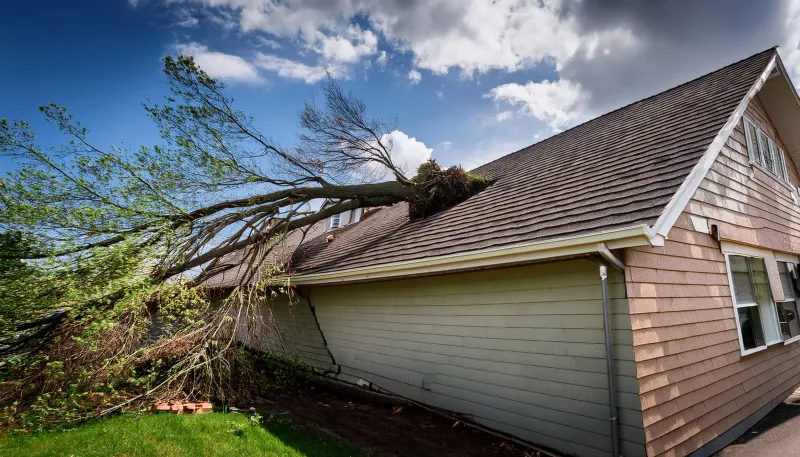
Here is the plain answer: a neighbor’s tree landing in your yard does not automatically make the neighbor responsible. Where the tree stood is only one fact.
Responsibility turns on what caused the damage and whether anyone was careless.
Two questions get mixed up here. One is whether your insurance covers damage to your property.
The other is whether your neighbor is legally responsible for that damage. A policy can pay a covered claim whether or not anyone was at fault.
Insurance FAQs from the National Association of Insurance Commissioners explain that a neighbor is responsible only if negligence caused the damage. When a storm knocks down a healthy tree, the damaged homeowner generally looks to their own insurer for covered losses.
The Insurance Information Institute describes a similar approach in its tree-damage guidance.
That does not mean the neighbor is always off the hook. If evidence shows they ignored a danger they should have addressed, a negligence claim may be possible.
The outcome depends on the facts, the policy wording, and the evidence you can gather.
A recognizable hazard can change the liability question
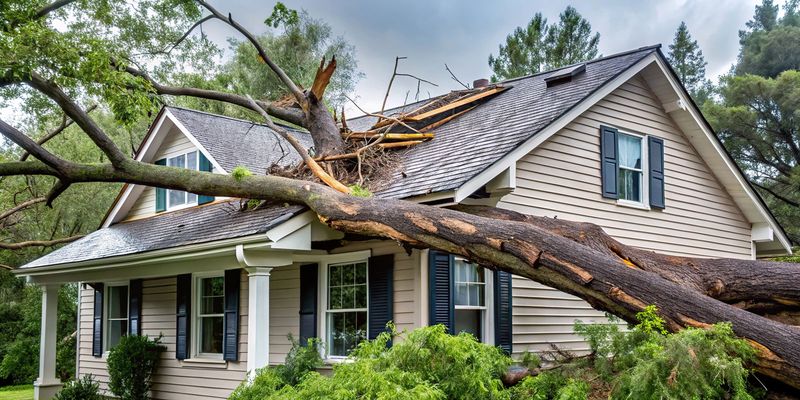
A negligence claim rests on evidence, not on assumptions. Courts look at questions such as whether the danger was foreseeable, whether the owner knew or should have known about it, whether reasonable care was taken, and whether the tree’s condition actually caused the damage.
That is why a healthy tree toppled by a strong storm is treated differently from an obvious hazard left alone. The NAIC storm FAQ contrasts the two: a natural event felling a healthy tree versus a dead or diseased tree that was an obvious hazard and went unaddressed.
A dead tree is not automatic proof of liability, though. Whether anyone noticed the problem, and what could reasonably have been done, still matter.
Illinois appellate cases give some background on these duties. Ortiz v.
Jesus People, U.S.A. is one example. The cited cases involve hazards or injuries to people outside the land, including a neighboring property and a public sidewalk.
Because of that, they offer limited, fact-specific context about reasonable care. They are not a direct rule that settles every fallen-tree property-damage dispute, and they do not promise any result for your situation.
Photos of the tree’s condition before it fell, old letters or complaints, and notes about earlier warnings can all help show what the owner knew.
A boundary tree may have more than one owner
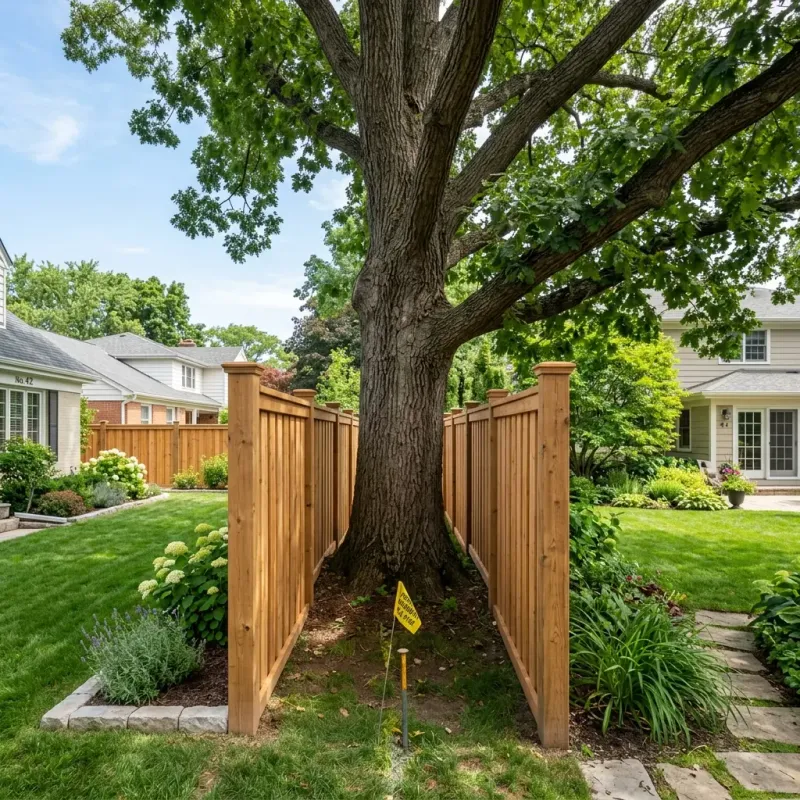
Property lines do not always decide who owns a tree. According to Illinois Legal Aid Online, a tree whose trunk straddles the boundary is generally jointly owned by both neighbors.
So check where the trunk actually stood before you assume the tree was only your neighbor’s. A tree that leaned or dropped branches into your yard may have had its base entirely on your side, or right on the line.
A survey, plat map, or the stump itself can help show the answer.
Ownership is also a separate issue from fault. Owning a tree, alone or jointly, does not prove anyone was careless.
Likewise, a tree entirely on a neighbor’s side does not prove they were. Negligence still depends on the condition of the tree, what the owner knew, and what care was reasonable.
Start a property-damage claim with your own insurer
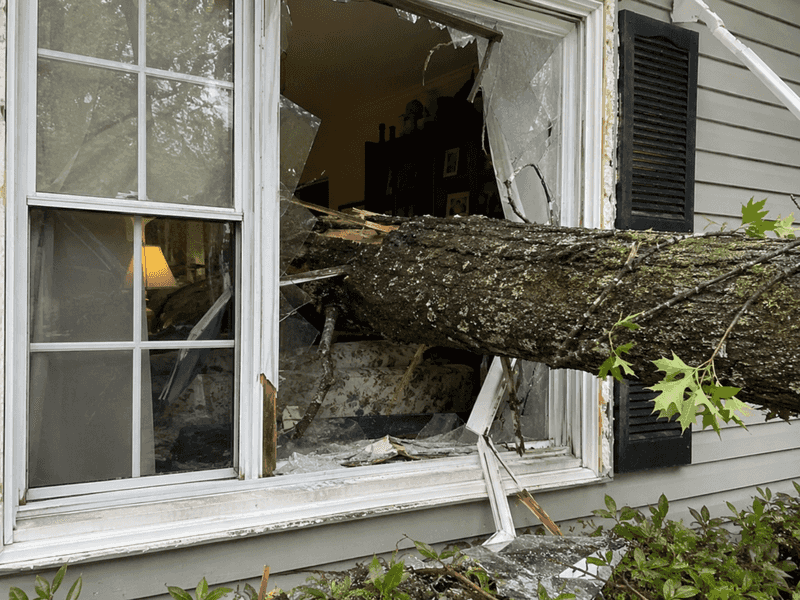
For covered damage to your home, fence, or other insured property, start with your own insurer. Illinois Legal Aid Online advises homeowners to report damage as soon as possible and to provide materials that support the claim.
Take clear photos or video of the tree, the damage, and the surrounding area before anything is moved, if it is safe to do so. Keep receipts, estimates, and notes about dates and conversations.
The Illinois Department of Insurance advises contacting your insurer and getting its agreement before hiring a contractor for repairs. Emergency steps to prevent more damage, like covering a hole, are worth asking your insurer about.
Your insurer may pay the covered claim first and then seek reimbursement from the neighbor’s insurer. That process is called subrogation, and it may happen in some circumstances.
Insurance industry guidance notes that coverage turns on your policy.
Subrogation does not prove the neighbor was negligent, and it does not guarantee you will get your deductible back. The NAIC reminds consumers that fault must be tied to negligence.
Ask your insurer how it handles such cases.
Yard cleanup is not the same as damage to a structure
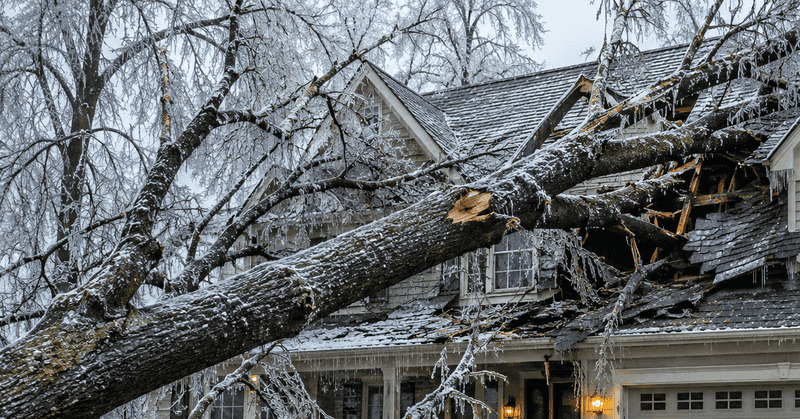
Many homeowners assume insurance will haul away any tree that falls on their land. That is not a safe assumption.
Debris-removal coverage is often limited or conditional, and the wording of your policy decides what applies.
According to the Insurance Information Institute, there is generally no debris-removal coverage when a fallen tree did not hit an insured structure. It also notes possible exceptions, such as a tree blocking driveway access.
Think of two situations. In one, a tree crushes part of your roof or garage.
That is damage to an insured structure, and removal may be handled as part of that claim, subject to your policy’s terms. In the other, a tree lies across your lawn and hits nothing.
Cleanup there may be your own expense.
A tree blocking a driveway or entrance may fall somewhere in between. Whether coverage applies can depend on the exact conditions in your policy.
Limits and conditions vary, so do not rely on a dollar figure you heard from a friend. Read your policy, or ask your agent directly what it says about tree removal.
Document the facts and take the next step
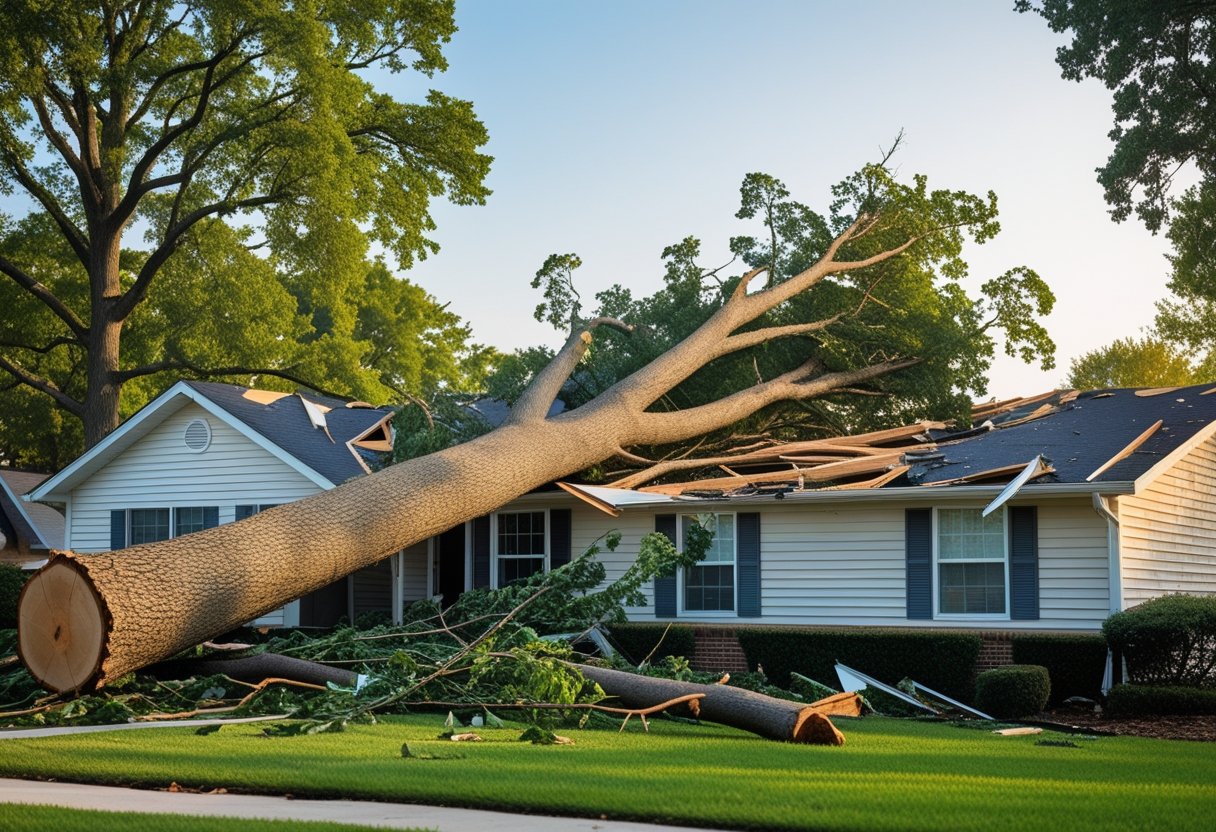
Start with safety, and keep clear until professionals say the area is secure, as Illinois DNR guidance advises. Then gather photos, video, receipts, and any proof of an earlier tree problem, such as a warning or complaint.
Next, call your insurer, report the damage promptly, and ask about your policy. Illinois Legal Aid Online recommends giving supporting materials with the claim.
Ask separately about cleanup, since removal coverage may differ from coverage for damage.
Where the tree landed does not settle who is responsible. Good records give you the best footing, whatever the answer turns out to be.
Share this story