A fox crossing your yard on a cold Delaware morning is doing something with purpose. Most often it is moving through the area it calls home or searching for a small meal.
Knowing what ordinary fox behavior looks like helps you stay calm, protect your pets, and know when a real problem needs attention.
What a fox may be doing in winter
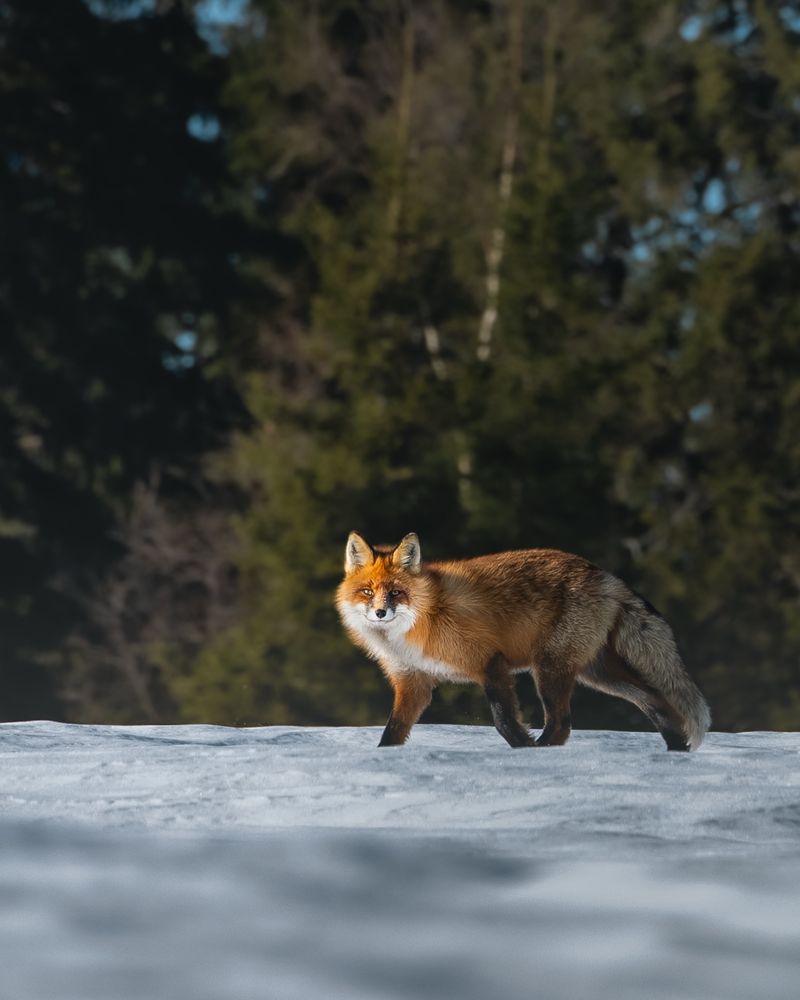
A fox crossing your yard in winter may be traveling through its territory or searching for prey. Both fit ordinary fox behavior, and neither one is strange.
Winter does not stop foxes from working; it just changes where and how they look for food.
According to the U.S. Fish and Wildlife Service, red foxes hunt small animals such as mice and birds, and they may travel while patrolling their territories in winter.
Foxes are built for the cold. They can hunt in low light, and they can dig down through snow to reach prey hidden below.
That means a steady trot across a lawn at dusk fits easily with a fox on a hunting route. It also fits with a fox simply passing through ground it knows well.
A yard can be part of a path that the animal uses again and again, the way you might use a favorite shortcut.
Here is the catch. A few seconds of watching cannot tell you which purpose applies.
A fox that trots past a window might be checking its borders, listening for a vole under the leaves, or heading to a spot farther along. You also cannot tell from a glimpse whether it found anything to eat in your yard.
So the useful takeaway is simple. Foraging and territorial movement are both well-supported, ordinary possibilities.
Treat the sighting as a sign that a wild animal is going about its day nearby, and keep your own response calm and sensible.
If you want to learn more, notice small details the next time you see one. Does it pause and tilt its head toward the ground, or does it keep a steady pace along a fence line?
Those clues hint at what it was doing in that moment, but they still do not prove a single reason.
Why foxes use Delaware neighborhoods

Foxes live all across Delaware, and they are here every month of the year. Red foxes in particular commonly use suburban and urban areas.
A fox in your neighborhood is not a lost visitor; it may well be a neighbor you rarely see.
Developed areas can offer things a fox needs. Delaware DNREC describes food and safety as common reasons foxes use developed spaces.
Sheds, decks, and brush piles can offer cover, and quiet backyards at night can feel safer than open fields.
Food is the part people tend to assume first. Trash, pet food, and bird feeder spills can certainly draw a fox.
Yet foxes also hunt natural prey, including rodents and birds, and a lawn with a mouse population is a fine hunting ground on its own.
This matters because a yard visit does not prove the animal ate anything you left out. Utah State University Extension also points out that foxes are adaptable and can make use of many settings.
Blaming a neighbor’s garbage for every visit would miss the bigger picture.
A practical example helps. If you see a fox pounce into a patch of leaves, it is likely after something living there.
If you see one nosing around an open trash bag, that is a different situation and one you can fix. Looking at what is actually around you is more useful than guessing.
A sighting cannot reveal whether a fox is seeking a mate

Mating may be part of some foxes’ winter behavior. Still, it is a possibility, not something a yard sighting can confirm.
One fox crossing a lawn does not tell you what is on its mind.
Delaware-focused sources do not agree on timing. DNREC’s fox publication gives the breeding season in Delaware as March and April.
WildlifeHelp’s Delaware guidance says mating typically occurs from December through February, with pups born in March and April.
With the experts giving different dates, the safest approach is not to guess. A fox seen in January or February may or may not be linked to breeding, and you cannot read that from a few seconds of trotting.
Trying to assign a romantic motive to a single animal goes further than anyone can see from a window.
What holds up better is what the wildlife agencies already describe. As noted by the U.S.
Fish and Wildlife Service, winter movement can include patrolling territory and hunting. Both are supported possibilities, and neither can be ranked as the answer for the fox you saw.
If you ever see two foxes together, that is interesting, but it is still only a moment. Enjoy the view and leave the conclusions open.
How to tell which kind of fox you saw

Delaware is home to two kinds of fox: the red fox and the gray fox. Red foxes are the more common of the two across the state, according to DNREC’s fox publication.
That makes red the better bet, but it is not a guarantee.
A quick look at a trotting animal rarely settles the question. Fur can look dull in winter light, and a fox seen at dusk or through a window shows few details.
Saying you saw a fox crossing your yard is not enough to name its species.
If you want to try, wait for a clearer view and look for a few clues. Check the tail tip, the overall color, and the legs and chest.
Better still, snap a photo from a safe distance through a window and compare it with pictures from a trusted wildlife source.
Do not move closer for a better look. A blurry photo is a fair trade for staying safe and keeping the animal calm.
In the end, species does not change the basic advice. Keep your distance, secure food sources, and watch your pets.
Whether it was red or gray, the same sensible habits apply.
Reduce food and shelter that can attract repeat visits

Few things keep a fox coming back like an easy meal. Taking away the free food is the most practical step you can take.
Delaware wildlife guidance, including DNREC’s fox publication, points to removing attractants as the way to limit conflicts.
Start with the trash. Use cans with tight lids, and set them out on collection morning rather than the night before.
Cover or enclose compost so scraps cannot be reached.
Next, handle pet food. Bring bowls indoors after meals, and store bags of food in a closed container.
Sweep up fallen birdseed, pick up fruit that drops from trees, and clear away stray food scraps from patios and grills.
Shelter matters too. Gaps under decks and sheds, and thick brush piles, can give a fox a cozy hiding spot.
Where it makes sense, close off those openings once you are sure no animal is inside, and tidy up debris.
DNREC’s guidance on wildlife problems backs this approach of removing what draws animals in. Be realistic, though.
These steps may reduce repeat stops, but they cannot guarantee a fox will stop passing through, since it may simply be hunting mice or following its usual route.
A good test is to walk your yard at dusk and look at it the way a hungry animal would. Anything edible or inviting is worth fixing first.
Keep your distance and protect pets and poultry
The best way to enjoy a fox sighting is from a window or a safe distance. Foxes generally avoid people, but they are wild animals.
They can bite, and they can pose real risks to small pets and poultry.
Do not feed a fox, chase it, or try to handle it. WildlifeHelp’s Delaware guidance advises keeping your distance, and feeding or approaching can teach a fox to lose its natural wariness.
That can lead to trouble for you and for the animal.
Small pets need extra care. Supervise cats and small dogs when they go outside, especially around dawn, dusk, and night.
A leash and a short trip to the yard is safer than letting a pet roam alone.
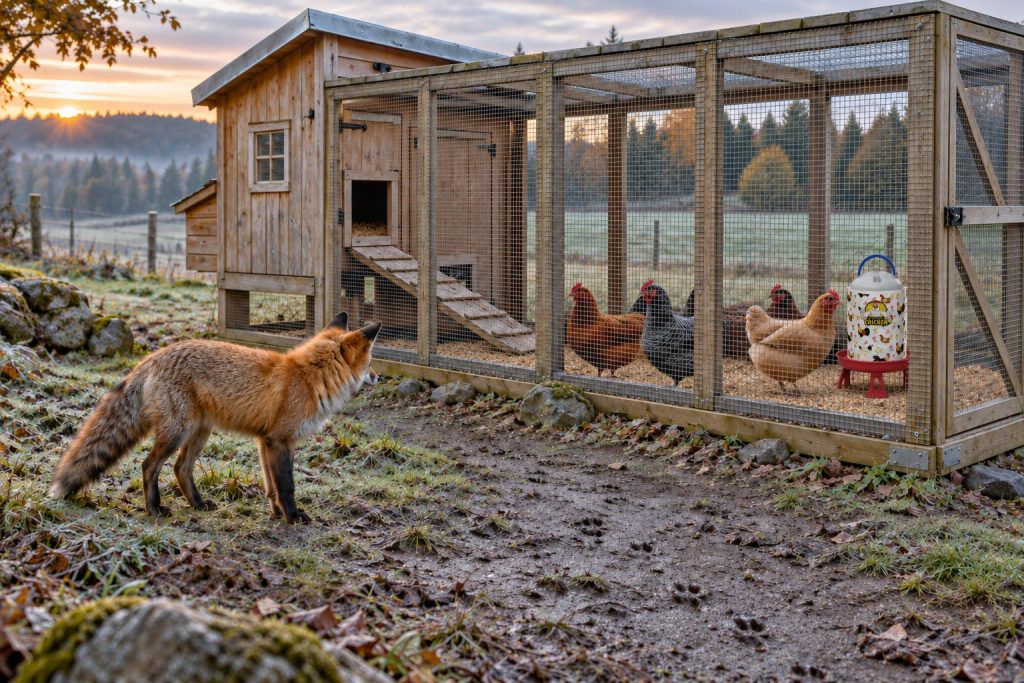
If you keep chickens or other poultry, use a predator-resistant enclosure with sturdy wire and secure latches, and close it up at night. Fox-proofing is much easier before a loss than after.
If a fox keeps causing problems, contact DNREC or a licensed wildlife-control operator. Please do not try to trap or relocate the animal yourself.
Rules and permits may apply, and DNREC’s fox publication warns that relocated wildlife may fare poorly.
Clapping or making a loud noise from a safe spot is not the same as chasing. Still, the goal is calm distance, not a confrontation.
Know when to seek health or wildlife advice
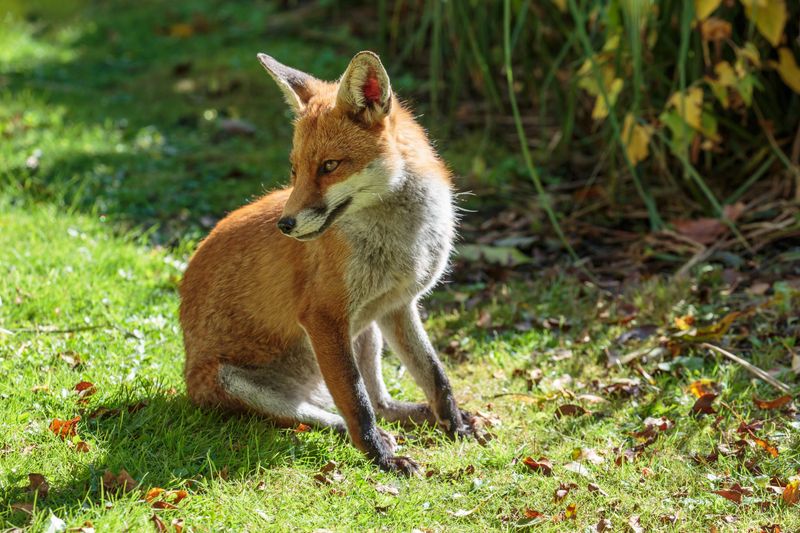
Seeing a fox in daylight can feel alarming, but foxes are mostly active at night and around dawn and dusk and can also be seen during the day. Daylight activity alone does not show that an animal is sick or has rabies, as DNREC’s fox publication explains.
Behavior tells you more than the clock.
Watch for clearly abnormal behavior or apparent illness, such as stumbling, confusion, or unusual boldness. Never approach an animal that looks unwell.
WildlifeHelp’s Delaware guidance advises seeking local guidance instead. If a fox acts aggressively, leave the area and contact DNREC Natural Resources Police.
A sighting with no contact is not a rabies exposure. Watching a fox cross your yard, even in daylight, does not put you at risk by itself.
Exposure involves contact, such as a bite, a scratch, or saliva reaching broken skin or the eyes, nose, or mouth.
If you are bitten or scratched, wash the wound with soap and water for 15 minutes. CDC guidance also calls for promptly contacting a health professional or public-health department.
Washing is a first step, not a replacement for that follow-up.
Do the same if fox saliva may have reached broken skin or your eyes, nose, or mouth. Get prompt advice even if the wound seems minor or you are unsure what happened.
Delaware’s Rabies Program can be reached at 302-744-4995. You can also read DNREC’s page on reporting sick or dead wildlife for what to do if you find an animal in trouble.
Observe from a distance and let the fox pass
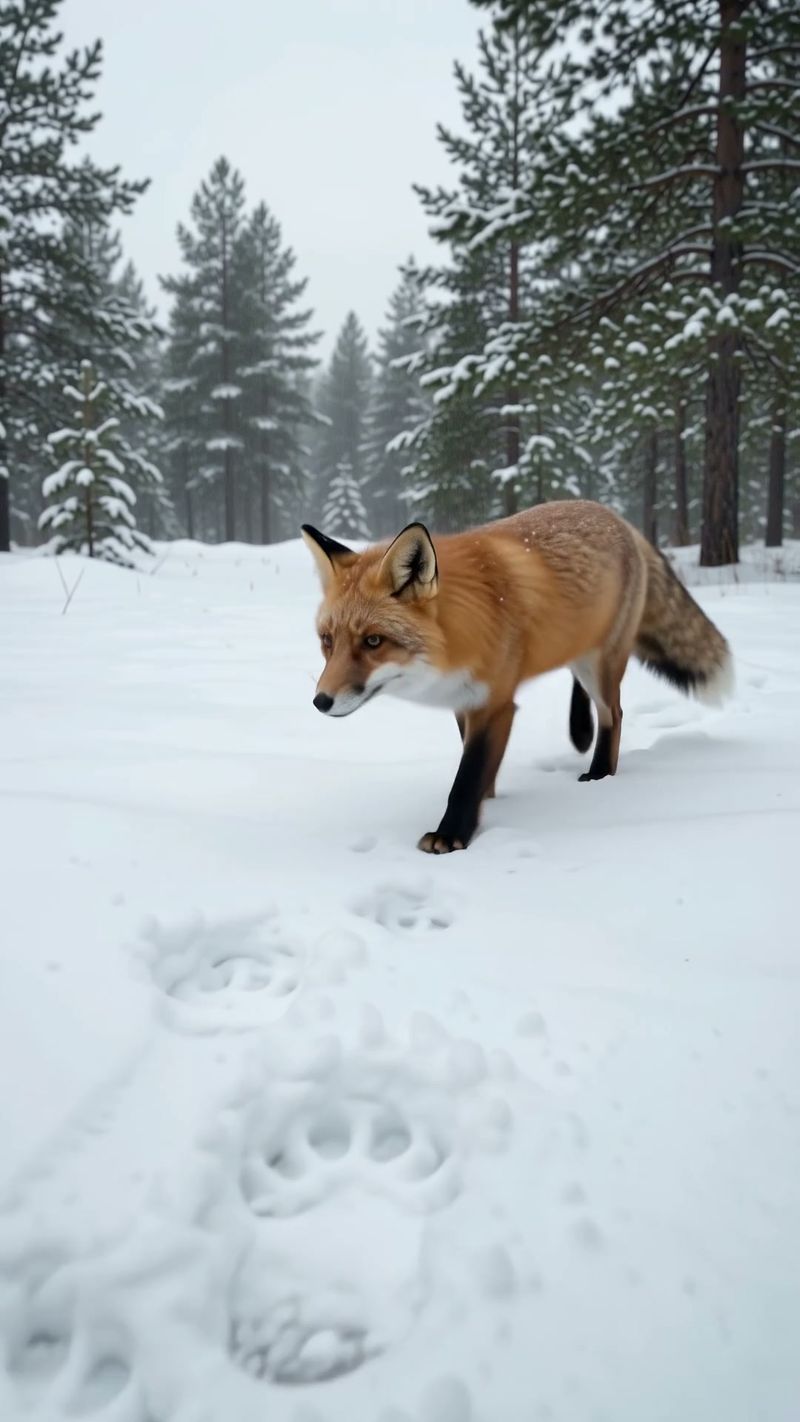
A winter crossing may reflect ordinary movement or foraging, which the U.S. Fish and Wildlife Service describes as typical for the season.
A brief sighting cannot establish the fox’s specific purpose, and that is fine. You do not need the answer to respond well.
Keep your distance, and if visits repeat, remove attractants as DNREC advises. Seek guidance if the animal’s behavior or any contact raises a real concern.
Most nights, the fox is simply doing its job, and your best part is staying out of its way.
Share this story