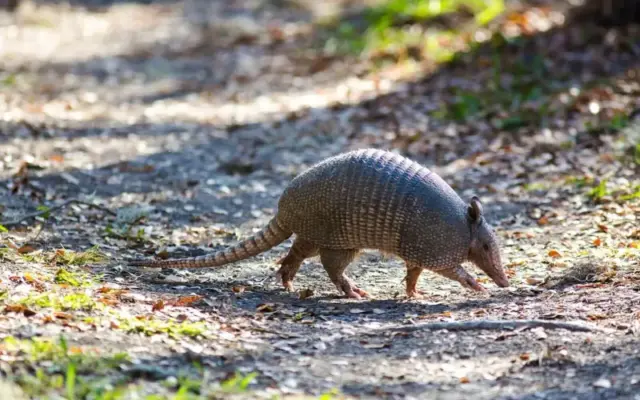
When the weather turns cold, armadillos seem to vanish from South Carolina yards, and the answer is that many are likely still nearby, just underground and moving less. They do not hibernate, and there is no proven statewide winter trip to somewhere warmer.
Fewer sightings mean the animals are harder to spot, not that they are gone for good. Here is what that means for your lawn when spring arrives.
Cold weather can make armadillos harder to see
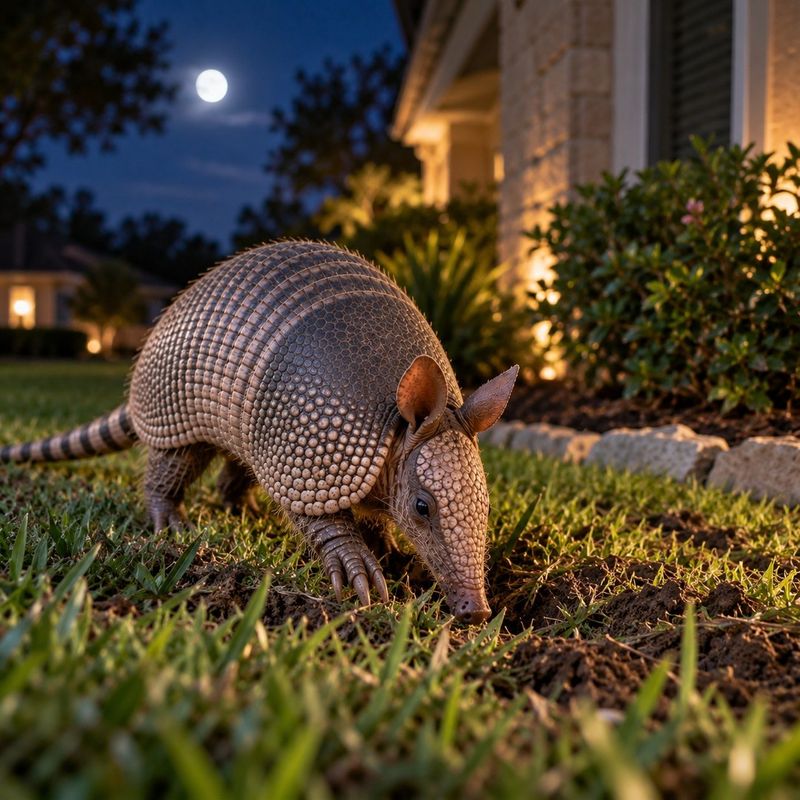
Cold weather can lead nine-banded armadillos to spend more time underground and move around less. For a homeowner, that can make a yard feel suddenly quiet.
The animal that dug up the flower bed in October may simply be resting in a den instead of wandering across the grass at dusk.
According to a University of Georgia natural history account, armadillos do not hibernate. They can come out to forage when conditions warm up, and sometimes that happens in daylight.
So a chilly week may hide them, while a mild afternoon may bring one back into view.
It also helps to know what the evidence can and cannot tell us. Nothing found so far shows a predictable winter migration out of South Carolina.
A quiet yard simply tells you that you are not seeing an armadillo right now.
That means fewer sightings do not prove an animal has permanently left your property. It could be sheltering close by, or it could have shifted to another part of its range.
From the porch, you cannot tell which.
The National Park Service notes in its Cumberland Island armadillo page that these animals live in coastal Georgia, where they are still seen in winter. Less visible is not the same as inactive, and the weather in your own neighborhood matters a great deal.
What armadillos did on a nearby Georgia island
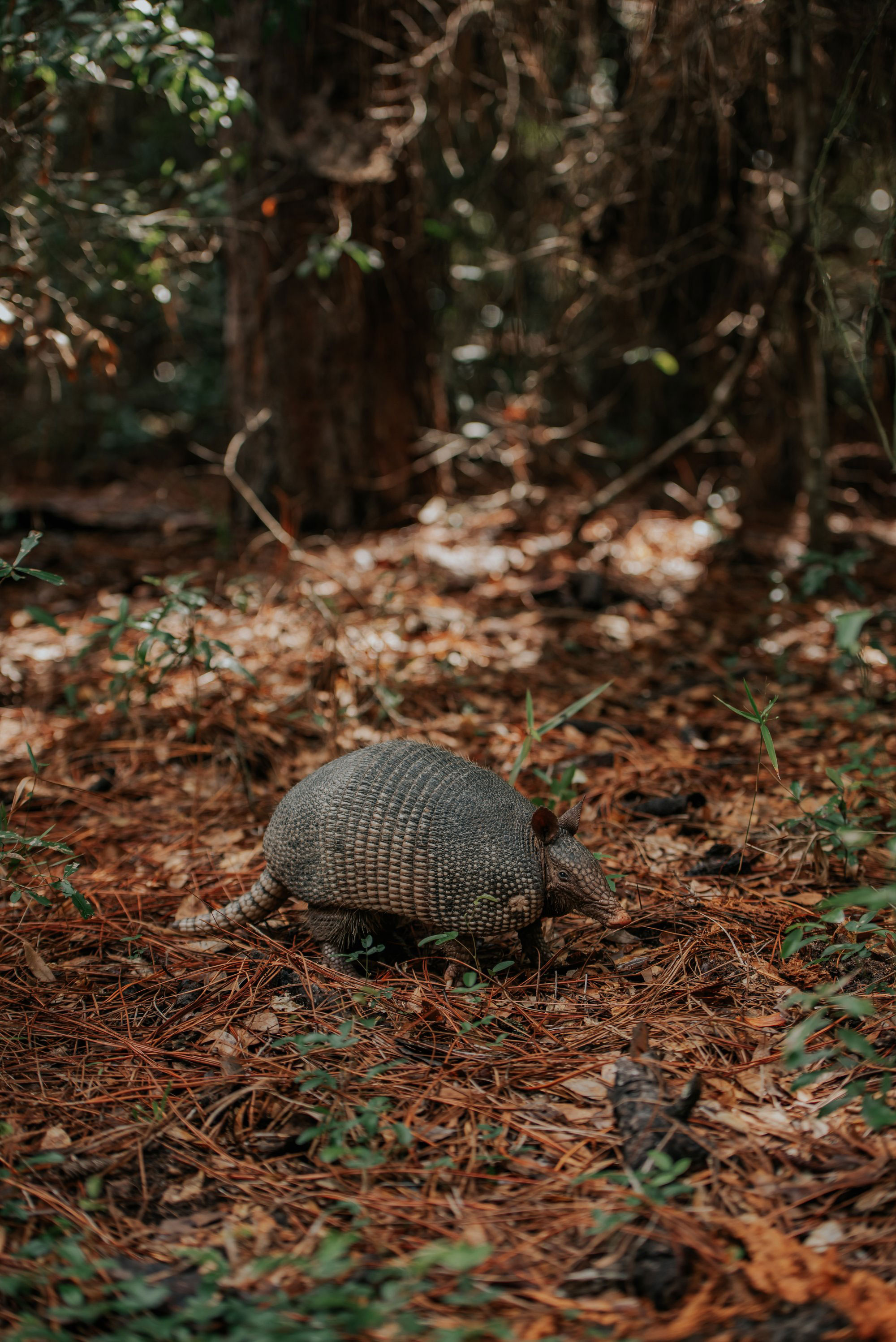
Some of the best nearby evidence comes from Cumberland Island, Georgia. There, armadillos spent more time in their dens and had smaller home ranges in winter than in summer, as described in the University of Georgia account.
In plain terms, they stayed closer to shelter and covered less ground.
That fits with the quiet-yard puzzle. An animal that stays near its den and roams a smaller area is simply less likely to cross your lawn.
Still, this is one island, not a survey of South Carolina backyards. Your own yard may see something different depending on weather, soil, and how much cover is around.
Armadillos do not hibernate, so winter does not shut them off. The National Park Service says on its Cumberland Island page that armadillos are seen in winter in coastal Georgia.
On a warm day, one may well come out to feed.
Cold has a harsher side too. Prolonged cold can harm or kill armadillos, which is one reason they favor milder conditions.
A hard freeze that lingers is hard on them, so you should not assume every animal you saw last fall will be around next year.
Spring digging is possible, but not certain
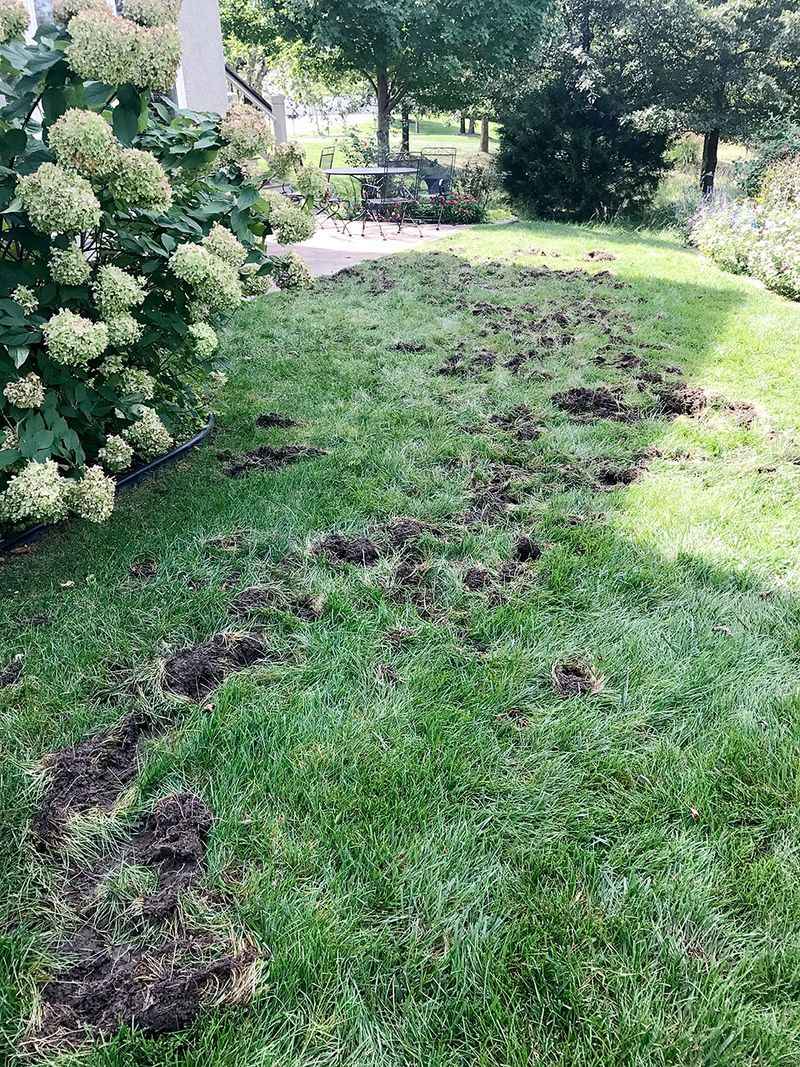
Armadillos dig because they are hunting. As Clemson Extension explains, they root in the ground for food such as insects and larvae.
That rooting can tear up turf and flower beds, even when the animal means no harm.
Digging goes hand in hand with being active. When an armadillo is out and foraging, fresh holes can show up.
When it is tucked in a den, the lawn usually stays untouched.
Because spring weather is warmer, more animals may be out searching for food. That makes renewed digging a real possibility, but it is only a possibility.
Nobody can say that a specific armadillo will come back to your yard or damage your lawn.
Remember what the Georgia island work showed, as noted in the University of Georgia account: home ranges change with the season. An animal that was nearby in fall may roam elsewhere by April.
Another may wander in for the first time.
The practical move is to stay curious rather than worried. Walk the yard as the ground warms, notice any new disturbance, and treat it as something to look into rather than a verdict.
Check what is making the holes
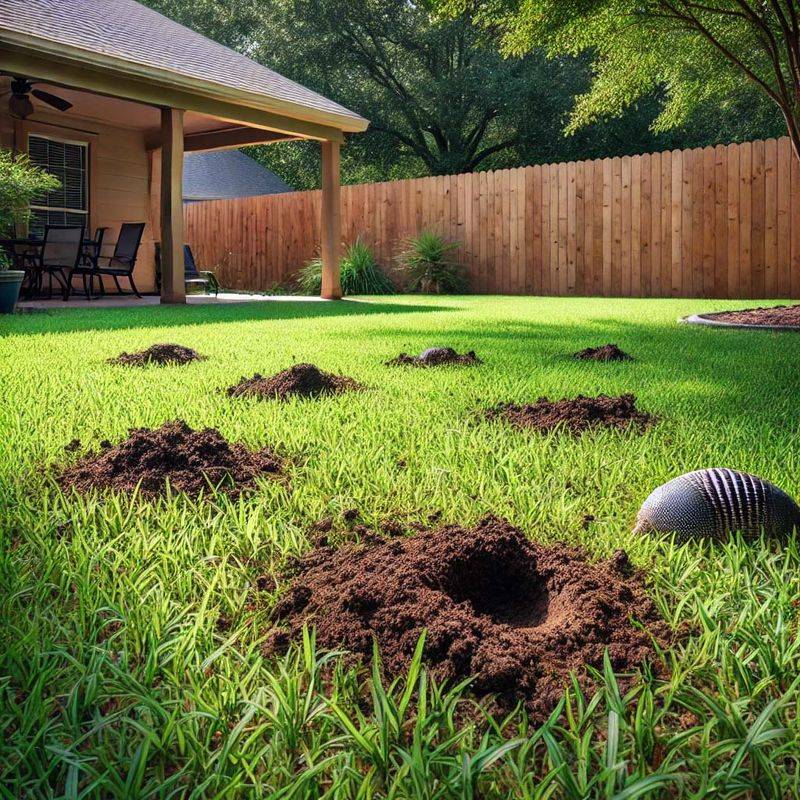
A torn-up patch of lawn is a clue, not an answer. Clemson describes armadillo rooting holes as typically cone-shaped, about 1 to 3 inches deep and 3 to 5 inches wide, in its armadillo fact sheet.
Holes that match that shape are worth a closer look, but they do not prove an armadillo made them.
Other things can leave similar marks. Grubs feed on grass roots, and animals including armadillos may dig where grubs are present.
Other wildlife can also dig, so the signs can overlap.
That is why inspection comes first. Clemson’s white grub guidance for turfgrass advises checking the turf and soil for grubs.
Cut a small square of sod, peel it back, and look at the roots and the top layer of soil.
If you find plenty of grubs, you have learned something useful about the lawn. It does not guarantee that treating them will stop animal digging, since a hungry animal may find other food.
If you find few or no grubs, a grub treatment may be wasted effort.
Take notes as you go. Write down where the holes are, how big they look, and whether they appear overnight.
Those details help you pick a response that fits the real cause.
Reduce cover and use a properly built fence
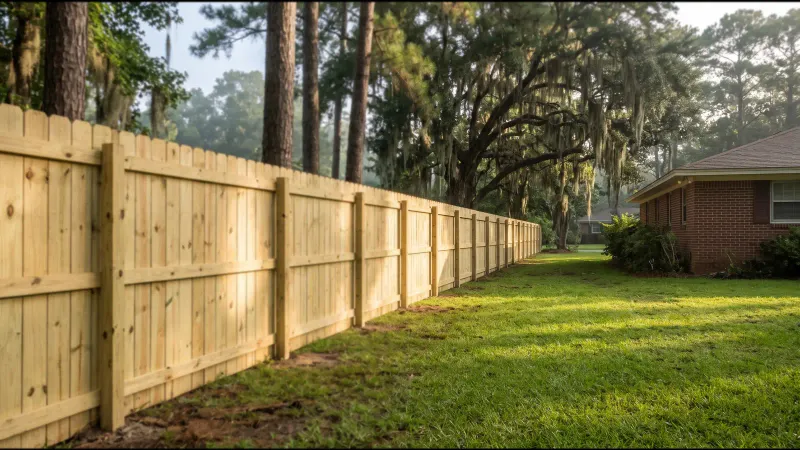
If armadillos are active around your home, start with the landscape. Clemson recommends removing brush or other cover near places where they are active, according to its armadillo fact sheet.
Piles of brush, wood, and tangled growth give them places to hide and den.
Walk the edges of the yard and ask where an animal could tuck away. Clearing a woodpile, trimming dense shrubs near the house, and tidying the area under a deck can all make the spot less inviting.
For areas you really want to protect, such as a garden or flower bed, fencing is the option Clemson describes. The fence should be at least 3 feet high and buried 12 to 18 inches deep.
In sandy soil, it needs to go deeper, since loose ground is easier to tunnel through.
Building it well matters more than building it big. A fence that stops above ground can simply be dug under.
Do not count on gadgets. Clemson says frightening devices are not known to be effective.
It also says no toxicants are registered for armadillos, so poisons are not a safe or legal choice.
Get qualified help with capture or removal
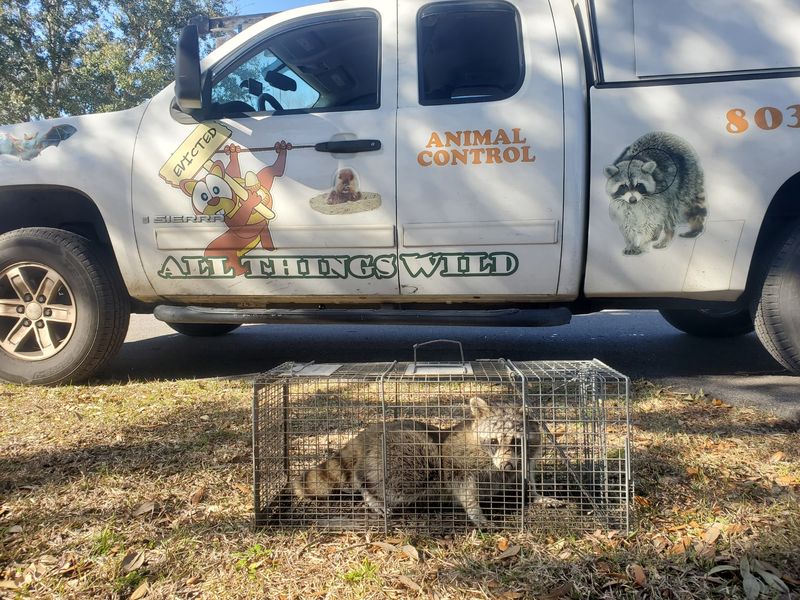
Some situations call for a professional. If an armadillo is causing trouble you cannot solve with cover removal or fencing, start with the South Carolina Department of Natural Resources.
Its wildlife control operator information can point you to people licensed to handle nuisance animals.
It also pays to read the agency’s armadillo species information and check current rules before acting. Procedures can change, so confirm them first.
Please do not catch, move, or release an armadillo yourself.
There is a health reason for caution, though it is small. The CDC says some armadillos in the southern United States carry the bacteria that cause Hansen’s disease, also called leprosy.
The risk to people is very low, and most people who encounter armadillos are unlikely to get it.
Even so, avoiding handling is a sensible precaution. Leaving the work to trained people protects you and the animal.
Use spring to inspect, not to predict
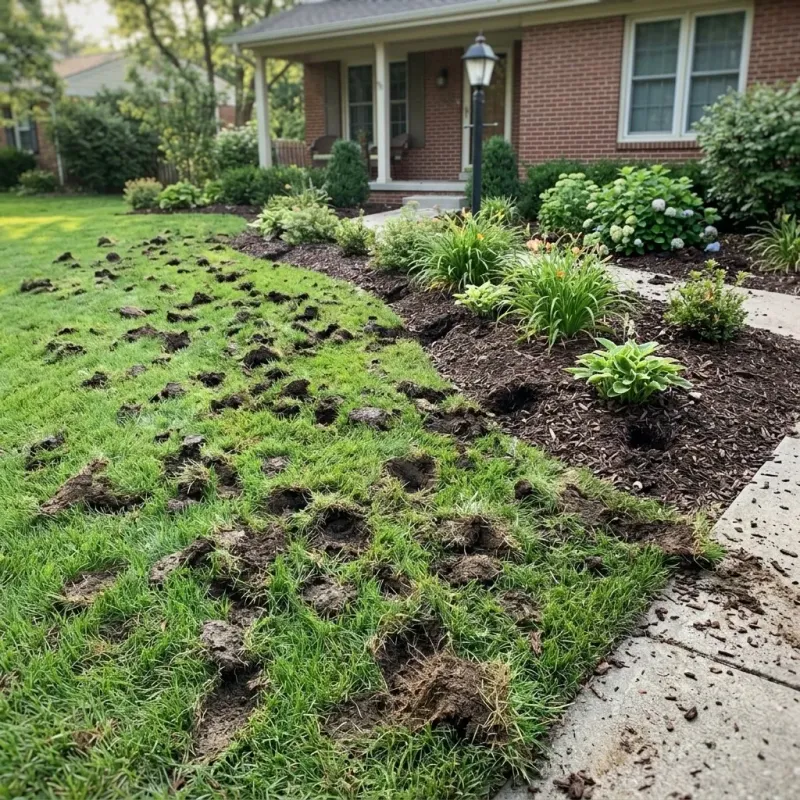
A silent winter yard cannot tell you where an armadillo is or whether it will be back. What you can do is look closely once the ground warms.
Check for fresh holes, compare them with Clemson’s description of rooting damage, and peel back some turf to look for grubs using Clemson’s grub guidance.
Once you know the cause, pick a response to match it. The lawn will tell you more than the calendar will.
Share this story