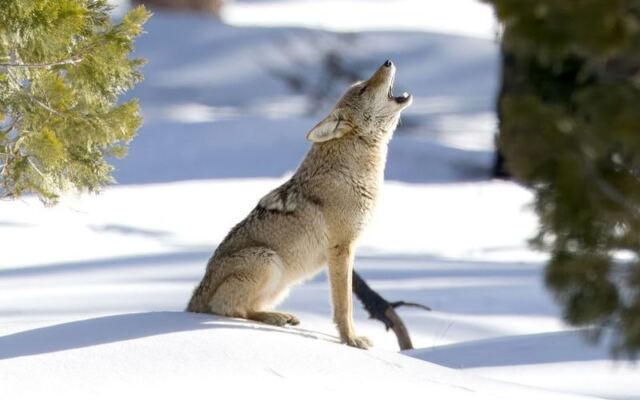
Those late-night yips and howls outside your Iowa home are coyotes talking to each other. They use their voices to announce where they are, keep family members in touch, and mark the land they live on.
The sound can feel eerie in the dark, but a noisy night usually says more about coyote communication than about danger. Here is what the calls mean, what they do not mean, and what to do if you want to stay prepared.
Why coyotes may be calling in late fall
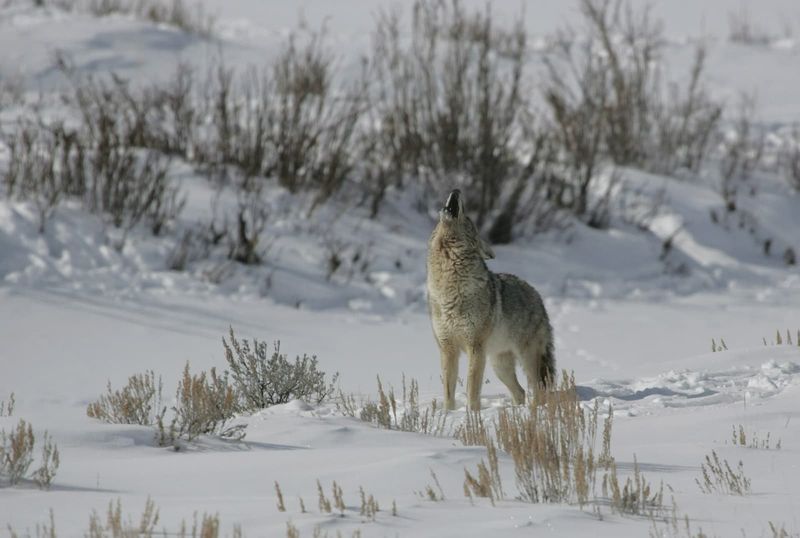
Late fall brings a seasonal backdrop to the sounds you may hear after dark. Iowa’s annual cycle for coyotes includes a September to December dispersal period, when young coyotes may leave the area where they were born and try to establish territories of their own.
That is helpful context, but it is only context. Hearing a howl in November does not tell you that the caller is a young coyote on the move.
A coyote that has lived in the same spot for years can sound exactly the same, and there is no way to tell the two apart by ear.
It also helps to keep the calendar straight. Dispersal is a different stretch of the year from breeding, which runs January through March, and from pup-rearing, which runs April through August.
A fall chorus should not be filed under either of those seasons.
Think of late fall as a time when coyotes may be a bit more on the move across farm fields, rural roads, and town edges. That is a good reason to be curious, and a gentle reminder to keep pets in mind, but it is not a reason to assume something unusual is happening in your yard.
The calls carry broad messages, not a decoded sentence
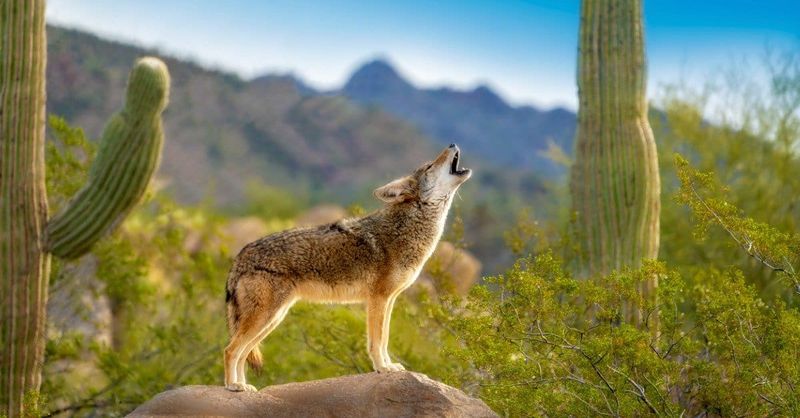
Coyotes have a surprisingly wide vocabulary of yips, barks, and howls. According to the Iowa DNR, they use these sounds to announce their presence to other family groups, strengthen bonds within their own family, and defend their territory.
A U.S. wildlife-management handbook adds a few more broad jobs for howling. A howl can share where a coyote is, help it find other coyotes, or mark a range that is already occupied.
Notice that all of these are general purposes, not sentences. Nobody can listen to a single chorus and say that the coyotes are warning your family, calling others to dinner, or responding to something in your yard.
The same kind of sound can serve different purposes at different moments.
So the honest answer to what they are saying is that they are checking in. Family groups keep track of each other, and neighbors learn who is nearby.
Hearing it from your porch means you are overhearing ordinary coyote business, even though the exact message stays their secret.
One chorus can sound like a much larger group
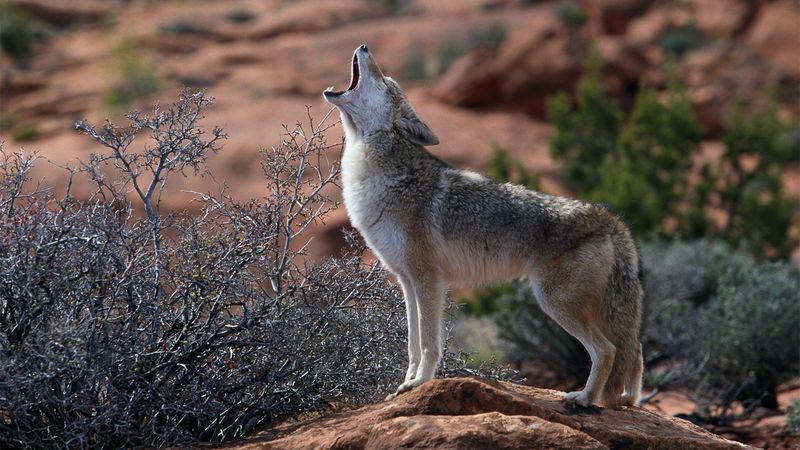
Ever walked outside, heard a wild burst of yips, and pictured a dozen coyotes? Your ears may have fooled you.
Coyote voices overlap, rise and fall, and bounce around in the dark, which makes a small group sound busy and big.
Researchers tested this idea in a study of human perception of coyote group size. In it, 427 listeners heard recordings of one to four coyotes.
On average, they overestimated the number of animals by nearly twofold.
That result is about how people hear, not about how many coyotes live in Iowa. It does not count animals in any county, and it does not say your neighborhood has a certain number.
It simply shows that our guesses from sound alone tend to run high.
The practical takeaway is easy. A loud, layered chorus does not mean a large group is gathered near your home, and it does not mean a large local population or an immediate threat.
Often it is a family group or a territorial pair making a lot of noise for a short time.
When Iowans are more likely to hear coyotes
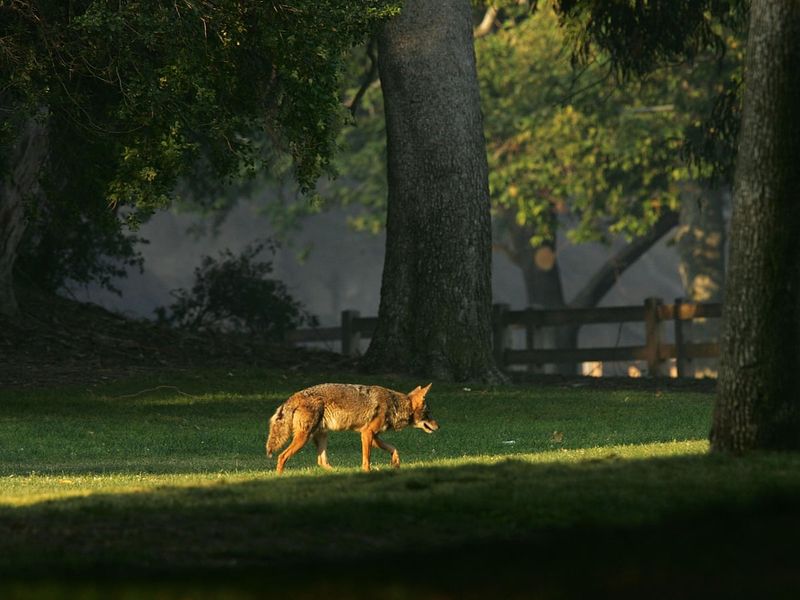
In Iowa towns and cities, coyotes are often heard but seldom seen. They can live close to people and still stay out of sight, so a howl from a nearby park or creek corridor may be the only sign that one is around.
Timing matters too. The Iowa DNR says urban coyotes are often active at night, which is when streets are quiet and calls carry farther.
Calls are also commonly heard at dusk or in the first hour of darkness.
Out in less-populated areas, the pattern is a little different. Activity there tends to peak around dawn and dusk, so people on farms and acreages may notice calls and movement at the edges of the day.
None of this means a coyote is heading for your house. Sound travels a long way over open fields and across sleeping neighborhoods, so a call that seems to come from your backyard may be coming from far beyond it.
Hearing coyotes tells you they share the area, which is not the same as knowing where they are going.
A howl is not proof of a kill or an immediate threat
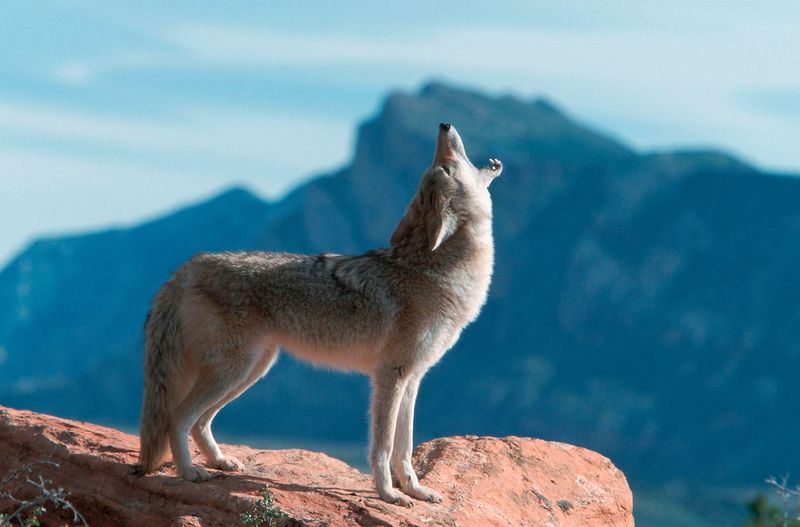
A common story says a howl announces a kill. It sounds dramatic, but it is a misconception.
Massachusetts wildlife officials point out that coyote howling serves communication functions instead. A howl alone is not evidence that a pet or any other animal has been killed.
The same goes for danger to people. The Iowa DNR cautions that vocalizations can create misconceptions about coyote numbers and risk.
Noise, even a lot of it, is different from behavior that signals trouble.
So what does count? According to Iowa State University Extension, an occasional sighting, especially of an animal that clearly fears people, is not by itself a reason for alarm or intervention.
More frequent encounters around pets or livestock call for practical precautions.
That does not mean coyotes pose no risk at all. Small pets can be vulnerable, and a bold animal deserves attention.
But a coyote being present, active at night, or vocal is ordinary wildlife behavior, and it is the behavior you watch, not the volume.
Keep pets close and remove easy food sources
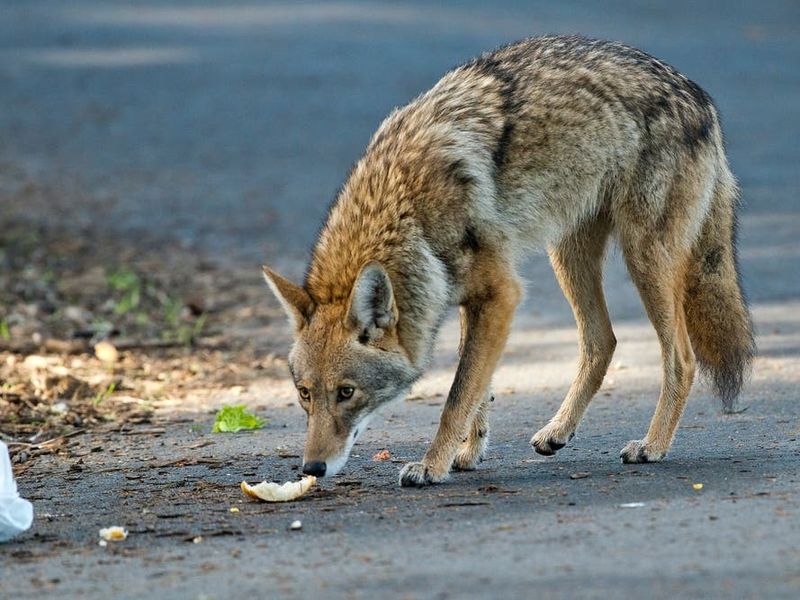
If the howling has you thinking about your pets, a few simple habits go a long way. These are precautions for living alongside wildlife, not signs that a coyote has picked out your home.
Start with cats, which are safest indoors. The Iowa DNR advises keeping cats inside, and supervising dogs outdoors.
Use a leash, particularly at dawn, dusk, and night, when coyotes tend to be more active.
Food is the next thing to check. Do not leave pet food outside, even for a short time.
Secure garbage, and look around for other easy meals, such as fallen fruit, spilled birdseed, or open compost.
For people with chickens, rabbits, or other livestock, Iowa State University Extension recommends starting with attractant control and good supervision, and adding protective measures if problems continue.
A quick evening routine can cover most of this: bring pets in, bring bowls in, close the lids, and turn on the porch light before you let the dog out. Once those habits are in place, a chorus in the distance becomes much easier to enjoy.
Let behavior, not the chorus, guide your response
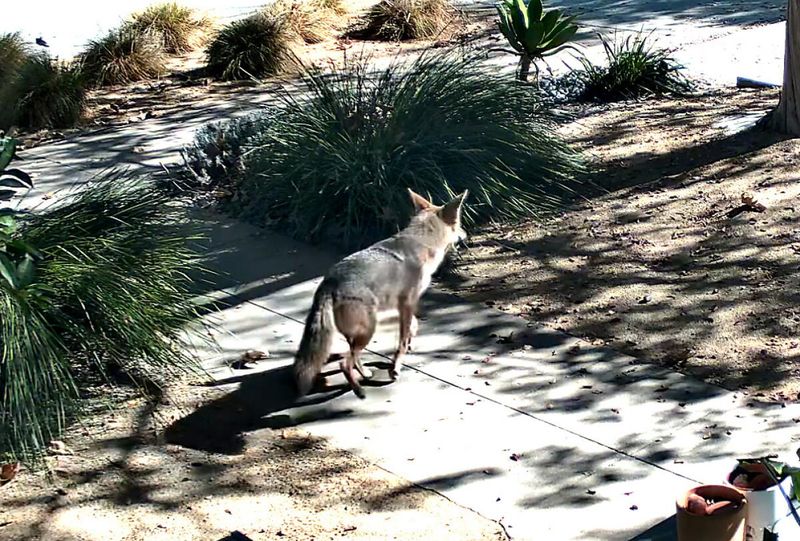
What you do should depend on what a coyote does, not on how loud it is. If one comes too close, the Iowa DNR advises making loud noises, shouting, and making yourself look large so it will leave.
Never approach it or feed it, and give it room to go.
Hazing like this can help, but it is not a guaranteed fix. In a USDA study with captive coyotes, responses changed with the animals’ past experience around people, including whether they had been fed.
Some situations call for outside help. Iowa State University Extension points to aggressive approaches, following children, and frequent attacks on pets or livestock as reasons to contact professionals.
Until then, the night belongs to the coyotes, and the howls are theirs to enjoy.
Share this story