Cutting that tall flower stalk will not save your onion, because the plant has already bolted and begun flowering. The better move is to pull the onion and use it soon.
A bolted bulb can still go in your skillet, but it will not wait around in storage like its neighbors. Here is how to read the signal and what to do next.
What a flower stalk means
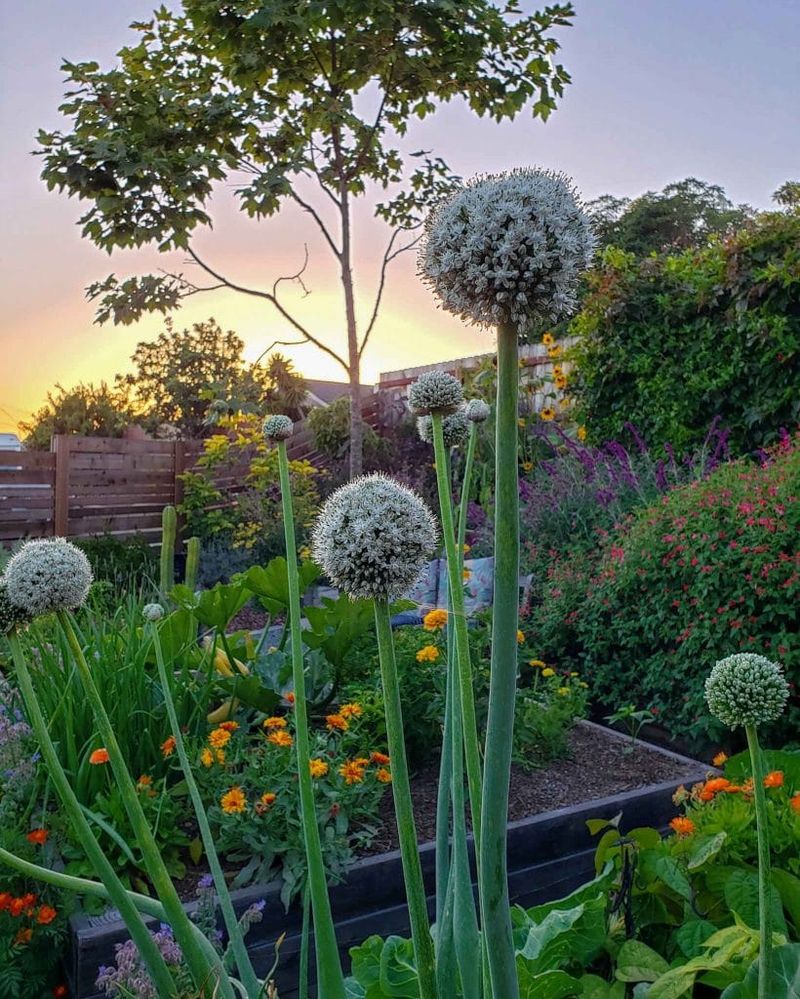
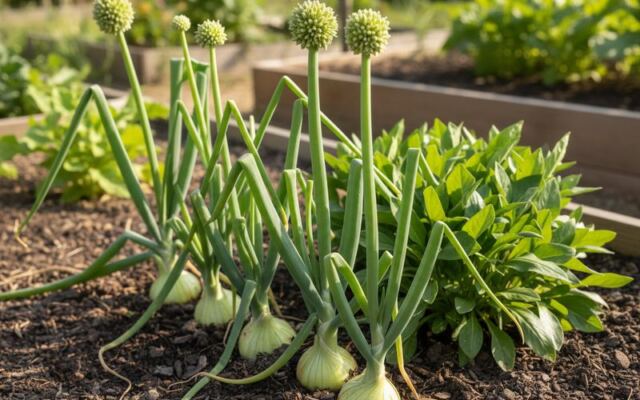
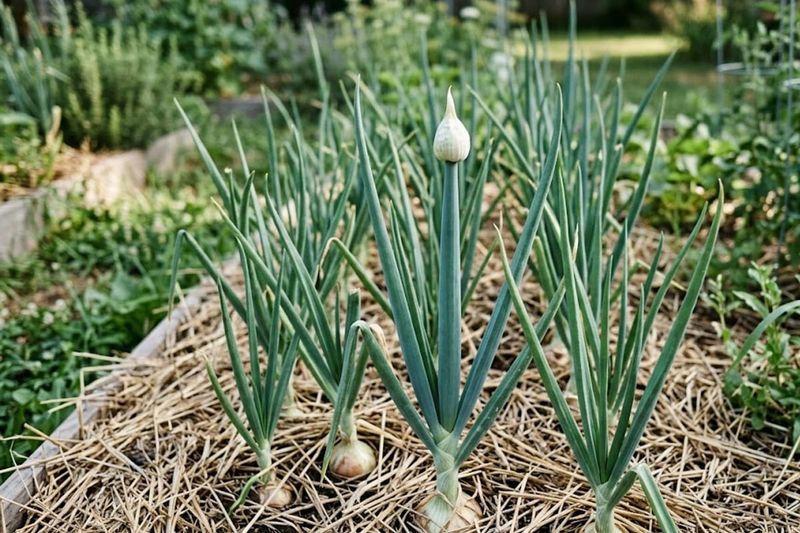
A tall, firm stalk shooting up from the center of a bulb onion means the plant has bolted. Bolting is the start of flowering, and the plant is shifting energy toward making seed.
You will usually see a thick, round bud on top that later opens into a ball of small flowers.
That is a different job from bulbing. LSU AgCenter explains in its Allium Crops guide that bulb formation responds to day length and temperature, and that the lengthening days and warming weather of spring start the bulbs swelling.
Bulbing is the normal, healthy process. A flower stalk is something else entirely.
Industry paperwork draws the same line. USDA onion loss standards define bolting and bulbing as separate things, which is a handy reminder that a swelling bulb and a rising stalk are not the same signal.
Once the stalk appears, the bulb often stops growing well. Iowa State Extension notes that bolting onions tend to produce a poorer bulb and that quality can decline.
Think of the stalk as an early warning, not a disaster.
Everything here applies to onions you are growing for bulbs. If you grow onions for their green tops, the picture is different, and we will get to that.
Should you cut the stalk?
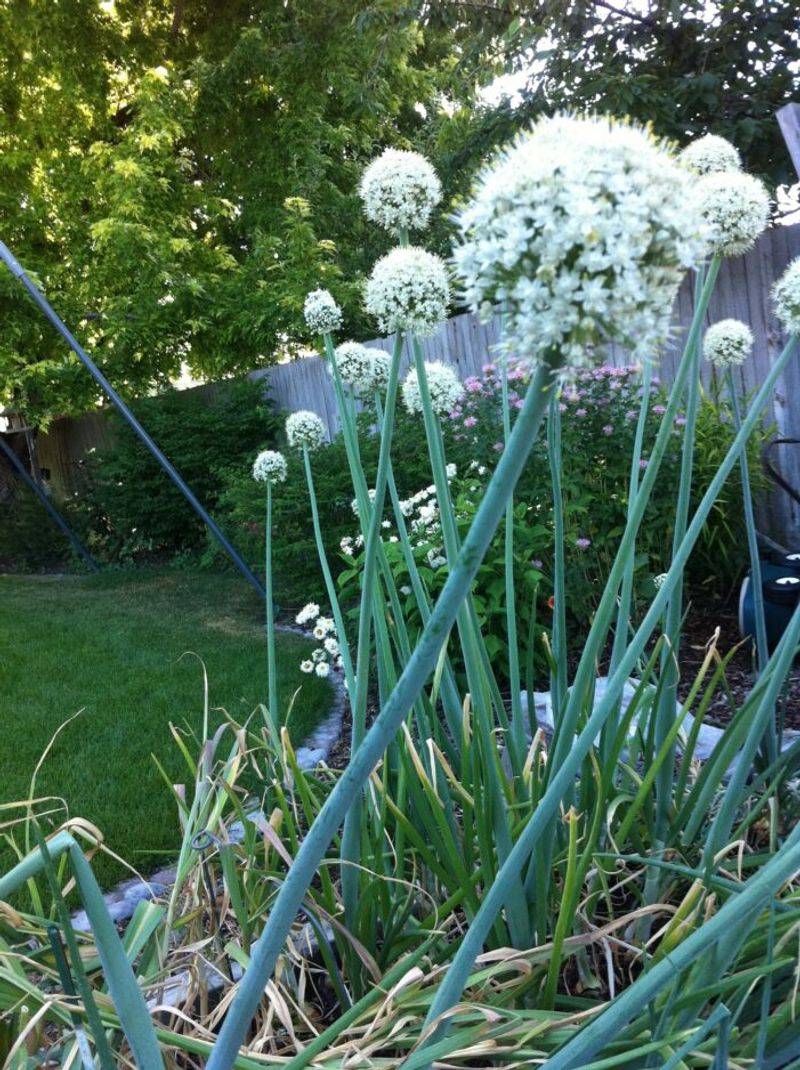
Snipping the stalk off does not stop bolting and does not reverse it. It is also not a proven way to rescue the bulb.
Once the plant has decided to flower, the change has already started.
UC ANR guidance says cutting the stalk will not halt bolting and recommends harvesting right away. That is a clear, simple rule you can follow.
Extension sources do not fully agree on the small stuff. South Dakota State Extension says removing the stalk may reduce how much stored energy the plant keeps spending.
Even so, it tells gardeners to harvest bolted bulbs first because they store poorly.
So if you want to snip the stalk, go ahead, but do not expect a bigger bulb or a longer shelf life. Texas A&M AgriLife Extension points the same direction, noting that bolted bulbs are best used soon.
The shared message across these sources is simple. Pull the onion and put it to use rather than betting on a cut to fix it.
Harvest the bolting onion and use it soon
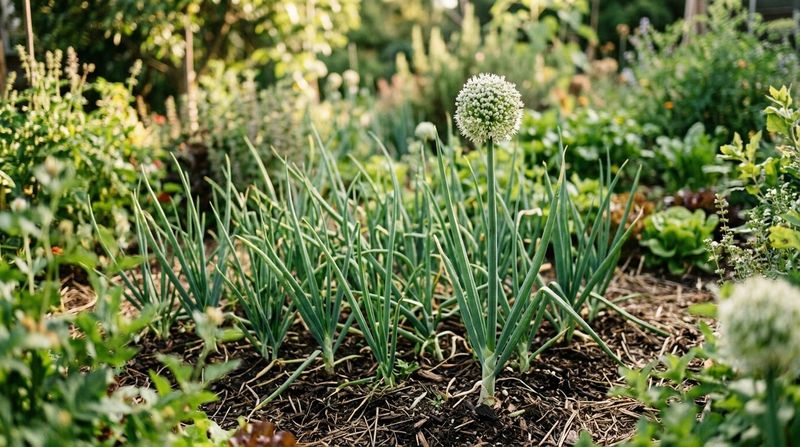
Dig the bolting onion now, even if the rest of your row is still growing. Do not leave it for the regular storage harvest.
Iowa State Extension advises harvesting at the first sign of bolting and using the bulb promptly, since bolted onions do not store well.
A bolted onion can remain edible. It may just be smaller, with a tough, woody core running up the middle where the stalk grew.
Texas A&M says these bulbs can still be eaten but should be used soon.
In the kitchen, slice around the tough center and cook the rest. Chopped onion freezes well, and a bolted bulb is a good candidate for tonight’s soup or sauté.
Timing matters because the stalk can grow into the bulb. A New Hampshire trial found that early-harvest bolted onions could still be marketable while stalks were small, while larger stalks showed up in the bulb later.
That trial used particular overwintered cultivars under its own growing conditions, so treat it as context, not a rule for every garden.
Do not borrow garlic advice here. Michigan State Extension contrasts onion stalks, which can compromise storage, with garlic scapes.
A garlic scape is a treat you cut on purpose, while an onion stalk is a sign to harvest.
Keep bolting separate from normal harvest timing
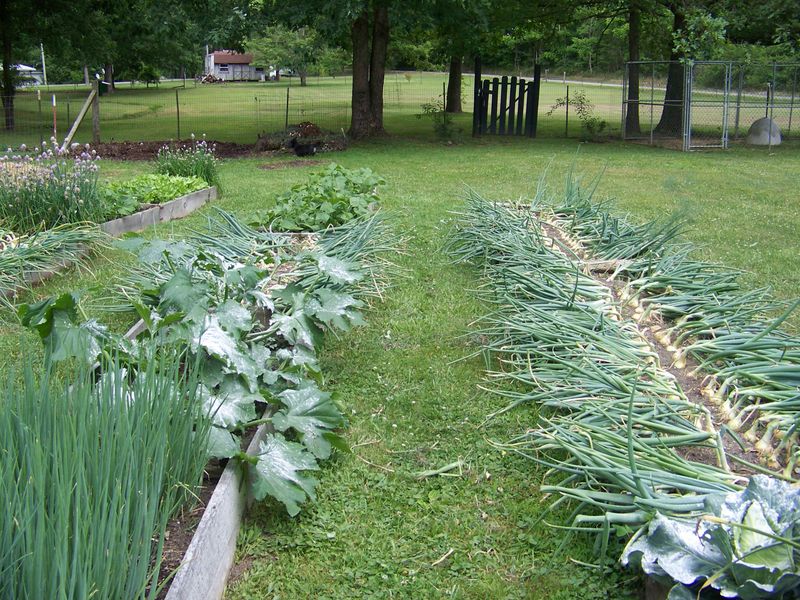
Two different signals show up in an onion bed in late spring, and they call for different timing. One is a flower stalk, which means harvest that onion now.
The other is falling tops, which tells you the whole crop is nearing readiness.
LSU AgCenter’s local planting guidance says the usual cue for harvest is when 50 to 60 percent of the tops have fallen over. That marks routine maturity for the crop as a whole.
It is not a reason to leave a bolting bulb in the ground until the rest catch up.
Picture a row where most plants still stand tall and green, and one has a thick stalk. Pull that one today, and leave the others to finish.
When the tops do flop, dig, cure, and store the healthy bulbs.
Bolting and bulbing are also not the same thing, as Iowa State Extension describes when it discusses bolting as a flowering response. A swelling bulb with healthy tops is simply growing.
Scallions and bunching onions are a separate crop. LSU AgCenter treats them as grown for green tops and harvested at usable size, so storage-bulb advice does not carry over to them.
Several factors can raise bolting risk
No single cause explains every bolted onion. Plant size, cold exposure, variety, and timing all play a part, and they can stack up.
Blaming Louisiana heat or day length alone misses most of the story.
Size is one you can control. LSU AgCenter warns that oversized transplants are more likely to bolt.
Its guideline is a transplant smaller than a pencil in diameter, with at least three true leaves.
Cold matters too. Clemson Extension says larger plants exposed to prolonged cold are more prone to bolt.
A big transplant that sits through a long chilly stretch is a likely candidate.
Variety and planting date round out the list. A variety that is not suited to your area, or a planting that runs too early or too late, can shift the odds.
Even a well-managed bed may have a few bolters.
If you spot a pattern, such as stalks showing up mostly on the biggest plants, that is a clue worth writing down. It points you to a fix for next season.
Set up the next Louisiana crop
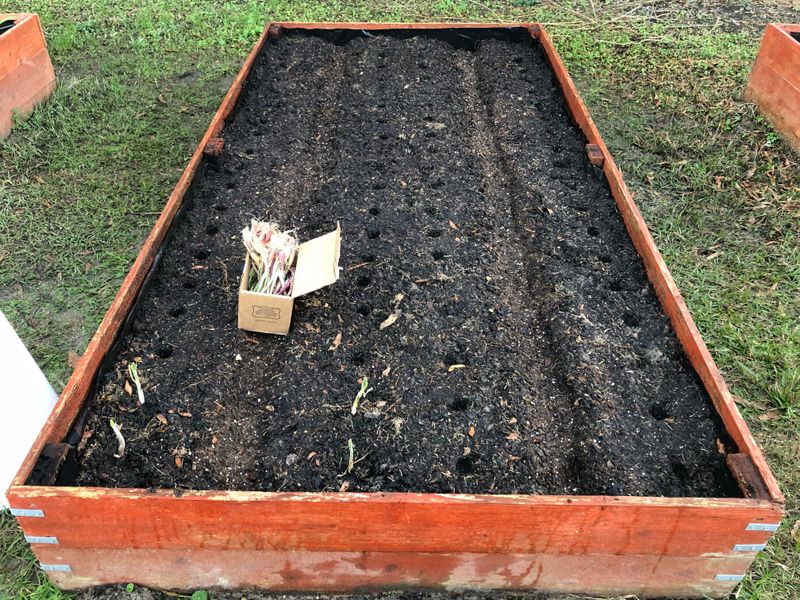
Next season, start by choosing the right type. LSU AgCenter says Louisiana bulb onions should be short-day varieties, which suit our spring day length and temperature pattern for bulbing.
Then watch the calendar. LSU’s local advice is to set transplants out from mid-December through January, with harvest around May.
Pick small ones, under pencil thickness with at least three true leaves, and skip the jumbo bundles.
Go easy on fertilizer, too. LSU cautions that overfertilizing can encourage bolting, so follow recommended rates instead of adding extra for good measure.
These steps follow local guidance and lower your risk. They do not guarantee that every onion stays vegetative, so a stray stalk is no reason to feel you did something wrong.
When one does appear, you now know the move. Pull it, use it, and let the rest of the row keep growing.
Share this story