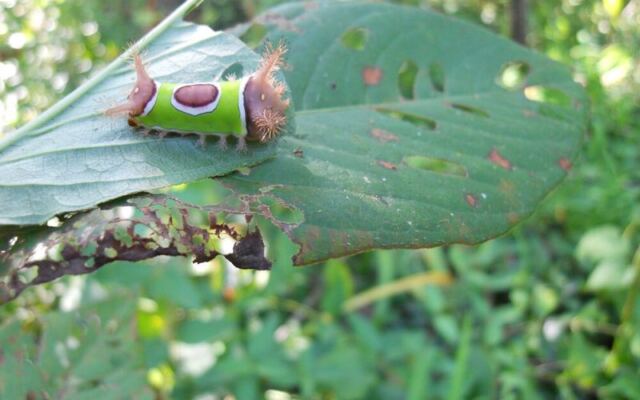
A green caterpillar with a brown saddle on its back can sting hard, and the first thing to do is use tape and soap and water. Spiny caterpillars like the saddleback caterpillar can cause sudden burning pain when they brush against bare skin.
Gardeners in Delaware who work around shrubs and ornamentals may want to know what to do before the pain sets in. A few calm steps can help, and knowing the warning signs tells you when to call for help.
Use Tape Before You Wash

Right after skin contact with a spiny caterpillar, you do not need to know what kind it was before you act. Gently press a piece of adhesive tape onto the affected spot, then lift it away.
Use a fresh piece each time and repeat a few times.
The goal is to lift off tiny hairs or spines that may be stuck in the skin. Poison Control guidance describes tape as a first step, and MedlinePlus gives similar advice.
Tape may help, but it cannot be counted on to remove every spine, and it does not prevent symptoms or cure the sting.
Once you have finished with the tape, wash the area gently with soap and water. Skip hard scrubbing, since rough rubbing could push spines deeper or irritate the skin more.
Try not to brush the caterpillar off with bare fingers, because that can lead to a second sting on your hand. If you need to move it, use a stick or a leaf, or simply step away and leave it alone.
Save the cold pack and the warning signs for later, once the skin has been taped and washed.
The Saddle and Spines Offer Clues
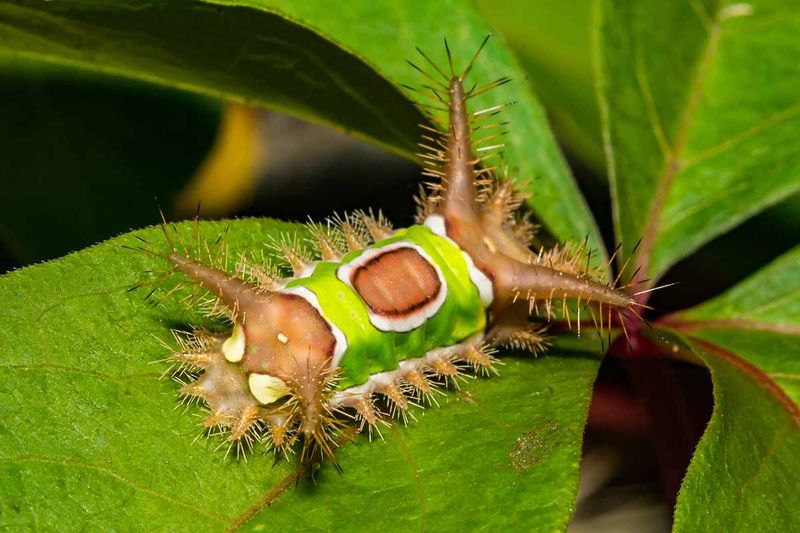
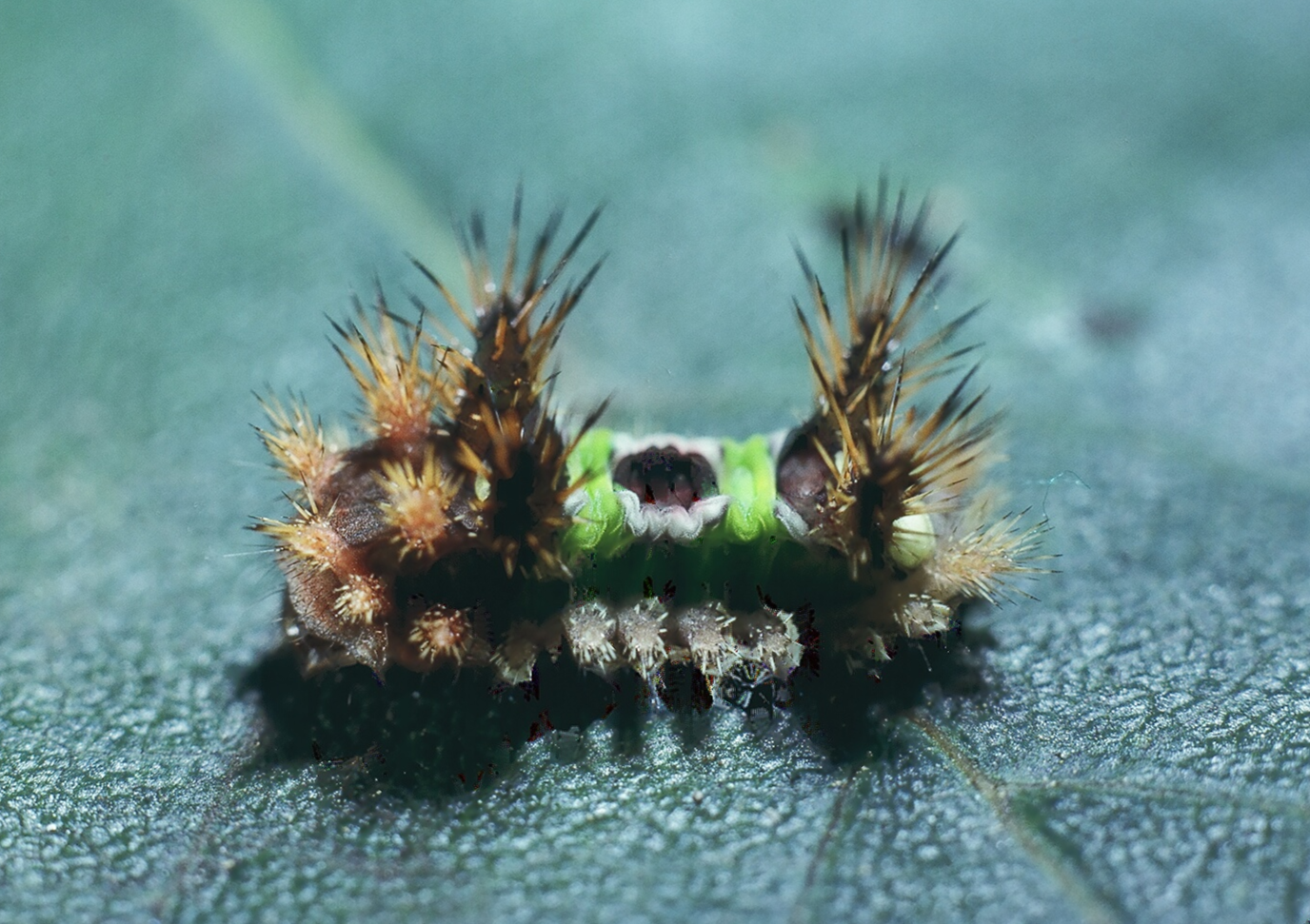
Some clues can point toward a saddleback caterpillar, Acharia stimulea. Look for a green body with a brown or purplish saddle centered on the back, along with prominent spiny projections.
Together, those features fit this species, according to Virginia Cooperative Extension.
The spines are the problem. They carry venom and can break off when something touches them, which is why contact can cause burning pain right away.
Green color alone is not enough to name this caterpillar. University of Maryland Extension lists several other stinging caterpillars in the region, and some of them cause similar problems.
The saddle marking and the spines are the details that matter.
Never pick up a caterpillar to check its markings. A close look with your eyes, or a quick photo from a safe distance, is a better way to study it.
If you got stung and are unsure what did it, the first-aid steps are the same either way.
A Sting Can Cause Burning, Itching, or Swelling
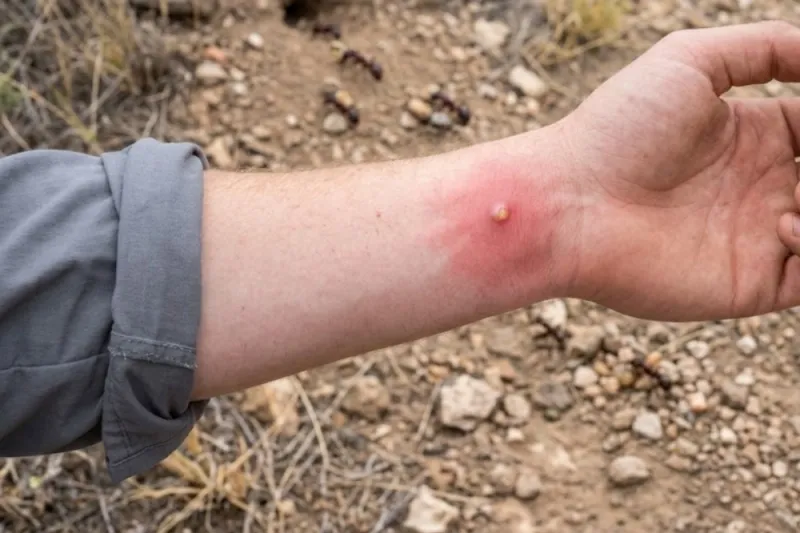
Expect the first sign to be burning pain, often right away. Redness, swelling, and itching can follow, and some people get blisters.
Reactions differ from person to person, and from one exposure to another.
As a general guide, Poison Control says the pain usually gets better within a few hours. Virginia Cooperative Extension notes that irritation may last a day or two.
Treat these as rough expectations, not promises, because your own reaction may be shorter or longer.
For discomfort, use a cold pack wrapped in a thin cloth. MedlinePlus suggests 10 minutes on the skin, then a 10-minute break.
Do not put ice directly on the skin, since that can add irritation of its own.
Resist the urge to scratch if the area itches, and keep it clean. Household pastes and similar remedies are not proven to neutralize the venom, so they should not replace the steps above or advice from a medical professional.
Know When to Get Medical Help
Most stings stay local, meaning the trouble stays in the spot that touched the caterpillar. Pain, redness, and itching fit that pattern, and they do not mean an emergency.
Severe allergic reactions are possible but rare.
Some signs are different. Call 911 for difficulty breathing, fainting, or swelling of the lips, face, or tongue.
Do not wait to see if these get better at home, and do not wait to call anyone else first.
Eye contact needs its own steps. Rinse the eyes with water, and get medical help if the irritation persists.
For advice about a specific exposure, Poison Control can help in the United States at 1-800-222-1222. The call is a good choice when symptoms seem mild but you are unsure what to do next, or when a child or another person has been stung.
It is not a substitute for 911, so if emergency signs appear, call 911 right away and do not wait for advice.
Check Foliage Before Reaching In
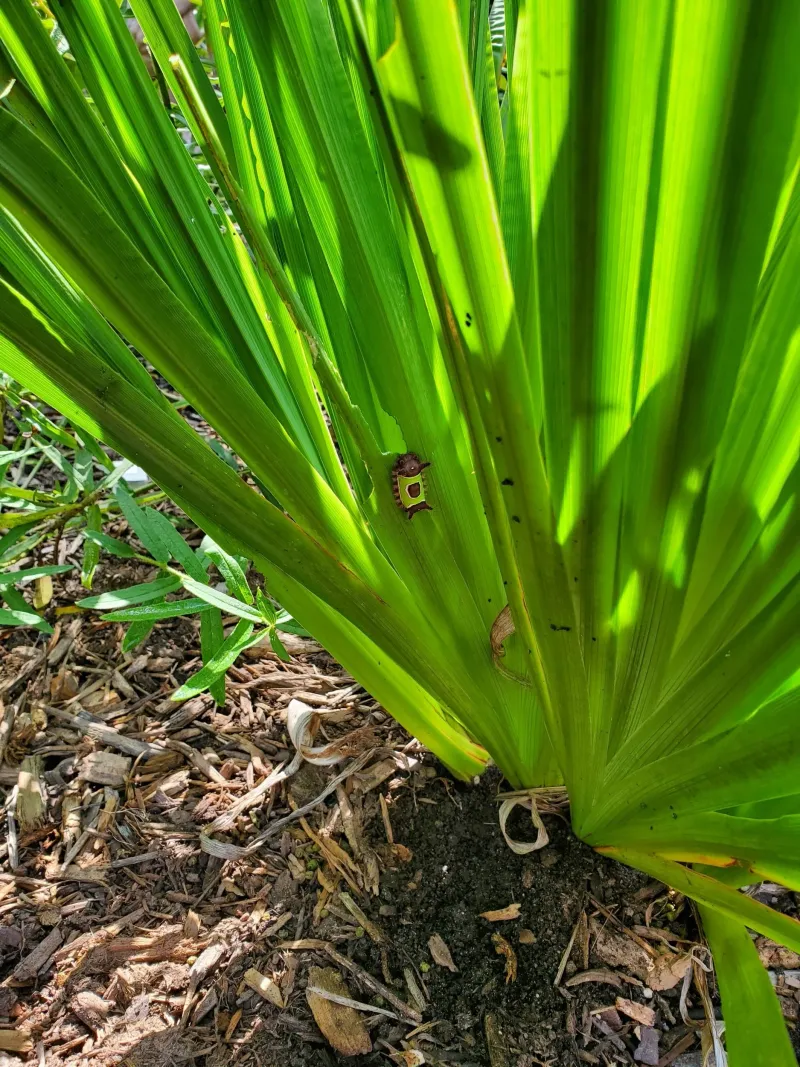
Garden chores often mean reaching into leaves without looking. Saddleback caterpillars can be hard to spot among foliage, since their green bodies blend in.
A slower look before you grab a branch can save you a painful surprise.
Documented host plants include trees and shrubs such as spicebush, buttonbush, viburnum, blueberry, oak, maple, and apple, as listed by University of Maryland Extension. Virginia Cooperative Extension describes the caterpillar as generally found on shade trees and ornamental shrubs in late summer.
That timing comes from Virginia, so it should not be read as a confirmed Delaware season.
Wear gloves when you handle plants and look carefully at the undersides of leaves. Gloves do not remove the risk, because spines can still touch bare wrists or arms, so long sleeves help too.
As for Delaware, BugGuide shows the species is present in the region, and its records include Delaware. That tells us it lives nearby, but it does not tell us how often gardeners run into it.
Remember the First Steps
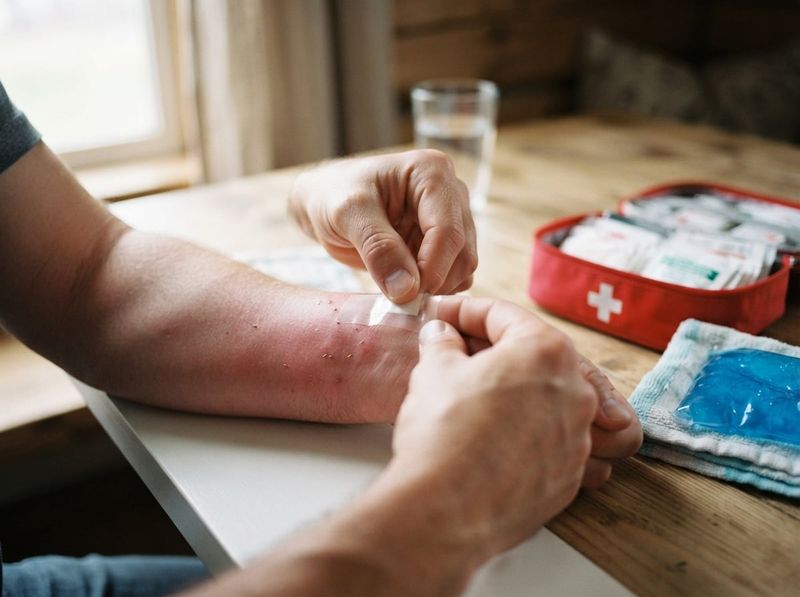
Tape first, to lift possible spines. Wash the skin gently with soap and water, then use a cloth-wrapped cold pack for discomfort.
Call 911 for emergency warning signs, and reach out to Poison Control when you want advice about your exposure.
A caterpillar can sting in a second, but a calm response takes only a few minutes.
Share this story