Get the latest garden guides in your inbox →
Gardening Latest
  • General Gardening
  • Lawn Care
  • Plant Care
  • Composting
  • Soil Health
  • Backyard
  • Garden Muse Magazine
  • General Gardening
  • Lawn Care
  • Plant Care
  • Composting
  • Soil Health
  • Backyard
  • Garden Muse Magazine
  • News
  • Gardening Calendar
  • Garden Structures
  • Vegetable Garden
  • Vertical Garden
  • Raised Beds
  • Hydroponics
  • General Equipment
  • Community Gardens
Garden Themes
  • Spiritual Garden
  • Hydroseeding
  • Seeding and Laying Sod
  • Artificial Grass
  • Lawn Care Equipment
  • Plants
  • Trees
  • Planting Tools
  • Composting Basics
  • Fertilizer
  • Alternative Growing Mediums
  • Front Yard
  • Backyard Activities
  • Landscaping
Gardening Latest

Explore by state

Which state is your garden in?

Currently viewing Indiana

All states

Northeast

  • Connecticut —
  • Delaware 33
  • Maine —
  • Maryland 19
  • Massachusetts 36
  • New Hampshire —
  • New Jersey 19
  • New York 29
  • Pennsylvania 29
  • Rhode Island —
  • Vermont —

Southeast

  • Alabama 19
  • Arkansas —
  • Florida 19
  • Georgia 20
  • Kentucky 33
  • Louisiana 18
  • Mississippi —
  • North Carolina 17
  • South Carolina 32
  • Tennessee 16
  • Virginia 18
  • West Virginia —

Midwest

  • Illinois 18
  • Indiana 21
  • Iowa 32
  • Kansas —
  • Michigan 19
  • Minnesota 18
  • Missouri 18
  • Nebraska —
  • North Dakota —
  • Ohio 20
  • South Dakota —
  • Wisconsin 34

Southwest

  • Arizona 19
  • Colorado —
  • Nevada —
  • New Mexico —
  • Oklahoma —
  • Texas 18
  • Utah —

West

  • Alaska —
  • California 19
  • Hawaii —
  • Idaho —
  • Montana —
  • Oregon —
  • Washington —
  • Wyoming —

No state matches that search.

Site menu

Gardening Latest
  • General Gardening
    • News
    • Gardening Calendar
    • Garden Structures
    • Vegetable Garden
    • Vertical Garden
    • Raised Beds
    • Hydroponics
    • General Equipment
    • Community Gardens
    Garden Themes
    • Spiritual Garden
  • Lawn Care
    • Hydroseeding
    • Seeding and Laying Sod
    • Artificial Grass
    • Lawn Care Equipment
  • Plant Care
    • Plants
    • Trees
    • Planting Tools
  • Composting
    • Composting Basics
  • Soil Health
    • Fertilizer
    • Alternative Growing Mediums
  • Backyard
    • Front Yard
    • Backyard Activities
    • Landscaping
  • Garden Muse Magazine

Explore

  • About GardeningLatest.com
  • Contact Us

Get the latest from the garden

New guides on lawn care, plants and backyard projects, sent when they go up.

Subscribe →

Follow

  • Facebook
  • X
  • Pinterest
  • YouTube
Indiana Gardening

Seeing a Red Fox in Your Indiana Yard This Winter? It’s Hunting, Courting, or Hunting for a Den

A red fox trotting across your Indiana yard in winter is most likely hunting, and it could also be in its mating…

DH

By Dale Hutchins

November 26, 2026 · 6 min read

Seeing a Red Fox in Your Indiana Yard This Winter? It’s Hunting, Courting, or Hunting for a Den
Seeing a Red Fox in Your Indiana Yard This Winter? It's Hunting, Courting, or Hunting for a Den

A red fox trotting across your Indiana yard in winter is most likely hunting, and it could also be in its mating season. A fox may even be scouting a spot for later in the year, though that is harder to know.

One sighting can’t tell you which it is, and that is the interesting part. Here is what the sighting can mean, what it can’t, and what to do about it.

At a glance

Where
Indiana Gardening
Hardiness zone
6 −10 to 0°F
Read
6 minutes
Published
November 26, 2026

What a winter sighting can and can’t tell you
What a winter sighting can and can’t tell you
© Fine Art America

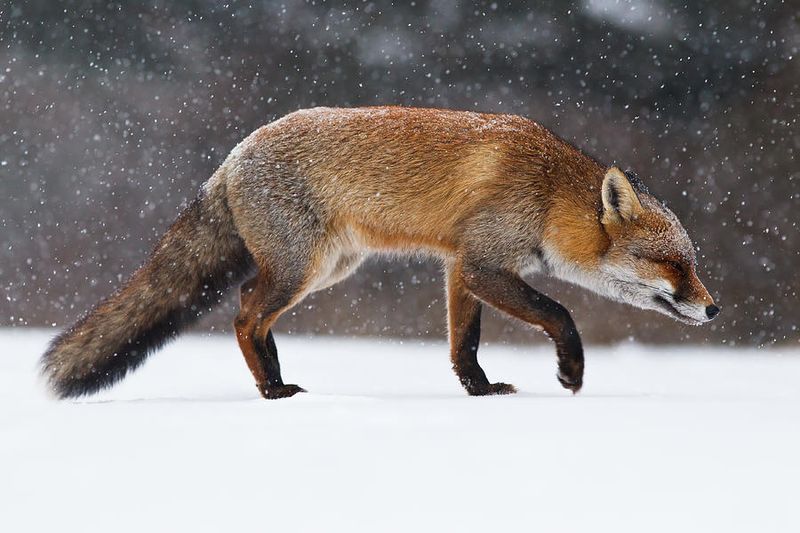
Picture a red fox crossing your snowy lawn. There are a few believable reasons it is there.

It may be hunting, since the National Park Service notes that red foxes eat mice and other small mammals and can be active in winter. It may also be breeding season, because Purdue Extension lists Indiana mating as January through March.

Den hunting is a third possibility, but it is the least certain one. Indiana DNR says red foxes seldom use dens except to rear young, so a fox passing through in midwinter is not automatically picking a home.

Here is the catch. Being seen tells you that a fox was in your yard, and not much more.

You can’t read its purpose from one glimpse, and you can’t tell whether it has chosen a den site. Behavior over time, such as repeated visits at the same hour, gives better clues than a single look.

The sections below take each possibility in turn. They also cover practical steps, so you can respond calmly whatever the fox is up to.

Read as a set, they give you a sensible way to think about the animal outside your window, according to Indiana DNR guidance.

Why a fox may hunt during the day in winter
Why a fox may hunt during the day in winter
© Buckrail

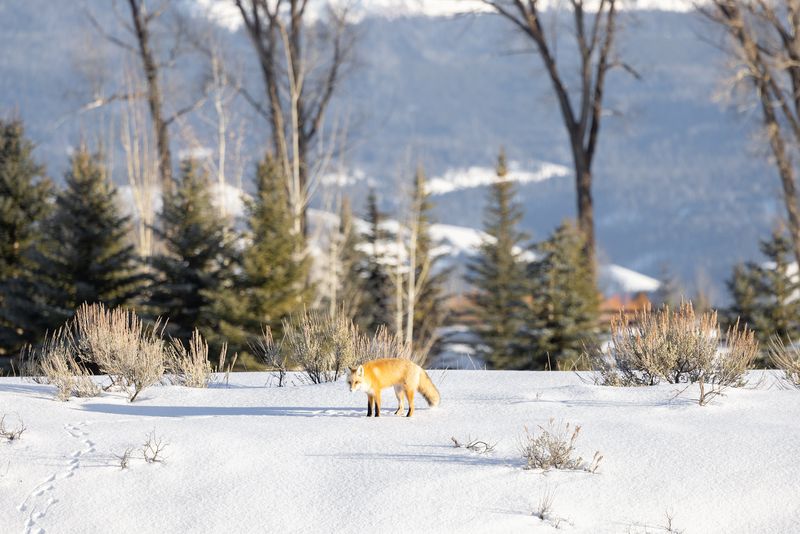
Mice, voles, and other small mammals make up a big part of a red fox’s menu. In winter, those animals keep moving under the snow, and a fox can listen for them and pounce.

The National Park Service describes this winter hunting and says foxes can be more active during the day in the cold months.

Pups are born in March or April, so a den that matters to a fox is tied to that spring window.

That helps explain a fox crossing your yard at noon. Grass edges, brush piles, woodpiles, and garden beds can hold rodents, so a yard may simply be part of a hunting route.

Your fox may well be after the mice already living near your shed.

Still, a fox hunting is only one reasonable guess. You can’t be sure that is what the animal you saw was doing, because a trotting fox and a hunting fox can look alike from a window.

Daylight alone also does not mean a fox is sick. A fox that moves steadily, looks alert, and has a full coat is often just going about its day.

Watch for the animal’s condition and behavior rather than the clock. Signs that point to trouble are covered in the last section.

When courtship is seasonally possible in Indiana
When courtship is seasonally possible in Indiana
© Secret World Wildlife Rescue

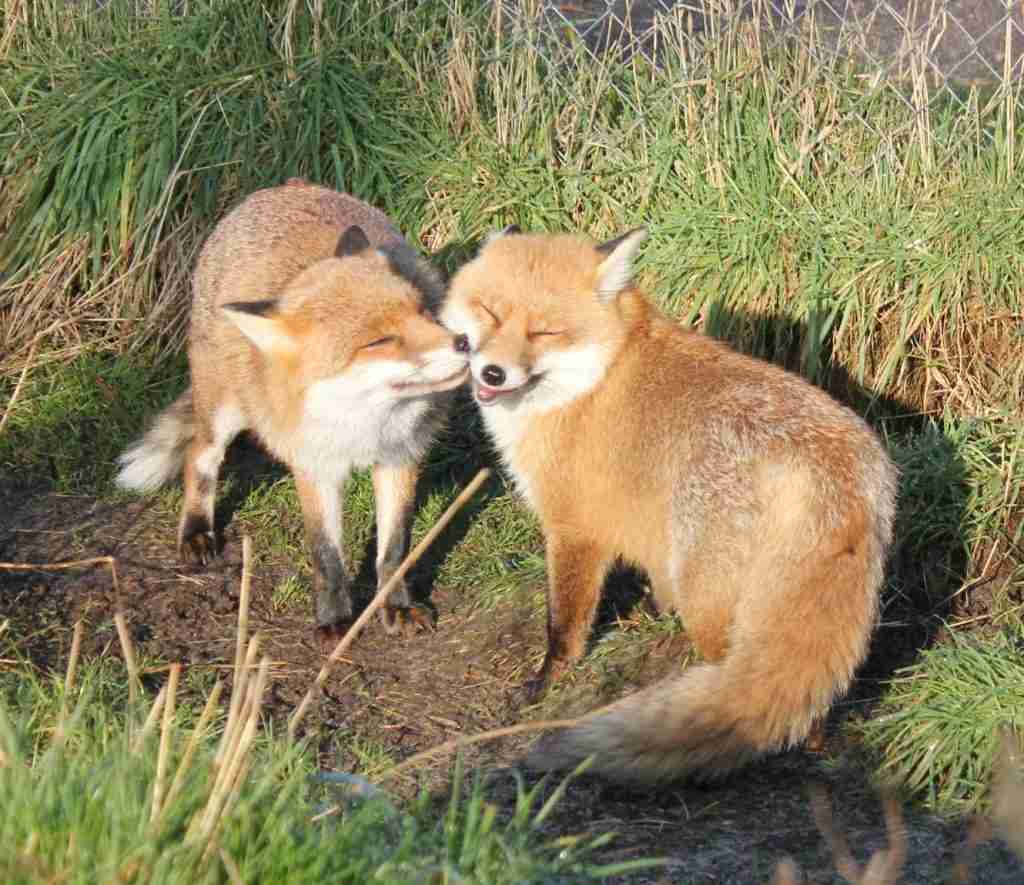
Late winter is not only cold, it is also breeding time. Purdue Extension gives Indiana’s red fox mating period as January through March.

That is why courtship is a believable reason for a fox to be roaming more than usual.

Dates are not exact, though. A U.S.

Forest Service review notes that breeding timing varies by region, so a general window is the most anyone can honestly offer.

Think of the season as background, not a verdict. A fox seen on a January morning could be courting, hunting, or just passing through.

Nothing you can see from your kitchen window settles that for any one animal.

So avoid putting a date or a storyline on the fox. Saying it is courting today goes further than the facts allow.

What you can say is that the calendar makes it one of several reasonable explanations.

If you see two foxes together, that fits the season, but it still isn’t proof of anything beyond two foxes sharing the same space. Keep your distance and let them move along.

What a fox sighting can tell you about a den
What a fox sighting can tell you about a den
© BBC Wildlife Magazine

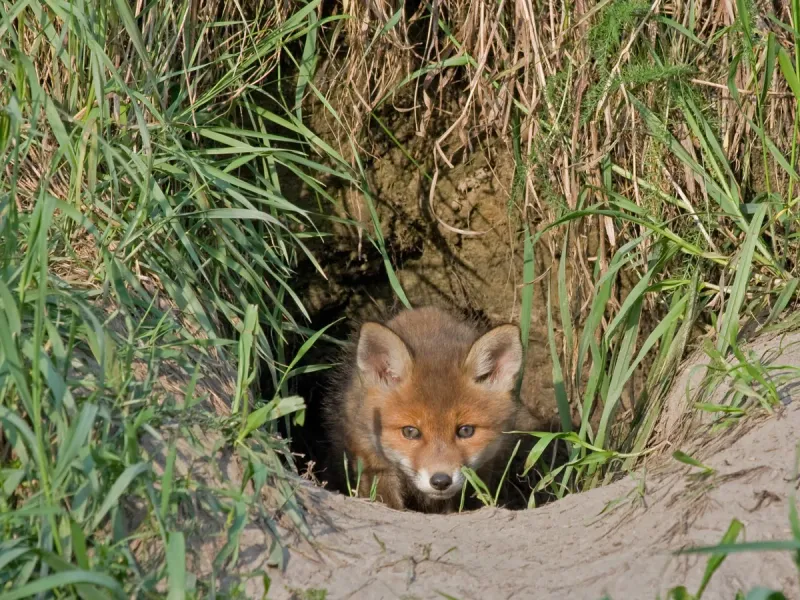
Seeing a fox does not establish whether a den is nearby or occupied. A fox can pass through a yard without any burrow within a long walk.

Even a hole in the ground doesn’t tell you who, if anyone, is using it.

According to Indiana DNR, red foxes seldom use dens except to rear young. Pups are born in March or April, so a den that matters to a fox is tied to that spring window.

Outside of it, a fox usually rests above ground.

That is why a midwinter sighting is a weak clue about dens. A fox may be checking out an area, but one pass through your yard can’t confirm that it is choosing a den site, and it can’t show that you have a den at all.

If you think a burrow may be in use, please leave it alone. Do not block the entrance while it may be occupied, because animals could be trapped inside.

DNR advises closing den entrances only after the young have moved on, in late fall.

Meanwhile, you can keep pets and children away from the area, stay back, and let the fox family handle its own business. If a den under a deck or shed worries you, plan to deal with the space once late fall arrives.

Make your yard less attractive to foxes
Make your yard less attractive to foxes
© Bear Wise

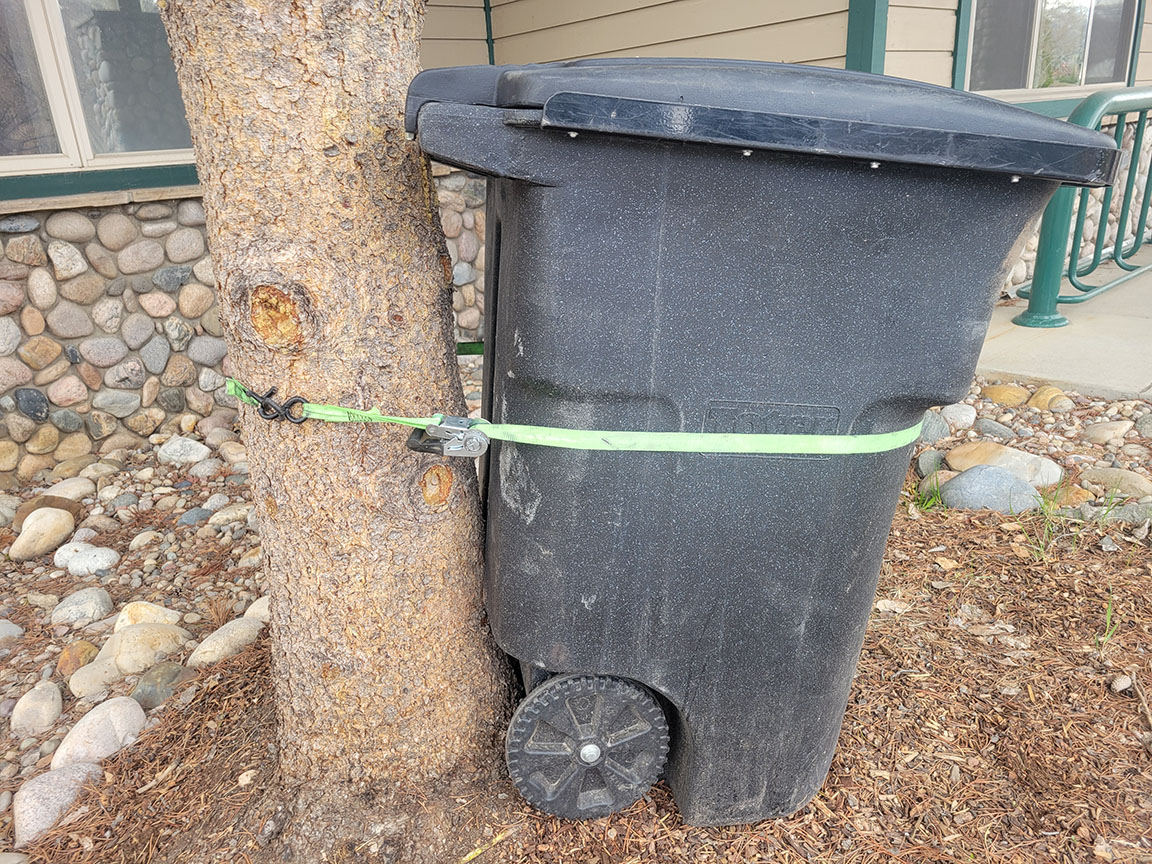
If you would rather the fox not stop by, start with the things that give it a reason to. Indiana DNR suggests bringing pet food and water dishes indoors, securing garbage and compost, and cleaning up fallen fruit.

Those steps remove easy meals, and they cost very little.

Next, look at hiding cover. DNR also advises trimming brush and shrubs where a fox could rest unseen.

A more open yard feels less comfortable to a wary animal.

A fox that does show up can be encouraged to leave. Clap, shout, or make other loud noise from a safe distance, or spray it with a garden hose.

This tells the fox your yard is not a quiet place to linger.

Stay well back while you do it. Never walk up to a fox, try to catch it, or handle it, and don’t offer it food.

Feeding is the surest way to turn a passing visitor into a regular one.

A practical routine helps. Check the yard at dusk, bring in bowls, close lids tightly, and look for windfall fruit under trees.

Small habits like these add up, and they keep your pets safer too, according to Indiana DNR.

When to keep away and get help
When to keep away and get help
© CBS 6 Albany

Most foxes you see are healthy and want nothing to do with you. Seeing one in daylight is not enough to call it sick, as the National Park Service notes that winter daytime activity can be normal.

Condition and behavior matter more than the time of day.

Worry if a fox seems confused, stumbles, seems unable to move well, or looks injured or very thin. A fox that appears sick calls for distance.

Keep people and pets away, don’t feed it, and don’t try to handle it. Indiana DNR asks residents to report sick wildlife through its sick-wildlife reporting channel.

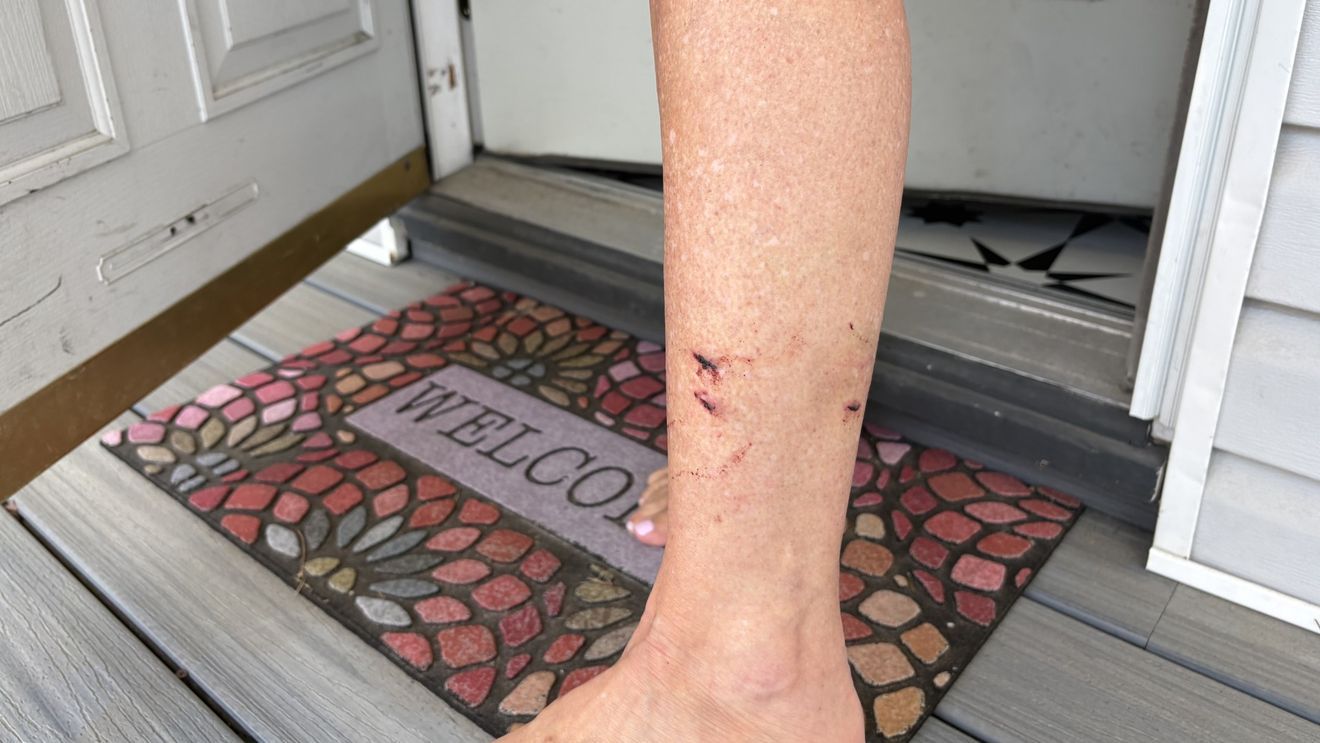
If anyone is bitten or scratched, wash the wound well with soap and water. Then call a doctor or your local health department promptly to talk about rabies risk.

Indiana’s rabies information and CDC guidance both point to that quick step.

Also let a professional know if your pet had contact with the animal. Don’t wait to see whether symptoms appear.

A fox in the yard is usually just a neighbor passing through, and your calm distance is the best welcome.

Share this story
DH

Written by

Dale Hutchins

More from Dale Hutchins →

About Gardening Latest

Gardening Latest provides in-depth guides to maintaining and enhancing your garden and backyard. Learn how to make the most of the space you have and create a beautiful garden.

More about us →

Latest stories

  • Massachusetts GardeningVenomous Snakes Are Rare In Massachusetts Gardens, But Here’s How To Recognize Them And Everything Else That Stings

    Venomous Snakes Are Rare In Massachusetts Gardens, But Here’s How To Recognize Them And Everything Else That Stings

    3 min ago
  • New York GardeningThat Fast-Running Bug In Your New York Basement Bites, But You Want It Around

    That Fast-Running Bug In Your New York Basement Bites, But You Want It Around

    13 min ago
  • Ohio GardeningOhio Homeowners Run Into More Venomous Yard Critters In Late Fall Than Any Other Time

    Ohio Homeowners Run Into More Venomous Yard Critters In Late Fall Than Any Other Time

    19 min ago
  • Pennsylvania GardeningDo Late-Night Coyote Howls in Pennsylvania Carry a Seasonal Message? What We Can and Can’t Tell

    Do Late-Night Coyote Howls in Pennsylvania Carry a Seasonal Message? What We Can and Can’t Tell

    30 min ago
  • Georgia GardeningUnder the Pine Straw in Georgia Yards Lives a Thumb-Sized Shrew With Venomous Saliva

    Under the Pine Straw in Georgia Yards Lives a Thumb-Sized Shrew With Venomous Saliva

    45 min ago

Gardening by state

Stories for your state, and the hardiness zone most of it gardens in.

Keep exploring

Read next

All Indiana Gardening →
Indiana GardeningVenomous Critters Quietly Share Your Indiana Yard, Until Late Fall Pulls Them Into View
Indiana Gardening

Venomous Critters Quietly Share Your Indiana Yard, Until Late Fall Pulls Them Into View

15 hr ago
Indiana GardeningIndiana Gardeners Who Grab a Saddleback Caterpillar by Mistake Need These First-Aid Steps Fast
Indiana Gardening

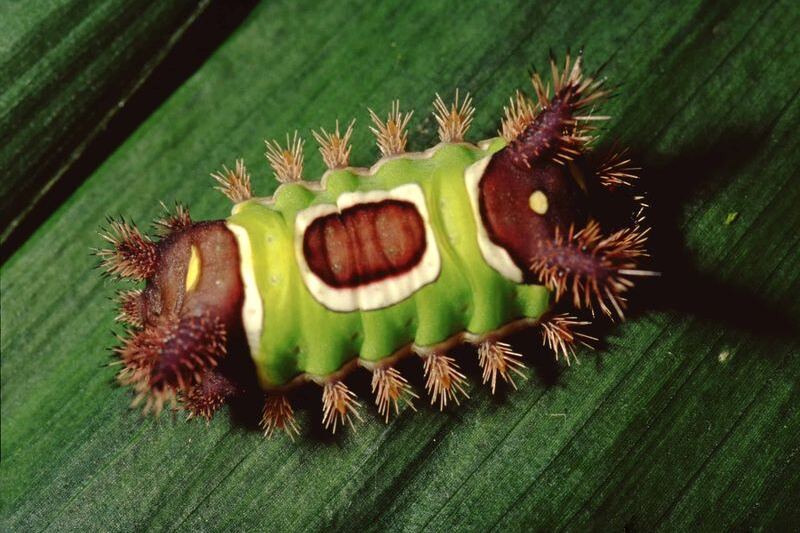
Indiana Gardeners Who Grab a Saddleback Caterpillar by Mistake Need These First-Aid Steps Fast

17 hr ago
Indiana GardeningThe Northern Short-Tailed Shrew in Indiana Gardens Is Tiny, Common, and Actually Venomous
Indiana Gardening

The Northern Short-Tailed Shrew in Indiana Gardens Is Tiny, Common, and Actually Venomous

21 hr ago

More from Indiana Gardening

  • The Humpbacked Bugs Leaping Around Your Indiana Basement Aren’t Spiders At All

    Nov 24
  • Before You Clear Out Your Indiana Garage This Winter, Check The Corners For These Egg Sacs

    Nov 24
Back to top

Leave a response Cancel

Your email address stays private. Required fields are marked with an asterisk.

Gardening Latest

In-depth guides to maintaining and enhancing your garden and backyard: how to make the most of the space you have, and how to make it beautiful.

  • Facebook
  • X
  • Pinterest
  • YouTube

We may earn a portion of sales from products or services that are purchased through our site as part of our affiliate partnerships with retailers.

Explore

  • About GardeningLatest.com
  • Contact Us
  • Terms and Conditions
  • Privacy
  • Editorial Note:
  • FTC Disclosure

Newsletter

New garden guides and seasonal tips, straight to your inbox.

We’ll email you a link to confirm. Unsubscribe any time.

Almost there! Check your inbox and tap the link to confirm.

© 2026 Gardening Latest. All rights reserved.

Back to top