The fast-running bug in your New York basement can bite, but it is also a hunter that eats other household pests. The common house centipede snacks on cockroaches, silverfish, and other small creatures that most of us would rather not share a home with.
That makes an occasional visitor easier to live with than it first looks. Here is what to know about what it eats, what it means when you see one, and what to do next.
That blur of legs has a recognizable look
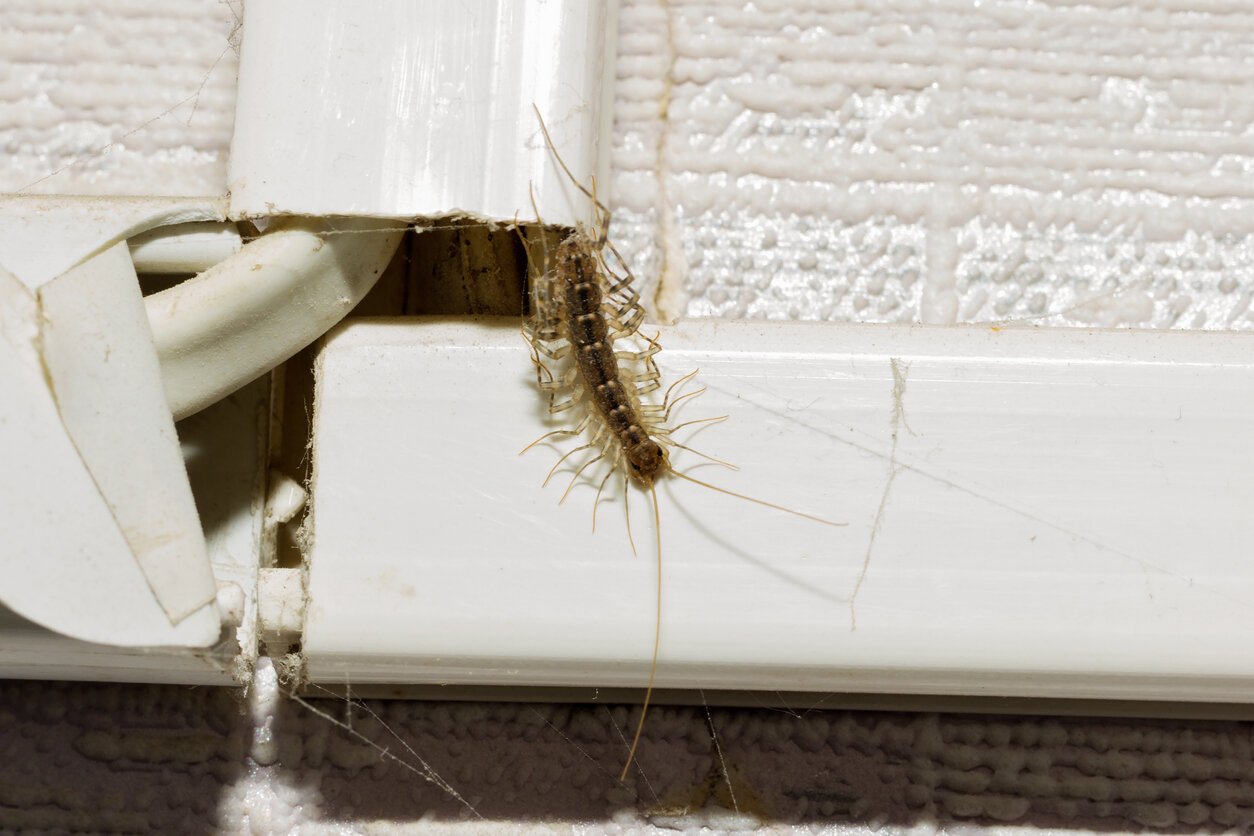
A common house centipede is a predator that eats small arthropods, including cockroaches and silverfish. It does not reliably control a pest infestation, though, so think of it as a bonus and not a service you can count on.
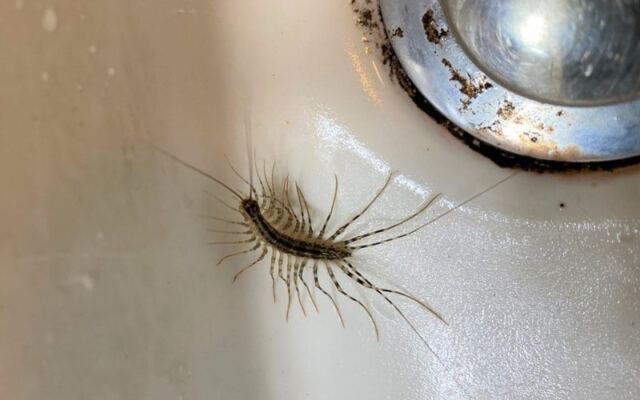
The species is Scutigera coleoptrata, and it is easy to spot once you know the clues. It is yellow-gray, with three dark stripes running along the body.
Adults have 15 pairs of very long legs, which give it a feathery, blurry look as it zips across a floor. According to Cornell’s New York State IPM fact sheet, this combination of color, stripes, and speed helps tell it apart from other centipedes.
That description fits the common house centipede specifically. Other centipede species can differ in size, color, and bite risk, so do not assume every centipede you meet behaves the same way.
A stout, much larger, or differently colored centipede is a different animal.
Spotting one also does not tell you which other pests share your home. It simply tells you a fast hunter found a basement that suits it.
If it vanishes behind a water heater before you can say hello, that is normal, because speed is its best trick.
Its diet explains why you might let it stay
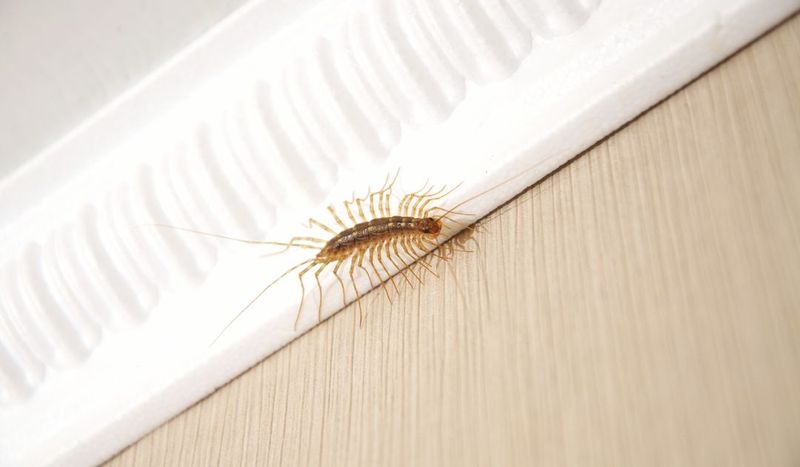
Night is when house centipedes get busy. They hunt in the dark, tracking down insects and spiders, and Penn State Extension lists silverfish and cockroaches among their prey.
If you have ever wondered what the speedy thing is doing at 2 a.m., the answer is usually dinner.
Cornell also describes them as predators of insects and spiders. That makes them a small natural helper in a place where you probably do not want roaches or silverfish scuttling around.
So letting one stay is a reasonable choice if it does not bother you. An occasional centipede may take a few unwelcome insects off your hands, and it asks for nothing but a dark corner.
Many people find that knowing this makes the surprise sighting less alarming.
The benefit has limits, though. One centipede cannot hunt down every bug in a basement, and it is not a dependable pest-control method.
Treat it like a quiet roommate who happens to eat the things you dislike, not as a substitute for dealing with problems yourself.
If you would rather not share space, that is fine too. Nothing says you have to welcome it.
The point is that a single centipede is not a sign that something terrible is happening, and it may be doing you a small favor.
A predator is not an exterminator
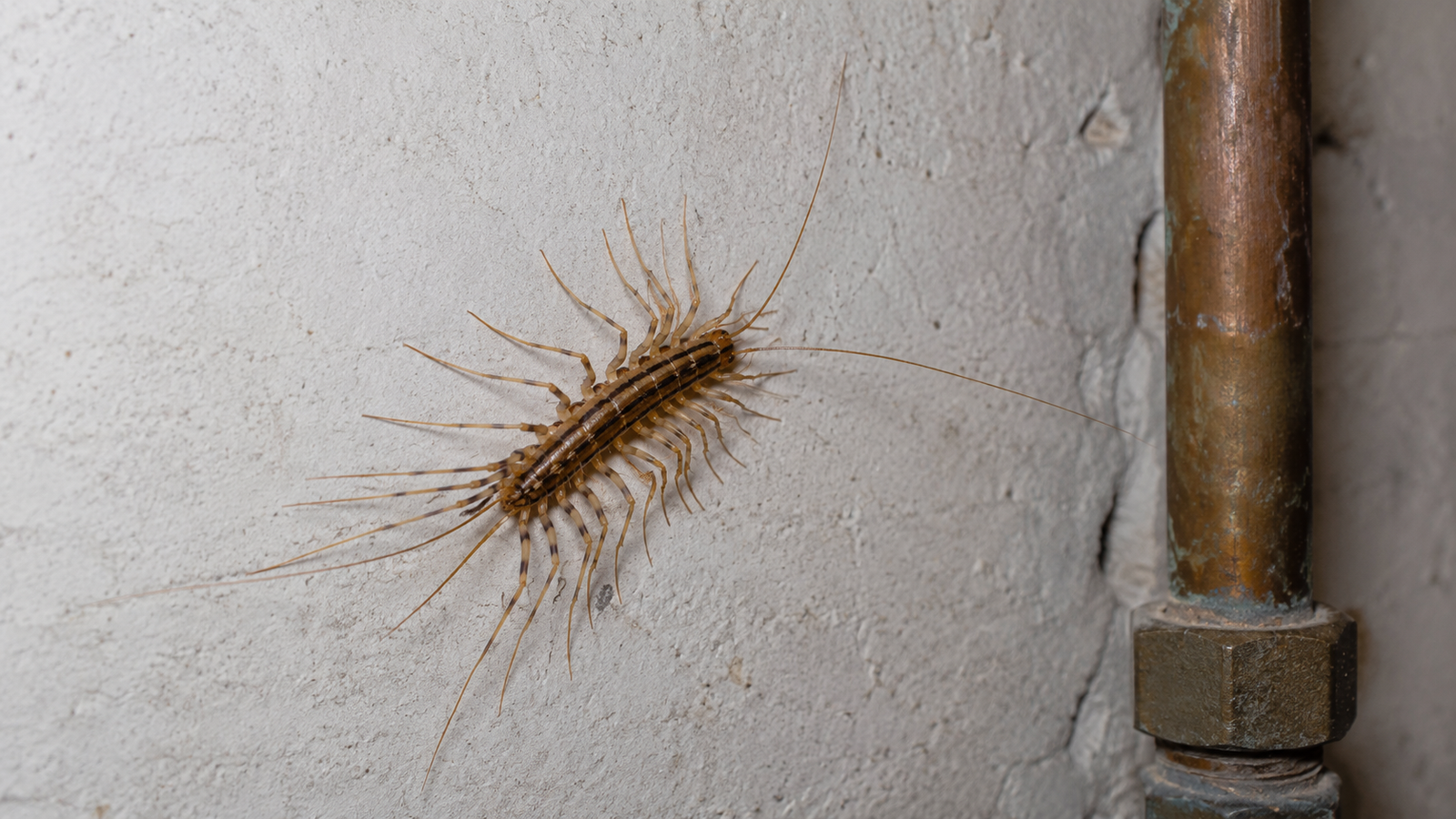
Eating a few pests is very different from wiping out an infestation. Centipedes eat roaches and silverfish when they find them, but nothing shows they can reliably clear a home of either one.
Cornell’s fact sheet says house centipedes can help reduce other pests, while also calling them a nuisance indoors, as the New York State IPM sheet explains.
If you are seeing roaches or silverfish yourself, deal with that problem directly. Find where they are living, remove food and water, and seal the spots they use to get in.
Waiting for a centipede to handle it is a gamble.
The centipede’s value is relative. It may help a little, but it can also be unwelcome on its own, especially if it keeps popping out near the laundry pile or your bare feet.
UC IPM notes that centipedes seldom need control unless they become a nuisance, and that cutting down their prey also cuts down their numbers.
That last point is handy. If you tackle the pests that feed a centipede, you shrink the reason it came in the first place.
It is a quiet, practical win for anyone who would like fewer legs in the basement overall.
What do repeated sightings tell you?
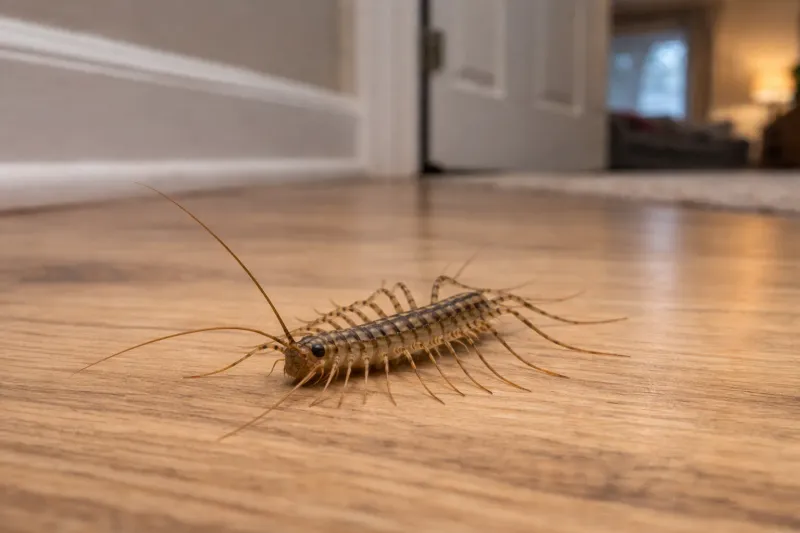
Seeing the same centipede dash past every week can feel like a message. The message is modest: this is a good time to look around.
According to University of Minnesota Extension, numerous house centipedes suggest other insects are available as food.
That makes frequent sightings a prompt to check for prey. Sticky traps are a simple way to do it.
Place a few along baseboards and in corners, then see what turns up besides centipedes. Traps help you monitor centipedes and other arthropods without spraying anything.
What sightings cannot do is name the culprit. They do not prove you have roaches, and they do not show that an infestation is severe.
Cornell’s sheet also points to moisture as a condition that favors centipedes, so dampness is another thing to inspect.
There is no magic number of sightings that triggers treatment, either. The sources describe action in plain terms: act when centipedes are frequent or bothersome, not when you hit a certain count.
Try keeping notes for a couple of weeks. Jot down where you see centipedes and what the traps catch.
A pattern, such as everything clustering near a leaky pipe, tells you far more than a single speedy surprise.
A bite is possible, but handling is the risk to avoid
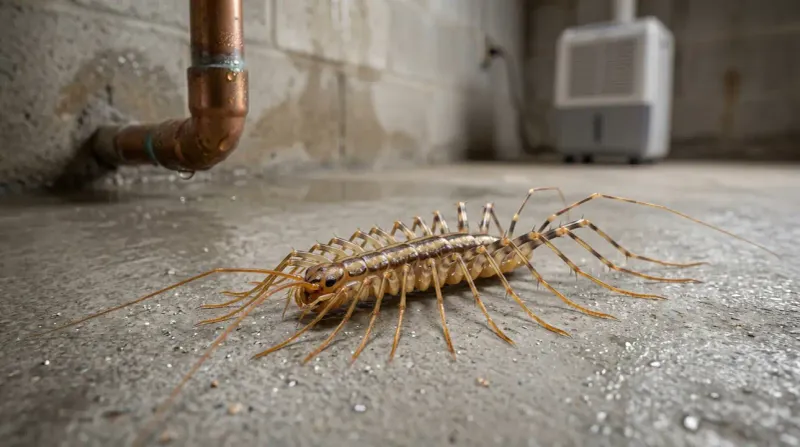
Yes, the headline is right that a house centipede can bite, but the picture is not scary. Bites are rare, and a house centipede’s small jaws usually cannot break human skin.
Cornell notes that one can pierce skin if it is handled roughly, so the real risk comes from grabbing one.
The best rule is simple: do not handle centipedes. If one needs to go, use a cup and a piece of paper, or leave it alone and let it run off.
Bare hands are a bad idea for something that is both fast and annoyed.
If a bite does happen, wash the area with soap and water. Then call Poison Control at 1-800-222-1222 for advice.
Poison Control describes house centipedes as relatively harmless compared with larger, more dangerous centipedes.
Seek medical care if you notice signs of an allergic reaction, such as swelling, hives, or trouble breathing. Get checked for signs of infection too, such as spreading redness, warmth, or pus.
Keep the comparison fair. Warnings about big or tropical centipedes do not describe the yellow-gray, three-striped house centipede in your basement.
Treat it with respect and a bit of distance, and the odds of trouble stay very low.
Make the basement less inviting
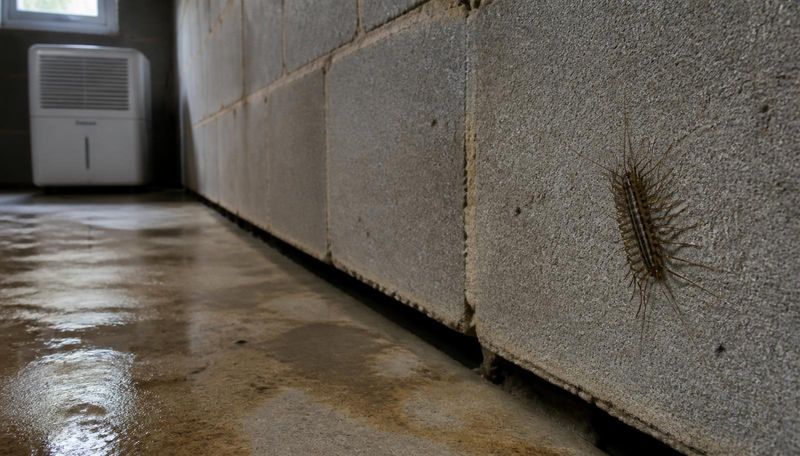
If you would like fewer visits, start with water. Check for leaks around pipes, the water heater, and foundation walls.
Improve ventilation or run a dehumidifier if the air feels damp. Cornell’s guidance gives an indoor humidity target below 60 percent, ideally 30 to 50 percent, and stresses fixing the moisture source itself.
More background is in Cornell’s moisture pests page.
Next, close the doors they use. Seal cracks in the foundation and gaps around basement doors and windows.
Then clear clutter, cardboard stacks, and debris that give centipedes and their prey places to hide.
Moisture and prey are separate clues. Dampness may explain why centipedes like your basement, while a steady supply of insects may explain why they stay.
University of Minnesota Extension ties numerous centipedes to available insect food, so sticky traps are useful for checking what else is living there.
Fixing these conditions matters more than routine pesticide treatment. Cornell advises against indoor or perimeter pesticides for house centipedes.
If you ever consider a product, follow its label and store it safely away from children.
As for tolerance, a lone centipede now and then is fine to live with if it does not bother you. Frequent or bothersome sightings are your cue to investigate, and UC IPM backs acting when they become a nuisance.
A dry, tidy basement is not much of a home for a hunter that needs dinner and damp corners to thrive.
Share this story